By: | Published: February 28, 2026
Professional arborists can prevent up to 80% of tree damage during construction, yet many property owners in Central Florida overlook their expertise until costly problems emerge. Whether you’re planning a residential expansion or commercial development, understanding how certified arborists protect your trees, ensure legal compliance, and boost property value is essential. This guide reveals why arborist involvement from day one saves money, preserves natural assets, and creates safer, more attractive properties.
Table of Contents
- Introduction To Arborists In Development
- Tree Health And Safety During Development
- Regulatory And Legal Compliance
- Aesthetic Enhancement And Property Value
- Common Misconceptions About Arborists In Development
- Conclusion And Practical Steps To Engage Arborists
- Partner With Certified Arborists For Your Development Needs
- Frequently Asked Questions About Arborists In Development
Key Takeaways
| Point | Details |
|---|---|
| Damage Prevention | Certified arborists reduce construction tree damage by up to 80% through strategic planning and protective measures. |
| Legal Protection | Arborist-developed tree protection plans prevent fines and project delays tied to Central Florida tree ordinances. |
| Property Value | Professional tree care increases property values while improving aesthetics and long-term tree health. |
| Local Expertise | Certified arborists provide climate-specific guidance for storm resilience and species-appropriate care in Florida. |
| Early Engagement | Hiring arborists during planning phases yields better outcomes than reactive damage control. |
Introduction to Arborists in Development
A certified arborist brings specialized training in tree biology, health assessment, and safe care practices that go far beyond basic landscaping skills. Certified arborists have formal training and certification focused on tree biology and safety, qualifying them to diagnose diseases, evaluate structural integrity, and plan preservation strategies during complex development projects. Their role of arborists in development extends from initial site evaluation through post-construction monitoring.
General landscapers typically focus on aesthetic maintenance like mowing and planting. Arborists, by contrast, possess advanced knowledge of tree physiology, soil science, and structural mechanics. The importance of arborist certification lies in standardized competency verification through organizations like the International Society of Arboriculture.
Development projects pose specific threats to existing trees that untrained workers often miss. Common challenges include:
- Root zone damage from heavy machinery compacting soil and severing critical root systems
- Improper pruning that weakens branch structure and invites disease
- Grade changes that suffocate roots or expose them to harsh conditions
- Soil compaction reducing oxygen and water availability by 40% or more
Arborists mitigate these risks through careful planning. They map root zones, establish protection barriers, specify pruning schedules, and monitor tree stress throughout construction. Their services during development include health assessments, preservation planning, structural pruning, soil management, and ongoing monitoring to keep trees thriving despite nearby disruption.
Tree Health and Safety During Development
Before construction begins, arborists conduct comprehensive tree inventories. They assess each specimen’s health, structural stability, and preservation value using standardized evaluation methods. Risk assessment identifies trees with decay, weak branch unions, or root problems that could fail during or after construction, potentially causing property damage or injury.
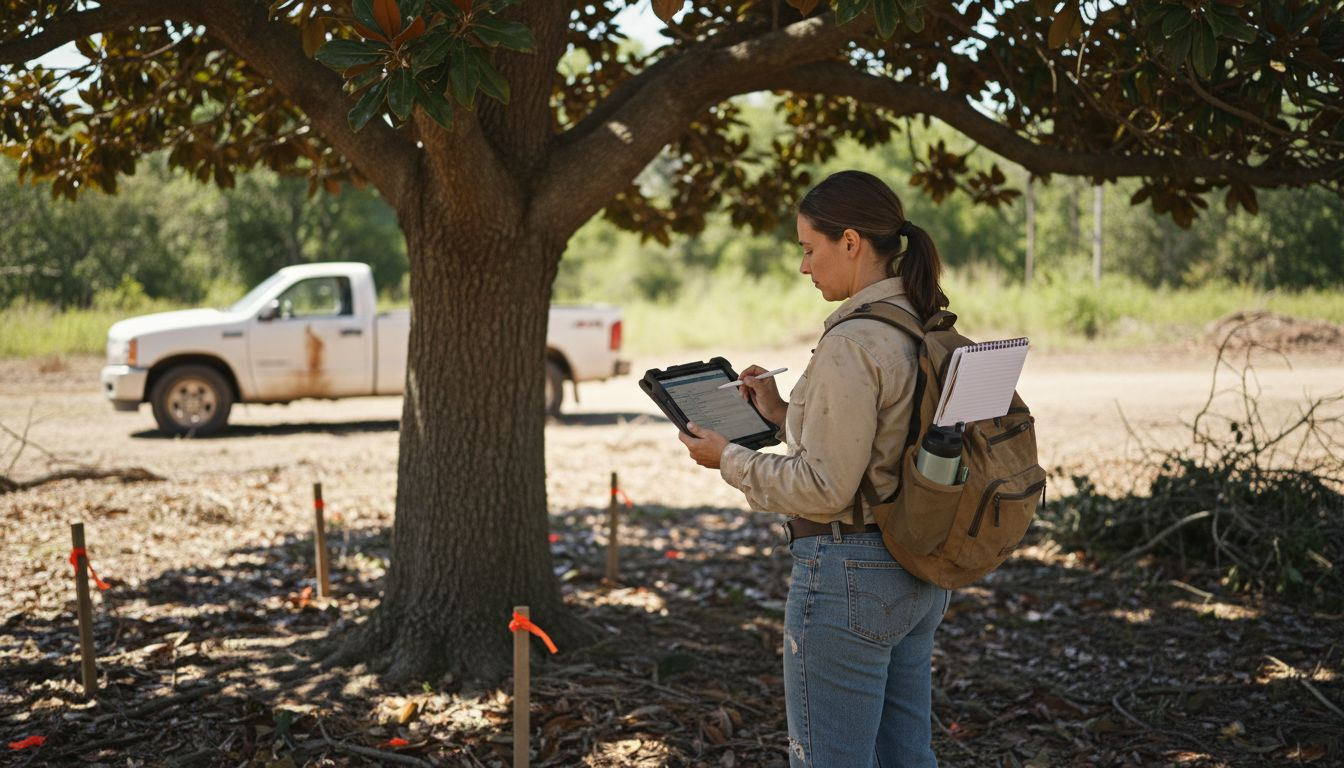
Professional arborists can reduce tree damage during construction by up to 80% through strategic intervention. Their arborist safety risk assessment protocols examine structural integrity, disease presence, and environmental stressors to prioritize protective measures.
Species-specific pruning maintains structural stability while minimizing stress. An oak requires different techniques than a palm or pine. Proper pruning techniques vary by species, season, and tree condition. Timing matters tremendously because pruning during active growth periods can weaken trees by 15-30% compared to dormant season work.
Pro Tip: Schedule pruning during late winter or early spring before new growth begins. This timing reduces stress, promotes faster healing, and minimizes disease transmission risk in Central Florida’s humid climate.
Tree preservation plans map critical root zones and establish physical barriers around protected areas. These plans specify:
- Minimum distance requirements for equipment and material storage
- Root protection fencing locations and construction methods
- Irrigation schedules to counter construction-related stress
- Monitoring intervals to detect problems before they become severe
| Tree Characteristic | Without Arborist Plan | With Arborist Plan |
|---|---|---|
| Survival Rate | 45-60% | 85-95% |
| Structural Damage | 35-50% of trees | 5-15% of trees |
| Recovery Time | 3-5 years | 1-2 years |
| Post-Construction Health | Poor to Fair | Good to Excellent |

Arborists don’t disappear after initial planning. They conduct site visits throughout construction phases, checking for unauthorized root damage, monitoring soil conditions, and adjusting care protocols as conditions change. This proactive oversight catches small problems before they escalate into tree loss or safety hazards.
Regulatory and Legal Compliance
Central Florida municipalities enforce strict tree preservation ordinances that regulate removal, protection, and replacement during development. Orlando’s tree ordinance, for example, requires permits for removing trees above certain diameter thresholds and mandates replacement ratios that can reach 3:1 for significant specimens.
Arborists provide legally compliant tree care plans that help avoid up to 100% of fines and project delays by ensuring projects meet all regulatory requirements before construction begins. They prepare documentation for permit applications, including tree surveys, preservation plans, and mitigation strategies that satisfy local tree ordinances.
Without proper arborist involvement, developers face serious consequences. A commercial project in Winter Park recently paid $45,000 in fines for unauthorized tree removal that could have been avoided with a $3,000 arborist consultation. Another residential development faced a six-month delay when inspectors discovered inadequate root protection, costing the owner over $120,000 in extended financing and contractor fees.
Many property owners mistakenly believe arborist services are optional luxury expenses. This misconception proves costly because legal compliance in development requires professional documentation in most Central Florida jurisdictions. Key compliance elements include:
- Tree inventory reports with species, size, and condition assessments
- Protection zone calculations based on trunk diameter and species characteristics
- Monitoring protocols with scheduled inspection intervals
- Mitigation plans specifying replacement trees and care requirements
Pro Tip: Engage a certified arborist during initial site planning, before architectural drawings are finalized. This timing allows tree protection to inform site layout, reducing conflicts between design intent and preservation requirements while streamlining permitting.
Arborists serve as liaisons between developers and municipal inspectors. They speak the technical language regulators expect, prepare documentation in required formats, and respond to inspector questions with scientific justification. This expertise accelerates approvals and prevents the back-and-forth revisions that delay projects and inflate costs.
Aesthetic Enhancement and Property Value
Healthy, mature trees dramatically improve property appeal for both residential and commercial developments. Studies consistently show that well-maintained landscapes with established trees command premium prices, with mature tree coverage increasing property values by 7-19% compared to similar properties without significant canopy.
Arborists enhance aesthetics through targeted interventions that go beyond basic trimming. Their aesthetic benefits of arborists include selective pruning that opens sight lines while maintaining natural form, crown shaping that creates balanced canopies, disease treatment that restores vigor and appearance, and seasonal care timed to maximize flowering and foliage quality.
Professional techniques produce results that amateur work cannot match:
- Strategic limb removal that improves tree structure while enhancing views
- Crown thinning that increases light penetration without compromising shade
- Deadwood removal that improves safety and appearance simultaneously
- Health treatments that reverse decline and restore vibrant foliage
| Property Aspect | Without Professional Care | With Arborist Involvement |
|---|---|---|
| Curb Appeal Rating | 6.2/10 average | 8.7/10 average |
| Tree Health Score | Fair (declining) | Good to Excellent (stable) |
| Property Value Impact | Baseline | +7-19% premium |
| Buyer Interest | Moderate | High (faster sales) |
| Maintenance Costs | Higher (reactive repairs) | Lower (preventive care) |
Local Central Florida projects demonstrate measurable returns. A lakefront residential development in Windermere invested $12,000 in arborist services to preserve and enhance existing oak canopy. The homes sold for an average of $85,000 more than comparable new construction without mature trees, generating $1.7 million in additional revenue across 20 units. A commercial office park in Maitland saw tenant interest increase 40% after arborist-led landscape revitalization improved the property’s professional appearance.
Aesthetics and safety work together to boost market attractiveness. Trees with structural problems create liability concerns that drive buyers away. Arborists identify and correct hazards before they become deal breakers, giving properties clean inspections and peace of mind. Beautiful trees that are also structurally sound represent the ideal combination that maximizes property value and marketability.
Common Misconceptions about Arborists in Development
Many property owners believe all tree trimming delivers similar results regardless of who performs the work. This misconception leads to poor outcomes because unlicensed workers lack understanding of tree biology, proper cutting techniques, and species-specific requirements. Certified arborists use species-specific, seasonal pruning standards differing by 15-30% in timing and technique compared to generic approaches.
Another widespread myth suggests that arborist certification is merely a marketing tool without practical significance. In reality, certification demonstrates verified competency in tree identification, diagnosis, treatment, and safety protocols. The common misconceptions about arborist services often stem from confusion between landscaping and specialized tree care.
Key distinctions that matter during development include:
- Understanding of root zone protection requirements versus simple avoidance
- Knowledge of species-specific pruning standards versus one-size-fits-all cutting
- Ability to diagnose diseases and prescribe treatments versus reactive removal
- Familiarity with local regulations and permit requirements versus learning on the job
Some developers assume they can handle tree care internally or through general contractors to save money. This approach backfires when regulatory violations trigger fines or when improper care kills valuable specimens. A $500 consultation prevents $50,000 mistakes, yet many skip professional input until problems force expensive remediation.
The belief that tree protection is optional unless explicitly required by permits ignores long-term consequences. Trees damaged during construction often decline slowly over 2-4 years before dying, creating delayed liability and aesthetic problems. Proactive arborist involvement prevents this scenario through proper planning and monitoring.
Confusion between tree removal services and comprehensive arborist care also causes problems. While removal is sometimes necessary, certified arborists prioritize preservation through health interventions and structural corrections. Their training emphasizes keeping trees alive and functional rather than defaulting to removal when challenges arise.
Conclusion and Practical Steps to Engage Arborists
Selecting the right arborist requires attention to specific qualifications and experience factors. Prioritize candidates with current ISA certification, relevant experience in development projects, and familiarity with local Central Florida tree species and regulations. Verify insurance coverage and ask for references from similar projects.
Engage arborists during the earliest planning stages, ideally before site design is finalized. Early involvement allows tree preservation to inform layout decisions, reducing conflicts and simplifying approvals. Late consultation forces reactive compromises that often cost more and achieve less.
Follow this checklist for successful arborist consultation:
- Schedule initial site assessment before architectural plans are completed
- Request comprehensive tree inventory with health and preservation ratings
- Obtain detailed protection plan specifying barrier locations and care protocols
- Incorporate arborist recommendations into site plans and contractor specifications
- Establish monitoring schedule with defined inspection intervals throughout construction
- Budget for ongoing care during and after development to ensure long-term tree health
Pro Tip: Maintain weekly communication with your arborist during active construction phases. Quick responses to emerging issues prevent minor problems from becoming major setbacks.
The benefits of professional arborist partnership extend far beyond regulatory compliance. You gain expert advocacy for tree preservation, documentation that protects you legally, increased property values through enhanced aesthetics, reduced liability from structural hazards, and long-term cost savings through preventive care rather than reactive crisis management.
Certified arborists transform development challenges into opportunities. Their expertise preserves natural assets that took decades to grow, creates landscapes that buyers and tenants prefer, and ensures your project meets all legal requirements without delays. For information on how to hire certified arborists, consult local professionals with proven development project experience.
Partner with Certified Arborists for Your Development Needs
Your development project deserves the protection and enhancement that only certified arborist expertise provides. McCullough Tree Service brings decades of experience helping Central Florida property owners navigate complex tree care challenges during construction and development.
Our team of certified arborist services professionals develops customized tree health and safety plans tailored to your project’s specific requirements. From initial assessment through post-construction monitoring, we ensure your trees remain healthy, compliant, and beautiful. Whether you need professional tree trimming to prepare for construction or expert tree removal when preservation isn’t feasible, our certified team delivers results that protect your investment and enhance your property’s long-term value.
Frequently Asked Questions about Arborists in Development
When is the best time to hire an arborist for a development project?
Hire an arborist during initial site planning, before finalizing architectural designs. Early engagement allows tree preservation to inform layout decisions, reducing conflicts and streamlining permits while maximizing tree survival rates.
What differentiates certified arborists from general landscapers in construction contexts?
Certified arborists possess specialized training in tree biology, structural assessment, and preservation techniques that landscapers typically lack. They understand root protection requirements, species-specific care protocols, and regulatory compliance needs essential during development.
How do arborists help with storm damage prevention in Central Florida?
Arborists identify structural weaknesses through detailed risk assessments, perform corrective pruning to reduce wind resistance, and recommend species selections with proven hurricane resilience. Their preventive work significantly reduces storm damage likelihood and severity.
How can I verify an arborist’s credentials and local experience?
Confirm current ISA certification through the organization’s online directory, verify liability insurance directly with their carrier, and request references from recent development projects similar to yours. Local professional associations also provide credential verification.
What cost benefits come from early arborist involvement versus post-damage remediation?
Early arborist consultation typically costs $2,000-$5,000 but prevents fines averaging $15,000-$50,000, avoids project delays costing $500+ daily, and eliminates tree replacement expenses of $3,000-$15,000 per mature specimen. The return on investment ranges from 300-2000%.
Recommended
- Role of Arborists: Transforming Urban Florida Development
- Role of Arborists in Safety: Protecting Orlando Properties
- The Environmental Impact of Tree Trimming
- Role of Arborists in Landscaping Success for Florida