By: Shelby McCullough| Published: February 6, 2026
Tending to trees in Orlando means more than just boosting curb appeal. When summer storms sweep through Central Florida, hidden hazards within your landscape can put property and safety at risk. Working with a Certified Arborist, who has at least three years of hands-on experience and proven expertise in tree care, delivers peace of mind with professional assessments and tailored solutions. Discover how qualified tree specialists help protect your investment and keep your property looking its best.
Table of Contents
- Step 1: Gather Essential Certified Arborist Credentials
- Step 2: Inspect Property and Identify Tree Care Needs
- Step 3: Evaluate Tree Health and Structural Risks
- Step 4: Perform Recommended Trimming or Removal Tasks
- Step 5: Verify Completed Work and Ensure Area Safety
Quick Summary
| Key Takeaway | Explanation |
|---|---|
| 1. Gather Certified Arborist Credentials | Achieve certification by meeting experience requirements and passing the exam to demonstrate your tree care expertise. |
| 2. Conduct Property Inspections Thoroughly | Perform a detailed assessment of each tree’s health and structural integrity to identify potential hazards before they escalate. |
| 3. Evaluate Tree Health Regularly | Systematically check for signs of decay or structural weaknesses to ensure long-term tree vitality and safety. |
| 4. Implement Proper Trimming Techniques | Use professional pruning methods to maintain tree health, avoiding over-pruning and ensuring clean cuts for healing. |
| 5. Verify Work and Ensure Safety | Conduct thorough post-maintenance inspections to confirm quality and mitigate any remaining safety risks in the area. |
Step 1: Gather Essential Certified Arborist Credentials
Successfully becoming a certified arborist requires strategic preparation and understanding of professional credentialing standards. Your goal is to master the comprehensive requirements that demonstrate your expertise in tree care and management.
The journey begins with meeting specific experience prerequisites. To qualify for arborist certification, you’ll need to accumulate critical professional experience:
- Minimum three years of practical arboriculture work experience
- Equivalent combination of education and hands-on tree care training
- Documentation of professional work history in tree management
The certification process involves successfully completing a rigorous examination administered by the International Society of Arboriculture. This comprehensive test covers multiple critical areas:
- Tree biology and identification
- Soil science and tree nutrition
- Pruning techniques
- Safe work practices
- Tree risk assessment
- Diagnosis and treatment of tree diseases
Professional certification represents your commitment to maintaining the highest standards of tree care and safety.
Additionally, candidates must commit to ongoing professional development. This means participating in continuing education programs and staying current with the latest arboriculture research and techniques.
Here’s a quick overview of essential certified arborist requirements and their professional significance:
| Requirement Type | Purpose | Professional Impact |
|---|---|---|
| Experience | Demonstrates practical skills | Shows industry expertise |
| Education | Provides theoretical knowledge | Enhances qualification growth |
| Examination | Assesses comprehensive understanding | Validates technical proficiency |
| Continuing Education | Keeps skills current | Maintains certification status |
Pro tip: Start collecting documentation of your professional experience early and network with experienced arborists who can provide mentorship and guidance through the certification process.
Step 2: Inspect Property and Identify Tree Care Needs
Conducting a comprehensive property inspection is crucial for identifying potential tree care requirements and mitigating potential risks. Your goal is to systematically evaluate each tree’s health, structural integrity, and environmental context to develop an effective management strategy.
Begin by performing a detailed property tree assessment, which involves examining multiple critical aspects of tree health and site conditions:
- Identify tree species and their specific characteristics
- Evaluate overall tree structure and growth patterns
- Check for signs of disease or pest infestation
- Assess potential safety hazards near structures
- Analyze soil conditions and drainage
- Examine proximity to buildings, power lines, and other infrastructure
During your inspection, look for specific warning signs that indicate potential tree health issues:
- Visible dead or decaying branches
- Fungal growth on trunk or roots
- Unusual leaf discoloration
- Bark damage or peeling
- Trunk cavities or structural cracks
- Root system disturbances
A thorough property inspection is the foundation of effective tree care and risk management.
Professional arborists use specialized tools and knowledge to conduct comprehensive evaluations, identifying subtle indicators that might escape an untrained eye. Your systematic approach will help develop targeted interventions to maintain tree health and property safety.
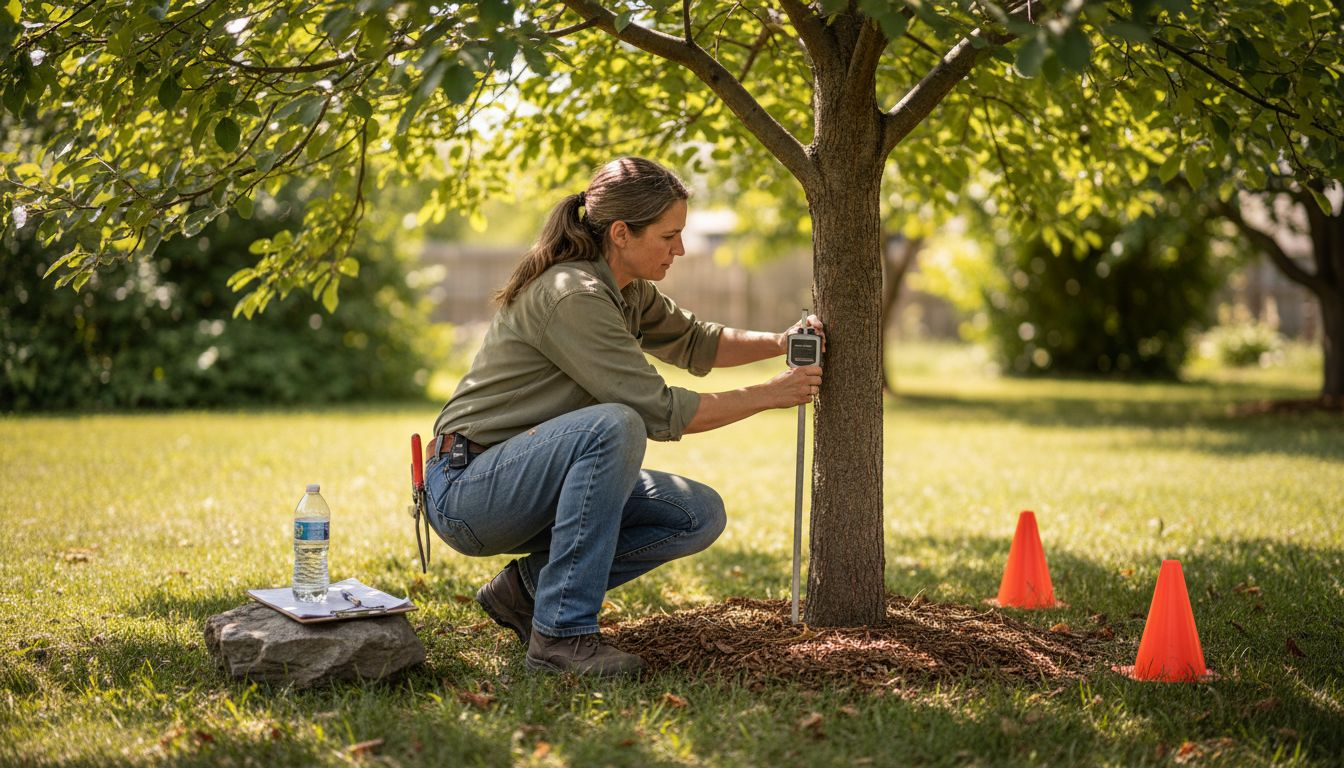
Pro tip: Photograph each tree during your initial assessment to create a baseline record and track changes in tree condition over time.
Step 3: Evaluate Tree Health and Structural Risks
Evaluating tree health and structural risks requires a systematic and detailed approach to identify potential hazards and preserve your trees’ long-term vitality. Your mission is to conduct a comprehensive assessment that pinpoints potential structural weaknesses and health challenges before they become critical problems.
Begin by identifying potential tree hazards, focusing on key structural and health indicators that signal potential risks:
- Examine branch attachment points for weakness
- Check for signs of decay or internal rot
- Assess root system stability and ground contact
- Evaluate trunk integrity and potential structural damage
- Look for pest infestations or disease symptoms
- Analyze tree lean and overall balance
Key structural risk assessment involves multiple critical evaluation techniques:
- Measure trunk diameter and check for unusual swelling
- Inspect bark for cracks, peeling, or abnormal texture
- Use specialized tools to test wood density
- Check for fungal growth indicating internal decay
- Evaluate branch strength and connection points
- Assess potential impact zones near structures
Comprehensive tree risk evaluation requires both visual inspection and specialized diagnostic techniques.
Professional arborists use advanced techniques to determine precise health conditions, including sonic tomography and resistance drilling to uncover hidden structural issues that might not be visible from external examination.
Pro tip: Conduct tree health assessments during different seasons to capture a comprehensive view of tree conditions and potential changes.
Step 4: Perform Recommended Trimming or Removal Tasks
Executing precise tree care interventions requires careful planning, specialized techniques, and a thorough understanding of each tree’s unique characteristics. Your goal is to implement targeted trimming or removal strategies that promote tree health and minimize potential risks to your property.
Begin by implementing professional pruning techniques that adhere to industry standards and protect the tree’s long-term vitality:
- Use clean, sharp pruning tools
- Make strategic cuts at proper branch unions
- Remove dead or diseased branches first
- Maintain the tree’s natural shape and structure
- Avoid over-pruning or removing more than 25% of live branches
- Cut branches at the correct angle to promote healing
Critical considerations for tree trimming and removal include:
- Assess branch size and location before cutting
- Use appropriate personal protective equipment
- Determine whether pruning or complete removal is necessary
- Consider potential fall zones and surrounding structures
- Plan removal strategy to minimize property damage
- Ensure safe working conditions and proper equipment
Professional tree care requires precision, knowledge, and respect for the tree’s biological systems.
Professional arborists evaluate multiple factors when deciding between trimming and removal, including tree health, structural integrity, potential hazards, and long-term site management goals.
Compare main tree care intervention approaches and their long-term outcomes:
| Approach | Typical Use Case | Long-Term Effect |
|---|---|---|
| Pruning | Address minor health issues | Promotes ongoing tree vitality |
| Removal | Resolve major safety threats | Improves property safety |
| Monitoring | Track post-care results | Supports preventive maintenance |
Pro tip: Always create a clear safety perimeter and have a planned escape route when performing tree trimming or removal tasks.
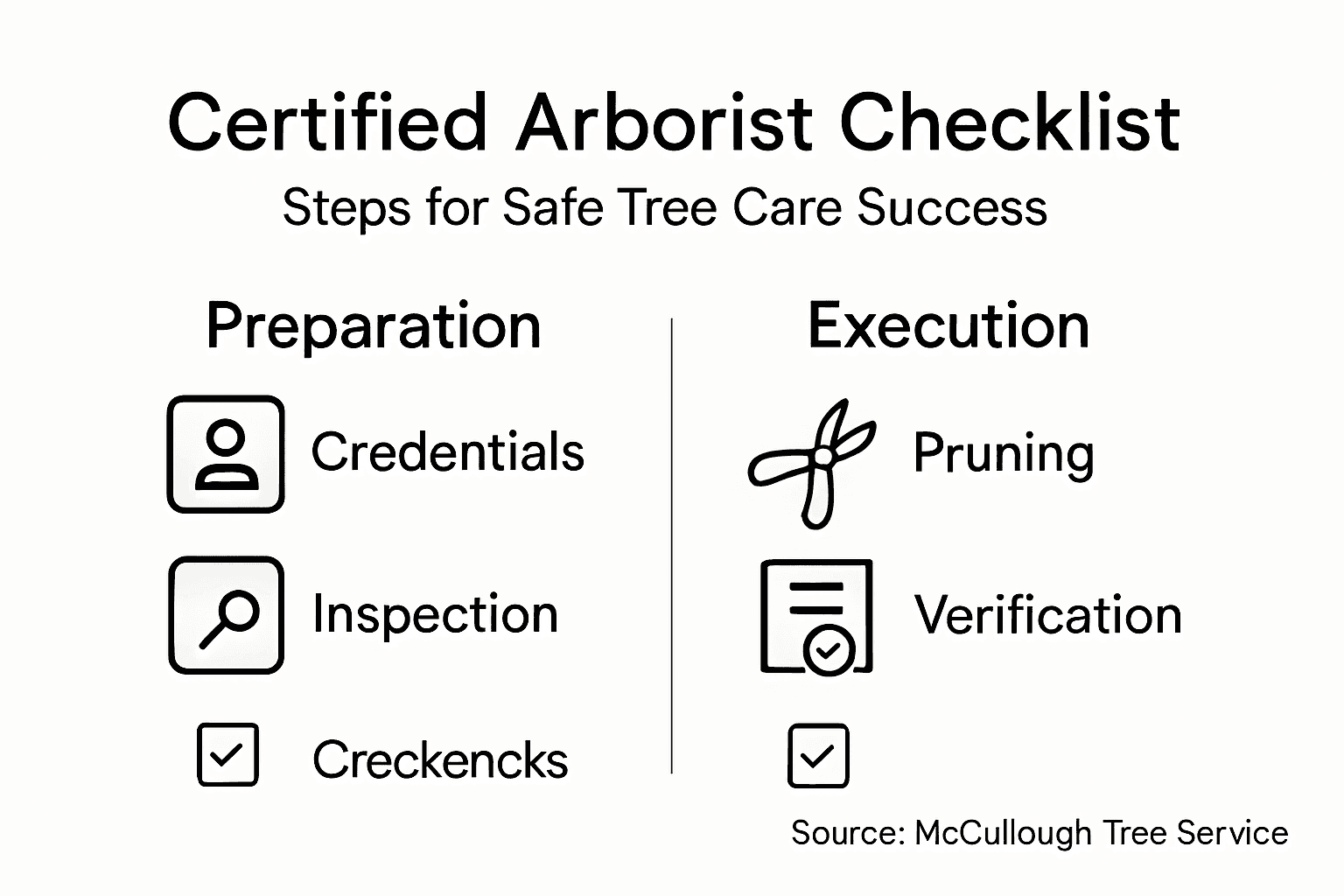
Step 5: Verify Completed Work and Ensure Area Safety
The final stage of tree care requires meticulous verification and comprehensive safety assessment to confirm the quality of work and protect your property. Your objective is to conduct a thorough post-maintenance inspection that guarantees all tree care objectives have been successfully achieved.
Begin by conducting a comprehensive site inspection that covers multiple critical safety elements:
- Check all pruning and removal sites for clean cuts
- Verify no damaged branches remain hanging
- Ensure complete debris removal from the area
- Inspect surrounding landscape for potential damage
- Confirm all equipment has been removed
- Assess ground area for soil disturbance or root exposure
Key safety verification steps include:
- Examine tree structural integrity after maintenance
- Check for potential falling hazards
- Validate proper cutting techniques were applied
- Review site for potential future maintenance needs
- Assess potential risks to nearby structures
- Document any recommendations for future care
Thorough site verification is the final critical step in professional tree care management.
Professional arborists understand that post-maintenance verification goes beyond simple cleanup, requiring a comprehensive approach that considers both immediate safety and long-term tree health.
Pro tip: Take photographs of the completed work site to maintain a professional record and help track tree growth and maintenance history.
Ensure Safe Tree Care Success with Certified Expertise from McCullough Tree Service
The article highlights the vital need for thorough tree health evaluations, risk assessments, and precise care interventions to protect both your property and the trees themselves. If you are facing challenges such as identifying tree hazards, choosing the right trimming techniques, or verifying completed work for lasting safety, McCullough Tree Service has you covered. Our team of certified arborists understands the complexities of tree biology, structural risks, and proper pruning methods, providing a professional approach based on industry standards.
Trust McCullough Tree Service as your local partner in Orlando and Central Florida for expert tree trimming, removal, and health assessment services. Don’t wait until minor tree issues become costly emergencies. Visit McCullough Tree Service to schedule a consultation today and experience comprehensive care that follows the exacting standards outlined in the certified arborist checklist. With our certified credentials and commitment to safety, we offer peace of mind backed by proven expertise.
Explore our services and discover why property owners rely on professional tree trimming and removal to keep their landscapes safe and thriving. Act now to secure your property’s safety and long-term tree health with trustworthy, licensed arborist support.
Frequently Asked Questions
What are the requirements to become a certified arborist?
To become a certified arborist, you need at least three years of practical experience in arboriculture or an equivalent combination of education and hands-on training. Gather documentation of your work history and consider enrolling in continuing education programs to stay updated on industry standards.
How do I conduct a thorough tree health assessment?
To conduct a thorough tree health assessment, begin by examining the tree’s structure, checking for signs of disease, and assessing soil conditions. Implement a systematic evaluation that includes documenting issues like dead branches or unusual leaf discoloration.
What techniques should I use for proper tree pruning?
Use clean, sharp tools and make strategic cuts at the proper branch unions to promote healing. Limit yourself to removing no more than 25% of live branches to maintain the tree’s vitality while addressing any dead or diseased limbs.
How can I identify potential tree hazards?
Identify potential tree hazards by closely examining branch attachment points, looking for signs of decay or pest infestations, and evaluating the tree’s overall stability. Conducting these inspections regularly will help mitigate risks before they become serious issues.
What steps should I take after completing tree care tasks?
After completing tree care tasks, conduct a comprehensive site inspection to verify clean cuts and ensure no hazards remain. Document your findings and recommendations for future maintenance to support the tree’s ongoing health.
How often should I pursue ongoing education as a certified arborist?
Engage in ongoing education regularly to maintain your certification and enhance your skills. Aim to participate in learning opportunities at least every few years to stay current with the latest techniques and research in arboriculture.
Recommended
- 7 Essential Tree Trimming Safety Tips for Homeowners
- Tree Trimming Safety Protocols to Remember
- Role of Arborists in Safety: Protecting Orlando Properties
- How to Select Arborist Services for Safe Tree Care
- Tree Service Orlando FL
- Tree Service Winter Springs FL