By: Shelby McCullough| Published: February 2, 2026
Property managers across Central Florida know the challenge of balancing curb appeal with legal responsibility when it comes to trees. Keeping your commercial grounds safe and attractive means more than a quick trim—it demands a thorough, regulated process led by certified professionals. Certified tree maintenance services not only enhance visual value but also protect your property and help you meet local compliance standards. This article sheds light on what goes into successful commercial tree care and how expert guidance can safeguard your investment.
Table of Contents
- What Commercial Tree Maintenance Involves
- Key Service Types And Industry Standards
- Hiring Certified Arborists And Legal Compliance
- Risk Management And Liability Prevention
- Cost Factors And Common Mistakes To Avoid
Key Takeaways
| Point | Details |
|---|---|
| Importance of Professional Services | Engaging certified arborists is essential for compliant and effective tree maintenance, ensuring both safety and environmental responsibility. |
| Regular Assessments are Crucial | Schedule comprehensive tree assessments at least twice a year to identify potential issues early and mitigate costly damage. |
| Risk Management Framework | Implement systematic risk management protocols that include regular inspections and documentation to prevent liability and enhance public safety. |
| Cost Management Strategies | Develop a proactive maintenance budget that integrates preventive measures to avoid unexpected expenses and maximize long-term property value. |
What Commercial Tree Maintenance Involves
Commercial tree maintenance represents a strategic approach to preserving tree health, safety, and aesthetic value for businesses and properties. Unlike residential tree care, commercial maintenance requires a comprehensive, systematic process that addresses multiple complex environmental and regulatory considerations.
The core elements of commercial tree maintenance typically include:
- Comprehensive Tree Assessments: Detailed inspections to evaluate tree structure, health, and potential risks
- Precision Pruning: Targeted trimming to maintain tree shape, remove hazardous branches, and promote healthy growth
- Disease and Pest Management: Regular monitoring and proactive treatment to prevent widespread tree damage
- Root Zone Protection: Strategies to maintain soil health and prevent damage during construction or landscaping activities
Professional tree maintenance goes beyond simple aesthetic considerations. Best management practices for urban forests emphasize the critical importance of protecting trees during development processes and maintaining their long-term ecological and economic value.
Successful commercial tree maintenance requires understanding the intricate balance between environmental preservation and property management needs. This involves careful planning, regular professional assessments, and implementing scientifically-backed tree care techniques.
Key Maintenance Procedures include:
- Regular structural pruning
- Soil nutrient management
- Pest and disease prevention
- Storm damage risk mitigation
- Compliance with local environmental regulations
Commercial tree maintenance is not just about beautification—it’s about creating sustainable, safe, and valuable green spaces for businesses.
Pro tip: Schedule comprehensive tree assessments at least twice annually to catch potential issues before they become costly problems.
Key Service Types and Industry Standards
Commercial tree maintenance services encompass a sophisticated range of specialized interventions designed to support the health, safety, and longevity of trees in business environments. These services are guided by rigorous professional standards that ensure quality, consistency, and environmental responsibility.
Primary Commercial Tree Service Categories include:
- Tree Health Assessments: Comprehensive evaluations of tree structural integrity and physiological condition
- Preventive Maintenance: Strategic pruning, disease prevention, and proactive care
- Emergency Tree Services: Rapid response for storm damage, hazardous tree removal, and critical interventions
- Landscape Integration: Holistic approaches to tree management within broader property development contexts
Professional maintenance standards developed by urban foresters and arborists provide critical guidelines for managing trees in commercial settings. These standards emphasize protecting critical root zones, selecting appropriate species, and implementing scientifically validated maintenance techniques.
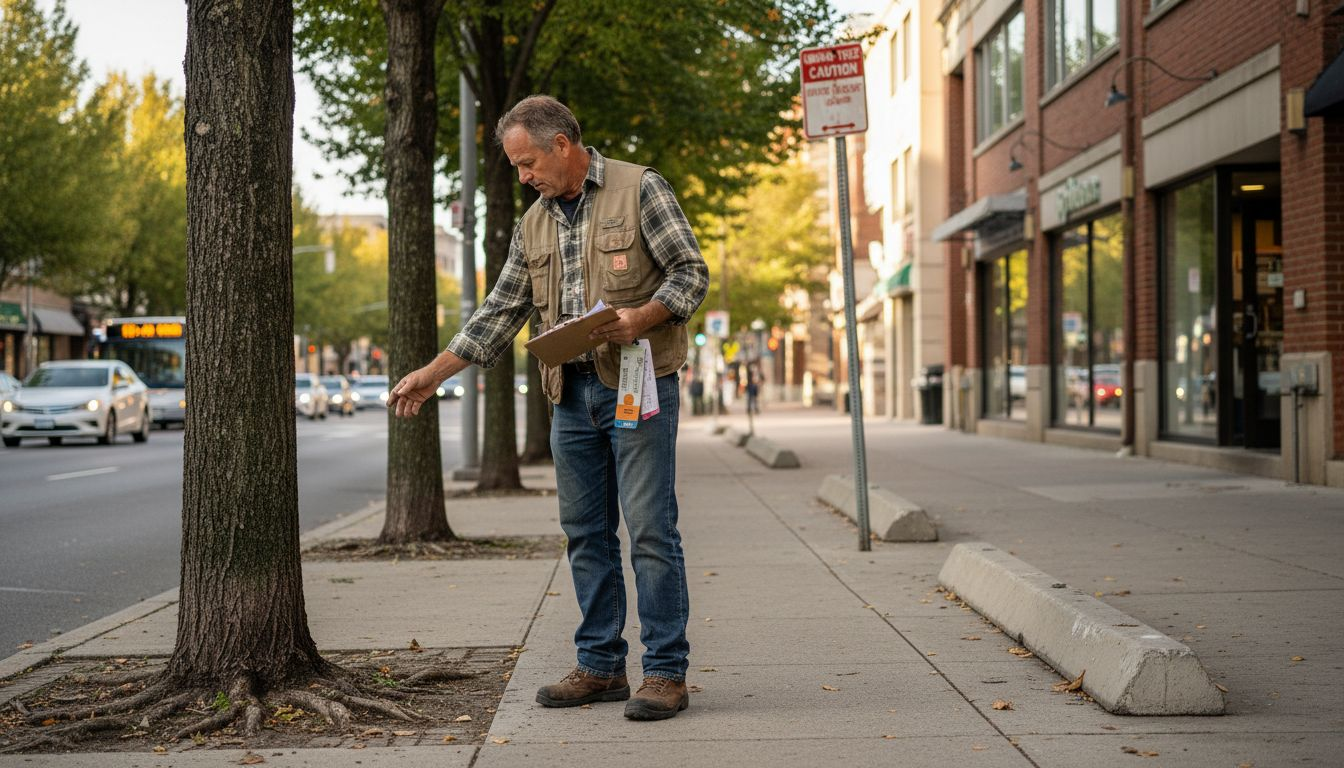
Here’s a summary of how different commercial tree maintenance service types benefit businesses:
| Service Type | Main Focus | Business Advantage | Common Scenarios |
|---|---|---|---|
| Tree Health Assessments | Analyze tree vitality | Early risk detection | Annual property inspections |
| Preventive Maintenance | Proactive care measures | Minimized future expenses | Seasonal pruning schedules |
| Emergency Tree Services | Urgent intervention | Quick hazard resolution | Post-storm cleanup needs |
| Landscape Integration | Holistic property planning | Enhanced property value | New development projects |
Industry professionals recognize multiple maintenance performance levels that help organizations evaluate and standardize their tree care approaches. These levels range from minimal intervention to comprehensive, proactive management strategies, allowing businesses to select services that align with their specific environmental and budgetary requirements.
Maintenance Performance Levels typically include:
- Reactive Maintenance (Minimal intervention)
- Basic Preventive Care
- Comprehensive Systematic Management
- Advanced Ecological Preservation
- Cutting-Edge Environmental Integration
Commercial tree maintenance is not simply about tree care—it’s about creating sustainable, safe, and environmentally responsible landscapes that enhance property value and ecological health.
Pro tip: Request detailed maintenance documentation and certifications from tree service providers to ensure compliance with professional industry standards.
Hiring Certified Arborists and Legal Compliance
Commercial tree maintenance involves far more than simple landscaping—it requires specialized expertise and strict adherence to professional standards that protect both property and environmental interests. Certified arborists provide critical professional services that go beyond basic tree trimming, ensuring comprehensive care and legal compliance for commercial properties.
Key Attributes of Certified Arborists include:
- Advanced training in tree biology and maintenance techniques
- Professional certification from recognized industry organizations
- Comprehensive understanding of local environmental regulations
- Specialized risk management and safety protocols
- Extensive knowledge of tree species and ecosystem interactions
Legal compliance in commercial tree maintenance encompasses multiple critical dimensions. Professional arborists must navigate complex regulatory landscapes, including local municipal codes, environmental protection guidelines, and safety standards that vary across different jurisdictions.
Critical Compliance Requirements typically involve:
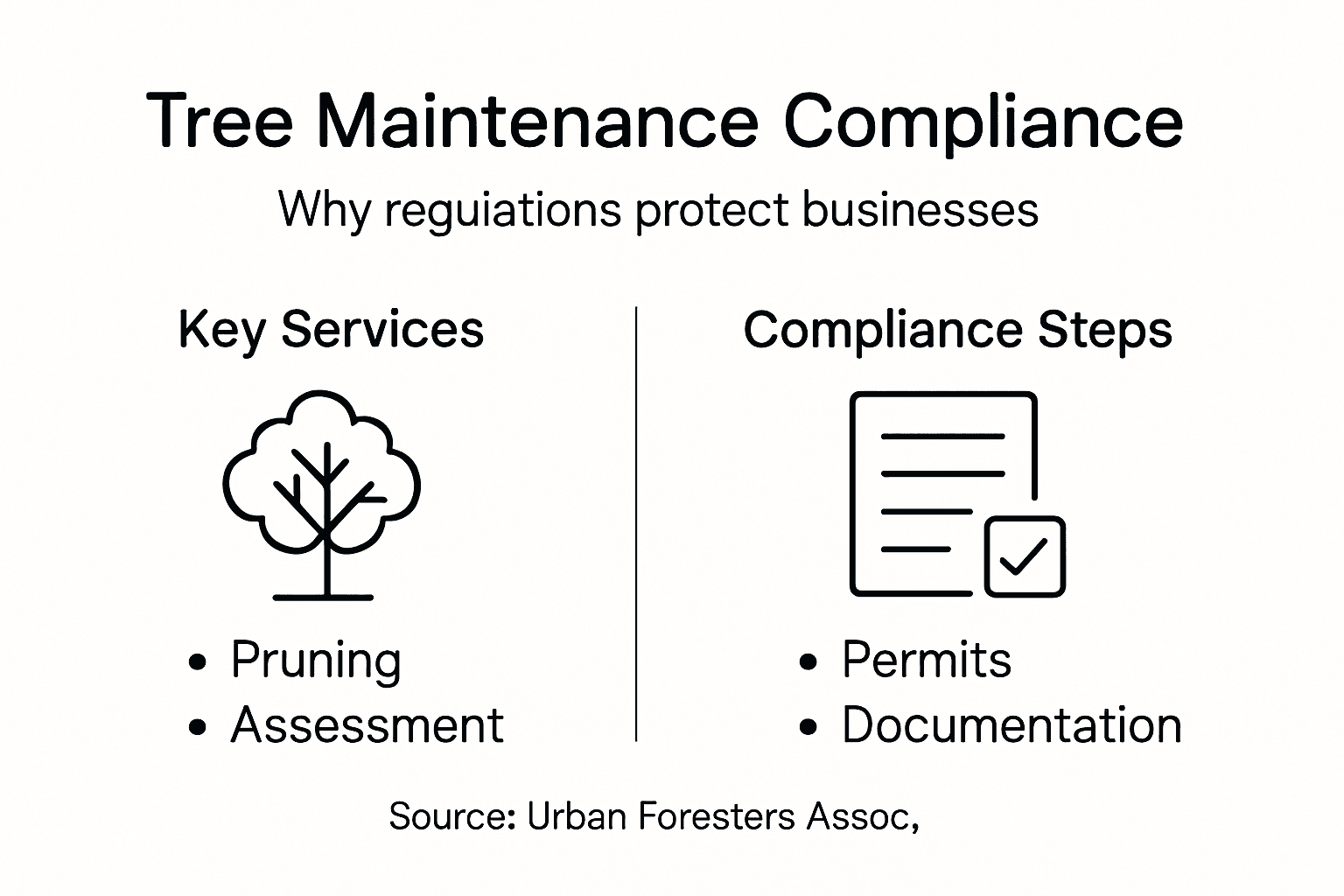
- Obtaining necessary permits for tree removal or significant pruning
- Following ANSI A300 professional tree care standards
- Maintaining appropriate liability insurance
- Documenting all maintenance and intervention procedures
- Adhering to environmental protection regulations
Certified arborists are not just tree care professionals—they are essential partners in maintaining safe, legally compliant, and environmentally responsible commercial landscapes.
Pro tip: Always request and verify a certified arborist’s current credentials and insurance documentation before initiating any commercial tree maintenance project.
Risk Management and Liability Prevention
Effective risk management is crucial for commercial property owners seeking to protect their investments and ensure public safety. Risk management strategies for tree maintenance provide a comprehensive framework for identifying, assessing, and mitigating potential tree-related hazards.
Key Risk Management Components include:
- Regular professional tree health inspections
- Comprehensive documentation of tree conditions
- Proactive maintenance and intervention strategies
- Systematic hazard identification and assessment
- Detailed record-keeping of all maintenance activities
Liability prevention requires a multifaceted approach that goes beyond simple maintenance. Commercial property managers must implement systematic processes that demonstrate reasonable care and professional diligence in managing potential tree-related risks.
Critical Risk Mitigation Steps:
- Conduct annual professional tree health assessments
- Create and maintain detailed tree inventory records
- Implement immediate corrective actions for identified hazards
- Develop comprehensive tree management documentation
- Maintain appropriate insurance coverage for potential tree-related incidents
Effective risk management is not about eliminating all potential risks, but about systematically identifying, documenting, and addressing potential tree-related hazards before they become critical problems.
Pro tip: Develop a comprehensive tree risk management protocol that includes regular inspections, immediate hazard reporting, and proactive maintenance strategies to minimize potential liability.
Cost Factors and Common Mistakes to Avoid
Commercial tree maintenance involves complex financial considerations that extend far beyond simple trimming and removal expenses. Tree maintenance cost factors encompass a wide range of direct and indirect expenses that property managers must carefully evaluate.
Primary Cost Drivers in Commercial Tree Maintenance include:
- Professional labor and specialized expertise
- Equipment and specialized tools
- Diagnostic and assessment services
- Potential property damage mitigation
- Ongoing preventive maintenance requirements
Understanding and avoiding common mistakes can significantly reduce long-term expenses. Improper tree care practices often lead to exponentially higher costs through tree loss, property damage, and potential legal liabilities.
Compare key cost drivers and mistakes to better manage commercial tree maintenance budgets:
| Factor or Mistake | Typical Impact | Preventive Strategy |
|---|---|---|
| Labor and expertise | Higher upfront costs | Hire certified professionals |
| Equipment/tools | Variable expense | Schedule routine maintenance |
| Assessment services | Diagnostic costs | Integrate into annual planning |
| Neglecting inspections | Increased long-term risk | Set regular assessment reminders |
| Inadequate root protection | Possible property damage | Protect soil during projects |
Critical Mistakes That Increase Maintenance Expenses:
- Neglecting regular professional inspections
- Improper pruning techniques
- Inappropriate species selection for local environments
- Inadequate root zone protection
- Delayed response to tree health issues
Effective tree maintenance is an investment in property value, not just an expense—strategic care prevents costly future problems.
Pro tip: Develop a comprehensive, proactive maintenance budget that includes preventive care to minimize unexpected tree-related expenses.
Ensure Compliance and Safety with Professional Commercial Tree Maintenance
Managing commercial tree maintenance involves navigating complex regulations and following strict standards to protect your property and reduce liability risks. If you are concerned about meeting legal requirements like ANSI A300 standards or obtaining proper permits, McCullough Tree Service offers trusted expertise with certified arborists who prioritize compliance, safety, and long-term tree health. Our team understands the critical importance of documentation, risk management, and proactive care to keep your business landscape both beautiful and secure.
Take control of your commercial tree maintenance today by partnering with professionals who bring advanced training and legal compliance to every project. Visit McCullough Tree Service to learn more about our Tree Health Assessments and Emergency Storm Cleanup services that protect your investment and ensure peace of mind. Contact us now for a detailed consultation and start safeguarding your commercial property with expert care.
Frequently Asked Questions
What is the importance of hiring certified arborists for commercial tree maintenance?
Hiring certified arborists is crucial because they possess advanced training in tree biology, understand local regulations, and implement best practices for tree care, ensuring both compliance and tree health.
What are the key components of legal compliance in commercial tree maintenance?
Legal compliance involves obtaining necessary permits, adhering to ANSI A300 tree care standards, maintaining insurance, and documenting all maintenance procedures to ensure that operations meet regulatory guidelines.
How can businesses effectively manage tree-related risks?
Businesses can manage tree-related risks by conducting regular health assessments, maintaining detailed documentation of tree conditions, implementing proactive maintenance strategies, and addressing hazards immediately to minimize potential liabilities.
What are the potential cost factors associated with commercial tree maintenance?
Cost factors include professional labor fees, equipment and specialized tools, assessment services, potential damage mitigation, and ongoing preventive maintenance requirements that all contribute to the overall budget for tree care.
Recommended
- The Benefits of Regular Professional Tree Trimming
- The Environmental Impact of Tree Trimming
- Role of Tree Maintenance: Enhancing Orlando Properties
- Tree Trimming Safety Protocols to Remember
- Tree Service Orlando FL
- Tree Service Winter Springs FL