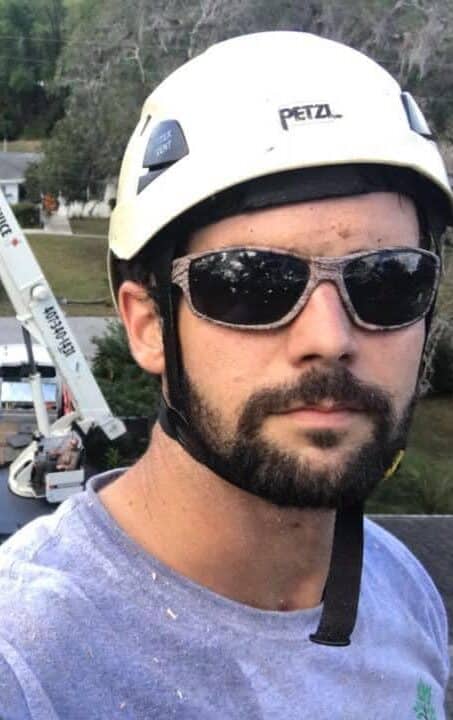
By: Shelby McCullough| Published: June 8, 2026
TL;DR:
- Storm cleanup services involve hazard removal, water mitigation, and debris clearance to restore safety after severe weather events. Starting within hours, these staged procedures protect properties, prevent secondary damage, and ensure insurance documentation accuracy. A coordinated approach by certified professionals maximizes recovery efficiency and safety in Central Florida.
Storm cleanup services are the professional response protocols deployed after hurricanes, tropical storms, and severe weather events to remove hazards, prevent secondary damage, and restore properties to safe, functional condition. In Central Florida, where hurricane season runs June through November, examples of storm cleanup services range from emergency tree and limb removal to roof tarping, water extraction, structural drying, and full debris hauling. Each service type addresses a specific damage category, and the most effective recoveries combine them in a staged sequence. Understanding what these services look like in practice helps homeowners and property managers hire the right crews, set realistic timelines, and protect their insurance claims from the start.
1. Examples of storm cleanup services: tree and limb debris removal
Tree and limb debris removal is the most common and most dangerous service category after a Central Florida storm. Fallen oaks, snapped palms, and hanging limbs create immediate hazards to structures, vehicles, and anyone on the property. Professional arborists assess each tree for structural integrity before cutting, working from the ground up and removing sections in controlled drops rather than felling whole trunks at once.
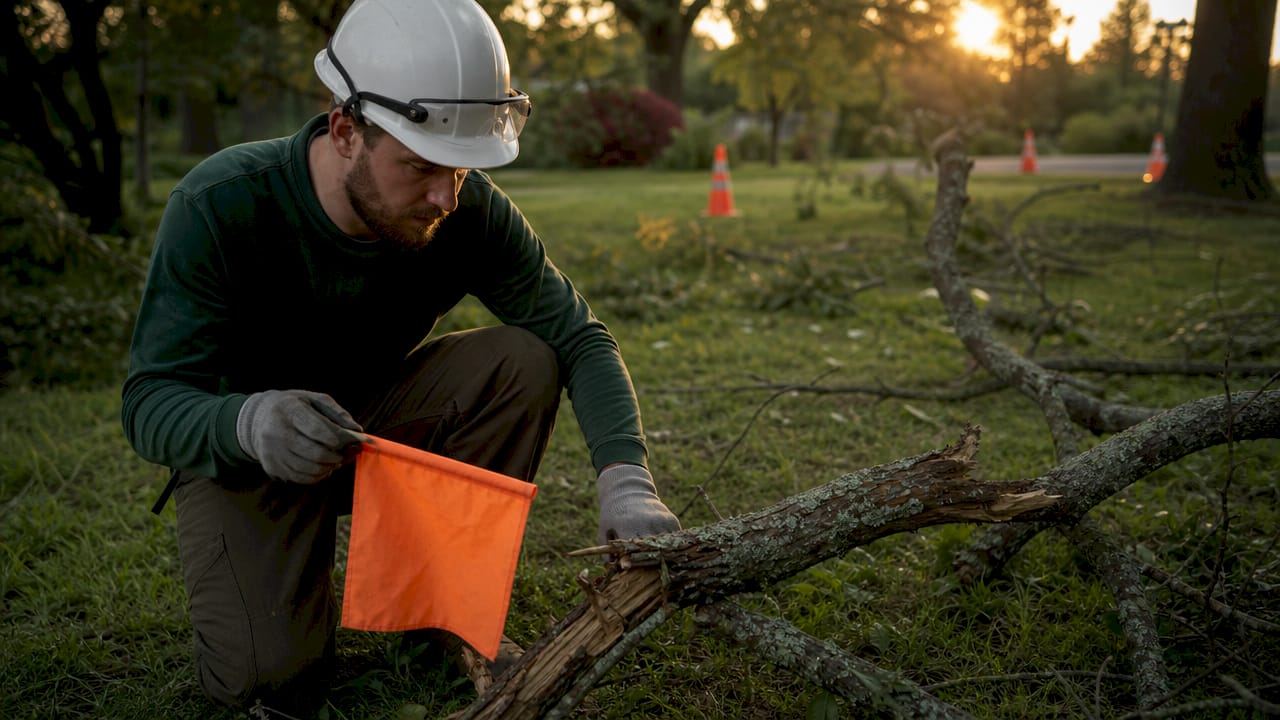
DIY hurricane cleanup carries serious injury risks, particularly with chainsaw use near downed power lines. UF/IFAS Extension recommends treating every downed line as energized and hiring line-clearance arborists for any work within striking distance of electrical infrastructure. This is not a precaution you can skip in a region where storms routinely knock out power across entire neighborhoods.
A certified arborist from a company like McCullough Tree Service will also assess whether a damaged tree can be saved or must come down entirely. That distinction matters for both safety and cost. Leaving a structurally compromised tree standing invites a second failure in the next storm.
- Assess all trees for hang points and widow makers before any ground work begins
- Remove limbs in sections, starting from the top of the canopy
- Chip or haul debris off-site to clear access routes
- Document every removed tree with photos before cutting for insurance purposes
Pro Tip: Before any crew starts cutting, walk the property and flag every downed power line with a visible marker. Share that map with the crew foreman before work begins.
For properties with multiple damaged trees, McCullough Tree Service offers emergency tree removal workflows specifically designed for post-storm conditions in Orlando and the surrounding area.
2. Emergency roof tarping and board-up services
Emergency roof tarping and board-up are the first line of defense against water intrusion after a storm opens a structure. When shingles are torn away, ridge caps are missing, or a tree has punched through a roof deck, every hour without protection adds water damage to the existing wind damage. Professional tarping crews use heavy-duty polyethylene tarps secured with wood battens and screws, not bungee cords or sandbags, to create a weatherproof seal over the damaged area.
WrightWay Emergency Services and right-nowrestoration both document standard tarping protocols that include full perimeter inspection before any tarp is placed. The goal is to identify every breach point, not just the obvious ones. A missed soffit gap or cracked skylight flashing can funnel as much water as a missing shingle field.
Board-up services follow the same logic for windows, doors, and garage openings. Plywood panels cut to fit and secured with structural screws keep wind-driven rain and debris out while the property awaits full repair. This also deters opportunistic entry in the days after a major storm when neighborhoods are partially evacuated.
Key elements of a professional tarping and board-up service include:
- Full roof and exterior inspection to identify all breach points
- Tarp sizing calculated to overlap undamaged roofing by at least 4 feet on all sides
- Batten-and-screw installation rather than adhesive or weight-only methods
- Photographic documentation of all covered areas for insurance adjusters
For detailed guidance on what a professional tarp installation should look like, Roofing & Exterior Pros provides a thorough breakdown of emergency roof tarping procedures that homeowners can use to verify contractor quality.
3. Water extraction and structural drying after flood and leak damage
Water extraction and structural drying are the core of flood damage restoration, and timing is the single most critical variable. Mold begins developing within 24 to 48 hours of water exposure, which means a crew that arrives on day three is already fighting a secondary problem on top of the original damage. Paul Davis Restoration and Remove Right both use this 24-to-48-hour threshold as the trigger for emergency dispatch protocols.
The visible water on your floors is only the beginning. Hidden moisture migrates into wall cavities, subfloor assemblies, and insulation, where it sits undetected until mold colonies or structural rot appear weeks later. Professional drying crews use thermal imaging cameras and calibrated moisture meters to map every affected zone before placing equipment.
A standard professional drying workflow runs as follows:
- Water removal: Truck-mounted or portable extractors pull standing water from floors and carpets within the first hours
- Equipment placement: Industrial air movers and dehumidifiers are positioned based on moisture maps, not guesswork
- Antimicrobial treatment: Affected surfaces receive EPA-registered antimicrobial spray to suppress mold growth during the drying period
- Monitoring: Moisture readings are logged every 24 hours and equipment is repositioned as drying progresses
- Clearance: Drying is complete only when all readings return to pre-loss baseline levels, typically 24 to 72 hours or longer for severe cases
Pro Tip: Before the extraction crew arrives, photograph every wet surface, waterline mark, and damaged material. Those photos are your baseline for the insurance claim and prevent disputes about what was wet versus what was pre-existing.
For homeowners who need to understand the water mitigation process before hiring a contractor, The Clean Genius offers a clear explanation of emergency water extraction procedures and what to expect from a professional crew.
4. Comprehensive debris removal and site cleanup
Comprehensive debris removal goes well beyond cutting up a fallen tree. After a significant storm, a Central Florida property can accumulate roofing wreckage, fence panels, shattered glass, flood-deposited sediment, and scattered personal property across every outdoor surface. Ilyas Tree Service describes an effective storm cleanup workflow that starts with isolating active hazards, then systematically clearing debris to restore safe access before any reconstruction begins.
The sequencing matters as much as the labor. A crew that hauls fence panels before clearing the driveway of tree sections has not restored access. JGW Group and similar full-service disaster cleanup companies prioritize by hazard category first, then by access route, then by cosmetic cleanup. That order keeps workers safe and gets the property functional faster.
The table below compares the two main debris removal approaches available to Central Florida property owners:
| Approach | Best for | Typical timeline | Key limitation |
|---|---|---|---|
| Professional full-service crew | Multi-category debris, large lots, commercial properties | Same day to 48 hours | Higher upfront cost |
| Municipal/FEMA assistance program | Curbside debris in maintained areas post-declared disaster | Days to weeks post-storm | Strict eligibility requirements apply |
Private property debris removal assistance through programs like USACE PPDR requires that debris pose an immediate threat to safety and be located in maintained areas, not forested back acreage. Many homeowners discover after a storm that their specific debris does not qualify, making a professional private crew the practical option for most residential situations.
Final site cleanup before reconstruction includes removing all organic material that could trap moisture, grading disturbed soil away from the foundation, and confirming that no buried debris is left to decompose under future landscaping or hardscape.
5. Hazardous tree assessment and selective removal
Not every storm-damaged tree needs to come down, and not every damaged tree is safe to leave standing. Hazardous tree assessment is a distinct service within storm recovery services that determines which trees pose ongoing structural risk and which can be preserved with corrective pruning or cabling.
Storm cleanup safety extends beyond the obvious fallen tree. A tree that lost 30 percent of its canopy in a storm may have root damage that makes it a fall risk in the next wind event. A certified arborist evaluates lean angle, root zone disturbance, included bark at major branch unions, and decay indicators before making a removal recommendation. This assessment protects homeowners from both unnecessary removal costs and from leaving a genuinely dangerous tree in place.
McCullough Tree Service’s hazardous tree removal team operates under ISA-certified arborist supervision, which means every removal decision is backed by documented professional judgment. That documentation also supports insurance claims when a tree removal is tied to storm damage rather than routine maintenance.
6. Stump grinding and root zone clearing
Stump grinding is the follow-through step that most homeowners underestimate until they are trying to replant or rebuild. After a storm tree removal, the remaining stump and surface root system create tripping hazards, obstruct reconstruction access, and can harbor wood-boring insects that spread to healthy trees nearby.
Professional stump grinding reduces the stump to wood chips 6 to 12 inches below grade, which is deep enough to allow sod, landscaping, or hardscape installation over the cleared area. Root zone clearing removes the major lateral roots that would otherwise heave pavement or interfere with foundation work. For properties where a large oak or pine came down near a structure, this step is not optional. It is part of restoring the site to a condition where contractors can safely work.
7. How storm cleanup service examples combine for full property recovery
The most effective residential storm cleanup follows a staged sequence rather than addressing damage categories in isolation. Stabilizing and mitigating damage first before full repair or rebuild is the professional standard, and it aligns directly with how insurance adjusters expect claims to be documented.
A practical staged approach for Central Florida properties looks like this:
- Stage 1 (Hours 1 to 6): Hazard survey, utility verification, and emergency tree removal from structures and access routes
- Stage 2 (Hours 6 to 24): Roof tarping and board-up to stop active water intrusion
- Stage 3 (Hours 12 to 48): Water extraction and structural drying equipment deployment
- Stage 4 (Days 2 to 5): Comprehensive debris removal and site clearing
- Stage 5 (Days 3 to 7): Moisture monitoring, mold prevention treatment, and damage documentation for insurance
Coordinating these stages with your insurance adjuster from the start prevents disputes about what was pre-existing versus storm-caused. Documenting damage promptly before cleanup begins is the single most valuable administrative step a property owner can take. Photograph every damaged surface, every removed tree, and every piece of equipment placed on the property before the crew leaves each day.
For properties with moderate damage, stages one through three are often sufficient to stabilize the situation before a general contractor takes over. For severe storm impacts, all five stages run in parallel with multiple specialized crews on site simultaneously.
Key takeaways
Effective storm cleanup in Central Florida requires a staged, multi-service approach that starts with hazard removal and structural protection, then moves through water mitigation and debris clearance before any reconstruction begins.
| Point | Details |
|---|---|
| Tree removal comes first | Fallen and hazardous trees must be cleared before any other service can safely proceed. |
| Tarp within hours, not days | Every hour without roof protection adds water damage on top of existing wind damage. |
| Mold clock starts immediately | Water extraction must begin within 24 to 48 hours to prevent mold development in walls and floors. |
| Document before you clean | Photograph all damage before any crew removes or covers anything to protect your insurance claim. |
| Staged sequencing saves money | Addressing hazards before debris and debris before reconstruction prevents rework and contractor delays. |
What I’ve learned from years of post-storm work in Central Florida
The homeowners who recover fastest after a storm are not the ones with the least damage. They are the ones who called a certified arborist and a water mitigation crew within the first six hours, took photos before anyone touched anything, and did not try to handle chainsaw work themselves because they wanted to save money.
The DIY instinct after a storm is understandable. The damage is visible, the tools are in the garage, and waiting for a crew feels passive. But storm-damaged trees behave differently than healthy ones. A trunk that looks stable can split under the weight of a chainsaw cut in a direction no one anticipated. Power lines that appear dead may still be energized. These are not theoretical risks. They are the scenarios that send people to the emergency room every hurricane season in Florida.
My practical recommendation: hire a certified arborist for every tree-related task, get water extraction equipment on site within 24 hours of any flooding, and treat every piece of documentation you create as evidence for your insurance claim. The crews at McCullough Tree Service follow ISA-certified protocols on every job, which means the work is defensible to an adjuster and safe for everyone on the property. That combination of speed, certification, and documentation is what separates a clean recovery from a months-long dispute.
— Mcculloughtreeservice
Storm cleanup services from McCullough Tree Service
When a storm hits Central Florida, McCullough Tree Service deploys ISA-certified arborists and experienced storm crews to handle the tree-related damage that blocks recovery from moving forward. From hazardous tree removal on structures to full storm debris clearance and stump grinding, every service is performed under certified supervision with full documentation for insurance purposes.
McCullough Tree Service serves Orlando and the broader Central Florida region with emergency response availability and transparent estimates. Whether you need one tree removed from a roof or a full property cleared after a major hurricane, the team brings the equipment, credentials, and local knowledge to get it done safely. Request your estimate at mcculloughtreeservice.com.
FAQ
What services are included in storm cleanup?
Storm cleanup packages typically include tree and limb debris removal, emergency roof tarping and board-up, water extraction, structural drying, and comprehensive debris hauling. The specific services needed depend on the type and severity of storm damage.
How soon should storm cleanup begin after a hurricane?
Cleanup should begin within hours of the storm passing, not days. Mold can develop within 24 to 48 hours of water exposure, and every hour without roof protection adds water intrusion to existing wind damage.
Can I do storm cleanup myself?
Basic debris clearing on the ground is manageable, but chainsaw work near downed trees and any task near power lines requires a professional. UF/IFAS Extension specifically recommends certified arborists for post-storm tree work due to serious injury risks.
Does homeowner’s insurance cover storm cleanup costs?
Most standard homeowner’s policies cover storm cleanup costs tied to covered perils like wind and flooding, but coverage varies. Documenting all damage with photos before cleanup begins is the most important step to support a successful claim.
How do I find a qualified storm cleanup company in Central Florida?
Look for companies with ISA-certified arborists for tree work, licensed contractors for structural services, and verifiable local references. McCullough Tree Service operates throughout Orlando and Central Florida with certified crews available for emergency response.
Recommended
- Storm Damage Tree Cleanup in Orlando & Central Florida
- Tree Storm Cleanup: Protect Your Central Florida Property
- Storm Damage Tree Cleanup Winter Park FL | McCullough Tree Service
- Storm Damage Tree Cleanup Maitland FL | McCullough Tree Service