By: Shelby McCullough| Published: March 30, 2026
After a severe storm tears through Central Florida, the urge to grab a chainsaw and clear fallen branches yourself is strong. But DIY tree storm cleanup often leads to higher costs, serious injuries, and improper debris disposal that can delay insurance claims. Professional tree storm cleanup is a structured, evidence-based process that maximizes safety, accelerates recovery, and protects your property value. Understanding the phased approach and knowing when to call certified arborists can save you thousands of dollars and prevent dangerous mistakes that compromise both your landscape and your family’s safety.
Table of Contents
- What is tree storm cleanup?
- The phased process of tree storm cleanup
- Common hazards and myths: What professionals look for
- Tree storm cleanup costs and insurance: What to expect
- Post-storm restoration and long-term tree health
- How to choose the right tree storm cleanup experts
- Get expert tree storm cleanup for your Central Florida property
- Frequently asked questions
Key Takeaways
| Point | Details |
|---|---|
| Phased approach is best | Restoring your trees after a storm works best in measured steps over months, not rushed decisions. |
| Avoid DIY risks | Professional help prevents injuries, property damage, and costly mistakes during cleanup. |
| Insurance needs documentation | Get certified arborist reports to maximize insurance claims and safety compliance. |
| Proper restoration matters | Waiting before major pruning and removing only what’s needed helps tree health long-term. |
| Choose certified experts | Hiring ISA-certified professionals ensures safe work and reliable outcomes for your property. |
What is tree storm cleanup?
Tree storm cleanup is the systematic process of safely removing or restoring trees and clearing debris after severe weather events. Unlike routine maintenance, storm cleanup addresses immediate hazards while preserving as much healthy tree structure as possible. In Central Florida, where hurricanes, tropical storms, and severe thunderstorms are common, this process requires specialized knowledge of local tree species and weather patterns.
The cleanup process involves several distinct phases: emergency hazard removal, professional arborist evaluation, debris sorting and disposal, restoration pruning, and long-term health monitoring. Phased approaches are recommended to ensure both immediate safety and long-term tree survival. Each phase serves a specific purpose and rushing through them often causes more harm than good.
Central Florida storms create unique challenges. High winds combined with saturated soil cause root heave, where entire root systems lift from the ground. Hanging branches, called “widow makers” by arborists, can fall without warning days or weeks after a storm. Lightning strikes weaken internal tree structure in ways invisible from the ground. These hazards require trained eyes and specialized equipment to address safely.
Common storm damage scenarios in Central Florida:
- Split trunks and major limbs from wind shear
- Uprooted or leaning trees threatening structures
- Broken branches tangled in power lines
- Crown damage exceeding 30% of total canopy
- Root exposure from soil erosion and flooding
Pro Tip: Take photos of all storm damage before any cleanup begins. These images are critical for insurance claims and help arborists assess the full extent of damage during their evaluation.
The goal is not just debris removal. Proper storm damage pruning preserves tree health, maintains property aesthetics, and prevents future hazards. Understanding this distinction separates professional cleanup from simple debris hauling.
The phased process of tree storm cleanup
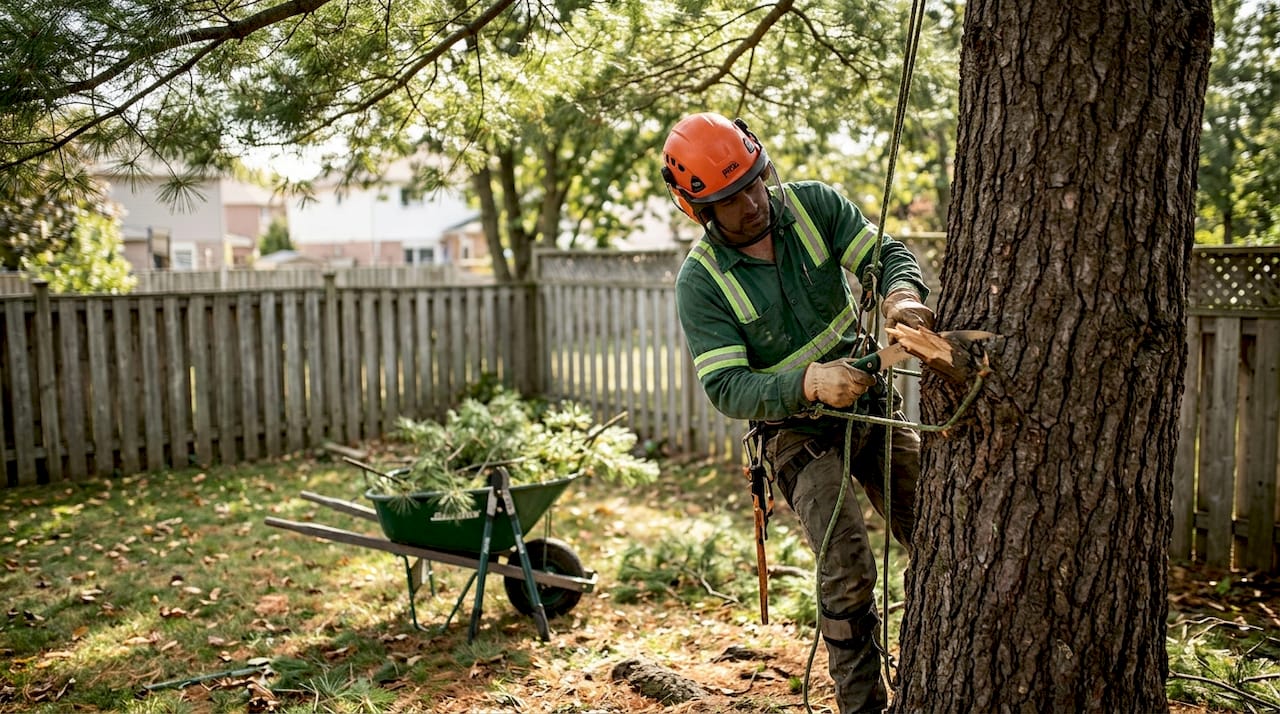
Effective tree storm cleanup follows a structured timeline that balances immediate safety needs with long-term tree health. Rushing this process or skipping phases leads to poor outcomes, including tree death, property damage, and wasted money.
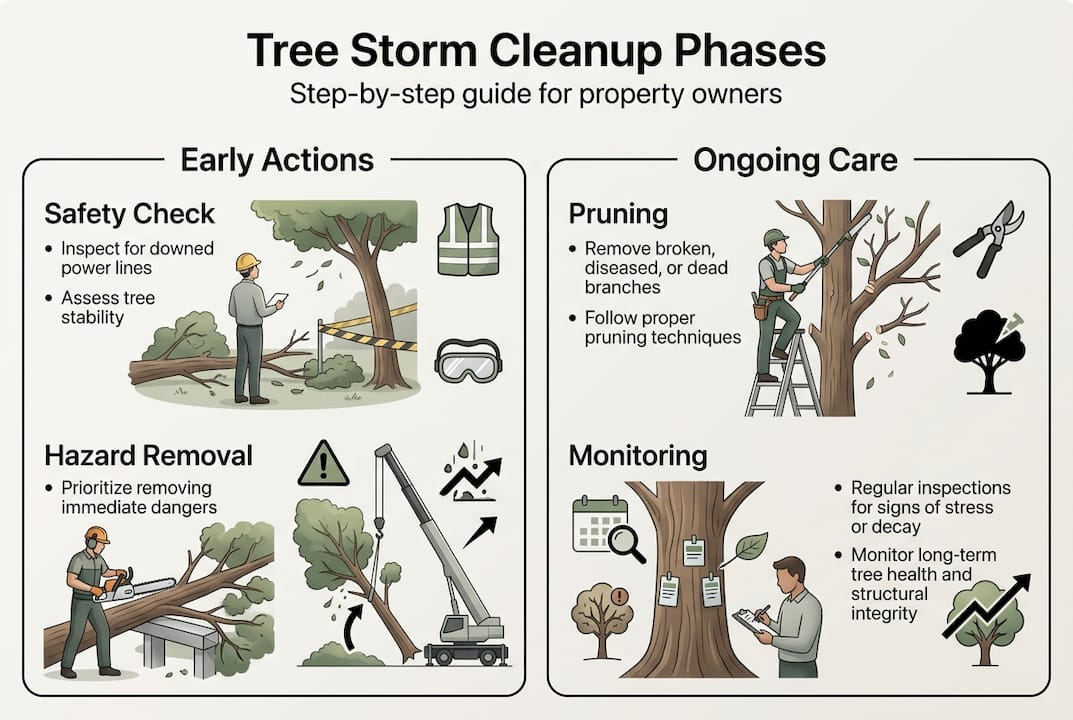
Phase 1: Immediate safety assessment (0-24 hours)
Before touching anything, identify immediate threats. Look for branches touching power lines, trees leaning toward buildings, and large limbs hanging overhead. These hazards require professional removal before any other work begins. Never attempt to move branches near utility lines yourself.
Phase 2: Emergency hazard removal (1-7 days)
Certified arborists remove dangerous elements that threaten people or property. This includes cutting away hanging branches, stabilizing split trunks, and removing trees at imminent risk of falling. Emergency work focuses solely on safety, not aesthetics or full restoration.
Phase 3: Professional evaluation (1-2 weeks)
An ISA-certified arborist inspects all damaged trees to determine which can be saved and which must be removed. This evaluation considers crown loss percentage, trunk damage, root stability, and species-specific recovery potential. Tree storm cleanup follows a phased approach, often over two to three years for full restoration.
Phase 4: Debris sorting and disposal (2-4 weeks)
Proper debris management matters for both environmental and financial reasons. Separate materials into categories: recyclable wood chips, burnable brush, and landfill waste. Many municipalities offer free storm debris pickup but require specific sorting methods.
Phase 5: Restoration pruning (2-6 months post-storm)
After waiting for trees to show their true condition, arborists perform corrective pruning to restore structure and promote healthy regrowth. This phase cannot be rushed. Dormant branches may appear dead immediately after a storm but leaf out months later.
Phase 6: Long-term monitoring (6 months to 3 years)
Mature trees require ongoing assessment and maintenance as they recover. Annual inspections catch developing problems early and guide additional pruning as needed.
| Cleanup Phase | Timeline | Primary Goal | Professional Required? |
|---|---|---|---|
| Safety Assessment | 0-24 hours | Identify immediate threats | Recommended |
| Hazard Removal | 1-7 days | Eliminate dangerous elements | Yes |
| Professional Evaluation | 1-2 weeks | Assess salvageability | Yes |
| Debris Management | 2-4 weeks | Proper sorting and disposal | Optional |
| Restoration Pruning | 2-6 months | Restore structure and health | Yes |
| Long-term Monitoring | 6 months-3 years | Ensure full recovery | Recommended |
Pro Tip: Schedule your professional evaluation during the 1-2 week window, not immediately after the storm. This timing allows trees to show stress patterns that help arborists make better decisions about which trees can recover.
Understanding these phases helps you set realistic expectations and budget appropriately. The emergency tree service steps your arborist follows are designed to maximize both safety and tree survival rates.
Common hazards and myths: What professionals look for
Storm-damaged trees hide dangers that untrained eyes miss. Professionals assess risk factors most homeowners overlook, preventing injuries and property damage.
Critical hazards arborists identify:
- Widow makers: Broken branches lodged in the canopy that can fall without warning
- Hidden cracks: Internal splits in trunks and major limbs invisible from ground level
- Root heave: Lifted root systems that destabilize entire trees
- Utility line contact: Branches touching or near power lines require utility company coordination
- Compromised structural integrity: Lightning damage, decay, or previous poor pruning that weakens storm resistance
Hidden hazards include widow-maker branches and root heave that may not cause immediate failure but create ongoing risk. These dangers persist for weeks or months after storms pass.
Florida law recognizes the urgency of storm cleanup. Florida Statute 163.045 exempts high-risk tree removal from standard permit requirements, allowing faster response to dangerous situations. However, coordination with utility companies remains mandatory for any work near power lines.
Dangerous myths that increase risk:
“Cutting away all damaged branches immediately helps the tree recover faster.”
This myth causes more tree deaths than any other post-storm mistake. Removing too much canopy at once shocks the tree and eliminates its ability to produce energy through photosynthesis. Proper restoration happens gradually over months or years.
“I can save money by doing the chainsaw work myself.”
Chainsaw injuries spike after every major storm. Without proper training, safety equipment, and experience, DIY tree work leads to falls, cuts, and crushing injuries. The money saved rarely justifies the risk.
“If the tree is still standing, it’s safe.”
Many trees appear stable but have compromised root systems or internal damage. These trees can fail suddenly, especially during the next storm or high wind event.
Pro Tip: If you see any of these warning signs, stay away from the tree and call a professional immediately: exposed roots, cracks in the trunk, a sudden lean that wasn’t there before the storm, or branches hanging more than 10 feet above ground.
Proper documentation from certified arborists protects you legally and financially. Insurance companies require professional assessments for claims, and detailed reports establish the necessity of removal or restoration work. Professional storm cleanup in Central Florida includes this documentation as standard practice.
Tree storm cleanup costs and insurance: What to expect
Understanding cleanup costs helps you budget appropriately and avoid price gouging from storm chasers who flood the area after severe weather.
Typical Central Florida storm cleanup costs:
| Tree Size | Standard Removal | Emergency Removal | Restoration Pruning |
|---|---|---|---|
| Small (under 30 ft) | $300-$500 | $500-$850 | $200-$400 |
| Medium (30-60 ft) | $850-$1,200 | $1,200-$1,600 | $400-$700 |
| Large (over 60 ft) | $2,000-$3,500 | $3,500-$5,500 | $800-$1,500 |
Emergency removals cost 40-100% more than standard jobs in Central Florida. This premium reflects increased risk, urgent scheduling, and often difficult working conditions immediately after storms.
Several factors influence final costs. Trees near structures or power lines require specialized rigging and careful piece-by-piece removal. Accessibility matters. Trees in backyards without equipment access cost more than those near streets. The extent of damage affects pricing. A tree with 40% crown loss requires more work than one with minor branch damage.
DIY cleanup appears cheaper initially but often costs more long-term. Equipment rental, disposal fees, and the risk of improper cuts that doom the tree add up quickly. More importantly, injuries from DIY tree work can result in medical bills far exceeding professional service costs.
Insurance coverage considerations:
Most homeowner policies cover tree removal only when trees damage insured structures. Fallen trees that miss your house typically aren’t covered. However, hazard removal to prevent imminent damage may qualify. Review your specific policy and document everything thoroughly.
Insurance companies increasingly require proof of professional service for claims. ISA-certified arborist reports carry more weight than DIY documentation. These reports detail the damage, explain why removal or restoration was necessary, and provide cost justification.
Pro Tip: Get multiple quotes after storms, but beware of prices significantly below market rates. Storm chasers often provide low initial quotes, then demand cash payments and disappear without completing work or providing proper documentation for insurance claims.
The benefits of professional damage tree removal extend beyond immediate cleanup. Proper work protects your property value, ensures safety, and provides the documentation needed for insurance recovery.
Post-storm restoration and long-term tree health
Successful tree recovery requires patience and evidence-based practices. Rushing restoration work or removing too much canopy at once significantly reduces survival rates.
Recovery prognosis by crown loss:
- Under 25% crown loss: Excellent recovery potential with minimal intervention
- 25-50% crown loss: Good recovery with proper phased pruning over 1-2 years
- 50-75% crown loss: Fair recovery possible but requires 2-3 years of careful management
- Over 75% crown loss: Poor prognosis; removal often recommended
Best practice is never to remove more than 25% of the canopy at once. Wait 2-6 months before major restoration pruning. This waiting period allows trees to show which branches are truly dead versus temporarily dormant.
Phased pruning produces healthier outcomes than aggressive immediate cutting. Trees need foliage to produce energy for healing and new growth. Removing too much canopy eliminates this energy source and can kill trees that would have otherwise recovered.
Best practices for restoration:
- Remove only clearly dead or dangerous branches during initial cleanup
- Wait for the next growing season to assess true damage extent
- Make proper pruning cuts just outside the branch collar
- Avoid topping or lion’s tailing, which creates weak regrowth
- Focus on structural integrity and balanced weight distribution
- Monitor for pest and disease issues that exploit storm damage
Ongoing maintenance significantly reduces future storm damage. Annual pruning removes weak branches before they become hazards. Proper tree care improves root systems and overall structural strength. Well-maintained trees withstand severe weather better than neglected ones.
Pro Tip: After restoration pruning, increase watering during dry periods for the first year. Storm-damaged trees have reduced canopy to collect moisture and need supplemental water to support recovery and new growth.
The transition from emergency cleanup to preventive care happens gradually. Tree trimming preparation for future storms should begin as soon as trees show stable recovery. This proactive approach protects your investment and reduces damage in the next severe weather event.
For visual guidance on proper restoration techniques, watch this video on saving trees after a storm to see professional methods in action.
How to choose the right tree storm cleanup experts
Selecting qualified professionals protects you from scams, ensures proper work, and maximizes insurance recovery. Storm chasers flood Central Florida after every major weather event, making careful vetting essential.
Essential qualifications to verify:
- ISA certification: Certified arborists have proven knowledge and follow industry standards
- Valid insurance: Verify both liability and workers’ compensation coverage
- Local business presence: Established companies have reputations to protect
- Proper licensing: Florida requires specific licenses for tree service businesses
- Written estimates: Legitimate companies provide detailed written quotes
ISA-certified arborists reduce scam risk, follow correct pruning practices, and help maximize insurance recovery. Certification demonstrates commitment to professional standards and ongoing education.
Warning signs of storm chaser scams:
- Demanding cash payment or large deposits upfront
- Offering prices significantly below other quotes
- Pressuring for immediate decisions without written estimates
- Lacking local business address or verifiable references
- Unable to provide proof of insurance
- Suggesting unnecessary tree removal to inflate costs
Ask specific questions about methods. Reputable arborists explain their approach and avoid harmful practices like topping or excessive canopy removal. They should discuss the three-cut method for branch removal, proper pruning angles, and realistic recovery timelines.
Request documentation practices upfront. Quality companies photograph damage, provide detailed written assessments, and create reports suitable for insurance claims. This documentation proves invaluable when filing claims or disputing coverage decisions.
Get ongoing maintenance recommendations, not just one-time clearing. Professional arborists view storm cleanup as the beginning of a recovery process, not a single transaction. They should discuss follow-up inspections, future pruning needs, and preventive measures for the next storm season.
Pro Tip: Check the Better Business Bureau and local reviews before hiring anyone. After major storms, scammers create fake online presences. Verify the company existed before the storm and has a track record of satisfied customers.
Preparing for future storms starts with choosing the right professionals now. Working with a certified arborist for hurricane prep creates an ongoing relationship that protects your property year-round.
Get expert tree storm cleanup for your Central Florida property
When storms damage your trees, the decisions you make in the following days and weeks determine whether your landscape recovers or deteriorates. McCullough Tree Service brings certified expertise, proper equipment, and years of Central Florida storm experience to every cleanup project.
Our ISA-certified arborists assess damage accurately, remove hazards safely, and create restoration plans that maximize tree survival. We provide the detailed documentation insurance companies require and follow evidence-based practices that protect both your property and your investment. From emergency removal to long-term maintenance, we guide you through every phase of storm recovery.
Explore our tree removal services to see the quality and care we bring to every project. Our tree trimming experts understand the delicate balance between safety and preservation. Learn more about proper techniques in our tree care guide to understand why professional methods matter.
Don’t let storm damage compromise your property’s safety or value. Contact McCullough Tree Service today for a professional assessment and discover how proper cleanup and restoration protect your Central Florida landscape for years to come.
Frequently asked questions
What qualifies as tree storm cleanup?
It involves phased removal of hazards, professional assessment, debris sorting, restoration pruning, and future maintenance after a storm. The process typically spans months to years for complete recovery.
When is it safe to prune or remove storm-damaged trees?
Wait 2-6 months post-storm to assess tree condition accurately before major pruning. This waiting period distinguishes deadwood from dormant limbs and prevents excessive canopy loss that can kill recoverable trees.
Can I clean up small branches myself, or do I need a pro?
DIY is fine for small debris on the ground, but professionals should handle chainsaw work, heights, and damaged or leaning trees. DIY risks property damage and injury outweigh savings for anything beyond ground-level debris.
Does Florida law require a permit for emergency tree removal?
Florida law provides permit exemptions for high-risk tree removal after storms under Florida Statute 163.045. However, utility company coordination remains mandatory for work near power lines.
How much does professional tree storm cleanup cost in Central Florida?
Small jobs cost $300-850, medium $850-1,600, and large $2,000-5,500. Emergency jobs cost 40-100% more than standard removals due to increased risk and urgent scheduling demands.
Recommended
- Emergency tree cleanup workflow for Central Florida
- Tree removal safety steps Central Florida homeowners need
- Storm Damage Tree Cleanup in Orlando & Central Florida
- Emergency Tree Removal: Protecting Central Florida Property