By: | Published: June 2, 2026
TL;DR:
- Storm damage tree assessment involves evaluating a tree’s structural integrity, hazards, and safety risks following severe weather events. It prioritizes hazard identification, inspection of trunk, limbs, roots, and canopy, and guides decisions for pruning, removal, or monitoring to ensure safety. Hiring certified arborists and acting promptly after storms are crucial to prevent accidents and preserve healthy trees.
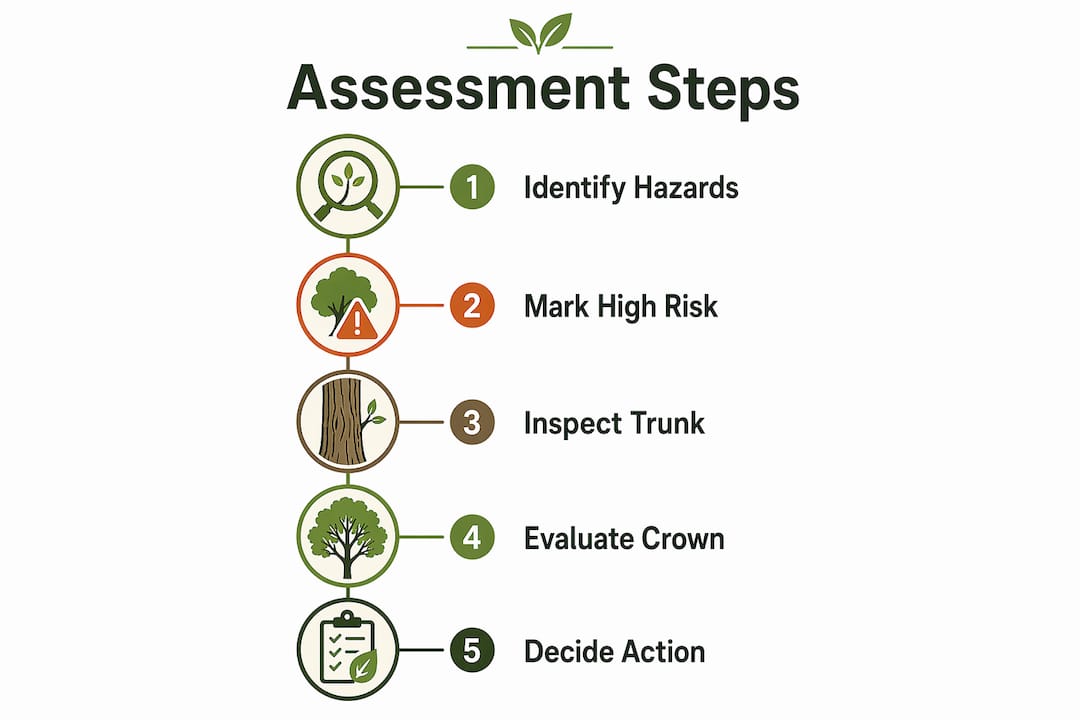
Storm damage tree assessment is the process of systematically evaluating a tree’s structural integrity, root condition, and safety risk after a severe weather event. In Central Florida, where hurricanes and tropical storms are seasonal realities, knowing how to assess storm-damaged trees is not optional. It is a safety responsibility. The industry term for this process is tree hazard evaluation, and it follows a sequence recognized by UF/IFAS and the International Society of Arboriculture (ISA): identify safety hazards first, inspect structural and health conditions second, then decide on pruning, removal, or monitoring. Skipping that order puts people and property at risk.
How to assess storm-damaged trees: start with hazard identification
The first step in any tree damage assessment is not grabbing a ladder. It is standing back and identifying which trees pose an immediate threat to people, structures, or animals. This concept is called target identification, and it is the foundation of the UF/IFAS safety-first framework for evaluating storm-damaged trees.
A hazard tree is defined by two factors: the likelihood of failure and the presence of a target. A large oak leaning toward your roof after a storm is a hazard. A broken branch hanging over a driveway is a hazard. A tree that fell into an empty field is a low-priority cleanup item. Ranking trees by this logic before touching anything is what separates a safe inspection from a dangerous one.
Look for these signs of unacceptable safety risk before getting close:
- Leaning trees with visible root lifting on one side of the base
- Large hanging or “widow maker” branches suspended in the canopy
- Trees in contact with or near power lines (report these to Duke Energy or your local utility immediately)
- Trunks with fresh, deep cracks running vertically or spiraling
- Trees resting against structures, fences, or other trees
Pro Tip: Never walk directly under a damaged tree during your initial inspection. Approach from the side and use binoculars to examine the upper canopy from a safe distance before moving closer.
Once you have identified high-risk trees, mark them clearly with flagging tape and keep people and pets away. Do not attempt to remove or prune these trees yourself. Unstable limbs and electrical hazards are the leading causes of post-storm injury during cleanup, and the danger is real even for experienced homeowners.
What does a thorough tree inspection actually involve?
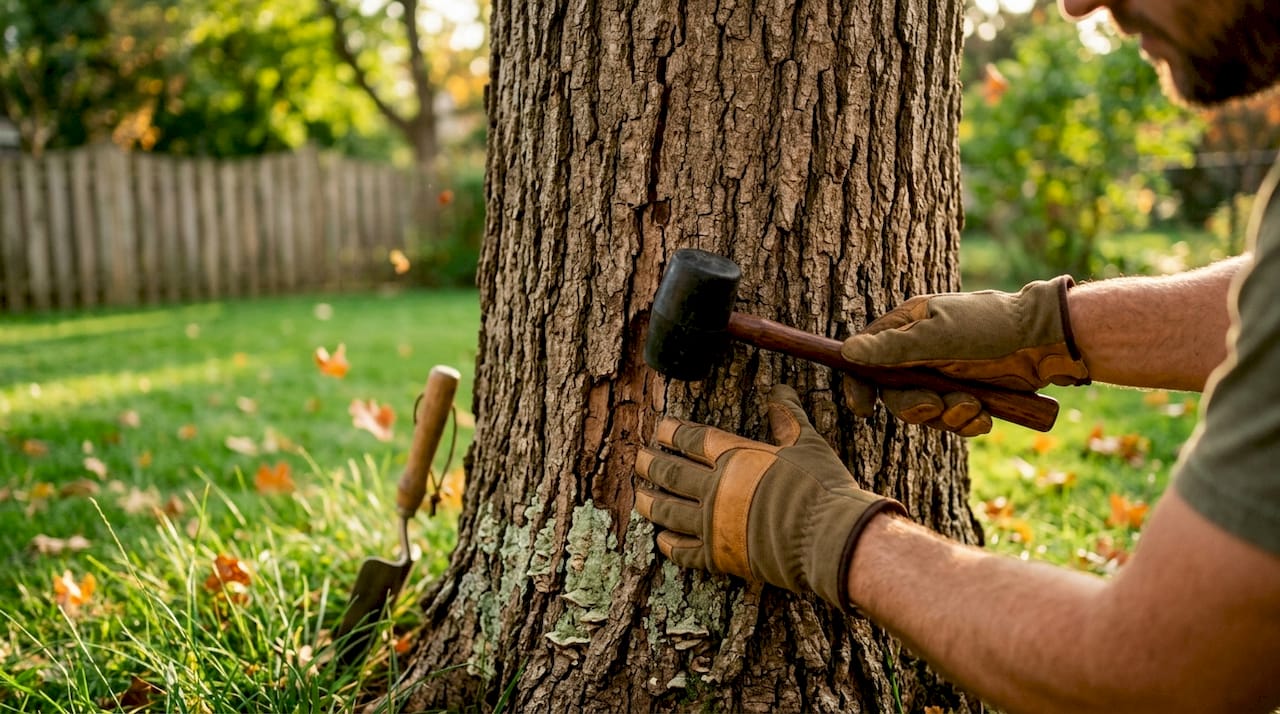
After neutralizing immediate hazards, the next phase is a structured inspection of each damaged tree. A proper tree damage assessment guide covers four zones: the trunk, the major limbs, the root zone, and the canopy. Each zone tells a different part of the story.
Trunk inspection starts at the base and works upward. You are looking for vertical cracks, hollow sections, and fungal growth. Mushrooms or conks growing at the base or on the trunk are a serious warning sign. They indicate internal decay that may not be visible from the outside. A tree can look healthy on the surface while its core is structurally compromised.
Limb and branch evaluation focuses on the size and location of breakage. A broken branch under three inches in diameter on a healthy tree is usually manageable with pruning. A broken co-dominant stem (two main trunks growing from the same point) on a large tree near a structure is a different situation entirely. Multiple interrelated factors, including tree size, age, species, and prior health, all influence whether a damaged limb represents a recoverable wound or a structural failure point.
Follow this numbered sequence when inspecting each tree:
- Photograph the full tree from multiple angles before touching anything.
- Examine the root zone for soil heaving, exposed roots, or a gap forming between the trunk base and the ground.
- Inspect the trunk from base to first major branch for cracks, cavities, and fungal signs.
- Evaluate major limbs for breakage, splitting, or hanging sections.
- Assess canopy loss as a rough percentage of the total crown.
- Note prior damage such as old pruning wounds, previous storm scars, or signs of disease.
Pro Tip: Use a rubber mallet to gently tap the trunk in several spots. A hollow sound compared to a solid thud can indicate internal decay that warrants a professional assessment.
Trees with less than 25 to 50 percent crown damage typically recover with proper pruning and care. Trees that have lost more than half their canopy, or that show root failure, trunk cracks, or significant decay, are strong removal candidates. The table below summarizes key inspection findings and what they typically mean.
| Inspection finding | Likely implication |
|---|---|
| Mushrooms or conks at base | Internal decay; structural risk elevated |
| Soil heaving or root exposure | Root failure possible; tree unstable |
| Canopy loss under 25% | Good recovery potential with pruning |
| Canopy loss over 50% | Removal likely warranted |
| Vertical trunk crack | Structural compromise; professional evaluation needed |
| Hanging broken limbs | Immediate hazard; do not walk beneath |
When should you call a certified arborist?
Some situations fall outside the scope of any homeowner inspection, no matter how careful. Complex or hazardous storm damage requires an ISA-certified arborist, and recognizing when to make that call is part of responsible property management.
Call a certified arborist when you observe any of the following:
- Any tree or limb in contact with or near a power line
- A tree leaning toward a structure, vehicle, or occupied area
- Trees with suspected root failure or significant trunk decay
- Any tree requiring a chainsaw and climbing to remove safely
- Situations where you are uncertain about the risk level
ISA certification means the arborist has passed a rigorous exam and follows ANSI standards, specifically ANSI Z133 for safety and ANSI A300 for pruning and tree care quality. These are not just credentials on a business card. They represent a professional trained to see what untrained eyes miss. Two trees with visually similar damage can have very different risk profiles due to root or internal structural conditions that only a trained evaluation reveals.
Always verify that any tree care company you hire carries general liability insurance and workers’ compensation coverage before work begins. Uninsured contractors leave you financially responsible for injuries or property damage that occur on your property.
Homeowners using chainsaws or attempting tree removal without proper training risk serious injury and can worsen structural damage to the remaining tree. The cost of a professional assessment is far lower than the cost of a preventable accident. You can review a tree risk assessment checklist to understand what a professional evaluation covers before scheduling a visit.
Post-assessment actions: pruning, removal, and monitoring
Once you have completed your inspection, the decision tree is straightforward. Trees fall into three categories: prune and monitor, remove immediately, or watch and wait.
Pruning candidates are trees with less than half their canopy damaged, a sound trunk, intact root systems, and no signs of internal decay. Proper pruning removes broken stubs cleanly at the branch collar, which is the swollen area where a branch meets the trunk. Cutting flush to the trunk or leaving long stubs both delay healing and invite disease. For Central Florida species like live oak, laurel oak, and sabal palm, timing and technique matter significantly.
Removal candidates are trees with root failure, major trunk cracks, more than 50 percent canopy loss, or proximity to structures that makes residual risk unacceptable. Determining acceptable risk often requires a certified arborist consultation, particularly when the tree is large or the target (your home, a neighbor’s fence, a public sidewalk) is high-value.
Pro Tip: Do not top a storm-damaged tree as a shortcut. Topping removes large portions of the crown indiscriminately and creates multiple decay entry points. It weakens the tree structurally and often leads to removal within a few years anyway.
The table below compares pruning versus removal based on common assessment outcomes.
| Assessment outcome | Recommended action |
|---|---|
| Under 25% canopy loss, sound trunk | Prune broken limbs, monitor for 1 season |
| 25 to 50% canopy loss, no root damage | Prune conservatively, reassess in 6 months |
| Over 50% canopy loss | Removal strongly recommended |
| Root heaving or soil gap at base | Immediate removal; structural failure risk |
| Trunk decay with fungal signs | Professional evaluation before any action |
Short-term monitoring after pruning means checking the tree every four to six weeks for new signs of stress: wilting, unusual leaf drop, or new fungal growth. Long-term, a tree that survived a major storm deserves a professional checkup before the next storm season. Proactive tree trimming preparation before storms arrive reduces the severity of damage you will need to assess afterward.
Key takeaways
Assessing storm-damaged trees safely requires a fixed sequence: identify safety hazards first, inspect structural and health conditions second, and act based on damage severity and residual risk.
| Point | Details |
|---|---|
| Hazard identification comes first | Rank trees by proximity to targets before any physical inspection begins. |
| Inspect all four zones | Evaluate trunk, limbs, root zone, and canopy to build a complete damage picture. |
| Crown damage guides the decision | Trees with under 25 to 50% crown loss typically recover; higher loss often warrants removal. |
| ISA certification matters | Hire arborists certified by ISA and compliant with ANSI Z133 and A300 standards. |
| Monitoring is part of recovery | Check pruned trees every four to six weeks and schedule a pre-season professional review. |
What most homeowners get wrong about storm tree assessment
After years of working with Central Florida property owners following hurricanes and tropical storms, the most common mistake is not skipping the inspection. It is doing the inspection in the wrong order. Homeowners walk straight to the most visually dramatic damage, the snapped limb or the toppled tree, without first scanning the whole yard for hidden hazards. That hanging branch thirty feet up, partially attached and swaying, is the one that sends people to the emergency room.
The second mistake is trusting appearances too much. A tree that looks mostly intact after a storm can have root damage that makes it a slow-motion hazard. I have seen mature oaks that showed no visible crown damage fail completely six months after a storm because the root plate was compromised and nobody caught it. That is exactly why visual inspection alone is not enough for large trees near structures.
The third mistake is waiting. Central Florida’s heat and humidity accelerate decay in wound tissue. A tree that might have been saved with prompt pruning in the first two weeks can become a removal candidate by month two if left unattended. The right way to save trees after a storm involves acting quickly and correctly, not just eventually.
Invest in a pre-storm season arborist consultation. It costs far less than emergency removal, and it gives you a baseline record of your trees’ health that makes post-storm assessment faster and more accurate.
— Mcculloughtreeservice
Get expert storm damage assessment in Central Florida
After a storm, the last thing you need is uncertainty about whether your trees are safe. Mcculloughtreeservice provides certified arborist evaluations, emergency storm cleanup, and professional tree removal and tree trimming services across Orlando and Central Florida. Every assessment follows ISA standards and ANSI guidelines, so you get an accurate picture of your trees’ condition and a clear plan of action. Whether you need a single tree evaluated or a full property assessment after a major storm, the team at Mcculloughtreeservice is licensed, insured, and ready to respond. Contact us for a free estimate and protect your property before the next storm season arrives.
FAQ
What are the first signs of storm damage to look for in a tree?
The most urgent signs include leaning with visible root lifting, large hanging branches, vertical trunk cracks, and mushrooms or fungal growth at the base. These signs of structural failure indicate a tree that may require immediate professional attention.
Can a storm-damaged tree recover without removal?
Yes. Trees with less than 25 to 50 percent crown damage and a sound trunk and root system typically recover with timely pruning and monitoring. Trees showing root failure, major decay, or more than half their canopy lost are generally better candidates for removal.
When is it unsafe to inspect a tree yourself after a storm?
Never inspect a tree that is leaning toward a structure, touching a power line, or has large hanging limbs directly above you. Electrical hazards and unstable limbs are the primary causes of post-storm injury, and these situations require a certified arborist or utility company response.
What qualifications should a storm damage arborist have?
Look for ISA certification, proof of general liability insurance, and workers’ compensation coverage. Qualified professionals follow ANSI Z133 and A300 standards for safety and tree care quality, which protects both the worker and your property.
How long does it take to know if a storm-damaged tree will survive?
Most trees show clear recovery or decline signals within one full growing season. Check pruned trees every four to six weeks for new stress signs, and schedule a professional follow-up before the next Central Florida storm season to reassess structural integrity.
Recommended
- Tree Health Assessment Guide for Central Florida Owners
- Expert storm prep tips for Central Florida trees
- Emergency tree response guide for Central Florida
- Tree risk assessment tips for Central Florida owners