By: Shelby McCullough| Published: April 9, 2026
TL;DR:
- Conduct a thorough visual hazard assessment immediately after a storm before attempting cleanup.
- Vet and hire ISA-certified, insured local arborists for safe, professional emergency tree services.
- Proactive pre-storm inspections and pruning reduce emergency damage and associated costs.
A major Florida storm can drop a 60-foot oak on your roof in seconds, turning a normal Tuesday into a crisis. When that happens, most homeowners and property managers freeze, unsure whether to call 911, their insurance company, or a tree crew first. Recent storms caused billions in residential property losses and landscape damage across Florida, and the decisions you make in the first hour matter enormously. This guide walks you through every step of emergency tree response, from spotting hazards to filing your insurance claim, so you can act fast, stay safe, and protect your property without making costly mistakes.
Table of Contents
- Assessing tree damage and safety hazards
- Preparing for emergency tree work: Tools, documentation, and selecting help
- Step-by-step emergency tree response actions
- Post-emergency verification, cleanup, and insurance best practices
- A better way to approach emergency tree response in Central Florida
- How McCullough Tree Service can support your emergency tree response
- Frequently asked questions
Key Takeaways
| Point | Details |
|---|---|
| Assess safety first | Always ensure no one is at risk from damaged trees or downed lines before acting. |
| Hire qualified help | Choose ISA-certified, insured local professionals to guarantee safe and effective response. |
| Document for insurance | Thoroughly photograph and record all damage to maximize your chance of insurance coverage. |
| Prioritize proactive care | Annual tree risk assessments and trimming dramatically reduce emergency events and long-term costs. |
Assessing tree damage and safety hazards
The moment the storm passes, your first job is not cleanup. It is observation. Walk the perimeter of your property from a safe distance and look for specific warning signs before you get anywhere near a damaged tree.
Here are the key visual cues that signal an immediate hazard:
- Leaning trees or root upheaval: A tree that was upright before the storm and is now leaning at any angle is unstable. Visible roots pulling out of the ground confirm the root system has failed.
- Hanging or dangling limbs: These are sometimes called “widow makers” in the industry. They look stable but can fall without warning.
- Bark stripping or trunk cracks: Deep cracks or stripped bark along the trunk signal structural failure inside the wood.
- Contact with utility lines: Any tree or limb touching a power line is a life-threatening hazard. Period.
- Trees on structures: A tree resting on your roof, fence, or vehicle needs professional attention before you enter that structure.
Never attempt to clear trees entangled in power lines. Call 911 and your utility company immediately.
Properly assessing tree hazards can prevent additional injury or damage, which is why a quick but careful visual sweep beats rushing in with a chainsaw. The emergency tree response overview from McCullough Tree Service outlines what a professional hazard check looks like if you want a reference point.
| Damage type | Risk level | Recommended action |
|---|---|---|
| Small fallen branches, no structure contact | Low | Homeowner can remove with gloves and hand tools |
| Large limbs on lawn, no utility contact | Moderate | Call a certified crew for safe cutting |
| Tree leaning toward structure | High | Evacuate area, call professionals immediately |
| Tree on roof or vehicle | Critical | Do not enter structure, call emergency crew |
| Any contact with power lines | Extreme | Call 911 and utility company first |
For anything beyond small debris, contact ISA-certified arborists who carry the training to evaluate structural integrity and hidden damage you cannot see from the ground.
Pro Tip: Before you touch anything, photograph every angle of the damage. Wide shots for context, close-ups for detail. These photos are your insurance claim’s best friend.
Preparing for emergency tree work: Tools, documentation, and selecting help
With your safety check done and immediate hazards identified, it is time to gather what you need before any work begins. Preparation here prevents expensive surprises later.
Documentation to collect right now:
- Timestamped photos and video of all damage
- Your homeowner or commercial property insurance policy number and claims contact
- Any receipts for recent tree work or landscaping (proof of pre-storm condition)
- A written incident log: date, time, storm name if applicable, and what you observed
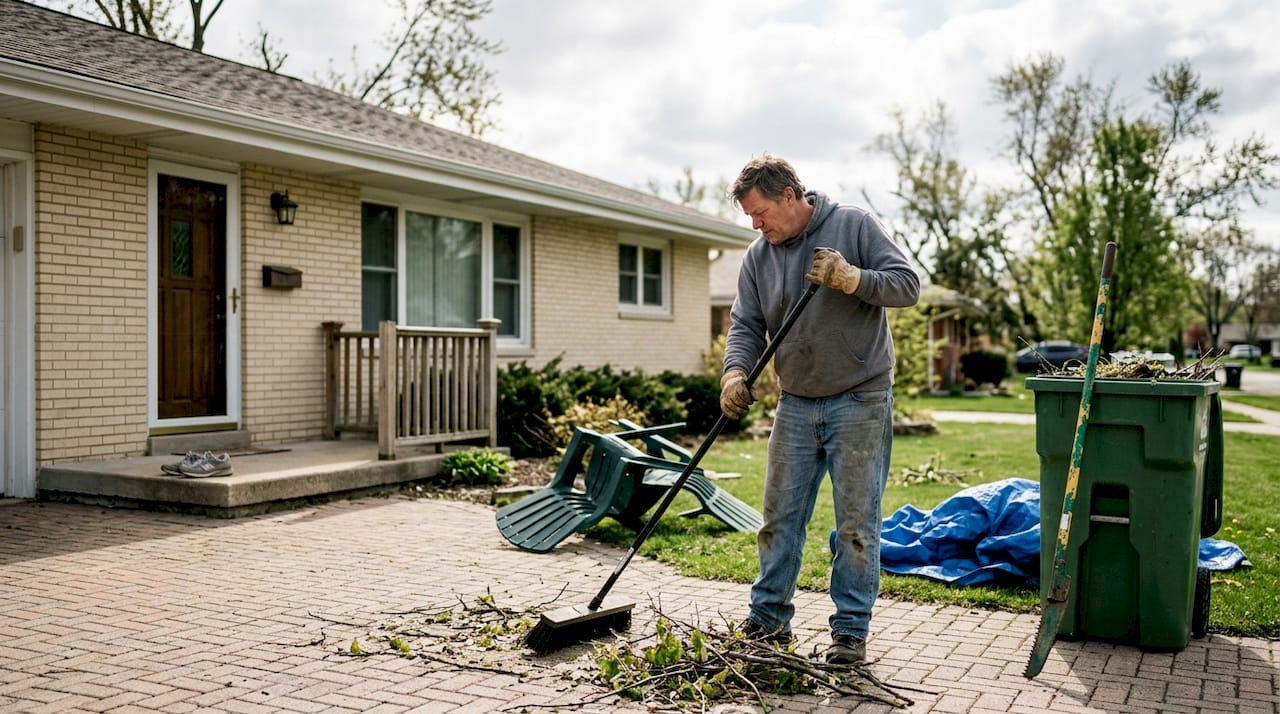
For basic debris removal, most property owners can safely handle small branches under four inches in diameter using gloves, safety glasses, and a hand saw. Anything larger, especially leaning trunks or limbs overhead, requires professional equipment and training. Do not use a chainsaw if you are not certified and experienced. The risk of kickback injury in post-storm conditions is very high.
When selecting an emergency tree service, prioritize ISA-certified, licensed and insured locals over storm chasers who flood the area after major weather events. Here is a quick comparison:
| Factor | ISA-certified local | Storm chaser |
|---|---|---|
| Credentials | ISA certification, state license | Often none or unverifiable |
| Insurance | General liability and workers’ comp | Frequently absent |
| Local knowledge | Familiar with FL species and codes | Generic approach |
| Response time | Established local dispatch | May disappear after payment |
| Insurance help | Can provide documentation | Rarely assists |
Steps to vet any emergency tree service before you hire:
- Ask for their ISA certification number and verify it at the ISA website.
- Request a current certificate of insurance naming you as additionally insured.
- Ask for two or three local references from recent storm work.
- Get the full scope of work and pricing in writing before work starts.
- Confirm they will provide a written safety clearance after the job is complete.
Review the emergency tree service steps for a full breakdown of what a qualified crew should do on arrival. For credential verification, the certified arborist services page shows exactly what to look for.
Pro Tip: Never pay more than a small deposit upfront. Reputable emergency crews do not require full payment before work begins.
Step-by-step emergency tree response actions
Once you have vetted your crew and documented your damage, the actual response follows a clear sequence. Knowing this sequence helps you stay in control and avoid confusion during a stressful situation.
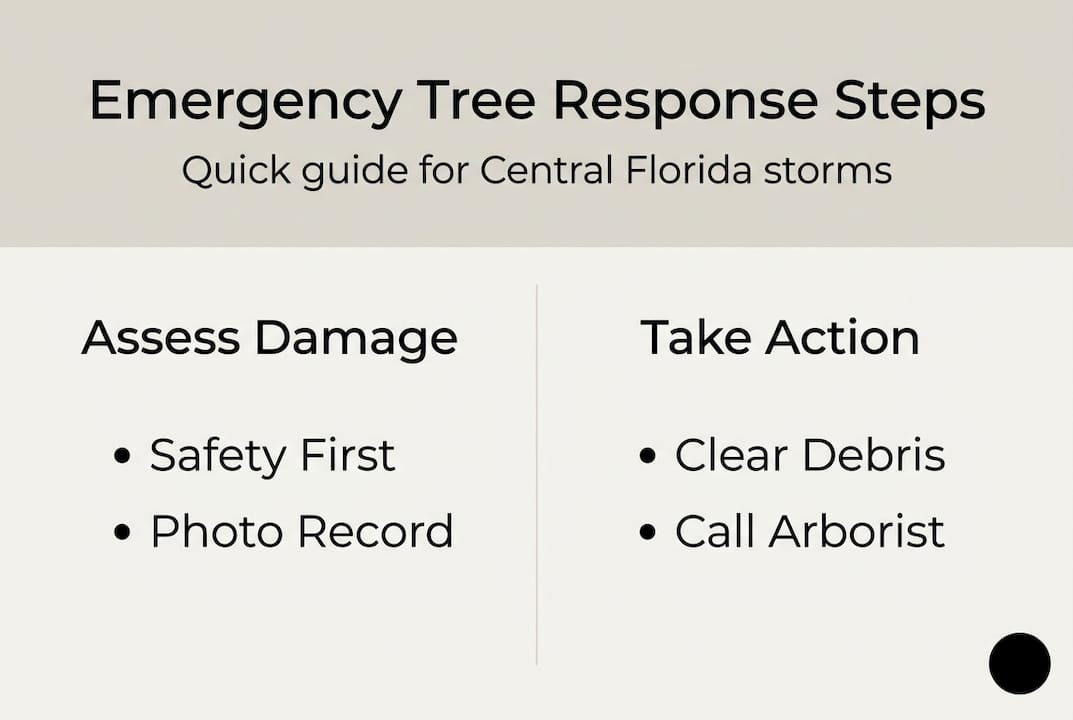
Your action steps as the property owner:
- Isolate the hazard area: Use caution tape, cones, or rope to keep people away from fallen or leaning trees. This includes family members, neighbors, and anyone curious about the damage.
- Call your emergency tree service: Give them your address, a brief description of the damage, and whether any utility lines are involved.
- Block vehicle and foot access: If a tree is on a driveway or entrance, redirect traffic. If it is on a roof, do not allow anyone inside.
- Document before the crew arrives: Add more photos if conditions allow. Note the time you called and the time the crew arrives.
- Accompany the initial inspection: Walk the site with the lead arborist. Ask questions. Make sure they note every hazard, not just the obvious one.
- Review and approve the work scope in writing: Before any cutting starts, confirm what will be removed, what will be stabilized, and what cleanup is included.
Professional crews use specialized gear to prevent further property damage and ensure safety.
What to expect during the removal process:
- Heavy equipment such as bucket trucks, cranes, or tracked skid steers may be needed for large trees
- Significant noise from chainsaws and chippers is normal and expected
- Crews will use rigging ropes to control the direction of falling limbs
- Ground protection mats may be placed to protect your lawn or driveway
- The site will be cleared of major debris, though some root grinding or stump work may be scheduled separately
Structural pruning reduces extension loss in storms and improves tree survival rates, which is why tree trimming for storm preparedness before hurricane season is so valuable. If you want to understand what pre-season work looks like, the hurricane tree prep tips page covers the full approach.
Post-emergency verification, cleanup, and insurance best practices
The tree is down and the crew has packed up. Most people think the job is done. It is not. What you do in the next 48 hours determines whether your property is truly safe and whether your insurance claim succeeds.
Verification checklist before you resume normal access:
- Walk the entire site with the crew lead before they leave
- Confirm no limbs remain lodged in the canopy above
- Check that all utility lines are visually clear and contact your utility company for formal clearance if any contact occurred
- Look for remaining root upheaval that could shift and create a trip hazard
- Get written safety clearance from the arborist before allowing regular foot traffic
Cleanup tasks after the emergency response:
- Rake and bag smaller debris such as leaves, twigs, and bark fragments
- Arrange stump grinding if the stump was left in place (most emergency crews focus on the hazard, not the stump)
- Check for soil erosion or root damage near structures that may need grading
- Schedule a follow-up inspection for any trees that were stressed but not removed
Insurance policies often cover removal from structures, but the documentation you submit makes or breaks the claim. Use this table to track what you need:
| Document | Purpose | Where to get it |
|---|---|---|
| Timestamped photos | Prove pre-removal damage | Your phone, taken immediately |
| Written estimate | Establish cost of removal | From your tree service |
| Paid invoice | Confirm work completed | From your tree service |
| Written safety clearance | Confirm site is hazard-free | From certified arborist |
| Communication log | Show timeline of events | Your own notes |
| Insurance adjuster report | Official damage assessment | Your insurance company |
For a full guide on what comes next, the storm cleanup best practices page covers site restoration in detail.
Pro Tip: Request written proof of safety clearance before allowing regular access to any area where a tree came down. Verbal confirmation is not enough for insurance or liability purposes.
A better way to approach emergency tree response in Central Florida
Here is something most guides will not tell you: the biggest mistake property owners make is not during the emergency. It is the three years before it, when nothing bad has happened yet.
We see it constantly. A storm hits, a tree falls, and the owner says, “I knew that one looked off.” The rush to remove after a storm is expensive, stressful, and often avoidable. Pre-season TRAQ assessments reduce emergencies significantly, yet most Central Florida property owners skip them entirely.
TRAQ stands for Tree Risk Assessment Qualification, a formal credential that allows arborists to evaluate the actual probability of tree failure. A one-hour TRAQ inspection in March costs a fraction of what emergency removal costs in September. It also tells you which trees to prune, which to monitor, and which to remove before they become a crisis.
As UF and ISA research consistently shows, structural pruning reduces hurricane losses for years to come. That is not just a talking point. It is the difference between a tree that bends in a storm and one that snaps. Review the annual pruning guidance to understand what a proper pre-season pruning program looks like.
Pro Tip: Put annual tree health checks on your spring calendar, ideally in March or April before the Atlantic hurricane season begins in June.
How McCullough Tree Service can support your emergency tree response
When a storm hits Central Florida, you need a crew that knows the region, carries the right credentials, and can respond fast without cutting corners.
McCullough Tree Service provides emergency tree removal for residential and commercial properties across Orlando and Central Florida, backed by ISA-certified arborists who assess hazards correctly the first time. Whether you need a downed tree off your roof, a leaning oak stabilized, or a full post-storm site evaluation, our team handles it with the right equipment and proper documentation for your insurance claim. Explore our certified arborist support services or get ahead of the next storm with proactive tree trimming preparation. Contact us today for a fast assessment.
Frequently asked questions
What does emergency tree response include?
Emergency tree response includes rapid hazard assessment, removal or stabilization of the damaged tree, and thorough documentation to support your insurance claim. It covers everything from isolating the danger zone to final safety clearance.
How quickly should I act if a tree falls on my property during a storm?
Immediate action prevents additional injury or loss after a tree failure, so secure the area and call an ISA-certified emergency tree service as soon as the storm passes and conditions are safe. Do not wait to see if the situation resolves on its own.
Are all tree removal costs covered by insurance after a hurricane?
Insurance covers tree removal when a tree damages a structure, but coverage for trees that fall in open yards varies widely by policy. Document everything and review your specific policy terms with your adjuster.
Why choose a local, ISA-certified arborist over a storm chaser?
ISA-certified and insured locals follow established safety standards, carry verifiable credentials, and can provide the documentation your insurance company requires. Storm chasers often lack both the credentials and the accountability.
What’s the best way to prevent future emergency tree situations?
Pre-season TRAQ assessments and structural pruning before hurricane season are the most effective prevention strategies. A certified arborist can identify at-risk trees before they become a storm-season emergency.
Recommended
- Emergency tree cleanup workflow for Central Florida
- Emergency Tree Removal: Protecting Central Florida Property
- Tree Planting Guide Central Florida for Homeowners