By: Shelby McCullough| Published: July 3, 2026
TL;DR:
- Effective storm cleanup involves safety planning, debris sorting, and prompt indoor drying to prevent mold growth. Homeowners should avoid risky tree work, follow debris separation rules, and act quickly within 48 hours of water intrusion. Professional assessment and assistance ensure safety and proper damage management.
Effective storm cleanup planning is the process of organizing tasks, resources, and safety measures to restore your property safely and efficiently after storm damage. Central Florida homeowners face this challenge regularly, given the region’s active hurricane and severe weather season. A structured post-storm recovery plan covers three non-negotiable pillars: personal safety, systematic debris management, and mold prevention. Knowing how to plan storm cleanup before a storm hits means you spend less time reacting and more time recovering. This guide walks you through each step, from suiting up with the right gear to sorting debris for municipal pickup.
How to plan storm cleanup safely: PPE and site hazards
Personal safety is the first and most critical phase of any emergency storm cleanup workflow. Before you touch a single branch, you need the right protective equipment and a clear understanding of what hazards are waiting for you.
What PPE do you actually need?
Chainsaw operators and anyone working near downed trees must wear a hard hat, safety goggles, hearing protection, heavy gloves, leg chaps, and steel-toed boots. This is not optional gear. Chainsaws are the most dangerous hand tools used during storm cleanup, and most injuries happen when operators are fatigued or rushing. Wearing full PPE cuts that injury risk significantly.
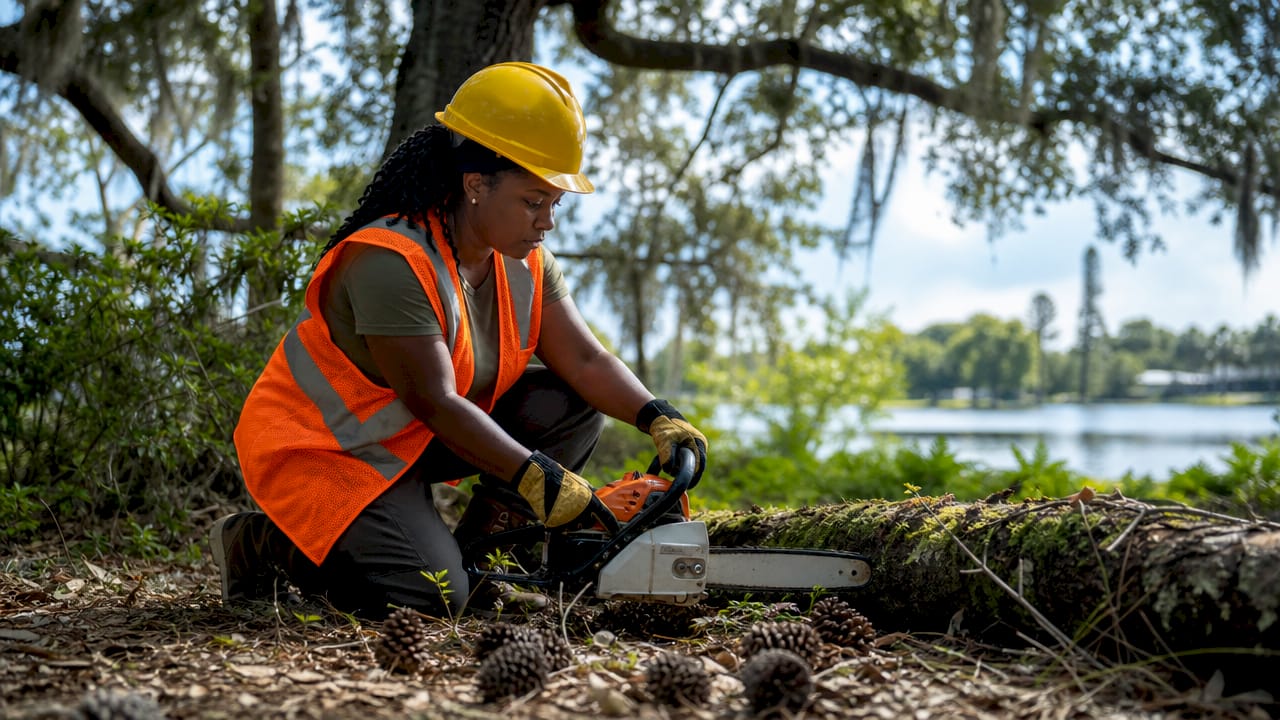
Working alone is one of the most common and dangerous mistakes homeowners make. Always have a partner present when operating a chainsaw or working near damaged trees. Your partner can call for help if something goes wrong and can spot hazards you might miss from your angle.
Hazards that catch homeowners off guard
Downed power lines are an obvious danger, but widow-maker branches are far more deceptive. These are large broken limbs still lodged in the tree canopy that can drop without warning, even days after the storm passes. Scan every tree above you before you start working beneath it.
“Safety is not a suggestion but a necessity in storm cleanup, especially with dynamic hazards that change rapidly after storm events.” Conditions on your property can shift within hours as saturated soil loosens root systems and weakens trees that looked stable at first glance.
The standard safe perimeter around any tree work is twice the height of the tree. If you are working near a 40-foot oak, keep bystanders at least 80 feet away. Mark that zone clearly before you start.
Pro Tip: Never attempt to fell a leaning tree or remove a tree that has fallen onto a structure yourself. These jobs require professional rigging equipment and certified training. Attempting them without both is how serious injuries happen.
How do you assess and prioritize damage after a storm?
Systematic damage assessment is the foundation of an organized storm recovery plan. Walking your property without a clear checklist leads to missed hazards and wasted effort.
Start your survey from the street and work inward. Look for blocked access routes first. A driveway or path blocked by a fallen tree creates a safety and emergency-access problem that takes priority over cosmetic debris. Once access routes are clear, move to structures: check your roof, fence lines, and any outbuildings for visible damage before addressing the yard.
Applying the 50% Rule to tree damage
The 50% Rule is the industry standard for deciding whether a storm-damaged tree is worth saving. If a tree has lost more than 50% of its canopy, or shows significant trunk splitting or root heave, it is unlikely to recover. A certified arborist assessment is the right call before you invest in saving or removing it.
Here is a practical order for prioritizing your storm cleanup checklist:
- Clear blocked driveways and emergency access paths.
- Identify and flag all widow-makers and hanging limbs above work areas.
- Document all structural damage with photos and video for your insurance claim.
- Apply the 50% Rule to every damaged tree and flag those that need professional evaluation.
- Separate debris into categories before moving it to the curb (more on this below).
- Address interior water intrusion within 24 hours of the storm passing.
Pro Tip: Take timestamped photos of every damaged tree, fence section, and roof area before you move anything. Insurance adjusters rely on this documentation, and missing photos can delay or reduce your claim payout.
Assessing storm-damaged trees in Central Florida requires evaluating root stability, bark damage, and canopy loss together, not just what you can see from the ground. When in doubt, call a certified arborist before making any removal decisions.
How should you sort and manage storm debris?
Debris sorting is the step most homeowners skip, and it is the one that causes the most delays in municipal collection. Local governments enforce strict separation rules, and non-compliance often causes multiple collection delays or private removal fees.
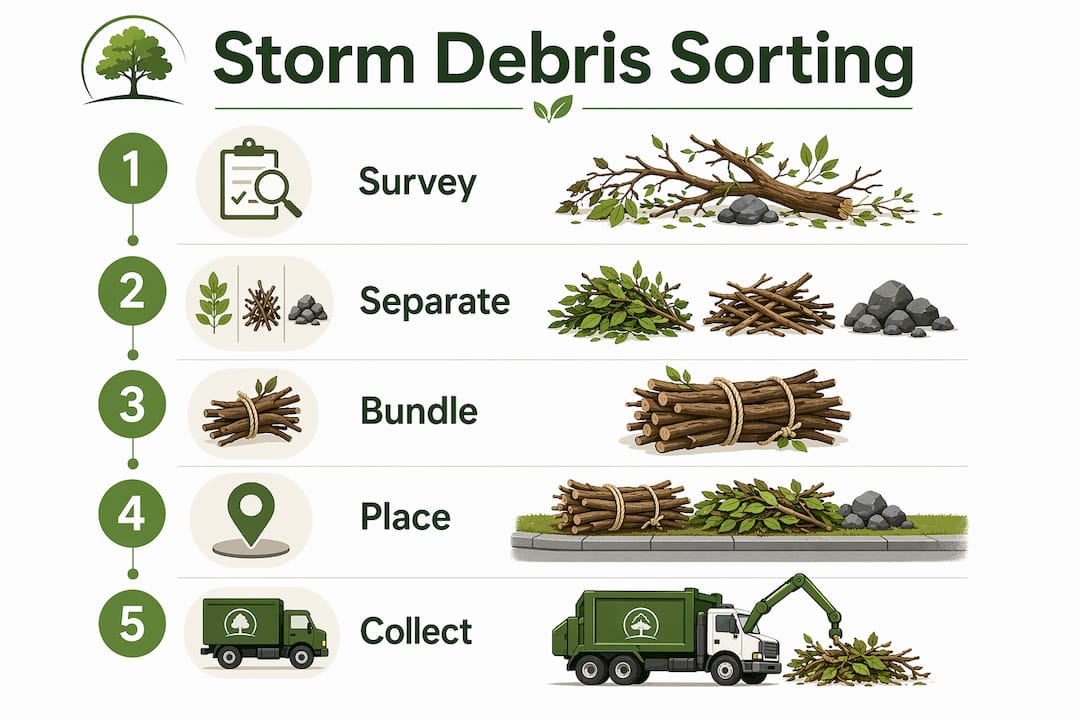
Debris must be sorted into five distinct categories: vegetative waste (branches, leaves, and stumps), construction and demolition debris, hazardous waste (chemicals, paint, and fuel), electronics, and large appliances. Each category gets its own pile at the curb. Mixing categories, such as placing a broken fence board in your vegetative pile, can disqualify the entire pile from municipal pickup.
Spacing and placement rules
| Debris category | Placement rule | Common mistake |
|---|---|---|
| Vegetative waste | Separate pile, bundled branches under 4 feet | Mixing with construction debris |
| Construction debris | Own pile, no loose nails or sharp materials exposed | Placing in vegetative pile |
| Hazardous waste | Sealed containers, separate from all other piles | Leaving open or mixed |
| Electronics | Flat on ground, separate pile | Stacking on top of appliances |
| Large appliances | Upright if possible, doors removed for safety | Blocking storm drain access |
Keep debris piles at least 6 feet apart to prevent cross-contamination and allow collection vehicles to access each category independently. Piles placed too close together are treated as a single mixed load and often left behind entirely.
Keep all piles away from fire hydrants, utility boxes, and storm drains. Check your municipality’s specific guidelines, as Central Florida cities including Orlando, Largo, and surrounding communities each publish post-storm collection schedules and placement rules after major weather events.
For a full breakdown of the storm cleanup workflow including FEMA-aligned debris separation protocols, Mcculloughtreeservice has published a step-by-step guide specific to Central Florida homeowners.
What steps prevent mold after indoor water intrusion?
Indoor water damage is a time-sensitive emergency. Mold begins growing within 24 to 48 hours after water enters a structure. That window is shorter than most homeowners expect, which means waiting until the next morning to start drying is often too late.
The biggest misconception about drying out a flooded room is that open windows and fans are enough. Air circulation alone does not remove moisture trapped behind drywall, under flooring, or inside insulation. Moisture mapping is necessary because surfaces can feel dry to the touch while materials behind them remain saturated.
Follow these steps immediately after water intrusion:
- Stop the water source if it is still active (roof tarps, sandbags, or temporary patches).
- Remove standing water with a wet-dry vacuum or pump within the first few hours.
- Pull up saturated rugs, carpet padding, and any porous flooring material.
- Run commercial-grade dehumidifiers to bring indoor humidity below 40%.
- Use a moisture meter to check walls and floors before declaring an area dry.
Pro Tip: Rent commercial-grade dehumidifiers rather than relying on residential units. A standard home dehumidifier removes a fraction of the moisture that a commercial unit pulls in the same time period. The rental cost is far lower than mold remediation.
Professional storm response teams dedicate the first two hours of a response to detailed moisture and structural assessment. That approach reduces unnecessary demolition and speeds up insurance documentation. Homeowners who skip this step often discover hidden mold weeks later, which complicates claims and increases repair costs significantly.
For general property cleanup best practices that complement your storm recovery effort, including interior cleaning after water damage, additional guidance is available from property maintenance specialists.
Key Takeaways
Effective storm cleanup requires a safety-first sequence: establish safe perimeters, assess damage systematically, sort debris by category, and address indoor moisture within 48 hours to prevent mold.
| Point | Details |
|---|---|
| Safety perimeter first | Keep bystanders at least twice the tree’s height away from any tree work. |
| Apply the 50% Rule | Trees losing more than half their canopy likely need professional removal, not saving. |
| Sort debris into five categories | Vegetative, construction, hazardous, electronics, and appliances must be in separate piles 6 feet apart. |
| Act on moisture within 48 hours | Mold growth starts within 24–48 hours; commercial dehumidifiers and moisture mapping are required. |
| Document everything for insurance | Timestamped photos before moving debris protect your claim and speed up the adjuster process. |
What I’ve learned from watching homeowners tackle storm cleanup
The most consistent mistake I see after a major storm in Central Florida is homeowners treating tree work as a DIY project to save money. The cost calculation changes completely when you factor in the real risks. A chainsaw in the hands of someone without training, proper PPE, and a partner is a genuine liability, not a cost-saving tool.
The second thing that surprises most homeowners is how much detective work goes into finding hidden damage. Structural moisture hides behind walls and under floors in ways that are completely invisible without a moisture meter. I have seen properties that looked fine two weeks after a storm develop serious mold problems because the drying phase was handled with a box fan and good intentions.
The third pattern I keep seeing is debris sorting done wrong. Most homeowners have never read their municipality’s post-storm collection rules. They pile everything together and then wonder why the truck drove past. Those rules exist for a reason, and ignoring them adds days or weeks to your recovery timeline.
My honest advice: limit your DIY work to ground-level, non-structural tasks. Raking, bagging leaves, and sorting debris are well within reach. Anything involving a chainsaw, a leaning tree, or a roof is a job for a certified professional. The money you save is not worth the risk.
— Results
Mcculloughtreeservice: professional storm cleanup support in Central Florida
Storm cleanup in Central Florida moves fast, and the window for safe, effective action is narrow. Mcculloughtreeservice provides certified arborist assessments, emergency tree removal, and post-storm debris management for residential and commercial properties across the Orlando area.

Whether you need a hazardous tree removed after a hurricane or a professional evaluation of trees that took a hit but are still standing, Mcculloughtreeservice brings licensed expertise and the right equipment to every job. Their certified arborists apply the 50% Rule and structural assessment standards to every damaged tree, giving you a clear, documented recommendation. For post-storm pruning and canopy restoration, their tree trimming services address both safety and long-term tree health. Contact Mcculloughtreeservice for a post-storm assessment before the next weather system arrives.
FAQ
What is emergency storm cleanup?
Emergency storm cleanup is the immediate process of removing hazards, clearing debris, and addressing water intrusion after a storm to restore safety and prevent further property damage. It prioritizes life-safety tasks like downed power lines and fallen trees before cosmetic restoration.
How soon should I start cleanup after a storm?
Start as soon as conditions are safe, ideally within 24 hours. Mold growth begins within 24–48 hours of water intrusion, and delayed debris removal can complicate insurance claims and municipal collection schedules.
When should I call a certified arborist instead of doing it myself?
Call a certified arborist any time a tree has lost more than 50% of its canopy, shows trunk splitting or root heave, or has fallen onto a structure. These situations require professional equipment and training that go beyond safe DIY scope.
How do I sort storm debris for municipal pickup?
Separate debris into five piles: vegetative waste, construction debris, hazardous materials, electronics, and large appliances. Keep each pile at least 6 feet apart and away from storm drains, fire hydrants, and utility boxes to comply with municipal collection rules.
What is the biggest indoor risk after a storm?
Mold is the biggest indoor risk. It begins growing within 24–48 hours of water intrusion and often develops behind walls and under floors where it is not visible. Commercial-grade dehumidifiers and moisture mapping are required to address it effectively.
Recommended
- Storm Cleanup Guide 2025: Central Florida Homeowners
- Storm Damage Cleanup Workflow for Central Florida
- Tree Storm Cleanup: Protect Your Central Florida Property
- Examples of Storm Cleanup Services for Central Florida