By: Shelby McCullough| Published: January 30, 2026
Planning a new project in Central Florida now means facing a patchwork of ever-evolving land clearing rules. For developers and contractors, keeping up with mandatory permits and approvals has become vital as regulatory agencies increase oversight across counties and cities. This article highlights the latest permit processes, major legal changes including Florida Senate Bill 1080, and practical strategies to help you avoid costly delays while meeting environmental protection standards in 2025.
Table of Contents
- Land Clearing Regulations Defined For 2025
- Types Of Permits And Regulatory Authorities
- Florida Sb 1080: Major Legal Changes Impacting Projects
- Mitigation, Protected Trees, And Environmental Restrictions
- Financial Risks, Fines, And Compliance Best Practices
Key Takeaways
| Point | Details |
|---|---|
| Navigating Regulatory Frameworks | Developers must understand the multi-layered land clearing regulations involving county, state, and federal authorities to ensure compliance. |
| Permit Requirements | Comprehensive documentation and environmental assessments are mandatory for all land clearing permits in Central Florida. |
| Compliance Challenges and Financial Risks | Non-compliance can lead to significant fines and project delays, making proactive planning and close monitoring essential. |
| SB 1080 Legislative Changes | Florida SB 1080 aims to streamline permitting processes by enforcing strict timelines and transparency, which developers must adapt to. |
Land Clearing Regulations Defined for 2025
Land clearing regulations in Central Florida represent a complex legal landscape designed to protect environmental resources while facilitating responsible development. Understanding these regulations requires navigating multiple jurisdictional requirements that impact property owners, developers, and contractors across the region.
Florida’s land clearing regulatory framework involves a multi-layered approval process that requires coordination between county, municipal, and state agencies. Mandatory permits and approvals are essential before initiating any land modification activities. Key regulatory considerations include:
- Obtaining appropriate county-level development permits
- Coordinating with Florida Department of Environmental Protection
- Securing approvals from local water management districts
- Documenting compliance with environmental protection standards
Permit Requirements for land clearing in 2025 demand comprehensive documentation and strategic planning. Property developers must now demonstrate clear environmental impact assessments and mitigation strategies before receiving clearance. Local jurisdictional controls vary significantly, meaning what works in one county might be prohibited in another.
Central Florida counties have increasingly sophisticated regulatory frameworks that protect critical habitats, manage water resources, and preserve native vegetation. Contractors must now navigate more stringent guidelines, including:
- Detailed vegetation mapping
- Endangered species habitat assessments
- Erosion and sediment control plans
- Wetland protection protocols
Compliance Challenges require developers to work closely with certified environmental professionals who understand local ordinances. Violations can result in substantial financial penalties and potential project shutdowns.
Pro tip: Always consult with local municipal planning departments and obtain written confirmation of your specific land clearing permit requirements before beginning any site preparation work.
Types of Permits and Regulatory Authorities
Land clearing in Central Florida involves a complex network of regulatory authorities that oversee different aspects of environmental protection and development. Permit requirements span multiple government levels, creating a comprehensive framework for responsible land use and environmental preservation.

The key regulatory bodies involved in land clearing permits include:
Here’s a summary of key regulatory authorities and their main responsibilities:
| Regulatory Authority | Primary Role | Example Requirement |
|---|---|---|
| County/Municipal | Local permit issuance | Approve tree removal requests |
| FL Dept. of Environmental Protection | State environmental oversight | Review pollution mitigation plans |
| Water Management District | Water resource protection | Assess stormwater impacts |
| U.S. Army Corps of Engineers | Federal wetlands regulation | Authorize wetland alterations |
- County and Municipal Governments: Local-level permit issuance
- Florida Department of Environmental Protection: State-level environmental oversight
- Water Management Districts: Regional water resource management
- U.S. Army Corps of Engineers: Federal wetlands and waterway regulation
Permit Types for land clearing are diverse and specific to different project requirements. Regulatory authority is decentralized, meaning developers must navigate multiple approval processes. The most common permits include:
- Land Clearing Permits
- Environmental Resource Permits
- Tree Removal Permits
- Stormwater Management Permits
- Wetlands Protection Permits
Each permit type addresses specific environmental and developmental concerns. County-level permits typically focus on local vegetation protection, while state-level permits examine broader ecological impacts. The complexity of these requirements demands thorough documentation and strategic planning from property developers.
Compliance Strategies require a comprehensive approach to understanding jurisdictional requirements. Developers must work closely with environmental professionals who can navigate the intricate permit landscape and ensure full regulatory compliance.
Pro tip: Create a detailed permit checklist specific to your county and project type, and consult with local regulatory experts to verify all necessary documentation before submitting your land clearing application.
Florida SB 1080: Major Legal Changes Impacting Projects
Florida Senate Bill 1080 introduces groundbreaking reforms that will fundamentally transform land use permitting processes across Central Florida. Permitting reforms target local government procedures with unprecedented transparency and accountability measures designed to streamline development projects.
The key legislative changes include:
- Mandatory publication of minimum application requirements
- Strict processing deadlines for permit applications
- Mandatory refund provisions for government processing delays
- Enhanced procedural consistency across local jurisdictions
- Limitations on additional permit-related fees
Permit Processing Timelines represent one of the most significant modifications in SB 1080. Local government review processes now operate under precise statutory constraints:
- 5 business days to acknowledge application receipt
- 30 days to determine application completeness
- 120-180 days for final permit decisions
- Automatic fee refunds for missed deadlines
- Written disclosure of all application requirements
The legislation aims to reduce bureaucratic complexity and create more predictable pathways for developers and property owners. By imposing clear timelines and transparency requirements, SB 1080 seeks to balance environmental protection with efficient project development.
Implementation Challenges will likely emerge as local governments adapt to these new procedural mandates. Municipalities must redesign their current permitting workflows to meet the bill’s stringent requirements, potentially requiring significant administrative restructuring.
Pro tip: Develop a comprehensive checklist of SB 1080 requirements and maintain meticulous documentation to navigate the new permitting landscape effectively.
Mitigation, Protected Trees, and Environmental Restrictions
Central Florida’s land clearing regulations create a comprehensive framework designed to protect environmental resources while allowing responsible development. Environmental restrictions impact land clearing processes through intricate rules governing tree removal, habitat preservation, and ecological mitigation.
Key environmental protection strategies include:
- Preservation of specimen and heritage trees
- Strict wetlands protection protocols
- Mandatory erosion control measures
- Habitat conservation requirements
- Stormwater management regulations
Protected Tree Categories represent a critical aspect of environmental restrictions. Legal frameworks define tree removal limitations based on multiple factors:
- Tree species significance
- Diameter and age considerations
- Ecological importance
- Location within proposed development site
- Potential environmental impact
Mitigation requirements often mandate replacement plantings or purchasing mitigation credits when removing protected vegetation. Developers must demonstrate comprehensive environmental stewardship by providing detailed plans that minimize ecological disruption and ensure sustainable land use practices.
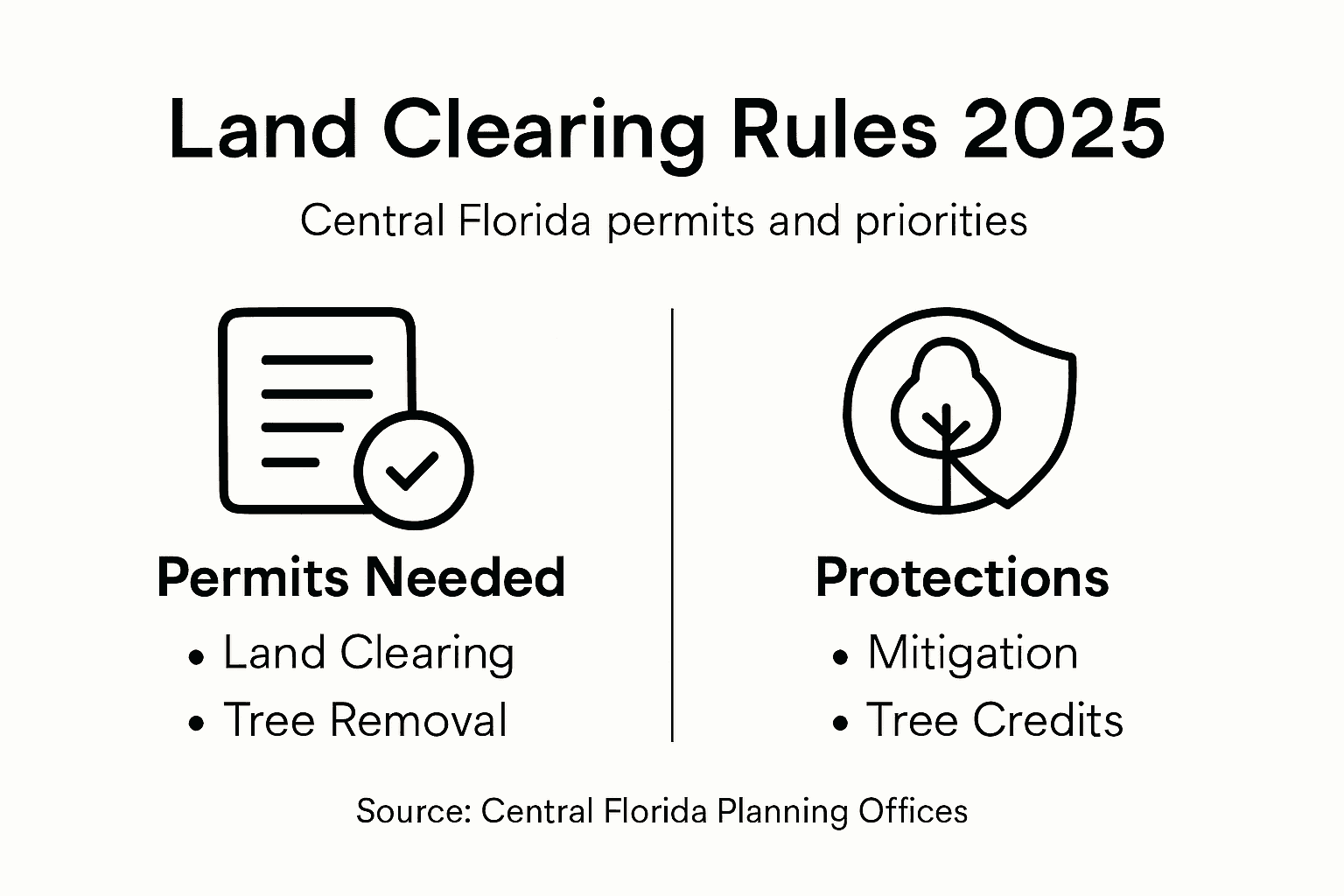
Compliance Strategies demand thorough documentation and proactive environmental assessment. Property owners must engage certified arborists and environmental consultants to navigate the complex regulatory landscape and develop legally compliant land clearing approaches.
Pro tip: Conduct a comprehensive ecological survey before initiating any land clearing project to identify protected trees and potential mitigation requirements.
Financial Risks, Fines, and Compliance Best Practices
Navigating the complex landscape of land clearing regulations requires a comprehensive understanding of potential financial risks and enforcement mechanisms. County-level enforcement demonstrates stringent penalty structures that can significantly impact project budgets and development timelines.
Key financial risks associated with non-compliance include:
- Daily accruing fines ranging from $200 to $250
- Administrative processing fees
- Mandatory restoration costs
- Potential criminal citations
- Project suspension or complete shutdown
Penalty Structures represent a critical consideration for developers and property owners. The financial consequences of regulatory violations can escalate quickly, creating substantial economic challenges:
- Initial warning citations
- Escalating daily fine assessments
- Mandatory corrective action expenses
- Legal prosecution costs
- Potential long-term development restrictions
Comprehensive compliance strategies demand proactive planning and meticulous documentation. Developers must anticipate potential regulatory challenges by maintaining extensive records, obtaining all necessary permits, and working closely with local environmental and municipal authorities.
Compliance Documentation requires a systematic approach that includes detailed permit applications, environmental impact assessments, and ongoing monitoring of regulatory changes. Successful navigation of these complex requirements demands professional expertise and consistent attention to procedural details.
The table below outlines major financial risks versus best compliance practices:
| Financial Risk | Possible Impact | Best Practice |
|---|---|---|
| Daily Fines | Escalates project costs | Monitor permit conditions daily |
| Administrative Fees | Adds to budget strain | Pre-submit thorough documentation |
| Restoration Costs | Delays project timelines | Engage certified environmental consultants |
| Legal Citations | Halts development | Maintain records, consult legal experts |
Pro tip: Allocate a contingency budget of 10-15% specifically for potential regulatory compliance expenses and unexpected mitigation requirements.
Stay Compliant and Confident with Expert Land Clearing Services
Navigating the new 2025 land clearing regulations in Central Florida can feel overwhelming with all the permit requirements, environmental restrictions, and financial risks outlined in the recent article. Issues like protected tree assessments, erosion control, and complex permit processing timelines create real challenges for property owners and developers striving to stay compliant while moving projects forward efficiently. Protect your investment and avoid costly fines by partnering with a certified arborist who understands these regulatory hurdles inside and out.
McCullough Tree Service offers professional land clearing along with comprehensive tree care solutions backed by certified expertise and full compliance with state and local regulations. We handle everything from tree removal and stump grinding to environmental assessments and storm cleanup with safety and precision. Our experience in Orlando and Central Florida ensures your project meets all legal requirements, including those updated under Florida Senate Bill 1080. Visit McCullough Tree Service to learn more about how we can streamline your land clearing needs and keep your property development on track.
Ready to tackle your land clearing project with confidence and compliance? Contact us today at McCullough Tree Service and get started on a customized plan that respects Florida’s evolving regulations. Don’t risk delays or fines when trusted experts are just a call away.
Frequently Asked Questions
What are the new land clearing regulations for 2025?
The 2025 land clearing regulations in Central Florida involve a multi-layered approval process requiring coordination between county, municipal, and state agencies. Key regulations include obtaining mandatory permits, conducting environmental impact assessments, and compliance with specific ecological protections.
What types of permits are required for land clearing in 2025?
Common permits required for land clearing include Land Clearing Permits, Environmental Resource Permits, Tree Removal Permits, Stormwater Management Permits, and Wetlands Protection Permits. Each focuses on different aspects of environmental and developmental concerns.
How does Florida SB 1080 impact land clearing projects?
Florida Senate Bill 1080 introduces significant reforms to streamline land use permitting processes, including strict processing deadlines for applications, mandatory publication of requirements, and refunds for government delays. It aims to create a more predictable pathway for developers.
What are the potential penalties for non-compliance with land clearing regulations?
Non-compliance can lead to severe financial penalties, including daily fines ranging from $200 to $250, mandatory restoration costs, potential criminal citations, and even project suspension. It’s crucial for developers to maintain compliance and documentation.
Recommended
- Land Clearing Process Guide for Property Owners
- Land Clearing Process Guide for Property Owners
- Expert Tips on the Land Clearing Process
- What Land Clearing Entails for Your Property
- Tree Service Orlando FL
- Tree Service Winter Springs FL