By: Shelby McCullough| Published: February 16, 2026
Trimming trees around your Central Florida home can transform your property and prevent costly damage. Tree care is more than just aesthetics—it protects your investment and promotes healthy growth. A well-planned approach starts with a thorough assessment, focusing on branch health and structural safety before making any cuts. This guide gives you clear steps for safe pruning, practical tool tips, and expert-backed methods that keep your trees thriving and your landscape looking its best.
Table of Contents
- Step 1: Assess Tree And Plan Trims
- Step 2: Gather Proper Tools And Safety Gear
- Step 3: Remove Damaged Or Dead Branches
- Step 4: Shape Canopy For Aesthetic Appeal
- Step 5: Inspect Work And Clean Up Debris
Quick Summary
| Key Takeaway | Explanation |
|---|---|
| 1. Assess tree health first | Conduct a thorough visual inspection to identify any issues like damage or disease before trimming. |
| 2. Use proper tools and safety gear | Select quality tools and wear protective equipment to ensure safety and promote effective pruning. |
| 3. Remove dead or damaged branches | Focus on eliminating compromised branches to enhance overall tree health and prevent safety hazards. |
| 4. Shape the canopy thoughtfully | Aim for an aesthetically pleasing and structurally sound tree by maintaining its natural form and symmetry. |
| 5. Inspect your work and clean up | After pruning, check your cuts and ensure a tidy environment to prevent future issues and support tree health. |
Step 1: Assess Tree and Plan Trims
Before trimming any tree, a strategic assessment is crucial for maintaining its health and structural integrity. This initial evaluation helps you determine the right approach to pruning and identify potential issues that could compromise your tree’s long-term growth.
Start by conducting a comprehensive visual inspection of the entire tree. Look for signs of damage, disease, or structural weaknesses that might require attention. Key aspects to evaluate include:
- Branch health and condition
- Overall tree structure
- Presence of dead or crossing branches
- Potential safety hazards
- Signs of pest infestation or disease
Developing a preventive pruning program begins with understanding the tree’s specific needs and growth patterns. Professional arborists recommend examining the tree’s trunk, main branches, and overall architecture to minimize potential risks like branch failure.
Your assessment should also consider the tree’s species, age, and location. Different trees require unique trimming approaches. For instance, young trees need formative pruning to establish strong branch structures, while mature trees might need maintenance trimming to remove dead or diseased limbs.
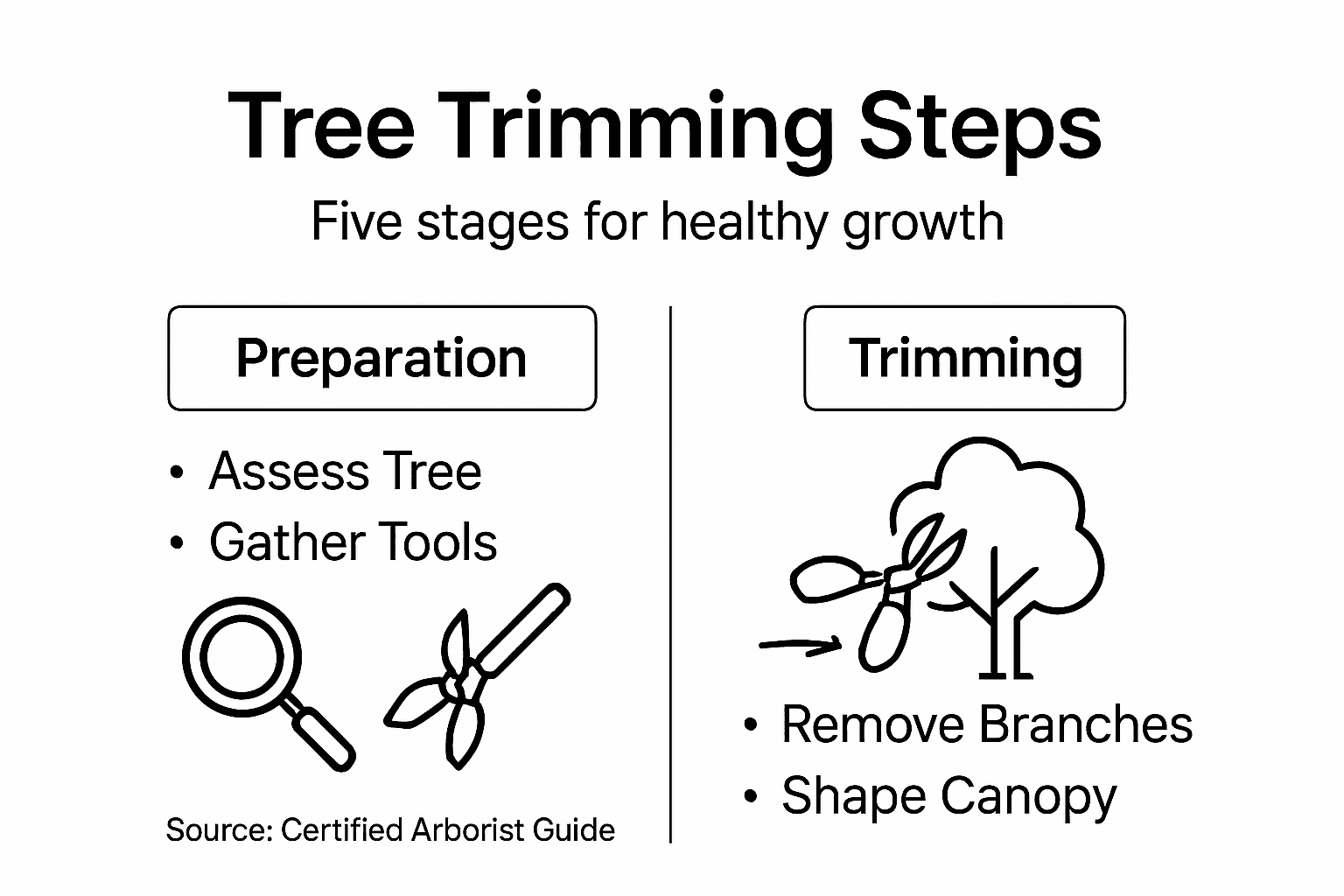
Here’s how common tree types influence trimming strategies:
| Tree Type | Pruning Focus | Typical Timing |
|---|---|---|
| Young Tree | Formative shaping | Late winter/early spring |
| Mature Tree | Maintenance, safety | Dormant season |
| Deciduous | Symmetry, airflow | After leaves drop |
| Evergreen | Light thinning | Early spring |
Proper tree assessment is the foundation of effective tree care and long-term health.
Pro tip: Take clear, well-lit photographs of your tree from multiple angles to help professional arborists provide more accurate advice if needed.
Step 2: Gather Proper Tools and Safety Gear
Preparing for tree trimming requires selecting the right equipment to ensure both your safety and the tree’s health. The tools you choose will directly impact the quality of your pruning and your personal protection during the process.
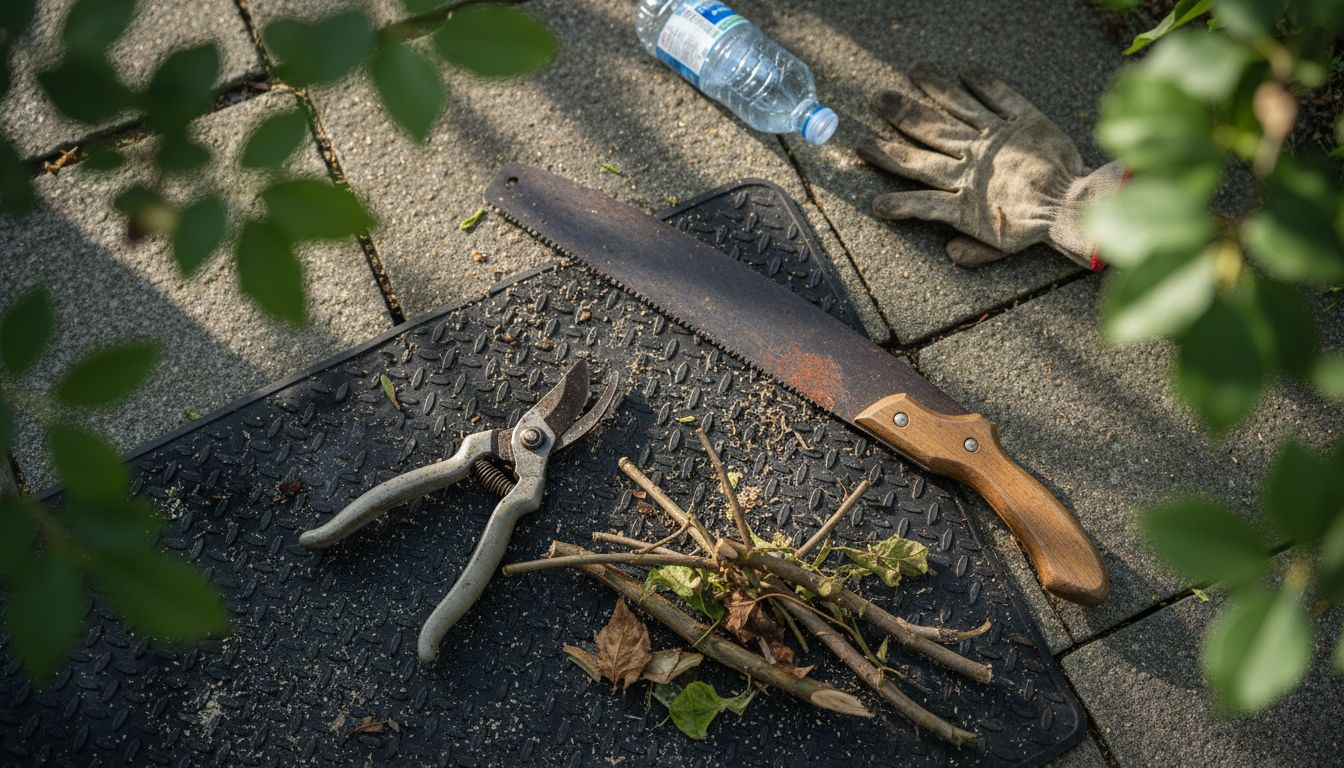
Start by assembling essential pruning tools for different branch sizes. Your toolkit should include:
- Pruning shears for small branches (under 1 inch)
- Loppers for medium branches (1-2 inches)
- Pruning saws for larger limbs
- Hand pruners with bypass or anvil designs
Safety gear is equally critical for preventing injuries during tree trimming. Always wear:
- Protective eyewear to shield against debris
- Heavy-duty work gloves for hand protection
- Sturdy non-slip boots with good traction
- Hard hat when working under or near branches
- Long-sleeved shirts and pants to prevent scratches
When selecting tools, prioritize quality and maintenance. Sharp, well-maintained tools make cleaner cuts that help trees heal faster and reduce the risk of disease transmission. Professional-grade tools might cost more upfront but will provide better performance and longevity.
Proper tools and safety gear are your first line of defense in responsible tree care.
Pro tip: Invest in ergonomic tools with comfortable grips to reduce hand fatigue during longer trimming sessions.
Step 3: Remove Damaged or Dead Branches
Removing damaged and dead branches is crucial for maintaining your tree’s health and preventing potential safety hazards. This step requires careful attention and precise techniques to ensure you’re supporting the tree’s long-term growth and structural integrity.
Pruning dead branches requires strategic cutting to promote healing and prevent further damage. Follow these key guidelines when removing nonliving or compromised branches:
- Identify dead branches by looking for:
- Lack of leaf growth
- Brittle, dry wood
- Bark falling off or peeling
- Visible fungal growth
When making cuts, remember these critical principles:
- Cut just outside the branch collar
- Use clean, sharp pruning tools
- Disinfect tools between cuts
- Remove branches at their point of origin
- Avoid leaving stubs that can harbor disease
The goal is to create clean cuts that allow the tree to heal quickly and prevent potential pest infestations or disease spread. When working with larger branches, make a three-cut technique to prevent bark tearing:
- Undercut the branch about 12-18 inches from the trunk
- Make a top cut slightly further out from the first cut
- Make the final clean cut at the branch collar
Proper branch removal is an investment in your tree’s future health and structural strength.
Pro tip: Clean and sharpen your pruning tools before each use to ensure precise, smooth cuts that minimize stress on the tree.
Step 4: Shape Canopy for Aesthetic Appeal
Shaping your tree’s canopy is an art form that balances visual beauty with the tree’s natural growth patterns. By carefully removing select branches, you can create a more attractive and structurally sound tree that complements your landscape design.
Pruning techniques enhance tree appearance while supporting overall tree health. Your goal is to create a balanced, open canopy that allows light and air to circulate effectively. Consider these key strategies for canopy shaping:
- Understand the tree’s natural form
- Remove crossing or rubbing branches
- Create visual symmetry
- Maintain the tree’s unique architectural structure
When shaping the canopy, focus on these critical principles:
- Identify the tree’s central leader
- Thin out dense areas to improve air circulation
- Maintain balanced branch distribution
- Preserve the tree’s natural silhouette
- Remove no more than 25% of live branches in a single season
Specific techniques vary depending on the tree species. Deciduous trees typically require different approaches compared to evergreens. Always make cuts that follow the tree’s natural branching pattern, avoiding harsh or unnatural angles that could compromise the tree’s structural integrity.
Thoughtful canopy shaping is an investment in your tree’s long-term health and landscape beauty.
Pro tip: Step back frequently during pruning to evaluate the tree’s overall shape and ensure you’re maintaining its natural, balanced appearance.
Step 5: Inspect Work and Clean Up Debris
After completing your tree trimming, a thorough inspection and careful cleanup are essential to ensure the health of your tree and maintain a safe, tidy landscape. This final step validates your pruning efforts and prevents potential future problems.
Proper post-pruning inspection ensures tree health and prevents long-term issues. Conduct a comprehensive review of your trimming work with these critical checkpoints:
- Verify clean and precise cuts
- Check for balanced branch removal
- Ensure no damaged bark remains
- Confirm overall tree structure
Your cleanup process should focus on several key areas:
- Collect all trimmed branches
- Dispose of debris properly
- Clean and sanitize pruning tools
- Inspect tree for any signs of stress
- Mulch smaller branches if possible
When collecting debris, separate materials for appropriate disposal. Larger branches can be used for firewood, while smaller twigs and leaves can be composted or mulched. Always wear protective gloves and use appropriate containers or bags for efficient cleanup.
A thorough inspection and cleanup is the final crucial step in responsible tree care.
Pro tip: Take photos of your trimmed tree from multiple angles to track its growth and compare future pruning results.
The table below summarizes the main purposes and benefits of each tree trimming step:
| Step | Primary Purpose | Long-Term Benefit |
|---|---|---|
| Assessment | Identify issues early | Ensures proper growth |
| Tools & Gear | Enhance safety, clean cuts | Reduces injury and disease |
| Deadwood Removal | Eliminate hazards | Boosts tree vitality |
| Canopy Shaping | Improve looks, balance | Promotes healthy structure |
| Inspection & Cleanup | Validate and protect work | Maintains safe environment |
Keep Your Trees Healthy and Beautiful with Expert Trimming
Proper assessment and trimming are essential for healthy tree growth as outlined in the step-by-step guide. Whether you need removal of dead branches, canopy shaping for better airflow and aesthetics, or just want to ensure your trees get the best care, McCullough Tree Service has you covered. We understand that a clean cut, the right tools, and professional safety measures make all the difference to your tree’s long-term vitality and your property’s safety.

Don’t wait until your trees show signs of distress or damage. Contact our certified arborists today for a comprehensive tree health assessment and expert trimming services tailored to your trees’ unique needs. Visit McCullough Tree Service to learn more and schedule an appointment. Trust us to protect and enhance the natural beauty of your Orlando property now.
Frequently Asked Questions
How do I assess my tree before trimming it?
Begin by conducting a visual inspection of the entire tree to look for signs of damage, disease, or structural weaknesses. Evaluate the health of the branches, overall tree structure, and any safety hazards to inform your trimming plan.
What tools do I need for tree trimming?
You will need pruning shears for small branches, loppers for medium branches, and pruning saws for larger limbs. Gather protective gear such as safety eyewear, gloves, and sturdy boots to ensure safe trimming.
When is the best time to trim my tree?
The timing for trimming depends on the tree species and its growth stage. Young trees typically benefit from formative pruning in late winter or early spring, while mature trees are best pruned during the dormant season.
How should I remove dead or damaged branches?
Remove dead branches by cutting just outside the branch collar using clean, sharp pruning tools. Follow a three-cut technique for larger branches to prevent bark tearing, which can help the tree heal more effectively.
What should I do after trimming my tree?
After trimming, conduct a thorough inspection to ensure all cuts are clean and the tree is balanced. Clean up the debris properly and disinfect your tools to maintain both safety and tree health.
How much of the tree can I trim at once?
It is recommended to remove no more than 25% of live branches in a single season to avoid putting too much stress on the tree. This approach promotes healthy growth while allowing the tree to recover properly.
Recommended
- How to Trim Trees Safely for Healthier Growth
- The Comprehensive Benefits of Tree Trimming
- Expert Tips: When Your Tree Needs Trimming
- Conifer Tree Trimming: Techniques for Healthy Growth
- Tree Service Orlando FL
- Tree Service Winter Springs FL