By: | Published: June 16, 2026
TL;DR:
- A storm damage cleanup workflow involves a step-by-step process prioritizing safety, damage documentation, debris removal, and drying. Proper sequencing and timely moisture control prevent secondary mold growth and ensure effective recovery, especially in humid regions like Central Florida. Accurate documentation and professional assistance are crucial for insurance claims and safe property restoration.
A storm damage cleanup workflow is a structured, step-by-step process that safely restores properties by addressing hazards, removing debris, controlling moisture, and coordinating repairs. In Central Florida, where hurricane season runs june through november and afternoon thunderstorms can strike year-round, property owners need a reliable post-storm restoration workflow that accounts for heat, humidity, and fast-moving mold risk. This guide walks you through every phase, from the first safety check to the final moisture clearance, using tools like commercial dehumidifiers, thermal imaging cameras, and moisture meters. Whether you are managing a residential lot in Maitland or a commercial property in Orlando, the sequence matters as much as the effort.
What is the storm damage cleanup workflow?
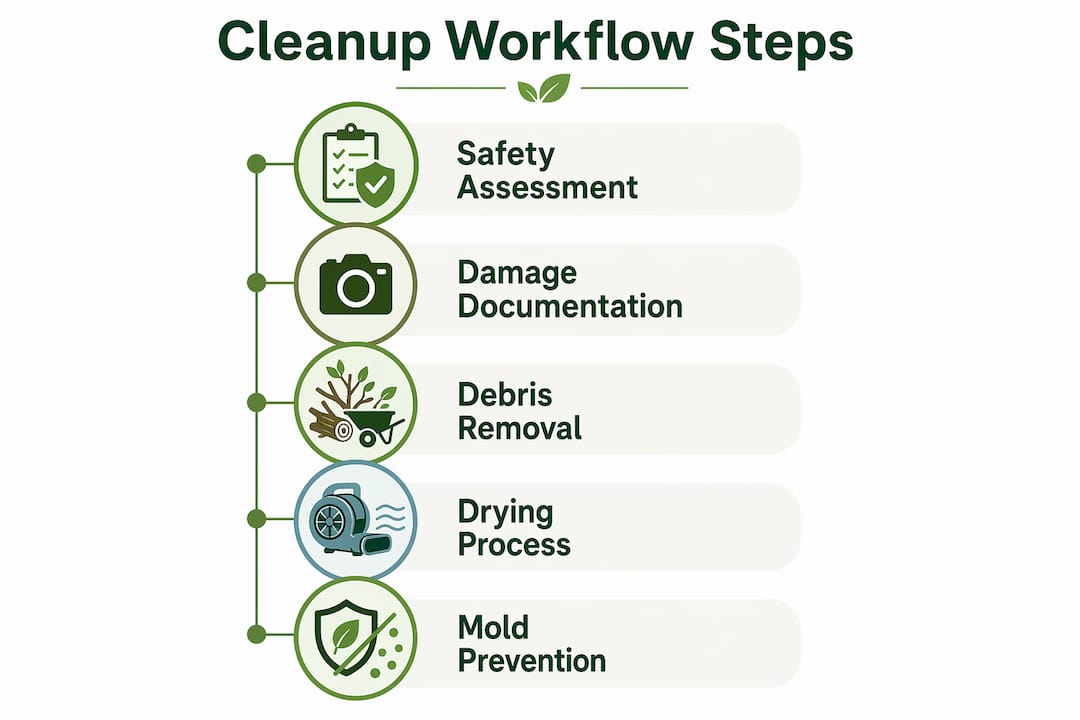
A storm damage cleanup workflow, known in the restoration industry as a mitigation and recovery sequence, is the ordered set of actions taken to stop ongoing damage, remove hazards, dry the structure, and prepare for reconstruction. The sequence is not optional. Skipping steps or reversing the order causes secondary damage that costs far more to fix than the original storm event. The core phases are: safety assessment, damage documentation, debris removal, structural drying, mold prevention, and rebuild coordination. Each phase feeds the next, and rushing any one of them creates problems downstream.
What safety precautions come before any cleanup begins?
Safety is the first and non-negotiable phase of any cleanup plan for storm damage. Before you touch a single branch or enter a damaged structure, you need to verify that the environment is safe enough to work in.
- Electrical hazards: Contact your utility provider before entering any area with downed power lines. Assume every line is live.
- Structural integrity: Walk the perimeter of your building before going inside. Look for shifted foundations, cracked load-bearing walls, or roof sections that could collapse.
- Chainsaw safety: Chain saws are the most dangerous hand tools used during cleanup. Use full PPE including cut-resistant chaps, a helmet with face shield, and steel-toed boots. Avoid the upper tip of the bar to prevent kickback.
- Lifting limits: Homeowners should not lift more than 50 pounds during cleanup. Overexertion injuries spike in the days following major storms.
- Partner rule: Never work alone with power tools. IFAS guidelines recommend partner-based work and scheduled rest breaks because fatigue causes the majority of chainsaw injuries.
- Perimeter marking: Use caution tape and signage to mark hazardous zones, especially around damaged trees, unstable fences, and exposed roofing materials.
Pro Tip: If you see a branch that is bent or pinned under another object, do not cut it. These are called spring poles, and cutting them without training can cause violent, lethal snapping. Call a certified arborist.
When electrical lines are involved or trees are leaning against structures, stop and call professionals. No amount of DIY effort is worth a fatality.
How do you assess and document storm damage effectively?
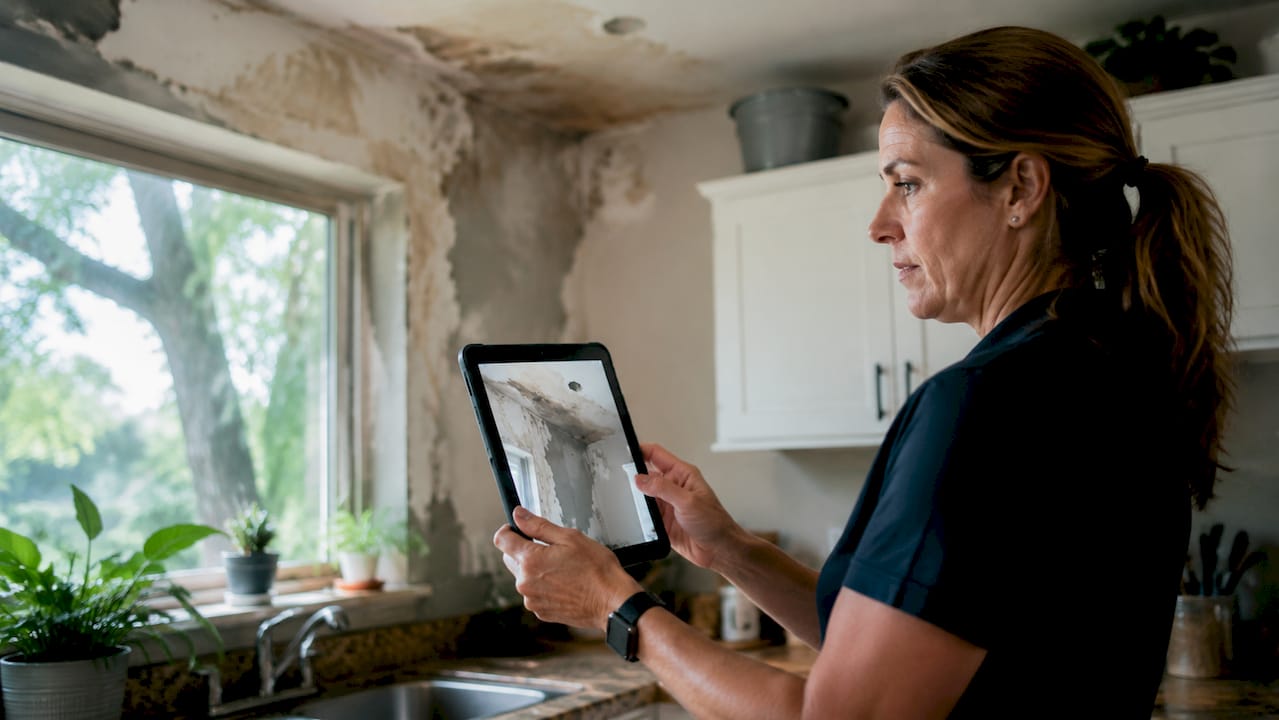
Thorough documentation is the foundation of both your cleanup plan and your insurance claim. Do this before moving a single piece of debris.
- Walk the full property with your phone or camera. Photograph every damaged area from multiple angles, including rooflines, siding, windows, fencing, and tree contact points.
- Record video of interior spaces where water has entered. Video captures scope and context that still photos miss.
- Use thermal imaging and moisture meters to detect hidden water behind walls and under subfloors. Visual checks alone are inadequate for identifying concealed moisture that will later grow mold.
- Map moisture readings room by room. Professional restoration firms use this moisture mapping data to set drying targets and track progress daily.
- Compile all receipts from emergency purchases, temporary repairs, and contractor invoices. Organized records directly support your claim.
| Documentation Step | Purpose |
|---|---|
| Photo and video walkthrough | Establishes pre-cleanup condition for insurance |
| Thermal imaging scan | Detects hidden moisture behind walls and floors |
| Moisture meter readings | Sets baseline for drying targets |
| Written damage inventory | Supports adjuster scope review |
| Receipt collection | Documents all out-of-pocket costs for reimbursement |
Professional restoration firms use software like Xactimate for damage estimates. Insurance adjusters use the same platform. If your adjuster’s scope misses items you documented, you have the right to request a supplement. Independent assessments from restoration contractors frequently catch damage that initial adjuster reports overlook.
What is the step-by-step debris removal and drying process?
This is the most physically demanding phase of the storm damage recovery process. Sequence matters here more than anywhere else.
- Secure the site first. Fence off unstable trees, cover exposed roof sections with tarps, and redirect foot traffic away from hazard zones.
- Remove large limbs and hazardous tree debris. Start with anything that is blocking access, resting on the structure, or creating a secondary fall risk. Learn more about emergency tree removal steps before attempting this phase yourself.
- Clear drainage paths. Gutters, downspouts, and yard drainage channels clogged with debris will continue funneling water into your foundation. Correct sequencing of debris removal prevents secondary water damage that worsens the original loss.
- Sort debris by type. Wood, metal, shingles, and household waste each require separate disposal. Construction debris like shingles can weigh several tons and require heavy-duty hauling and recycling compliance. For guidance on sorting and disposal, Ohana Property Services offers a clear debris removal breakdown for residential properties.
- Begin interior drying within 24–48 hours. Mold colonization begins within 48 hours on wet organic materials. This is not a guideline. It is a biological deadline.
- Deploy commercial dehumidifiers and air movers. Residential box fans are not sufficient. Commercial equipment pulls moisture from structural cavities that consumer units cannot reach.
- Run drying equipment for 3–7 days. Mitigation and drying typically take 5–7 days for moderate storm damage. Check moisture readings daily and log them.
Pro Tip: Rent commercial-grade dehumidifiers from equipment suppliers like Sunbelt Rentals or United Rentals if a restoration contractor is not yet on site. Getting drying started fast is more important than waiting for the perfect setup.
Watch for spring poles throughout debris removal. Any branch that is bent, pinned, or under tension from another object requires a trained professional with the right equipment. Do not attempt to cut these yourself.
How do you coordinate mold prevention and reconstruction prep?
Once debris is cleared and drying equipment is running, the focus shifts to monitoring and preparing for the rebuild phase.
- Check moisture readings daily using a pin-type or pinless moisture meter. Target readings vary by material, but wood framing should reach below 19% moisture content before reconstruction begins.
- Apply antimicrobial treatments to any surface that had prolonged water contact. This includes subfloors, wall cavities, and ceiling joists. Antimicrobial sprays like Benefect Decon 30 are commonly used by professional restoration teams.
- Identify unsalvageable materials early. Drywall, insulation, and carpet that absorbed standing water typically cannot be dried in place. Removing them quickly reduces mold risk and speeds up the overall timeline.
- Communicate scope changes to your adjuster. As demolition reveals hidden damage, update your insurance documentation immediately. Adjusters expect scope supplements on complex claims.
- Do not begin reconstruction until moisture clearance is confirmed. Rushing rebuild without moisture clearance seals mold inside walls, creating a far more expensive remediation problem later.
- Schedule your contractor walk-through only after drying is complete and documented. Contractors need dry, stable conditions to give accurate bids and start work without delays.
This phase requires patience. In Central Florida’s humid climate, drying takes longer than in drier regions. Plan for the full timeline rather than the optimistic one.
What mistakes derail a storm damage cleanup workflow?
Most costly mistakes in the storm damage remediation process come from rushing, underestimating, or skipping steps that seem minor in the moment.
- Wrong debris removal sequence. The most common mistake in storm cleanup is incorrect sequencing of debris removal, which leads to secondary damage that worsens water intrusion. Clearing drainage before removing roof debris, for example, allows continued flooding.
- Skipping moisture mapping. Relying on visual inspection misses water trapped in wall cavities and subfloors. That hidden moisture becomes mold within two days.
- Underestimating debris volume. Property owners frequently underestimate debris volume and weight, which leads to inadequate disposal planning and illegal dumping fines. Hire professional haulers for large-scale debris.
- Ignoring chainsaw fatigue. Most chainsaw injuries happen when operators are tired. Skipping breaks is not a time-saver. It is an injury risk.
- Cleaning before documenting. Moving debris before photographing it destroys your insurance claim evidence. Document everything first, then clean.
“The difference between a smooth recovery and a six-month nightmare usually comes down to the first 48 hours. Get the sequence right, document everything, and start drying immediately.”
Avoiding these mistakes is not complicated. It requires discipline, not expertise. Follow the sequence, respect the timeline, and call professionals when the work exceeds your training.
Key takeaways
A structured storm damage cleanup workflow that prioritizes safety, documentation, correct debris sequencing, and rapid drying is the single most effective way to restore a Central Florida property without secondary mold damage.
| Point | Details |
|---|---|
| Safety before all else | Verify electrical safety, mark hazards, and never work alone with power tools. |
| Document before you clean | Photograph and moisture-map all damage before moving any debris for insurance purposes. |
| Sequence debris removal correctly | Clear drainage paths and large limbs first to prevent secondary water intrusion. |
| Start drying within 48 hours | Mold colonization begins within 48 hours; deploy commercial drying equipment immediately. |
| Confirm moisture clearance before rebuilding | Rushing reconstruction without verified dryness seals mold inside walls permanently. |
What i have learned after years of storm cleanup in central florida
The part most property owners get wrong
The drying phase is where I see the most costly mistakes. Property owners will spend two full days clearing debris with impressive efficiency, then stop drying equipment after 48 hours because the floors “feel dry.” Feeling dry and being dry are completely different things. Moisture trapped inside a wall cavity at 30% content will grow mold within a week, and by the time you smell it, the remediation bill is larger than the original storm damage.
My honest advice: treat the drying timeline as a hard deadline, not a suggestion. In Central Florida’s humidity, structures hold moisture longer than anywhere else in the country. The 5–7 day drying window is not conservative. It is accurate.
The other thing I consistently recommend is getting professional help for tree work before attempting anything yourself. A leaning pine against a roof looks manageable until you realize the root ball has shifted and the whole tree is under tension. Mcculloughtreeservice handles these situations every week after major storms in the Orlando area, and the calls we get after a homeowner has already made the situation worse are the hardest ones to fix.
Proactive tree trimming before storm season is the best investment you can make in your cleanup workflow. A well-maintained canopy loses fewer limbs, creates less debris, and protects your structure far better than any tarp.
— Mcculloughtreeservice
How Mcculloughtreeservice supports your storm recovery in central florida
When a storm hits Central Florida, the tree work is often the most dangerous and complex part of the entire recovery. Mcculloughtreeservice deploys certified arborists with the equipment and training to handle hazardous tree removal, large limb extraction, and full storm cleanup services safely and efficiently.

From emergency response calls to scheduled post-storm clearing, Mcculloughtreeservice serves residential and commercial property owners across Orlando, Maitland, and the surrounding Central Florida region. The team handles everything from professional tree removal of storm-damaged trees to stump grinding and debris hauling. If you are ready to restore your property, contact Mcculloughtreeservice for a consultation and get your cleanup moving in the right direction.
FAQ
What is a storm damage cleanup workflow?
A storm damage cleanup workflow is a structured sequence of steps including safety assessment, damage documentation, debris removal, structural drying, mold prevention, and rebuild coordination. Following the correct order prevents secondary damage and supports insurance claims.
How soon should drying equipment be running after storm damage?
Drying equipment should be running within 24–48 hours of water intrusion. Mold colonization begins within 48 hours on wet organic materials, making rapid deployment of commercial dehumidifiers and air movers critical.
When should i call a professional instead of doing DIY storm cleanup?
Call a professional when trees are leaning against structures, when spring poles are present, when electrical lines are involved, or when debris exceeds what you can safely lift and haul. Chainsaw work near structures or under tension always requires a certified arborist.
How do i document storm damage for an insurance claim?
Walk the full property with a camera before touching any debris. Photograph all damage from multiple angles, record video of water-affected interiors, log moisture meter readings room by room, and keep all receipts. Insurance adjusters use Xactimate software, so thorough documentation supports supplement requests if initial scopes are incomplete.
How long does the full storm damage recovery process take?
Debris removal and structural drying typically take 5–7 days for moderate damage. Reconstruction timelines depend on the scope of structural repairs, but no rebuild should begin until moisture readings confirm the structure is dry.
Recommended
- Storm Damage Tree Cleanup in Orlando & Central Florida
- Examples of Storm Cleanup Services for Central Florida
- Emergency tree cleanup workflow for Central Florida
- Storm Cleanup Workflow: A Step-by-Step Recovery Guide