By: Shelby McCullough| Published: May 27, 2026
TL;DR:
- Central Florida’s climate fosters rapid spread of tree diseases like oak wilt, fire blight, and leaf spots. Proper maintenance, including correct watering, mulching, and strategic pruning, effectively prevents most infections if done proactively. Regular inspections and early professional intervention are essential for maintaining tree health in this high-risk region.
Central Florida’s heat, humidity, and seasonal storms create some of the most aggressive conditions for tree disease in the country. Yet most property owners only act when a tree looks obviously sick, which is often months after the damage started. This tree disease prevention guide gives you a science-based, regionally specific plan to protect your trees before problems take hold. You’ll learn which diseases are most common here, how to build a maintenance routine that starves disease cycles, and exactly when professional help makes the difference between a healthy tree and a dead one.
Table of Contents
- Key takeaways
- Tree disease prevention guide: Know your local threats first
- Best practices for tree maintenance that prevent disease
- How to monitor your trees and catch disease early
- Integrated prevention strategies and when treatment is appropriate
- Seasonal tree care checklist for Central Florida
- What I’ve learned from years of Central Florida tree care
- Protect your trees with professional care in Central Florida
- FAQ
Key takeaways
| Point | Details |
|---|---|
| Know your local threats | Central Florida trees face region-specific diseases like oak wilt, fire blight, and Entomosporium leaf spot that worsen in humid conditions. |
| Maintenance prevents most disease | Proper watering, mulching, and pruning eliminate the majority of conditions that allow disease to establish. |
| Early detection changes outcomes | Spotting early warning signs lets you act before infections spread to surrounding trees or cause structural failure. |
| Home remedies often backfire | Baking soda and neem oil treatments under Florida heat can cause more leaf damage than the disease itself. |
| Seasonal timing is non-negotiable | Pruning, fertilizing, and mulching at the right time of year dramatically reduces disease pressure on your property. |
Tree disease prevention guide: Know your local threats first
Before you can protect your trees, you need to know what you’re protecting them against. Central Florida’s climate creates year-round pressure from fungal diseases, bacterial infections, and wood-boring pests that property owners in cooler states rarely deal with.
Here are the most common threats you’ll encounter:
- Entomosporium leaf spot attacks ornamental pear and Indian hawthorn trees. Wet spring conditions trigger repeated infections and 10 to 20 percent leaf drop, though healthy trees typically outgrow it.
- Oak wilt is a vascular disease that blocks water movement inside the tree. It spreads through root contact between neighboring oaks and through bark beetles carrying spores between trees.
- Fire blight is a bacterial disease that kills shoots and branches rapidly, making them look scorched. Healthy trees often outgrow mild fire blight infections, but repeat infections in stressed trees can be fatal.
- Ganoderma butt rot is a soil-borne fungal disease that attacks the root system and lower trunk of palms and hardwoods, often going undetected until the tree becomes a hazard.
- Emerald ash borer is a metallic-green beetle whose larvae tunnel under bark and kill ash trees by disrupting nutrient flow. It has been expanding its range southward.
Central Florida’s rainy season, which runs roughly June through September, accelerates disease spread dramatically. Fungal spores travel in water droplets. Overhead irrigation during evening hours keeps foliage wet for extended periods, creating exactly the conditions pathogens need to germinate and penetrate leaf tissue.
| Disease | Primary Host | Peak Risk Season |
|---|---|---|
| Entomosporium leaf spot | Ornamental pear, hawthorn | Spring rainy periods |
| Oak wilt | Live oak, red oak | Year-round, worst in spring |
| Fire blight | Pear, apple, crabapple | Spring bloom |
| Ganoderma butt rot | Palms, hardwoods | Year-round in wet soil |
| Emerald ash borer | Ash trees | Late spring through summer |
Best practices for tree maintenance that prevent disease
The biggest misconception in tree care is that disease prevention means spraying something. In reality, the most powerful tree disease prevention strategies are built into your routine maintenance, not a bottle.
Watering correctly is your first defense. Deep, infrequent watering at the drip line, roughly one inch per week during the growing season, builds a stronger, deeper root system that resists stress. Shallow, frequent watering keeps surface roots wet and encourages the kind of fungal growth that leads to root rot. Overwatering is one of the most common causes of tree decline in Central Florida because many property owners equate wet soil with healthy trees.
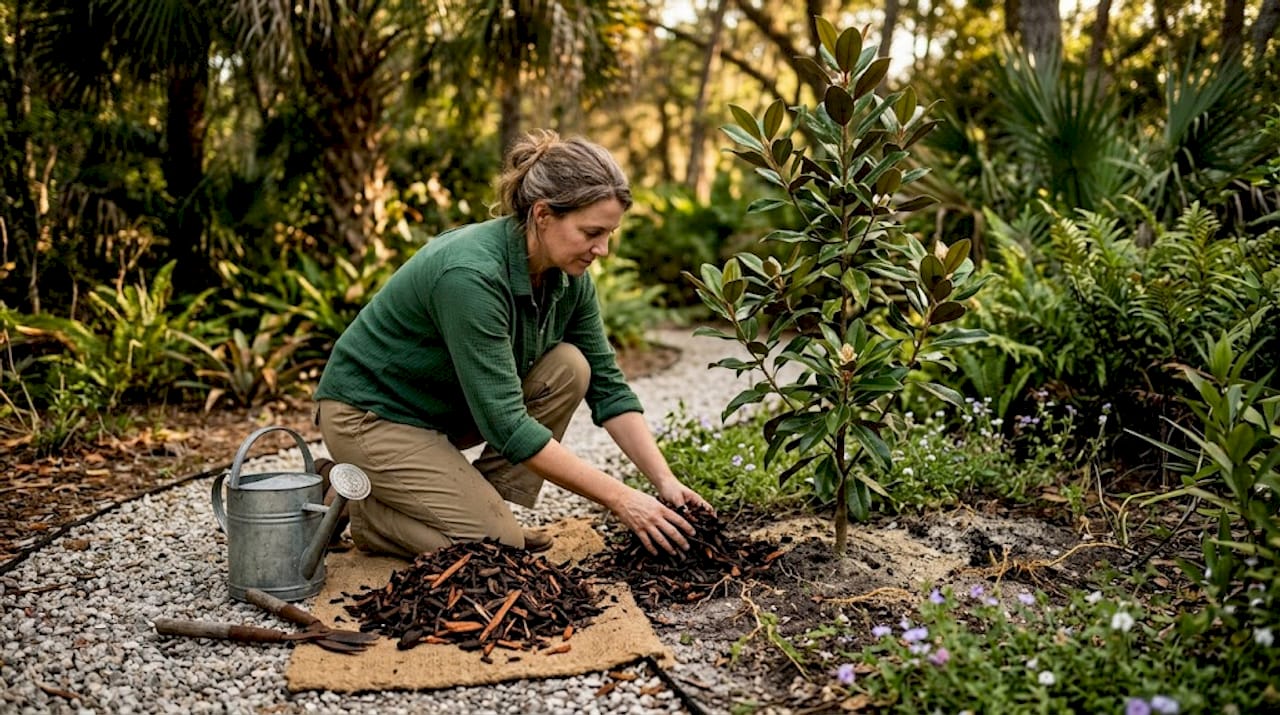
Mulching done right is genuinely transformative. A 2 to 3 inch mulch layer around the base of your tree retains moisture, regulates soil temperature, and suppresses weeds that compete for nutrients. The critical error is volcano mulching, where mulch is piled directly against the trunk. That practice traps moisture against the bark and creates an open door for fungal pathogens and insects. Keep mulch pulled back several inches from the trunk. Mulch decomposition also feeds soil biology, which supports the tree’s natural immune responses.
Pruning requires restraint. Most homeowners either never prune or prune too aggressively. Remove no more than 20 to 25 percent of a tree’s live canopy in any single year. Cutting more than that triggers stress responses that actually reduce the tree’s ability to fight disease. Focus cuts on dead, damaged, or crossing branches first. Always use clean, sharp tools, and sterilize blades between cuts when working near infected wood.
Pro Tip: Disinfect your pruning tools with a 10 percent bleach solution or 70 percent isopropyl alcohol between trees, especially after cutting near any suspicious branch dieback. Dirty blades are one of the fastest routes for disease transmission.
Soil care rounds out the maintenance picture. Central Florida soils tend to be sandy with low organic matter, which means nutrient availability drops quickly. A soil test every two to three years tells you exactly what amendments your trees need rather than guessing with a general fertilizer that could create nutrient imbalances.
How to monitor your trees and catch disease early
You don’t need specialized equipment to monitor your trees effectively. You need a consistent schedule and a checklist of things to look for. Property owners who walk their property with intention catch problems months before they become emergencies.
Here’s a practical inspection routine:
- Walk the tree’s perimeter monthly. Look at the canopy, the trunk, and the soil around the base. Changes in leaf color, density, or shape are often the first signals.
- Check for leaf abnormalities. Spots, curling, early drop, unusual discoloration, or a powdery coating all indicate problems worth investigating. Review the unhealthy tree indicators guide to match what you see to likely causes.
- Inspect bark and trunk. Cankers, oozing sap, cracks, fungal conks (shelf-like growths at the base), and unusual woodpecker activity all signal internal issues.
- Look at soil and roots. Mushrooms around the base, soil heaving, or roots that appear discolored and brittle can indicate root rot.
- Compare to prior months. A tree that loses leaves faster than last year, or develops a lean, needs attention even if individual symptoms seem minor.
Pro Tip: Photograph your trees from the same angle each season. Side-by-side comparisons over 12 months reveal gradual decline that is nearly invisible when you see the tree every day.
Knowing when to call a professional is as important as knowing what to look for. If you spot fungal conks at the trunk base, significant bark loss, sudden canopy collapse in one section, or a lean that appeared without a storm cause, contact a certified arborist. These are structural and disease signals that go beyond what a homeowner inspection can resolve. Early professional intervention costs a fraction of emergency removal.
Integrated prevention strategies and when treatment is appropriate
The best guide to tree care treats disease control as a system, not a single action. Integrated disease management combines the right tree selection, cultural practices, and targeted treatments when science supports them.
Start with disease-resistant varieties. When planting new trees, choose species and cultivars that resist common local pathogens. For example, selecting fire blight-resistant pear cultivars eliminates one of the most frustrating disease problems in the region. The Central Florida tree maintenance checklist includes variety recommendations aligned to local disease pressure.
Sanitation is underrated. Removing diseased leaf litter breaks the disease cycle by eliminating spore sources before they reinfect your trees in the next rain event. Bag and remove infected material rather than composting it.
The case against home remedies is clear. Baking soda and neem oil show low efficacy against established fungal and bacterial diseases and can cause significant foliar burning in Central Florida’s heat. Many property owners try these approaches first and arrive at professional help with a tree that now has both the original disease and chemical burn damage.
“Scientific, evidence-based practices are the foundation of effective tree disease prevention. Home remedies may seem low-risk, but in high temperatures and high humidity, they introduce new stressors on already-struggling trees.”
When fungicides or insecticides are genuinely appropriate, timing and product selection matter enormously. Preventive fungicide applications before rainy season make sense for trees with a documented history of fungal disease. Reactive spraying after symptoms appear is rarely effective. An arborist can recommend labeled products and application timing that align with your specific tree species and disease pressure.
Seasonal tree care checklist for Central Florida
Central Florida’s climate does not follow a traditional four-season pattern, which means your tree disease prevention strategies need to match the actual local calendar.
- January through March: This is your best pruning window for most deciduous trees. Late winter pruning before spring flush allows wounds to seal quickly and reduces the time pathogens have to colonize fresh cuts. Apply a fresh layer of mulch now before the heat intensifies.
- April through May: Watch for fire blight and Entomosporium leaf spot as spring rains arrive. Avoid overhead irrigation. Apply preventive fungicide to high-risk trees based on prior season history, not as a default.
- June through September: Rainy season demands maximum vigilance. Reduce irrigation to account for rainfall. Increase inspection frequency. Remove any infected material immediately after storms, since wounds created by wind damage are prime infection entry points.
- October through December: Fertilize now to build root strength through winter. Refresh mulch to support soil biology through cooler months and prepare the tree for the following growing season.
| Month Range | Priority Actions | Disease Risk Level |
|---|---|---|
| Jan–Mar | Prune, apply mulch | Low |
| Apr–May | Monitor for fungal disease, reduce overhead watering | Moderate |
| Jun–Sep | Remove infected material, reduce irrigation | High |
| Oct–Dec | Fertilize, refresh mulch, inspect for structural damage | Low to moderate |
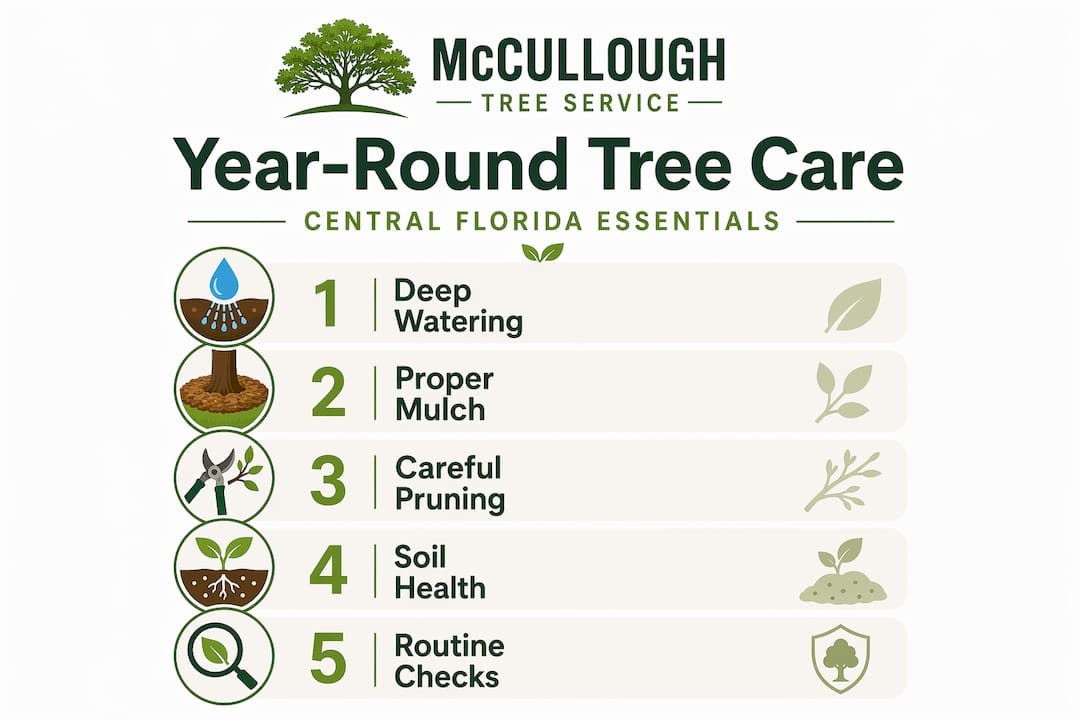
Following the tree care best practices recommended for this region gives you a year-round framework that takes the guesswork out of timing.
What I’ve learned from years of Central Florida tree care
Over years of working with property owners across Orlando and Central Florida, I’ve watched the same avoidable mistakes play out repeatedly. The most damaging one isn’t neglect. It’s well-intentioned over-pruning. I’ve seen homeowners cut back 50 percent or more of a canopy in a single session because the tree “looked overgrown,” and within two seasons that tree developed multiple secondary infections it would have never been susceptible to when healthy. Excessive pruning beyond 25 percent canopy removal in a year triggers stress responses that directly lower disease resistance.
The second pattern I’d push back on is reactive spraying. Many property owners wait until visible symptoms appear and then expect a fungicide or insecticide to solve the problem. By then, the disease has often progressed past what surface treatment can reach. The trees that stay healthy on well-managed properties are rarely treated at all. They’re watered correctly, mulched properly, and pruned at the right time of year. Prevention genuinely outperforms treatment in almost every case I’ve seen.
My honest recommendation for any property owner with mature or high-value trees is to get a professional health assessment every one to two years. Not because something is necessarily wrong, but because a certified arborist can catch structural and disease issues at a stage when options are still affordable. Waiting costs more money and more trees than any consultation ever will.
— Mcculloughtreeservice
Protect your trees with professional care in Central Florida
Reading this guide gives you a strong foundation, but the gap between knowing and doing is where most trees get into trouble. Mccullough Tree Service works with residential and commercial property owners across Orlando and Central Florida to provide the hands-on tree care that prevention requires. From precise tree trimming services designed to reduce disease risk without stressing the canopy, to the safe removal of diseased trees before they spread infection to surrounding vegetation, the team brings certified arborist expertise to every job. If you’re ready to stop guessing and start building a prevention plan that actually works for your property, reach out to Mcculloughtreeservice for a professional assessment today.
FAQ
What is the most common tree disease in Central Florida?
Fungal diseases like Entomosporium leaf spot and Ganoderma butt rot are among the most frequently seen in Central Florida, driven by the region’s high humidity and extended rainy season.
How often should I inspect my trees for disease?
A monthly visual inspection is a solid minimum, with more frequent checks during rainy season from June through September when disease pressure is highest.
Can I treat tree disease with home remedies?
Baking soda and neem oil treatments show low efficacy against most tree diseases and can cause foliar burning in high temperatures, so science-based treatments applied at the right time are far more reliable.
When is the best time to prune trees in Central Florida?
Late winter between January and March is the best pruning window for most deciduous trees, as wounds seal quickly and disease risk is lower before spring fungal activity peaks.
How much of a tree can I safely prune at one time?
Never remove more than 20 to 25 percent of a tree’s live canopy in a single year, as removing more causes stress that reduces the tree’s natural defenses against disease.
Recommended
- Tree Planting Guide Central Florida for Homeowners
- Tree health tips for Central Florida properties in 2026
- Tree preservation: boost health & beauty in Florida
- Role of preventative tree care for Central Florida property owners