By: Shelby McCullough| Published: July 9, 2026
TL;DR:
- Commercial tree removal must follow strict federal, state, and local permits, including EPA and municipal regulations. Certified arborist assessments and phased clearing techniques are essential to ensure compliance, manage costs, and protect the environment. Developers who plan permits early, invest in thorough assessments, and choose appropriate removal methods complete projects faster and within budget.
Tree removal for commercial expansion is a legally regulated process that requires permits, certified arborist assessments, and coordinated site planning before a single tree comes down. Federal oversight through the EPA’s National Pollutant Discharge Elimination System (NPDES) applies to any site disturbing more than 1 acre, and local municipalities add their own permit layers based on tree diameter and species protection. Skipping any step exposes your project to stop-work orders, fines reaching six figures, and mandatory replanting at your expense. The developers who move fastest are the ones who plan the permit timeline before they plan the construction schedule.
1. Key permit and regulatory requirements for commercial tree removal
Commercial tree clearing is governed by overlapping federal, state, and local rules. The EPA’s NPDES permit applies to any land disturbance over 1 acre and requires a Stormwater Pollution Prevention Plan (SWPPP) before clearing begins. Local municipalities layer their own requirements on top, typically targeting trees with a diameter at breast height (DBH) of 6–24 inches, with stricter rules for heritage or specimen trees.
Permit fees vary widely. Standard permits range from $0 to $150, but protected or heritage tree permits can exceed $300–$500 per tree. Penalties for unpermitted removal run from $500 to over $100,000 per tree. That range is not a typo. Municipalities treat unauthorized removal of a protected oak or cypress as a serious offense, not a paperwork slip.
Review timelines add another variable. Permit review can take 10 business days for straightforward cases, or stretch past 90 days when environmental reviews are triggered. Developers who treat the permit as a formality and schedule clearing crews before approval routinely push their project start dates back by months.
- Obtain NPDES coverage and file your SWPPP before any ground disturbance over 1 acre
- Check local DBH thresholds and identify any heritage or specimen trees on the parcel
- Budget for permit fees, mitigation costs, and a contingency for extended review periods
- Submit complete applications the first time. Incomplete applications cause most delays and denials
Pro Tip: File permit applications for the longest-lead regulatory body first. Multiple permits with staggered timelines can compress your schedule if you sequence them wrong. Plan around the slowest approval, not the fastest.
2. Certified arborist assessments and site planning
A certified arborist assessment is the foundation of every compliant commercial clearing project. The arborist surveys the entire parcel, measures DBH for each tree, flags specimen and protected species, and produces a report that supports your permit application. Arborist reports are required for heritage trees in most jurisdictions and directly influence whether your permit is approved or denied.
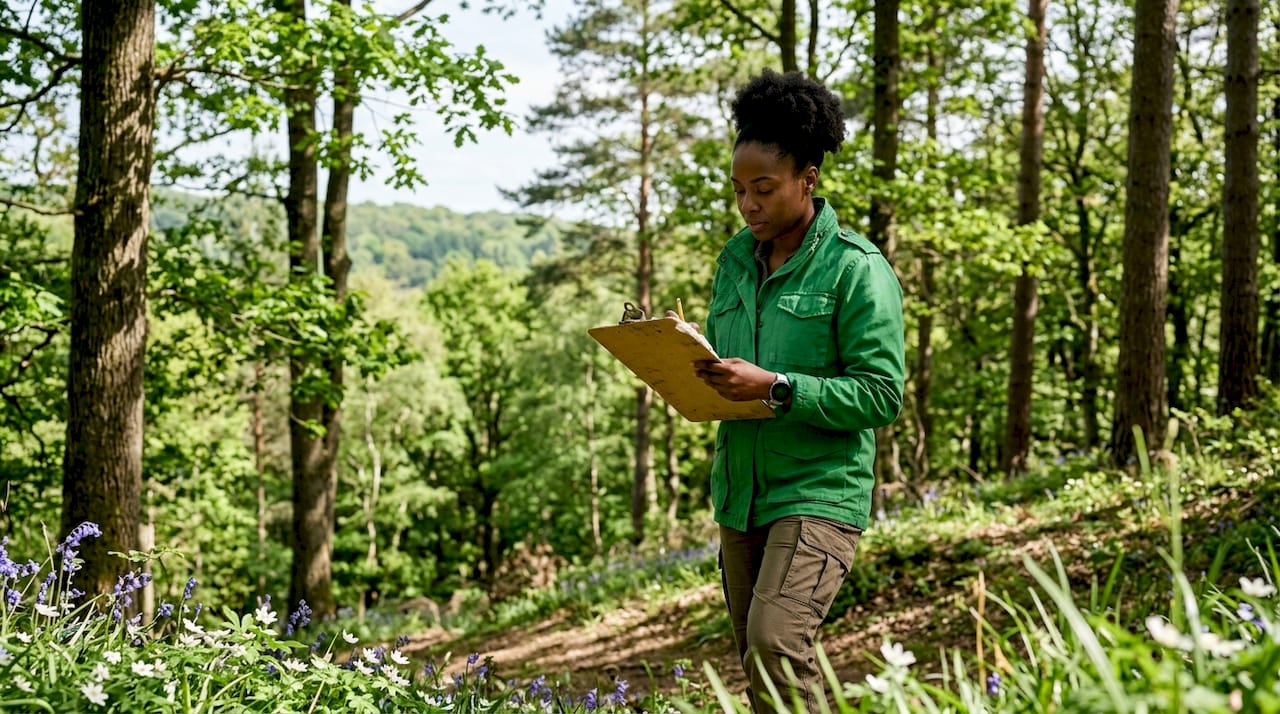
The assessment also drives mitigation planning. If you must remove specimen trees, most jurisdictions require replacement planting at a set ratio. Jacksonville, FL, for example, requires a 1:1 caliper-inch replacement ratio for specimen trees. Where replanting is not feasible on site, payment into a municipal tree fund is typically required. Both options add real cost to your budget, so knowing the numbers early matters.
Physical tree protection is part of the arborist’s scope too. Trees you plan to keep need root zone fencing, typically orange construction fencing, installed before any equipment moves on site. Proper root zone barriers are a standard best practice that prevents incidental damage and the fines that follow. Damage to a retained tree during construction can trigger the same penalties as unauthorized removal.
- Conduct a full site tree survey measuring DBH and flagging protected species before submitting permits
- Identify mitigation requirements early: replanting ratios, tree fund payments, or both
- Install physical protection zones around retained trees before clearing crews arrive
- Use the arborist report as your primary permit documentation
Pro Tip: Invest in a thorough arborist assessment upfront, even if it costs more than the minimum required. A detailed report reduces back-and-forth with regulators and shortens review time. You can review certified arborist removal methods to understand what a compliant assessment looks like in practice.
3. Top tree removal methods and land clearing techniques
The clearing method you choose affects cost, timeline, compliance, and the condition of the soil you hand off to your grading crew. Two primary approaches dominate commercial land clearing for development: forestry mulching and traditional mechanical clearing using bulldozers, excavators, and stump grinders.
Forestry mulching vs. traditional clearing
Forestry mulching uses a single machine to cut, grind, and spread vegetation as organic mulch in one pass. Forestry mulching provides immediate organic ground cover that can replace costly silt fences and erosion blankets, which directly reduces stormwater compliance costs. Traditional clearing with bulldozers and excavators moves faster on dense timber but generates large debris piles that require hauling, adding cost and logistics.
| Method | Best for | Key advantage | Key limitation |
|---|---|---|---|
| Forestry mulching | Light to medium vegetation | Reduces erosion control costs | Slower on heavy timber |
| Bulldozer clearing | Dense timber, large acreage | High speed on heavy material | Debris hauling adds cost |
| Excavator with grapple | Selective removal, tight sites | Precision around retained trees | Higher equipment cost per hour |
| Stump grinding | Post-clearing stump removal | Clean finish for grading | Adds time and cost per stump |
Stump grinding costs range from $150 to $800 per stump, depending on stump diameter and accessibility. On a parcel with dozens of stumps, that line item alone can shift your budget significantly.
Phased clearing and crew coordination
Pre-clearing coordination meetings between the developer, engineer, and clearing crews prevent the most common and expensive site problems: erosion buildup, access conflicts, and grading delays. Phased clearing, where you clear sections in sequence rather than the entire parcel at once, keeps exposed soil to a minimum and reduces the erosion control infrastructure you need to maintain.
On-site mulching from forestry operations also cuts hauling costs. Material that would otherwise fill dumpsters becomes ground cover that meets EPA stormwater requirements. That is a direct cost offset with a compliance benefit attached.
4. Cost factors and budgeting for commercial tree removal projects
Commercial land clearing costs range from $1,500 to over $12,000 per acre, depending on vegetation density, tree size, and the clearing method used. Lightly wooded parcels with small-diameter trees sit at the low end. Dense canopy with large specimen trees requiring individual permits and mitigation push costs well past the midpoint.
The permit and mitigation layer adds costs that developers frequently underestimate. Permit fees, mitigation replanting, and tree fund payments are fixed obligations once your permit conditions are set. Fines for noncompliance can dwarf those costs entirely. A single unpermitted removal of a protected tree can trigger fines exceeding $100,000. Treating compliance costs as optional savings is the fastest way to blow a project budget.
Three strategies consistently reduce total clearing costs:
- Salvage timber sales: Large-diameter hardwoods have market value. Coordinate with a timber buyer before clearing to offset equipment and hauling costs.
- On-site mulching: Forestry mulching eliminates hauling fees and reduces erosion control material costs simultaneously.
- Accurate site plans: Detailed pre-clearing surveys prevent scope creep. Discovering a protected tree mid-project stops work and resets your permit timeline.
Pro Tip: Get a line-item clearing bid that separates permit fees, mitigation costs, equipment costs, and hauling. Bundled bids hide the variables that blow budgets. You can review commercial tree removal cost factors for a detailed breakdown of what drives pricing.
5. Environmental best practices and compliance tips
Environmental compliance in commercial tree clearing goes beyond pulling the right permits. Tree canopy preservation ordinances mean property ownership does not give you unrestricted removal rights. Protected species, migratory bird nesting seasons, and wetland buffer zones all impose timing and method restrictions that can halt clearing mid-project if you have not planned for them.
Migratory bird protections under the Migratory Bird Treaty Act prohibit disturbing active nests. Clearing during nesting season without a prior survey creates federal liability. Schedule your arborist survey to include a nesting assessment, and time clearing outside peak nesting periods when possible.
Wetland adjacency is another common oversight. Parcels near wetlands or waterways require additional permits and buffer zone compliance. Clearing within a buffer zone without authorization triggers Army Corps of Engineers jurisdiction and can stop a project entirely.
- Install root zone fencing around all retained trees before equipment arrives on site
- Conduct a nesting survey before clearing during spring or summer months
- Confirm wetland buffer boundaries with your engineer before finalizing the clearing plan
- Use erosion control measures, including silt fences, sediment basins, or forestry mulch, per your SWPPP
- Document every step: pre-clearing photos, permit approvals, inspection sign-offs, and mitigation receipts
Pro Tip: Engage your local planning authority before submitting your permit application. A pre-application meeting clarifies local requirements, flags potential issues early, and builds a working relationship with the reviewers who control your timeline. Developers who skip this step often face revision requests that add weeks to the process.
Key takeaways
Successful commercial tree clearing requires permits, arborist assessments, and phased clearing methods to stay on schedule, within budget, and legally compliant.
| Point | Details |
|---|---|
| Permits are non-negotiable | NPDES and local permits are required before clearing any commercial site over 1 acre. |
| Arborist reports drive approvals | Detailed tree surveys and mitigation plans are the primary documents regulators review. |
| Method selection controls cost | Forestry mulching reduces erosion control and hauling costs compared to traditional clearing. |
| Fines exceed permit costs | Unpermitted removal penalties can reach $100,000 per tree, far outweighing compliance costs. |
| Phased clearing reduces risk | Clearing in sections limits erosion exposure and prevents grading crew conflicts. |
What I have learned from watching developers get this wrong
The most consistent mistake I see commercial developers make is treating tree removal as a construction task rather than a regulatory process. They hire a clearing crew, set a start date, and then discover the permit takes 60 days. The crew sits idle. The project schedule compresses. Costs climb.
The second mistake is underinvesting in the arborist assessment. A minimal survey misses protected species, produces a thin report that regulators send back for revision, and delays the permit further. A thorough assessment costs more upfront but moves through review faster because it answers the questions before regulators ask them.
Engaging with authorities early and submitting complete documentation the first time is the single highest-return action a developer can take on a clearing project. The permit is not a fee. It is a record of compliance that protects the project from litigation, stop-work orders, and forced restoration. Developers who understand that distinction plan better and spend less.
Phased clearing and forestry mulching are not just environmental gestures. They reduce real costs and keep the site in a condition that grading crews can work with immediately. The developers who integrate environmental best practices into their clearing plan from the start finish faster than those who treat compliance as an afterthought.
— Results
Mcculloughtreeservice: professional commercial clearing in Central Florida
Commercial tree clearing in Orlando and Central Florida carries specific permit requirements, protected species considerations, and site conditions that demand local expertise.
Mcculloughtreeservice provides certified arborist assessments, permit-compliant commercial tree removal, and full land clearing services for commercial expansion projects across Central Florida. The team handles everything from initial site surveys and permit documentation to forestry mulching, stump grinding, and debris management. Whether you are clearing for a parking expansion, a new building footprint, or a full site development, Mcculloughtreeservice has the equipment and credentials to keep your project on schedule. Request an estimate and get a line-item clearing plan built around your site’s specific conditions.
FAQ
What permits are required for commercial tree removal?
Commercial sites disturbing over 1 acre require an EPA NPDES permit and a SWPPP. Local municipalities add tree removal permits based on tree diameter (DBH) and species protection status.
How long does the commercial tree removal permit process take?
Permit review ranges from 10 business days to over 90 days for complex cases involving heritage trees or environmental reviews. Plan your project schedule around the longest expected approval timeline.
What happens if you remove trees without a permit?
Fines for unpermitted removal range from $500 to over $100,000 per tree, and regulators can issue stop-work orders and require mandatory replanting at replacement ratios of 1:1 to 3:1.
What is the most cost-effective clearing method for commercial sites?
Forestry mulching is the most cost-effective method for light to medium vegetation because it eliminates hauling costs and provides natural erosion control that meets EPA stormwater requirements in a single pass.
Do I need a certified arborist for commercial tree removal?
Yes. Most jurisdictions require a certified arborist report for heritage and specimen trees, and the report is the primary document supporting your permit application. Professional arborist surveys also identify protected species that could trigger additional compliance requirements.
Recommended
- Commercial Tree Removal Guide for Safe Property Management
- How to Remove Commercial Trees Safely and Legally
- Commercial Tree Removal Explained: Ensuring Safety and Compliance
- Tree Planting for Commercial Properties: Boosting Value and Compliance