By: Shelby McCullough| Published: June 28, 2026
TL;DR:
- Choosing the right tree depends on site conditions, climate projections, and local regulations to ensure long-term success. Small to moderate-sized trees often outperform large species in tight urban spaces by offering effective shade without infrastructure risks. Proper soil preparation, adherence to permits, and ongoing professional maintenance are essential for sustainable urban tree health and benefits.
Urban tree selection is the systematic process of choosing tree species that will thrive in specific city conditions while delivering maximum ecological, cooling, and aesthetic benefits. Get it wrong and you end up with cracked sidewalks, blocked sewer lines, or a dead tree within five years. Get it right and you reduce heat, boost property value, and contribute to a healthier neighborhood. This guide covers urban tree selection explained from site assessment through regulatory compliance, giving property managers and homeowners the framework to make confident, lasting choices.
What environmental and site factors determine the best urban tree species?
Site conditions are the single biggest predictor of urban tree success or failure. Ignoring plant site factors like soil type and root space leads to high failure rates regardless of which species you choose. A tree that thrives in a suburban backyard can die within two years when planted in a compacted, paved urban lot.
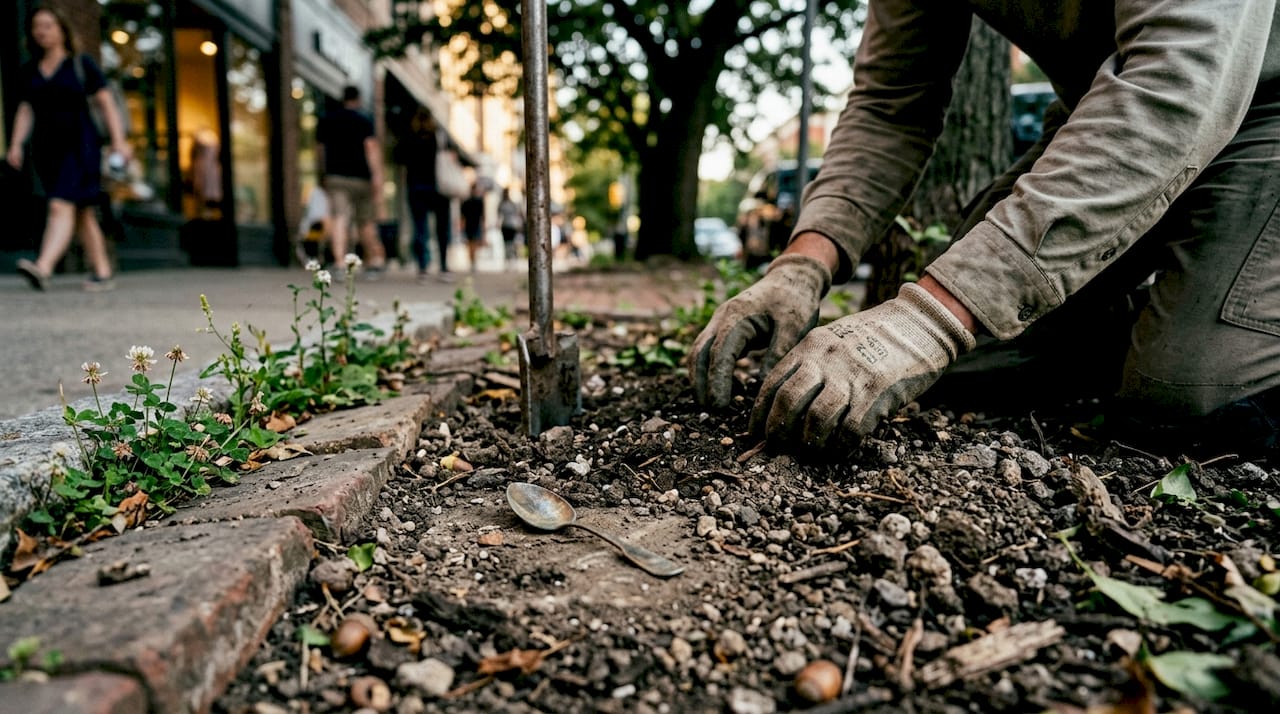
Soil quality in cities is rarely natural. Construction fill, compaction from foot traffic, and contamination from road salt all reduce the oxygen and water available to roots. Before choosing any species, test your soil’s pH, drainage rate, and compaction level. A simple percolation test, where you fill a hole with water and measure how fast it drains, tells you whether the site suits moisture-sensitive or drought-tolerant species.
Root space is equally critical. Most urban trees need at least 1,000 cubic feet of soil volume to reach maturity. Planting a large-canopy tree in a 4-foot tree pit is a setup for failure. Species selection must match the actual root zone available, not the ideal one.
Climate adaptation adds another layer of complexity. Space-for-time substitution, a methodology developed by UC Davis and USDA researchers, recommends selecting species already thriving in cities that are currently warmer and drier than your target location. This approach prepares your urban forest for the climate conditions projected 20–30 years from now, not just today’s weather.
Urban stresses compound natural climate challenges. Heat reflected off pavement, air pollution, drought from impervious surfaces, and de-icing salt all narrow the range of species that will survive long-term. When evaluating a site, treat these stressors as hard filters before you even look at a species list.
- Soil type and drainage: Sandy soils drain fast and suit drought-tolerant species; clay soils hold water and favor flood-tolerant trees.
- Root space: Measure the available soil volume, not just the surface area of the planting hole.
- Climate projection: Select species rated for a zone one or two warmer than your current USDA hardiness zone.
- Urban stressors: Pollution tolerance, salt resistance, and heat tolerance should all appear on your species checklist.
- Overhead and underground utilities: Check for power lines above and gas or water lines below before finalizing any species.
Pro Tip: Contact your local cooperative extension office for a free or low-cost soil test before purchasing any trees. The results will eliminate half the guesswork in species selection.
How do species characteristics impact their suitability for urban settings?
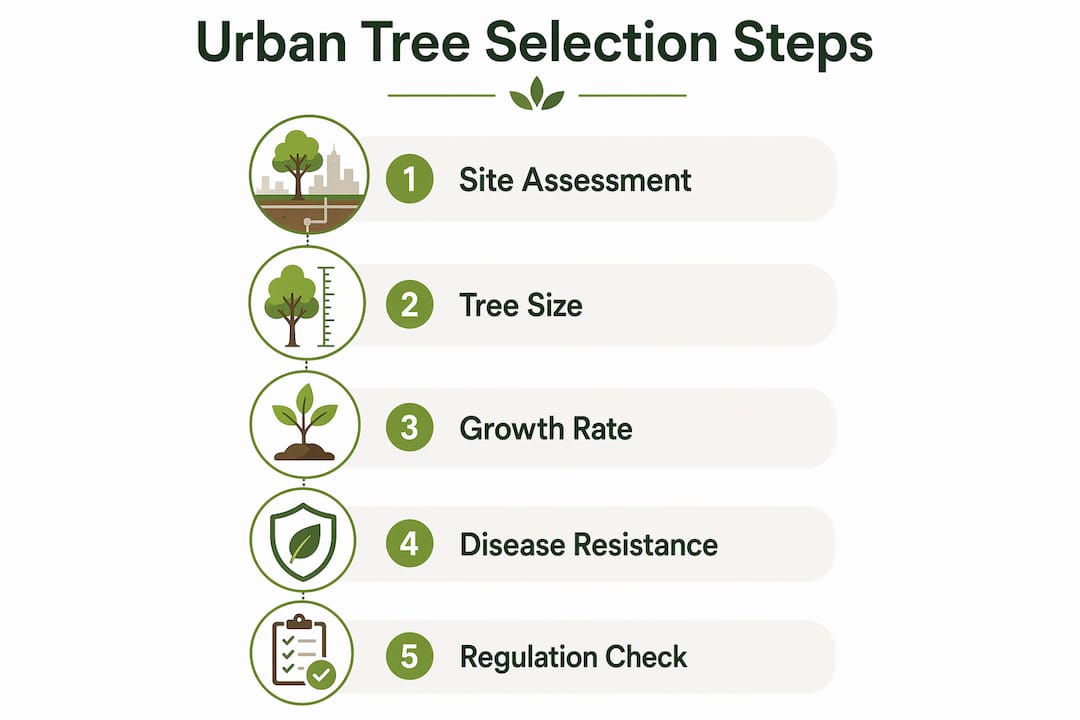
Tree size is the most overlooked factor in urban species selection. Small to moderate-sized trees can provide shade and cooling comparable to large trees while reducing infrastructure damage risks. A 25-foot ornamental tree planted in the right spot often outperforms a 60-foot shade tree crammed into a narrow median.
Growth rate matters just as much as mature size. Fast-growing trees frequently develop weaker wood that is prone to limb breakage, especially during storms. Species like silver maple and Bradford pear grow quickly but create serious hazards within 15–20 years. Slower-growing species like bur oak or American hornbeam take longer to establish but deliver decades of reliable structure.
Canopy shape and density directly affect cooling performance. Urban trees reduce radiant heat on pedestrians by over 18°C when layered with shrubs and ground cover. A wide-spreading canopy that shades both pavement and building walls delivers the greatest cooling return. Columnar or narrow-form trees work better along tight streetscapes but provide less overall shade.
Disease resistance and low maintenance requirements reduce long-term costs. Species that require frequent spraying, heavy pruning, or are prone to pest outbreaks add recurring expense and liability. Dutch elm disease wiped out entire urban canopies across the United States in the 20th century, a lesson in the cost of monoculture planting.
One underappreciated issue is botanical sexism. Many cities plant only male trees to avoid fruit and seed litter, but male trees release far more pollen than female trees. This practice has measurably worsened urban allergy seasons across the country. Selecting female or fruitless cultivars where available balances cleanliness with air quality.
| Species trait | Urban benefit | Potential problem |
|---|---|---|
| Small to moderate size | Fits tight lots, less infrastructure risk | Less shade coverage per tree |
| Drought tolerance | Survives compacted, dry urban soils | May need supplemental water at establishment |
| Wide canopy spread | Maximum shade and cooling | Requires more horizontal space |
| Slow growth rate | Strong wood, long lifespan | Slower to provide shade benefits |
| Low pollen production | Better air quality for residents | Limits species choices in some climates |
Pro Tip: Check your city’s approved species list for trees already proven in your local urban conditions. These lists reflect years of real-world performance data, not just nursery catalog descriptions.
What regulatory and community guidelines must be considered?
Local regulations govern urban tree planting more strictly than most property owners expect. Urban tree planting permits typically take about 5 business days to process, and many cities prohibit any single species from exceeding 10% of the total canopy to prevent monoculture disease vulnerability. Planting without a permit can result in fines or mandatory removal at your expense.
Most municipalities maintain three types of species lists: approved, restricted, and prohibited. Approved lists include trees proven to perform well locally. Restricted lists flag species that require special conditions or permits. Prohibited lists ban trees that cause documented infrastructure damage, spread invasive seeds, or create public safety hazards. Checking all three lists before purchasing a tree saves significant time and money.
Canopy coverage goals shape neighborhood planting plans. Many urban forestry programs target 30% canopy cover across residential zones, a threshold linked to measurable reductions in urban heat and stormwater runoff. If your block is already near that target, your permit application may face additional scrutiny. If your area is below it, you may qualify for subsidized planting programs.
Spacing rules protect both trees and infrastructure. Most cities require minimum distances between trees and streetlights, driveways, intersections, and utility lines. A tree planting considerations guide for Central Florida properties outlines these clearances in practical terms for homeowners and property managers.
- Obtain permits before purchasing trees, not after.
- Cross-reference your chosen species against the city’s prohibited and restricted lists.
- Confirm minimum spacing from utilities, sidewalks, and structures.
- Check whether your neighborhood has active canopy coverage goals that affect approval.
- Ask your municipality about cost-share or free tree programs tied to urban greening targets.
How do you design an effective urban tree planting strategy?
A successful urban tree planting strategy starts with a written site assessment, not a trip to the nursery. Walk the planting area and document soil conditions, available root space, overhead and underground utilities, sun exposure, and proximity to structures. This assessment becomes your filter for every species decision that follows.
Set clear goals before selecting species. Shade for a parking lot requires a different tree than privacy screening along a fence line or stormwater management near a retention pond. Mixing goals without prioritizing them leads to compromised outcomes. Rank your top two objectives and let them drive species selection.
Layered vegetation delivers the best ecological return. Layered planting that combines trees with shrubs and ground cover maximizes cooling through stratified shade and evapotranspiration. However, excessive density in humid climates can trap heat and moisture at ground level, so balance density with your local conditions. In Central Florida, for example, spacing and airflow matter as much as canopy coverage.
- Assess the site: Document soil, drainage, root space, utilities, and sun exposure before selecting any species.
- Define your goals: Prioritize shade, cooling, biodiversity, or aesthetics and let those goals filter your species list.
- Apply space-for-time substitution: Choose species from the UC Davis and USDA framework that already thrive in climates warmer than your current zone.
- Diversify species: Plant no more than 10% of any single species across your property or block to reduce disease vulnerability.
- Plan for maintenance: Budget for annual pruning, irrigation during establishment, and periodic professional tree trimming to keep trees structurally sound.
- Consult a certified arborist: A professional site visit before planting catches problems that no checklist can fully anticipate.
Canopy-deprived urban neighborhoods endure up to 40% higher excess heat compared to well-greened areas. That gap is large enough to affect public health, energy costs, and property values. A well-executed planting strategy closes that gap one tree at a time.
Pro Tip: Plant trees in fall when soil temperatures are still warm but air temperatures have dropped. Root establishment happens faster in fall than in spring, giving trees a stronger start before their first summer.
Key Takeaways
Effective urban tree selection requires matching species to site conditions, climate projections, and local regulations before a single tree is purchased.
| Point | Details |
|---|---|
| Site assessment comes first | Soil type, root space, and urban stressors determine which species will survive long-term. |
| Climate resilience matters | Use space-for-time substitution to select species suited to future projected conditions, not just today’s climate. |
| Size and growth rate are critical | Small to moderate-sized trees often outperform large species in tight urban lots with less infrastructure risk. |
| Regulations shape your choices | Permits take about 5 business days; no single species should exceed 10% of total canopy to prevent disease spread. |
| Layered planting maximizes cooling | Combining trees with shrubs and ground cover reduces radiant heat by over 18°C compared to trees planted alone. |
What I’ve learned from watching urban trees fail
The most common mistake I see property managers make is treating tree selection like a landscaping decision rather than an infrastructure decision. They pick a tree based on how it looks in a catalog photo, plant it in whatever space is available, and then wonder why it dies or destroys a sidewalk within a decade.
The second mistake is chasing fast growth. A tree that doubles in size in five years sounds appealing until a storm takes out three major limbs and drops them on a parked car. Slower-growing species with dense wood structure consistently outperform fast growers in urban settings over a 20-year horizon.
Smaller trees also get far less credit than they deserve. Property managers often assume bigger means better when it comes to shade and cooling. The research does not support that assumption. A well-placed 20-foot tree with a wide canopy can shade a building wall more effectively than a 50-foot tree planted in the wrong spot.
The detail that gets skipped most often is soil health. You can select the perfect species, follow every regulation, and plant at the ideal time of year. If the soil is compacted, poorly drained, or contaminated, the tree will struggle regardless. Soil preparation is not optional. It is the foundation that every other decision rests on.
Finally, maintenance is not a cost to minimize. It is the investment that protects everything you spent on selection and planting. Trees that receive regular pruning and health checks live longer, cause fewer hazards, and deliver more consistent ecological benefits. Skipping maintenance to save money in year three often means paying for hazardous tree removal in year ten.
— Mcculloughtreeservice
Tree care support from Mcculloughtreeservice
Choosing the right tree is only the beginning. Long-term success depends on consistent, professional care from planting through maturity.
Mcculloughtreeservice works with residential and commercial property owners across Orlando and Central Florida to support every stage of urban tree care. From certified arborist consultations that assess site conditions and species suitability, to professional trimming that keeps your trees structurally sound and compliant with local regulations, the team brings licensed expertise to every job. Whether you are planting new trees, maintaining an existing canopy, or dealing with a tree that has outgrown its space, Mcculloughtreeservice provides the professional support that turns good intentions into lasting results.
FAQ
What is urban tree selection?
Urban tree selection is the process of choosing tree species suited to specific city conditions, including soil type, available root space, climate, and local regulations. The goal is to maximize ecological, cooling, and aesthetic benefits while minimizing infrastructure damage and maintenance costs.
How do I choose the best trees for a city lot?
Start with a site assessment that documents soil quality, root space, sun exposure, and proximity to utilities. Then filter species by drought tolerance, mature size, and your city’s approved species list before making a final choice.
Why do urban trees fail so often?
Overlooking plant site factors like soil compaction and root space is the leading cause of urban tree failure. Species selection matters, but site conditions determine whether any species survives long-term.
What is space-for-time substitution in urban forestry?
Space-for-time substitution is a planting strategy that selects tree species already thriving in cities warmer and drier than the target location. This prepares urban forests for projected climate conditions 20–30 years from now.
Do I need a permit to plant a tree in a city?
Most cities require permits for street trees and some private plantings. Permits typically process in about 5 business days, and many municipalities restrict any single species to no more than 10% of total canopy coverage. Check your local urban forestry office before planting.
Recommended
- Tree Hazard Evaluation Explained: A Guide for FL Owners
- What Is Tree Work Compliance? A Property Owner’s Guide
- Urban Tree Care Explained: Health, Safety, and Law
- Tree Care 101: Trimming vs. Pruning Guide