By: Shelby McCullough| Published: June 23, 2026
TL;DR:
- Tree work compliance involves following safety standards and permit requirements before tree maintenance or removal. Property owners must verify contractor credentials and obtain necessary permits to prevent legal and safety issues. Compliance ensures long-term tree health, worker safety, and protects property value.
Tree work compliance is defined as adherence to federal safety standards, local permit requirements, and industry care guidelines that govern all professional tree maintenance and removal. For property owners and managers in Orlando and Central Florida, understanding what is tree work compliance means knowing which rules apply before a single branch is cut. The two primary national frameworks are ANSI A300 for tree health and ASC Z133-2026 for worker safety. Ignoring either standard exposes you to OSHA fines, civil penalties, and personal liability for accidents on your property.
What is tree work compliance and which standards govern it?
Tree work compliance in arboriculture rests on two distinct but equally binding national standards. ANSI A300 covers tree health practices including pruning, fertilization, and structural support. ASC Z133-2026 governs worker safety on every job site. Compliance with both is the industry gold standard, and treating them as separate concerns is a common and costly mistake.
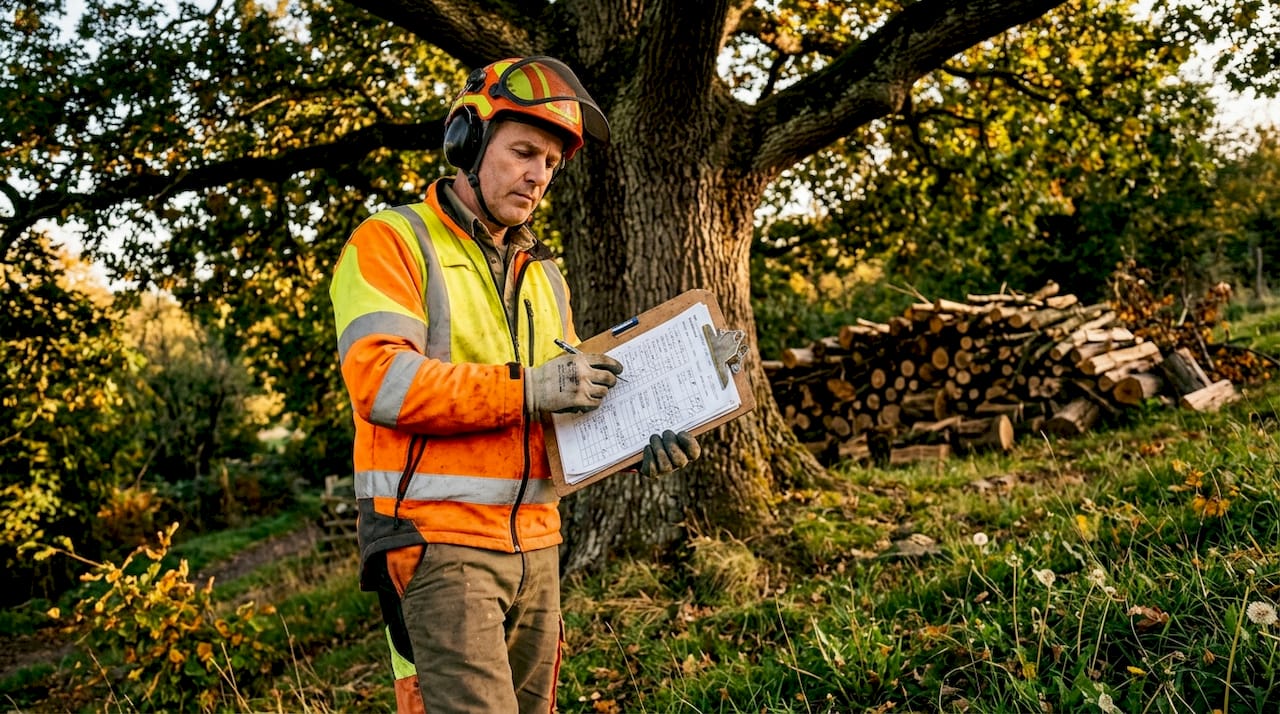
OSHA enforces tree service safety by referencing ANSI Z133 standards under its General Duty Clause. That means a company does not need to violate a specific OSHA rule to face a citation. If a crew fails to meet ANSI Z133 requirements, OSHA can still issue a fine. Violations carry penalties ranging from $7,000 to $70,000 per incident.
The 2026 update to ASC Z133 introduced a critical language shift. The standard now uses the word “shall” instead of “should” throughout its text. That single word change converts every safety recommendation into a mandatory requirement. New provisions include a four-level electrical qualification system and structured drop zone management protocols.
Key requirements under the updated ASC Z133-2026 include:
- Mandatory pre-job hazard assessments before any work begins
- Documented personal protective equipment (PPE) checks for every crew member
- A four-level qualification system for workers operating near electrical lines
- Defined drop zones with clear communication protocols
- Timestamped equipment inspection records retained for audit purposes
Pro Tip: Ask any tree service provider to show you their written safety program before work starts. A compliant company has this document ready. One that hesitates likely does not have it.
Initial compliance implementation for a tree service company costs $5,000–$15,000. Companies that invest in full compliance typically see insurance premium reductions of 10–15% within 18–24 months. That math matters to you as a property owner because compliant companies carry better coverage, which protects you from liability when crews work on your land.
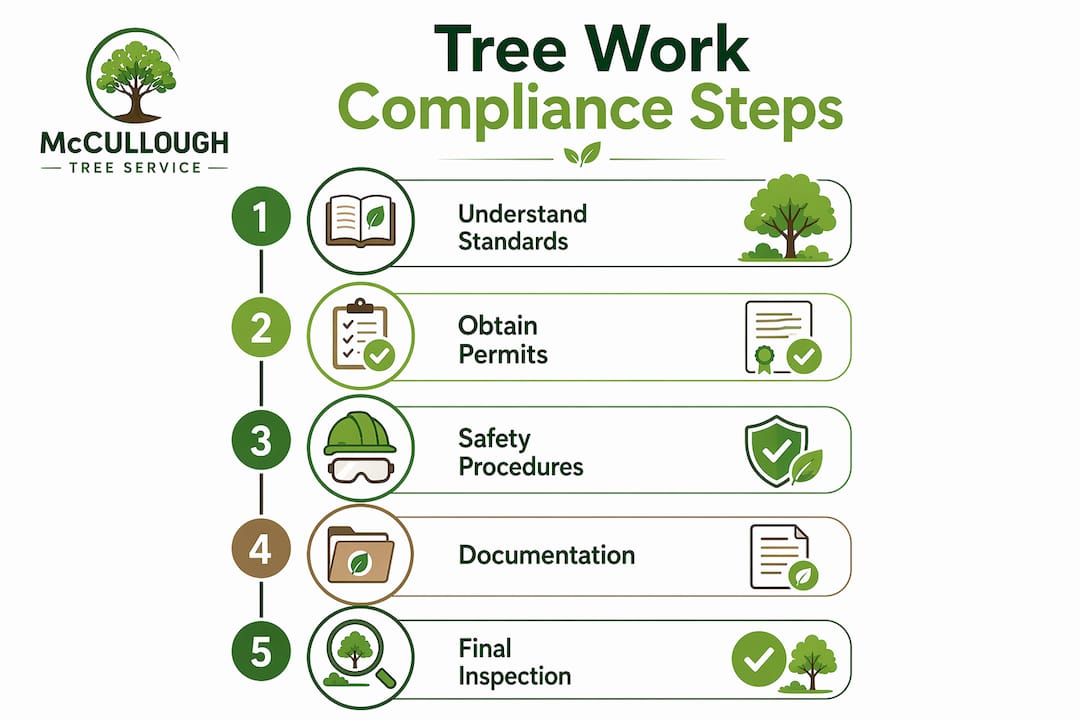
How do local permits and municipal rules affect tree work?
Federal standards set the safety floor, but local ordinances determine what work requires a permit and what happens if you skip one. Most municipalities require permits for tree removal and major pruning, particularly for trees above a certain trunk circumference or species protected under local tree preservation guidelines. In Central Florida, tree permits are required for many removal and significant pruning projects on both residential and commercial properties.
Municipal inspection timelines and reporting windows are specific and non-negotiable. Many jurisdictions require that completed work be reported within 5 business days. Inspections are typically completed within 10 business days after notification. Missing these windows can trigger stop-work orders even after a job is finished.
Permit negligence is one of the leading causes of costly legal problems for property owners. Civil penalties, mandatory tree restoration orders, and fines are all possible outcomes. The financial exposure from skipping a permit almost always exceeds the cost of obtaining one.
Property owners often assume the contractor handles all permitting. That assumption is wrong. Permitting responsibility typically falls on the property owner unless the contract explicitly delegates it to the service provider. Get that delegation in writing before any work begins.
Common local compliance requirements to verify before scheduling work:
- Whether the tree species is protected under local ordinance
- Trunk circumference thresholds that trigger permit requirements
- Setback rules for trees near property lines or public rights of way
- Required notification periods for neighbors or utility companies
- Specific forms or fees required by your city or county
What compliance documents should property owners require?
Verifying credentials before hiring a tree service is the single most effective risk management step a property owner can take. Insurance verification is the starting point. Every legitimate tree service must carry General Liability insurance and Workers’ Compensation coverage. If a worker is injured on your property and the company lacks Workers’ Compensation, you may be held financially responsible.
Beyond insurance, the compliance documentation you should request includes:
- Pre-job hazard assessment. A written evaluation of site risks completed before work starts, including overhead line proximity, soil conditions, and structural tree hazards.
- PPE inspection logs. Timestamped records showing that helmets, eye protection, chainsaw chaps, and other required gear were checked before each shift.
- Equipment inspection records. Documented checks of chainsaws, chippers, aerial lifts, and rigging gear.
- Proof of ISA certification. The International Society of Arboriculture credential confirms the arborist has passed standardized competency testing in tree care.
- TCIA membership verification. Tree Care Industry Association membership signals commitment to industry safety and ethics standards.
- Current business license. Confirms the company is legally authorized to operate in your jurisdiction.
ISA certification and automated safety documentation are industry best practices that distinguish professional, compliant providers from unlicensed operators. A company that cannot produce these documents on request is not compliant. You can verify ISA credentials directly through the ISA’s public online database.
Pro Tip: Request a certificate of insurance directly from the provider’s insurance company, not just a copy from the contractor. Certificates can be forged. A direct confirmation takes five minutes and eliminates the risk entirely.
For commercial properties, the documentation bar is higher. Review the compliance records your tree company maintains, including hazard assessments and equipment inspections, before signing any service agreement.
What are the most common tree work compliance risks?
The most dangerous assumption a property owner makes is that any licensed contractor is automatically compliant. Licensing and compliance are not the same thing. A company can hold a business license while still lacking proper insurance, skipping hazard assessments, or sending uncertified workers to handle high-risk jobs near power lines.
Electrical hazards are the leading cause of fatalities in tree care. Work near power lines requires a minimum approach distance of 10 feet for lines under 50kV. Any work within 50 feet of a power line must include coordination with the utility provider before the job begins. Skipping that coordination step is not just a compliance violation. It is a life-safety failure.
“Line clearance and utility coordination are critical to preventing electrocution fatalities in tree care. No compliant crew begins work near energized lines without written utility confirmation.”
Additional compliance pitfalls property owners regularly encounter include:
- Hiring providers who carry no Workers’ Compensation, creating direct owner liability
- Assuming storm damage cleanup does not require permits when it often does
- Failing to document verbal agreements about permit responsibility in writing
- Scheduling work without confirming the tree is not protected under local ordinance
- Overlooking the need for ongoing site safety evaluations during multi-day jobs
Emergency planning is also part of compliance in arboriculture. A compliant crew has a written emergency action plan on site. That plan identifies the nearest hospital, assigns a first-aid responder, and establishes communication protocols if an accident occurs. Ask to see it before work begins.
How does compliance improve tree health, property value, and safety?
Compliance is not just a legal obligation. It delivers measurable benefits to your trees, your property, and the workers on your land. ANSI A300 standards govern pruning cuts, removal of deadwood, and structural support methods in ways that promote long-term tree health and reduce future maintenance costs. Non-compliant pruning, such as topping or flush cuts, accelerates decay and shortens a tree’s life.
The table below summarizes the core benefits of full tree work compliance:
| Compliance Area | Direct Benefit |
|---|---|
| ANSI A300 pruning standards | Promotes tree longevity and reduces future maintenance costs |
| ASC Z133-2026 safety protocols | Reduces on-site accidents and fatalities for workers |
| Insurance verification | Protects property owners from financial liability for injuries |
| Local permit compliance | Prevents civil fines, stop-work orders, and restoration mandates |
| ISA-certified arborists | Ensures correct diagnosis and treatment of tree health issues |
Safety compliance also reduces accidents at the job site. Automated safety tracking systems cut insurance audit failure rates significantly. Companies without these systems fail audits at a rate 23% higher than those with documented safety programs. That failure rate translates directly into higher insurance costs, which compliant companies pass back to clients as savings.
Well-maintained, properly pruned trees add measurable value to residential and commercial properties. Healthy trees reduce cooling costs, improve curb appeal, and signal responsible property stewardship to neighbors and local authorities. Compliance with tree preservation guidelines is the foundation of that long-term investment.
Key Takeaways
Tree work compliance requires meeting both ANSI A300 tree health standards and ASC Z133-2026 safety mandates, obtaining local permits, and verifying contractor insurance and credentials before any work begins.
| Point | Details |
|---|---|
| Two national standards apply | ANSI A300 governs tree health; ASC Z133-2026 governs worker safety. Both are mandatory. |
| Local permits protect owners | Skipping permits can trigger civil fines, stop-work orders, and mandatory restoration. |
| Insurance verification is non-negotiable | Require General Liability and Workers’ Compensation certificates before work starts. |
| Permitting is the owner’s responsibility | Unless delegated in writing, permit obligations fall on the property owner, not the contractor. |
| Electrical work requires utility coordination | Any tree work within 50 feet of power lines must be cleared with the utility provider first. |
Why compliance is the one thing property owners cannot delegate away
Working in Central Florida for years, I have seen the same pattern repeat itself. A property owner hires the lowest bidder, skips the document check, and assumes the contractor handles everything. Then a worker gets hurt, or the city issues a stop-work order, or a protected tree gets removed without a permit. The owner is left holding the legal and financial consequences.
Compliance is not paperwork for its own sake. It is the mechanism that keeps workers alive, trees healthy, and property owners out of court. The shift from “should” to “shall” in ASC Z133-2026 is not bureaucratic noise. It is the industry acknowledging that voluntary safety was not enough. Property owners need to internalize that same shift in their own thinking.
Vetting a contractor takes 20 minutes. Verifying insurance, checking ISA credentials, and confirming permit status before work starts costs nothing. The alternative, dealing with an OSHA investigation or a civil lawsuit, costs far more than any tree job. Treat compliance as a fixed part of every project, not an optional add-on.
— Mcculloughtreeservice
Mcculloughtreeservice keeps your property fully protected
Mcculloughtreeservice operates under ANSI A300 and ASC Z133-2026 standards on every job in Orlando and Central Florida. Every crew member carries verified PPE, and every project begins with a documented hazard assessment.
Mcculloughtreeservice holds current licensing, General Liability insurance, and Workers’ Compensation coverage. ISA-certified arborists lead all tree health assessments and pruning decisions. Whether you need compliant tree trimming or a full hazardous tree removal handled to code, Mcculloughtreeservice delivers the documentation and credentials you need to stay protected. Contact Mcculloughtreeservice today for a free estimate and compliance-ready service on your property.
FAQ
What is tree work compliance in simple terms?
Tree work compliance is following all applicable safety standards, permit requirements, and documentation rules before and during tree maintenance or removal. The two primary national frameworks are ANSI A300 for tree health and ASC Z133-2026 for worker safety.
Do property owners need a permit to remove a tree?
Most municipalities require a permit for tree removal, especially for protected species or trees above a certain trunk size. Permit responsibility typically falls on the property owner unless the contract explicitly assigns it to the contractor.
What PPE is required for compliant tree work?
ASC Z133-2026 mandates helmets, eye protection, hearing protection, chainsaw-resistant chaps, and gloves as minimum PPE for ground workers. Aerial workers require additional fall protection equipment and harness inspection logs.
How close can tree workers get to power lines?
The minimum approach distance for lines under 50kV is 10 feet. Any work within 50 feet of a power line requires utility coordination with the utility provider before the job begins.
What certifications should I look for when hiring a tree service?
ISA certification confirms an arborist has passed standardized competency testing. TCIA membership signals commitment to industry safety standards. Both credentials, combined with valid insurance, are the baseline for a compliant tree service provider.
Recommended
- Commercial Tree Removal Guide for Safe Property Management
- Commercial Tree Removal Explained: Ensuring Safety and Compliance
- What Is Tree Canopy Management? A 2026 Guide
- Commercial Tree Maintenance – Why Compliance Matters