By: Shelby McCullough| Published: January 28, 2026
Worried that one unhealthy tree might put your entire yard or home at risk? In Central Florida, hiring a licensed tree service means more than just ticking a box for legal compliance. These professionals offer proven expertise and insurance protection that safeguard your property, family, and investment. If you care about tree health, safety, and curb appeal, understanding what true professional licensing involves will help you make choices that keep your home secure and beautiful year-round.
Table of Contents
- What Licensed Tree Service Really Means
- Types of Licensing and Certification Standards
- Legal Requirements for Tree Work in Florida
- Risks of Hiring Unlicensed Tree Companies
- Benefits: Insurance, Safety, and Property Value
Key Takeaways
| Point | Details |
|---|---|
| Licensed Tree Services Ensure Safety | Hiring licensed tree services minimizes risks related to property damage and personal injuries through adherence to safety regulations and insurance coverage. |
| Understanding Licensing and Certifications | Different certification levels exist in the industry, ensuring tree care professionals are qualified and knowledgeable about current practices and standards. |
| Legal Compliance is Essential | Homeowners must navigate local regulations, including permits and species restrictions, to avoid potential fines or liabilities related to tree work. |
| Risks of Unlicensed Services | Unlicensed tree services can lead to financial and legal vulnerabilities for homeowners, making verification of licensing and insurance critical before hiring. |
What Licensed Tree Service Really Means
Licensed tree services represent far more than a simple business certification. In Florida, professional licensing requirements ensure that tree care companies meet rigorous safety and professional standards designed to protect both property owners and workers during complex tree maintenance tasks.
A licensed tree service demonstrates comprehensive professional qualifications that go beyond basic operational permissions. These qualifications typically involve passing specialized examinations, maintaining certified arborists on staff, and proving extensive industry experience. The licensing process verifies that companies understand critical safety protocols, possess appropriate insurance coverage, and follow established industry guidelines like ANSI standards for tree removal and pruning.
For homeowners, hiring a licensed tree service provides critical protections. Licensed professionals must adhere to strict safety regulations, carry appropriate insurance, and maintain documented credentials that can be independently verified. This means reduced risk of property damage, worker injuries, and potential legal complications. Proper licensing also indicates that the company has invested in professional training, specialized equipment, and ongoing education in arboricultural practices.
Pro tip: Always request to see a tree service company’s current license and insurance documentation before allowing any work on your property.
Types of Licensing and Certification Standards
In the tree service industry, licensing and certification standards represent complex frameworks that ensure professional competence and safety. ANSI A300 Tree Care Standards form a critical foundation for these professional qualifications, establishing comprehensive performance benchmarks that guide tree care practices across Florida and the United States.
These standards typically encompass multiple certification levels and specialized credentials. Arborist certifications range from entry-level technician credentials to advanced master arborist designations, each requiring specific training, examinations, and documented professional experience. Key certification categories include tree risk assessment, utility line clearance, municipal forestry management, and specialized pruning techniques. Some certifications also require ongoing education credits to maintain active status, ensuring professionals stay current with evolving industry practices and technological advancements.
Beyond traditional licensing, some tree service professionals pursue additional environmental and sustainability certifications. These advanced credentials, such as those provided by the Forest Stewardship Council, demonstrate a commitment to responsible forest management and ecological preservation. Such certifications often involve rigorous third-party audits that evaluate environmental, social, and economic practices, providing an extra layer of professional credibility.
Pro tip: Request detailed information about a tree service professional’s specific certifications and verify their credentials through official industry associations before hiring.
Legal Requirements for Tree Work in Florida
Florida’s tree work regulations form a complex legal landscape that balances property rights with environmental preservation. Tree removal laws vary significantly across different municipalities, requiring homeowners and tree service professionals to navigate intricate permit requirements and local ordinances carefully.
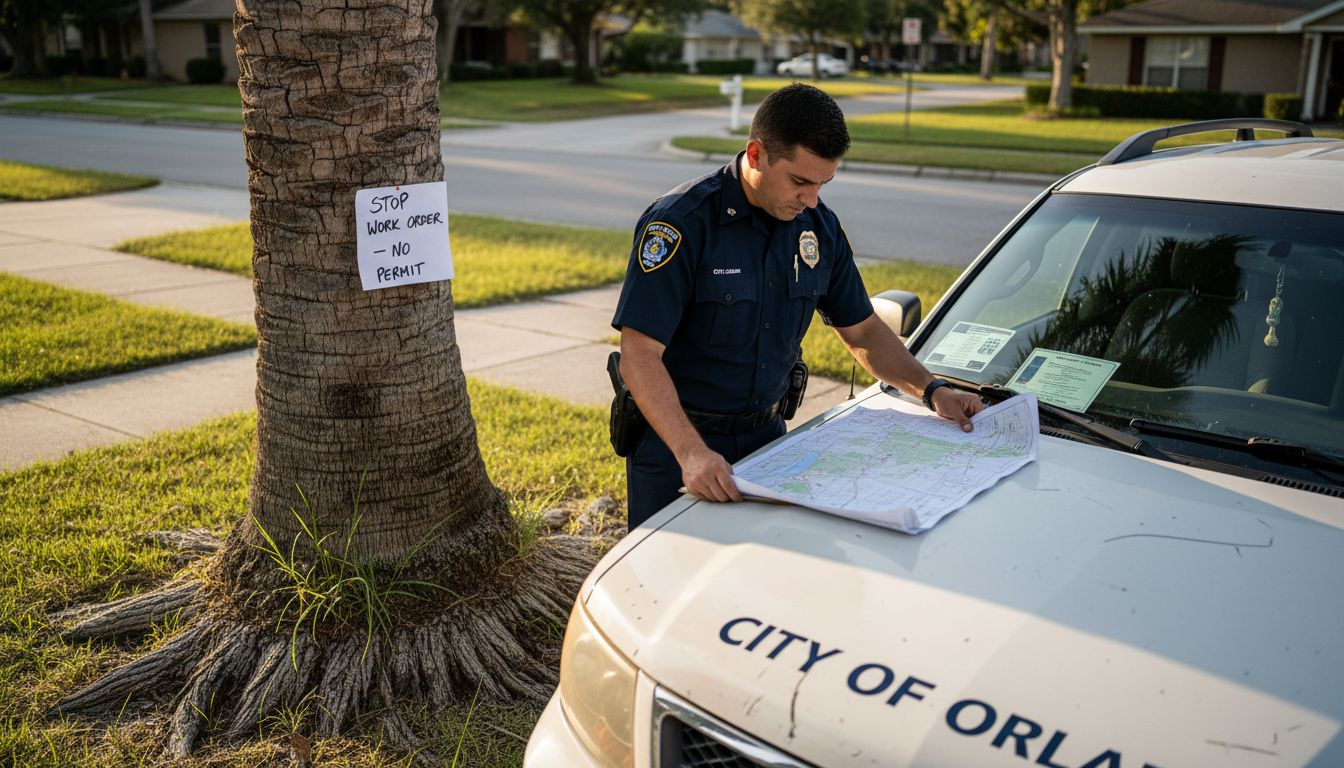
Under Florida Statute 163.045, tree removal is subject to specific legal guidelines that differ based on tree location, species, and potential environmental impact. Some municipalities require detailed permits for removing trees over a certain diameter, while others mandate professional assessments for trees near power lines, property boundaries, or in environmentally sensitive areas. These regulations aim to protect native ecosystems, prevent unnecessary tree destruction, and ensure public safety through controlled and responsible tree management.
The legal framework also addresses potential liability issues surrounding tree maintenance and removal. The Fallen Tree Act establishes clear guidelines for property owners regarding tree-related damages, emphasizing the importance of proactive maintenance and professional tree care. Homeowners can be held responsible for damages caused by neglected or hazardous trees, underscoring the critical need for regular professional inspections and timely intervention by licensed tree service professionals.
Below is a summary of important Florida legal requirements for tree work:
| Requirement | Details | Potential Impact |
|---|---|---|
| Permit Regulations | Vary by city; required for certain species and size | Delays or fines possible |
| Statute 163.045 | Specific rules for tree removal and protection | Safeguards environment |
| Liability for Damages | Owners can be held responsible for unsafe trees | Costly lawsuits possible |
| Municipal Guidelines | Additional local ordinances must be followed | Permit denial or penalties |
Pro tip: Always consult local municipal guidelines and obtain necessary permits before conducting any significant tree work on your property.
Risks of Hiring Unlicensed Tree Companies
Hiring an unlicensed tree service can expose homeowners to substantial financial and legal vulnerabilities. Contractor licensing risks extend far beyond simple service quality, potentially creating complex legal and financial nightmares that can dramatically impact property owners.
Unlicensed tree companies frequently lack critical protections that licensed professionals provide. These risks include inadequate insurance coverage, potential legal invalidation of work contracts, and significant personal liability for accidents or property damage. Without proper licensing, homeowners may find themselves responsible for worker injuries, structural damages, or unintended environmental impacts during tree removal or maintenance operations.
Here’s a comparison of licensed versus unlicensed tree service providers:
| Aspect | Licensed Tree Service | Unlicensed Tree Service |
|---|---|---|
| Insurance Coverage | Full liability and worker protection | Often uninsured, homeowner risk |
| Safety Standards | Follows ANSI and legal protocols | May skip critical safety steps |
| Professional Training | Certified staff, ongoing education | Limited training, little oversight |
| Legal Protection | Contracts upheld, less risk | Contracts may be invalid, legal exposure |
Legal precedents demonstrate the severe consequences of working with unlicensed contractors. Subcontractor legal challenges have shown that licensed professionals who engage unlicensed subcontractors may be prevented from recovering compensation, creating additional layers of financial risk. This underscores the critical importance of verifying a tree service company’s licensing status, insurance coverage, and professional credentials before allowing any work on your property.
Pro tip: Always request and independently verify a tree service company’s current license number and insurance documentation before signing any contracts.
Benefits: Insurance, Safety, and Property Value
Licensed tree services provide homeowners with comprehensive protection through robust insurance coverage and professional risk management. Licensed service insurance guarantees financial security by shielding property owners from potential damages, worker injuries, and unexpected liabilities that could otherwise result in significant out-of-pocket expenses.
Professional tree care goes far beyond simple maintenance, directly impacting property aesthetics and market value. Certified arborists understand how strategic tree trimming, disease prevention, and careful removal can enhance landscape appearance, improve tree health, and prevent potential structural damages. Well-maintained trees can increase property values by creating visual appeal, providing natural shade, and demonstrating proactive property management that attracts potential buyers or renters.
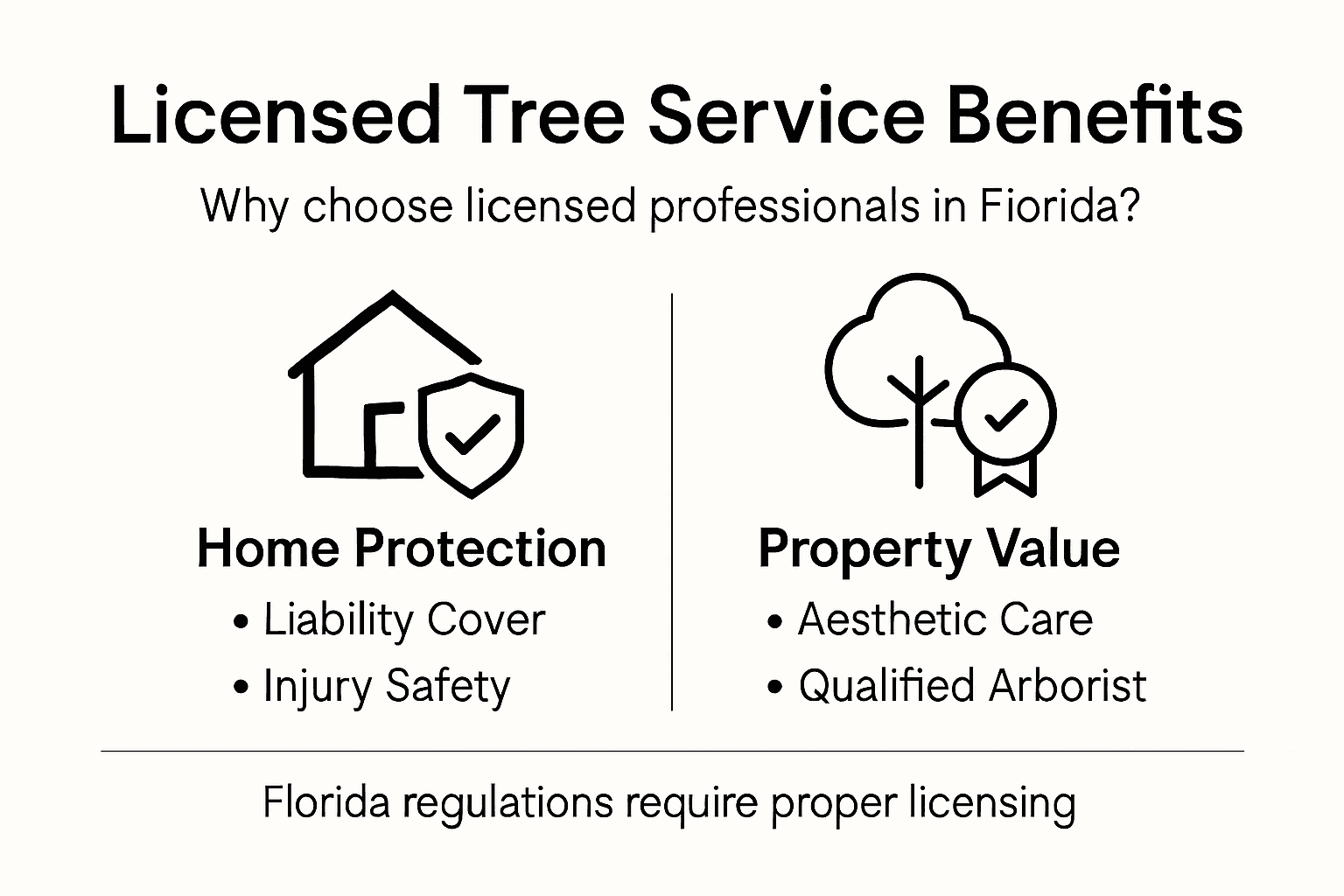
Safety represents another critical advantage of hiring licensed tree service professionals. These experts are trained in advanced risk assessment techniques, utilize specialized equipment, and follow strict industry safety protocols that minimize the potential for accidents. Their comprehensive approach includes thorough property evaluations, identifying potential hazards before they become serious problems, and implementing precise tree care strategies that protect both the property and its inhabitants from potential risks associated with poorly maintained or structurally compromised trees.
Pro tip: Request a comprehensive property assessment from licensed arborists to identify potential tree-related risks and maintenance needs before they become expensive problems.
Ensure Your Florida Property’s Safety with Licensed Tree Care Experts
Understanding the critical importance of licensing and safety in tree services is the first step to protecting your home or business from costly damages and legal risks. The article highlights the necessity of hiring licensed professionals who follow strict safety protocols, carry comprehensive insurance, and comply with Florida regulations. Avoid the dangers of unlicensed contractors by choosing expert arborists who prioritize your property’s health and compliance.
At McCullough Tree Service, we are committed to delivering licensed, certified, and insured tree care tailored to Orlando and Central Florida. Our team of certified arborists specializes in everything from tree trimming and removal to storm cleanup and risk assessments. We leverage industry best practices and stay up-to-date on all local tree laws so you can feel confident about your property’s safety and value.
Ready to protect your property with trusted, professional tree care?
Contact us today at McCullough Tree Service for a comprehensive tree health assessment and secure your peace of mind. Don’t wait until costly damages or legal troubles arise—get the licensed expertise your trees and property deserve now.
Frequently Asked Questions
What does it mean for a tree service to be licensed?
A licensed tree service indicates that the company meets specific safety and professional standards, verifying their qualifications, insurance coverage, and adherence to industry guidelines.
Why is it important to hire a licensed tree service?
Hiring a licensed tree service reduces the risk of property damage and worker injuries, ensuring adherence to safety regulations and providing legal protections for homeowners.
What should I check to verify a tree service’s license and insurance?
Always ask for current license and insurance documentation, and independently verify these credentials through official industry associations before hiring any tree service.
What legal requirements should I be aware of for tree work in Florida?
Tree work in Florida is subject to various local regulations and permit requirements, particularly for tree removal, which ensures that ecological preservation and public safety standards are upheld.
Recommended
- Licensing for Florida Tree Services
- Florida Tree Service Licenses: Verify Now
- Why Trim Trees for Safety in Central Florida
- 7 Essential Tree Care Tips for Homeowners in Florida
- Tree Service Orlando FL
- Tree Service Winter Springs FL