By: Shelby McCullough| Published: April 13, 2026
TL;DR:
- Regular tree care includes pruning, mulching, irrigation, and pest checks to ensure health and safety. Neglecting maintenance leads to higher costs, property damage, and reduced property value. Professional advice and proper timing are essential for long-term tree health in Central Florida.
Trees look tough. They survive storms, droughts, and decades without anyone lifting a finger. But that independence is partly an illusion, especially in Central Florida’s humid, hurricane-prone environment. Neglected trees cost homeowners far more than routine maintenance ever would, through emergency removals, storm damage repairs, and declining property values. This guide breaks down what regular tree care actually involves, what it costs you to skip it, and how to apply proven practices to the trees on your property right now.
Table of Contents
- What regular tree care really means
- The hidden costs of neglecting tree care
- Best practices for healthy, safe, and beautiful trees
- Adapting tree care to local risks and tree types
- Why shortcutting tree care is a gamble Central Florida homeowners can’t afford
- Central Florida’s trusted tree experts: Ready when you need us
- Frequently asked questions
Key Takeaways
| Point | Details |
|---|---|
| Prevent costly damage | Regular tree care saves more in repairs and removal than it costs to maintain healthy trees. |
| Boost property value | Well-maintained trees can increase your home’s value by up to 15 percent. |
| Enhance safety and beauty | Routine care prevents falling limbs and keeps your landscape attractive year-round. |
| Certified care matters | Rely on certified arborists who follow UF/IFAS and ISA standards for the safest, longest-lasting results. |
What regular tree care really means
To understand why regular tree care is not optional, let’s clarify what this actually involves and what experts recommend.
Regular tree care is not just trimming a branch when it gets in the way. It is a planned routine that includes pruning, structural monitoring, mulching, irrigation management, and pest and disease checks. Each task serves a specific purpose, and skipping any one of them creates gaps that compound over time.
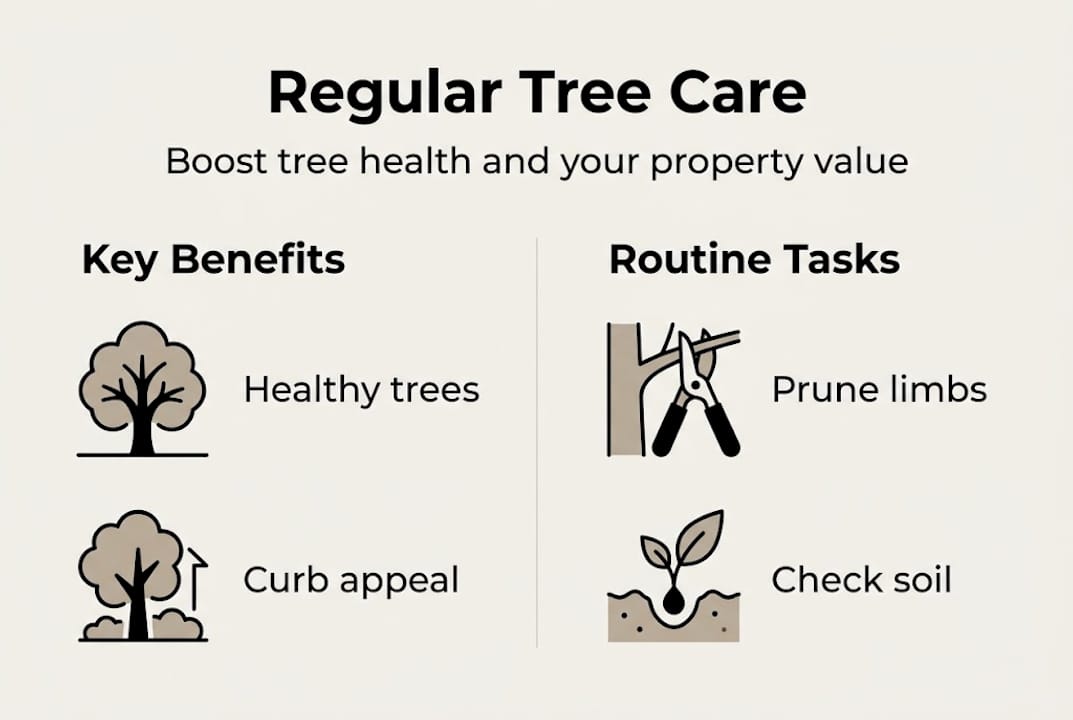
Urban and suburban trees face stressors that wild trees simply do not. Compacted soil, restricted root zones, pollution, and foot traffic all weaken a tree’s natural defenses. Wild trees grow in communities where competition and natural selection shape their structure. Your yard tree grows alone, often in poor soil, with no forest ecosystem to support it. That means it needs you.
Professional tree trimming follows science-backed standards. According to UF/IFAS, a healthy tree should maintain a dominant leader, strong scaffold branching, and a live crown ratio of at least 60%. Understanding the difference between trimming vs. pruning matters because each technique targets a different goal, whether that is aesthetics, clearance, or structural health. Regular pruning establishes strong structure and requires several prunings spread across decades to get it right.
Standard care tasks by tree age
| Tree stage | Key tasks | Frequency | Goal |
|---|---|---|---|
| Young (1-5 yrs) | Structural pruning, staking, watering | Every 1-2 years | Build strong form |
| Maturing (6-20 yrs) | Crown thinning, pest checks, mulching | Every 2-3 years | Manage growth, prevent defects |
| Mature (20+ yrs) | Hazard assessment, selective pruning | Every 3-5 years | Safety and longevity |
Here is what a solid annual care routine covers:
- Pruning: Remove dead, crossing, or structurally weak branches
- Mulching: Apply 2-4 inches around the base to retain moisture and protect roots
- Watering: Supplement during dry spells, especially for young trees
- Pest and disease checks: Inspect leaves, bark, and soil for early warning signs
- Structural monitoring: Look for cracks, lean, or hollow sections
Pro Tip: Investing in proper care during a tree’s first five years is the single best thing you can do for long-term health. Early structural pruning prevents the costly corrective work that comes later.
The hidden costs of neglecting tree care
But what happens if you skip that care? The actual costs, both seen and unseen, are steeper than most expect.
The financial gap between routine maintenance and emergency response is enormous. A standard pruning session might run a few hundred dollars. An emergency tree removal after a storm, with crane equipment, debris hauling, and potential roof or fence repair, can easily reach several thousand dollars. That is not a hypothetical. It is what we see regularly across Orlando and surrounding communities.
Improper or absent tree care can increase costs by 30% and reduce property values by 15%, while healthy urban trees generate large annual savings for communities through energy reduction and stormwater management.
Property value is a real factor. Mature, well-maintained trees add significant curb appeal and can increase a home’s market value. Diseased, overgrown, or hazardous trees do the opposite. Buyers and appraisers notice both.
Energy savings are another overlooked benefit. Healthy shade trees on the west and south sides of a Central Florida home can meaningfully reduce cooling costs during long summer months. Neglected trees lose canopy density and stop providing that natural shade buffer.
Insurance is also at stake. If a tree falls and damages a neighbor’s property or your own home, and an inspector determines the tree showed visible signs of decay or neglect, you may face a denied claim or reduced payout. Some insurers also offer discounts for properties with documented, professional tree care. You can learn more about navigating tree damage claims assistance if you are dealing with an active situation.
The importance of tree maintenance goes beyond aesthetics. The benefits of tree trimming include structural integrity, pest resistance, and storm readiness.
Common regrets from homeowners who delayed care:
- Waiting until a branch falls on a vehicle or fence
- Discovering root rot only after a tree leans dangerously
- Losing a mature shade tree to a preventable fungal infection
- Paying for emergency removal during hurricane season at peak pricing
Best practices for healthy, safe, and beautiful trees
To prevent costly outcomes, it is crucial to use proven care techniques and avoid common pitfalls.
Not all pruning is equal. Reduction and thinning cuts are the gold standard. They remove specific branches while preserving the tree’s natural shape and structural balance. Topping and heading cuts, on the other hand, remove large portions of the crown indiscriminately. This triggers rapid, weak regrowth and opens the tree to decay and pest entry.
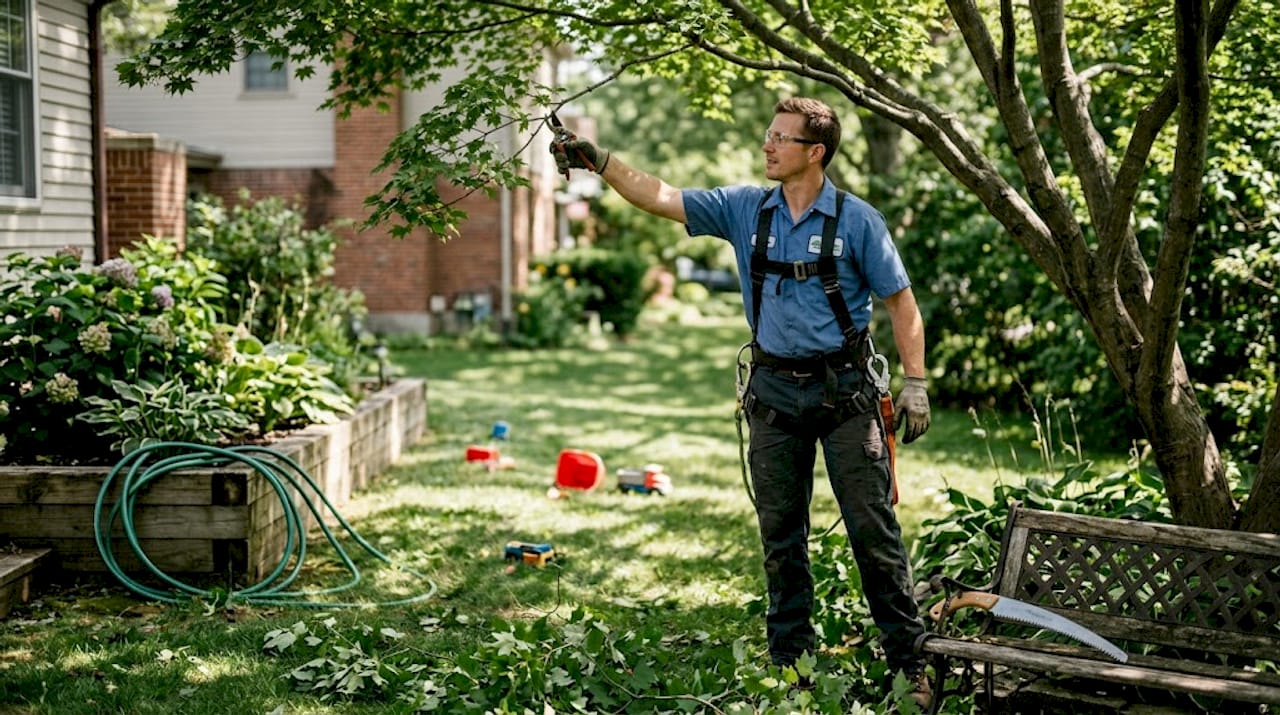
Proper reduction and thinning cuts reduce storm risk, with fall or winter pruning preferred to minimize decay and disease spread in Florida’s climate.
Timing matters more than most homeowners realize. Pruning during active growth periods stresses the tree and invites disease. Fall and early winter, when trees are less active, is the preferred window for most Florida species.
Improper pruning techniques like topping, over-pruning, and lion’s tailing are riskier than no pruning at all. Certified arborists trained to ISA and UF/IFAS standards are the only reliable choice for this work.
Here is a step-by-step annual care routine:
- Inspect in early spring: Look for winter damage, new pest activity, and structural changes
- Prune in fall or winter: Focus on dead wood, crossing branches, and structural corrections
- Mulch after pruning: Refresh the mulch ring to support root recovery
- Monitor through summer: Watch for signs of stress, especially during drought periods
- Schedule a professional assessment: Have a certified arborist review mature trees every 3-5 years
Pro Tip: Learn to spot early warning signs yourself. Yellowing leaves outside of fall, soft or peeling bark, sudden leaning, and mushroom growth near the base are all red flags that need professional attention fast.
For more on how proper technique reduces risk, see branch failure reduction and pruning benefits for Central Florida properties.
Adapting tree care to local risks and tree types
Once you know the general principles, it pays to adapt to the specifics of your trees and property, including timing and local risks.
Central Florida has a unique mix of tree species, each with its own care requirements. Getting this wrong is one of the most common and costly mistakes local homeowners make.
Tree types, best care timing, and local risks
| Tree type | Best pruning window | Key local risk |
|---|---|---|
| Live oaks | Winter (avoid beetle season) | Ambrosia beetle, oak wilt |
| Citrus trees | After harvest, late winter | Huanglongbing (HLB) spread |
| Palms | Year-round, minimal pruning | Over-pruning, nutrient deficiency |
| Evergreen ornamentals | Late winter to early spring | Fungal disease in wet seasons |
Avoid removing more than 25% of a tree’s foliage per season, respect local pest and disease cycles like oak beetle and HLB, and adjust care based on whether the tree is still developing or fully mature.
Young trees need training. The goal is to establish a central leader and balanced scaffold branches early. Mature trees need management. The goal shifts to hazard reduction, canopy maintenance, and health monitoring.
Common local mistakes to avoid:
- Pruning oaks in spring or summer when beetle activity peaks
- Over-trimming palms, which weakens the trunk and stresses the tree
- Ignoring citrus tree timing, which can spread HLB through pruning tools
- Removing too much canopy at once, leaving trees sunburned and stressed
- Using dull or unsterilized tools that introduce pathogens
For species-specific guidance, essential tree pruning tips cover the most common Central Florida tree types in detail.
Why shortcutting tree care is a gamble Central Florida homeowners can’t afford
With all the research and best practices laid out, here is what matters most after years of Central Florida tree care experience.
Most homeowners who delay tree care are not being reckless. They are being practical, or so it feels. Skipping a pruning cycle saves a few hundred dollars today. But the trees we are called to remove after a storm, or the ones that drop a branch on a car, are almost always the ones that went years without attention or were topped by an unlicensed crew trying to save the homeowner money.
The uncomfortable truth is that the most expensive jobs we handle are almost never surprises. They are the predictable results of skipped maintenance. Hidden rot, weak branch unions, and pest damage do not appear overnight. They build quietly over seasons.
Working with a certified arborist is not about compliance or paperwork. It is about having someone who can see what you cannot, before it becomes a crisis. The importance of pruning is not just structural. It is financial protection.
Pro Tip: A quick visual check every few months costs nothing. Walk your property after any significant storm and look for hanging branches, new cracks, or sudden lean. Catching problems early keeps small fixes small.
Central Florida’s trusted tree experts: Ready when you need us
If you are ready to take tree care off your problem list, or avoid future headaches in Central Florida, professional help is close at hand.
At McCullough Tree Service, our certified arborists bring the training, tools, and local knowledge to keep your trees healthy, safe, and looking their best year-round. Whether you need routine maintenance or a full hazard assessment, we work to protect your property and your investment.
Explore our tree trimming services and see what a certified arborist can do for your landscape. We serve homeowners and property managers across Orlando and Central Florida with transparent pricing, licensed crews, and a track record of satisfied clients. Reach out today for a free estimate and take the first step toward trees that work for your property, not against it.
Frequently asked questions
How often should trees be pruned in Central Florida?
Most trees benefit from professional pruning every 3-5 years, but young trees may need more frequent shaping to build healthy structure. Strong structure requires about 7 prunings in the first 25 years of a tree’s life.
What’s the risk of removing too much from a tree at once?
Removing more than 25% of a tree’s foliage in a single season increases the risk of decay, pest entry, and long-term decline. Timing and foliage limits are both critical for maintaining tree health and pest resistance.
Does regular tree care really save money?
Yes. Routine care costs far less over time than emergency removal or post-storm repairs, and well-maintained trees add real market value to your property. Neglect raises costs by 30% and can reduce property value by 15%.
When is the best time to prune trees in Central Florida?
Fall and winter are generally the best seasons, as cooler temperatures and reduced tree activity limit the risk of decay and disease spread. Fall pruning minimizes decay and should be adjusted based on species and local pest cycles like beetle season for oaks.
Recommended
- Why regular tree maintenance matters for property owners
- Routine tree care: prevent damage and boost value
- The Benefits of Regular Professional Tree Trimming
- Tree preservation: boost health & beauty in Florida