By: Shelby McCullough| Published: March 31, 2026
Most property owners in Central Florida think of tree care the way they think of repainting a fence — nice when it happens, but not exactly urgent. That mindset is exactly what leads to a downed oak across a driveway the morning after a tropical storm. Florida’s climate is unforgiving, and trees that look perfectly healthy from the street can be hiding dead limbs, root disease, or weak branch unions just waiting for the right gust of wind. Routine, scheduled tree care is not cosmetic maintenance. It is one of the most cost-effective ways to protect your property, your neighbors, and your investment in the long run.
Table of Contents
- The hidden risks of neglecting tree care
- How often should trees in Central Florida be cared for?
- Expert-approved techniques: What routine tree care involves
- Preventing storm damage and protecting property value
- Why less is more: Tree care wisdom from the field
- Get expert routine tree care for your Central Florida property
- Frequently asked questions
Key Takeaways
| Point | Details |
|---|---|
| Prevention beats emergency | Regular tree care avoids costly storm damage and unexpected repairs. |
| Follow expert guidelines | Prune trees every 1-3 years based on species and local Florida risks for optimal health. |
| Less is more | Over-trimming harms trees—focus on safe, structural techniques recommended by certified arborists. |
| Boost property value | Well-maintained trees enhance both look and long-term value of any Central Florida property. |
The hidden risks of neglecting tree care
Building on why tree care is far from cosmetic, let’s look at what happens when it’s ignored. The problems that come from skipping regular tree care rarely announce themselves early. A tree can look full and green while carrying dead wood, fungal decay, or a structurally compromised branch union deep in its canopy. By the time you notice something is wrong, the risk is already real.
Central Florida sits squarely in hurricane territory, and neglected trees cause more storm damage and emergency costs than well-maintained ones. That is not a small distinction when a single fallen limb can destroy a roof, knock out power lines, or total a parked vehicle. Emergency tree removal after a storm costs significantly more than routine care scheduled in advance.
Here are the most common hazards that build up when tree care is skipped:
- Dead or dying limbs that become projectiles in high winds
- Overgrown canopies that act like sails, increasing wind resistance and uprooting risk
- Undetected fungal disease that hollows out trunks from the inside
- Crossing or rubbing branches that create open wounds and entry points for pests
- Root zone stress from compacted soil or nearby construction left unaddressed
“A Central Florida homeowner we worked with had skipped tree inspections for five years. After a Category 1 storm passed through, two large laurel oaks dropped limbs that crushed a section of fence and damaged the corner of the garage roof. The repair bill was over $8,000. A routine inspection and targeted pruning the year before would have cost a fraction of that.”
Even slow-growing species are not immune. Oaks, magnolias, and camphor trees all benefit from regular structural checks. Learning more about tree maintenance benefits can help you understand what is actually at stake before a storm hits.
How often should trees in Central Florida be cared for?
Neglect has costs, so when is the right time to act? Here’s what science recommends. The answer depends on the species, the tree’s age, and its location on your property. But there is a solid baseline to work from.
UF/IFAS recommends pruning every 1-3 years depending on the species’ growth rate. Fast-growing trees like crape myrtles and water oaks need more frequent attention. Slower-growing species like live oaks and magnolias can go longer between major pruning cycles. The key is that no tree should go indefinitely without an inspection.
| Tree type | Growth rate | Recommended care interval |
|---|---|---|
| Crape myrtle, water oak | Fast | Every 1-2 years |
| Red maple, sweet gum | Moderate | Every 2 years |
| Live oak, magnolia | Slow | Every 2-3 years |
| Palms | Varies | Annually for frond removal |
For pruning in Central Florida, the winter dry season (roughly November through February) is the best window for most major structural work. Trees are under less stress, pest activity is lower, and wounds close more efficiently before the growing season kicks in.
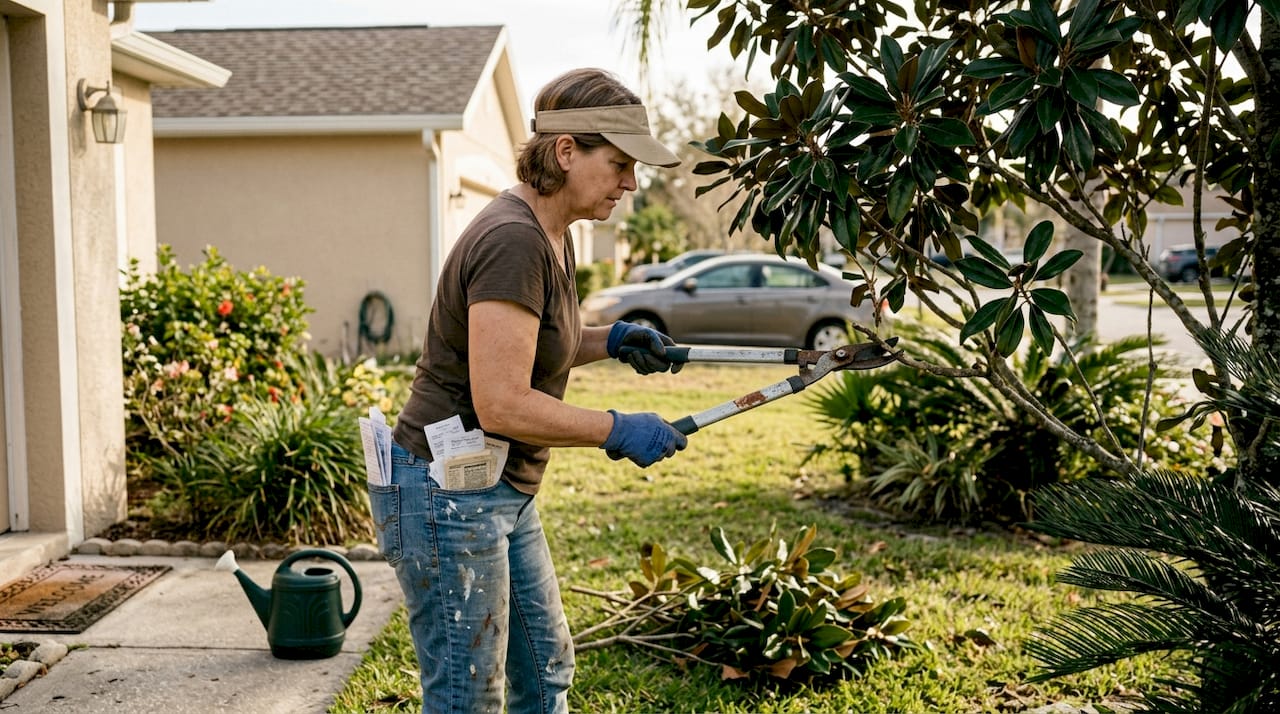
It is also worth noting that annual heavy pruning is unnecessary and can actually harm your trees. More frequent is not always better. Aggressive yearly cuts stress the tree, reduce its ability to photosynthesize, and can trigger weak, fast-growing regrowth that is more vulnerable to wind.
If you are curious about what routine care typically runs in your area, reviewing tree care costs in Florida can help you plan your budget realistically.
Pro Tip: Do not rely only on calendar-based scheduling. After any significant storm, have a certified arborist inspect your trees even if they appear undamaged. Hidden structural stress from wind loading often shows up weeks later.
Expert-approved techniques: What routine tree care involves
Knowing when to act is half of the equation — the other half is how you do it, and with whom. There is a significant difference between a proper pruning cut and the kind of aggressive trimming that leaves trees worse off than before.
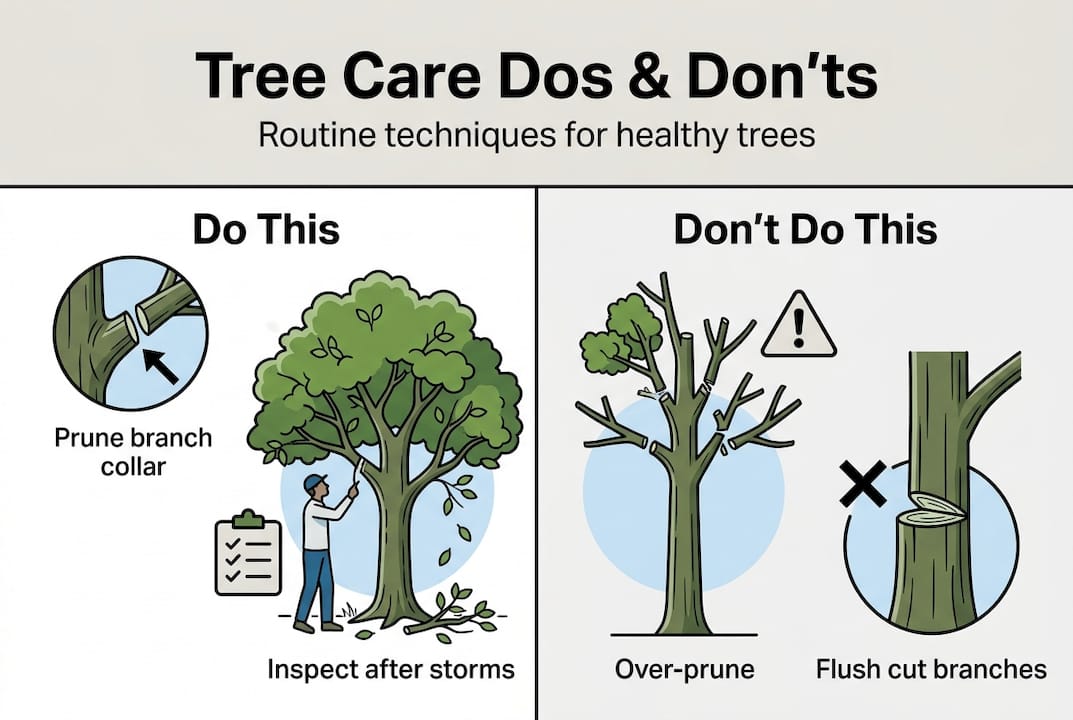
Sound pruning focuses on cleaning, thinning, and raising while never removing more than 25% of the live crown at one time. Here is what each method means in practice:
- Cleaning — Removing dead, diseased, or broken branches to eliminate hazards and reduce disease spread
- Thinning — Selectively removing branches to reduce canopy density, improve airflow, and reduce wind resistance
- Raising — Removing lower branches to provide clearance for structures, vehicles, or pedestrian areas
- Reduction — Shortening specific branches to reduce weight or height while maintaining the tree’s natural form
| Proper technique | Improper technique |
|---|---|
| Cutting just outside the branch collar | Flush cuts that damage the trunk |
| Removing no more than 25% of live crown | Topping or removing more than half the canopy |
| Thinning for airflow and structure | Lion’s tailing (stripping inner branches only) |
| Targeted dead wood removal | Hurricane cuts that strip entire canopies |
Over-pruning leads to weak regrowth, nutrient loss, and increased storm vulnerability. Topping a tree, for example, is one of the most damaging things you can do. It triggers rapid, weakly attached regrowth and leaves large wounds that invite disease.
Understanding the difference between trimming vs pruning helps you have a more informed conversation with whoever is working on your property. For anything beyond basic cleanup, professional tree trimming by a trained crew makes a measurable difference in outcomes.
Pro Tip: Always verify that anyone working on your trees holds ISA (International Society of Arboriculture) certification. This credential confirms they have been trained in science-based methods and are accountable to a professional standard.
Preventing storm damage and protecting property value
Once best practices are in place, property owners immediately benefit from peace of mind and long-term savings. The connection between routine tree care and storm readiness is direct and well-documented.
Well-maintained trees have properly spaced canopies, strong branch attachments, and no hidden decay. They are simply less likely to fail during a storm. That translates to fewer emergency calls, less structural damage, and no scrambling to find a crew in the middle of hurricane season when every tree service in Orlando is already booked.
Proactive care reduces storm risk, prevents major repairs, and boosts curb appeal. That last point matters more than most people realize. Healthy, well-shaped trees are one of the few landscaping investments that actually increase in value over time. Studies consistently show that mature, well-maintained trees can add 10 to 15 percent to a property’s appraised value.
Here is a summary of what routine tree care delivers in practical terms:
- Lower emergency costs from avoiding post-storm removal and structural repairs
- Reduced insurance risk because maintained trees are less likely to cause damage claims
- Higher property value through improved curb appeal and landscape maturity
- Longer tree lifespan because properly pruned trees resist disease and structural failure
- Neighborhood safety by eliminating hazards that could affect adjacent properties
Getting ahead of hurricane season with hurricane tree prep is one of the smartest moves a Central Florida property owner can make. And keeping up with regular tree trimming throughout the year means you are never starting from scratch when a storm is in the forecast.
Why less is more: Tree care wisdom from the field
Here is something we see constantly in this industry: property owners who think they are doing their trees a favor by scheduling aggressive annual trims. They want their trees to look neat, they want them to feel “storm-ready,” and they end up with weakened, stressed trees that are actually more vulnerable than before.
Annual heavy pruning compromises tree health, and most trees genuinely thrive on more mindful, spaced-out cycles. The properties we have seen hold up best after major storms are almost always the ones following 2 to 3 year care cycles with a certified arborist making the calls. Not the ones that get trimmed every spring by whoever shows up with a truck and a chainsaw.
The uncomfortable truth is that “hurricane cuts” — stripping a tree down to bare branches before storm season — do not protect trees. They destroy the canopy structure that actually helps trees flex and survive wind loading. A full, properly thinned canopy performs better in a storm than a butchered one.
Routine, expert evaluations beat frequent, drastic trimming every single time. The goal is not to cut as much as possible. The goal is to cut strategically, at the right time, using the right methods. That is what separates a healthy 50-year-old oak from a liability.
Get expert routine tree care for your Central Florida property
You now have a clear picture of what routine tree care actually involves, how often it should happen, and why the quality of the work matters as much as the schedule. Putting that knowledge into practice starts with having the right team evaluate your trees.
At McCullough Tree Service, our certified arborists assess your trees based on species, condition, and your property’s specific risk factors — not a one-size-fits-all schedule. Whether you need a full structural evaluation, seasonal maintenance, or want to review our tree trimming services before committing, we make the process straightforward. If you are still sorting out the basics, our trimming vs pruning guide is a great place to start. Contact us today to schedule your property evaluation and get ahead of the next storm season.
Frequently asked questions
How often should I schedule tree care in Central Florida?
UF/IFAS recommends pruning every 1-3 years based on each species’ growth rate and local conditions. Fast-growing trees need attention more frequently than slow-growing ones.
Is annual heavy pruning necessary for Florida trees?
No. Annual heavy pruning can harm trees and make them more vulnerable to storms, not less. Most trees perform better on 2 to 3 year care cycles.
What are the best months for tree pruning in Central Florida?
The winter dry season, roughly November through February, is ideal for most major pruning work. Trees are under less stress and recover more efficiently before spring growth begins.
Can routine tree care really increase property value?
Yes. Routine care improves appearance, structural health, and safety, all of which contribute directly to higher property value and stronger curb appeal for both residential and commercial properties.
Recommended
- Why regular tree maintenance matters for property owners
- How tree care boosts property value in Central Florida
- Tree Pruning Importance: Key Benefits Explained
- Commercial tree maintenance: Boost property value by 20%