By: Shelby McCullough| Published: February 20, 2026
Choosing the right trees for a Central Florida yard starts long before you select your favorite leaf shape or bloom color. Central Florida’s unique mix of sandy soils, unpredictable rain, and strong storms means every decision—from assessing soil to picking native species—impacts your landscape’s beauty and the safety of your home. This guide walks you through site assessment and soil preparation, backed by expert recommendations, so your trees will flourish for years to come.
Table of Contents
- Step 1: Assess Site and Prepare Soil
- Step 2: Select Suitable Central Florida Trees
- Step 3: Plant Trees with Correct Technique
- Step 4: Verify Health and Support Growth
Quick Summary
| Key Point | Explanation |
|---|---|
| 1. Assess your site conditions first | Evaluate sunlight, drainage, and soil type to ensure suitable selections for planting trees. This assessment guides all future decisions on tree planting. |
| 2. Choose native tree species | Opt for native trees like Live Oak and Bald Cypress that thrive in Central Florida’s climate, requiring less maintenance and supporting local wildlife. |
| 3. Plant at the correct depth | Ensure the root collar is level with the ground to prevent rot. A well-planted tree has a higher chance of thriving long-term. |
| 4. Monitor tree health regularly | Check weekly during the first year for leaf color and soil moisture to catch any stress or pest issues early, ensuring your tree’s establishment. |
| 5. Use mulch effectively | Apply 2 to 4 inches of mulch around the base to retain moisture and regulate temperature, promoting healthy growth in Central Florida’s heat. |
Step 1: Assess Site and Prepare Soil
Before you dig a single hole, take time to evaluate your yard. Understanding your site’s conditions determines whether your trees thrive or struggle for years. This assessment shapes every decision you’ll make moving forward.
Start by observing your landscape throughout different times of day. Notice where sunlight hits your yard, how water drains after rain, and what existing obstacles exist. Some trees need full sun; others prefer partial shade. Central Florida’s afternoon heat can be intense, so consider how much protection your new trees will get.
Check your soil type next. Florida soils vary significantly, from sandy to clayey compositions. Dig a small hole about 12 inches deep and examine the soil texture. Does it feel gritty and loose? That’s sand. Does it clump together? That’s clay. Most of Central Florida has sandy soil, which drains quickly but holds fewer nutrients. Understanding soil characteristics for site selection helps you choose appropriate trees and prepare accordingly.
Look for underground utilities and overhead power lines. Call 811 before digging to locate buried pipes and cables. Check for sidewalks, septic systems, and building foundations that might conflict with root growth.
Once you’ve assessed your site, prepare the soil area:
- Clear the planting zone of grass, weeds, and debris
- Remove rocks and roots that block water drainage
- Loosen compacted soil by turning it over or aerating
- Add organic material if your soil is pure sand or heavy clay
Good site preparation now means healthier trees that resist storms and disease for decades.
For sandy soils typical in Central Florida, consider mixing in 2-3 inches of compost or aged bark. This improves water retention and adds nutrients your trees need. Don’t overthink amendments—quality trees grow in Florida’s native soils with proper care.
Here’s a quick guide to identifying and improving common Central Florida soil types:
| Soil Type | Common Features | Challenges | Best Improvement Method |
|---|---|---|---|
| Sandy | Gritty, loose, drains fast | Low nutrients, dries out | Add compost for moisture |
| Clayey | Clumps, dense | Poor drainage, compacts | Aerate and mix in organic matter |
| Silt | Smooth, powdery texture | Moderate drainage issues | Add sand and organics |
| Loam | Balanced, crumbly, rich | Rare in Central Florida | Maintain with light compost |
Pro tip: Visit your yard at different times of day and after rain to see real drainage patterns, not just what you think happens. Wet spots reveal poor drainage before you plant.
Step 2: Select Suitable Central Florida Trees
Now that you understand your site conditions, it’s time to choose trees that will actually thrive in your yard. The right tree in the right place means decades of beauty with minimal struggle. This decision determines whether you’ll spend years fighting poor growth or enjoying a flourishing landscape.
Start by considering native trees. Species like Live Oak, Bald Cypress, and Sabal Palm have evolved to handle Central Florida’s heat, humidity, and sandy soils. Native trees need less water, fertilizer, and pest management once established. They also support local wildlife and create a healthier ecosystem in your yard.
Think about your tree’s mature size and shape. A 40-foot oak won’t work near power lines or small yards. Check how wide the canopy spreads and how deep roots typically grow. This prevents future conflicts with structures, utilities, and neighbors.
Consider your yard’s specific conditions from Step 1. Sunny spots need full-sun trees. Wet areas require flood-tolerant species. Sandy soils work well with most natives, but some trees prefer richer soil. Match tree characteristics with your site’s reality.
When selecting among many options, use the right tree, right place principle to narrow your choices. This approach matches tree requirements with your yard’s conditions, maximizing survival rates.
Great Central Florida tree choices include:
- Live Oak for shade and storm resilience
- Sabal Palm for tropical character
- Crape Myrtle for colorful flowers
- Bald Cypress for wet areas
- Sweetbay Magnolia for smaller spaces
Native trees adapted to Central Florida’s climate need less water and maintenance while supporting local birds and wildlife.
You can also explore specific species recommendations tailored to Orlando’s unique growing conditions. Visit local nurseries that specialize in Central Florida natives. Staff there understand microclimates and can suggest varieties proven to perform in your neighborhood.
Compare these popular Central Florida tree options for landscape success:
| Tree Species | Ideal Conditions | Wildlife Benefit | Storm Resilience |
|---|---|---|---|
| Live Oak | Full sun, sandy soil | High (birds, mammals) | Excellent |
| Sabal Palm | Well-drained, partial sun | Moderate (birds) | Good |
| Crape Myrtle | Sunny, varied soils | Low | Fair |
| Bald Cypress | Wet areas, flood tolerant | High (birds, fish) | Excellent |
| Sweetbay Magnolia | Partial shade, moist soil | Moderate (pollinators) | Good |
Pro tip: Ask the nursery which trees they see thriving in similar yards to yours, and ask about the tree’s storm resilience rating since Central Florida experiences hurricanes and strong winds.
Step 3: Plant Trees with Correct Technique
Proper planting technique makes the difference between a tree that struggles and one that thrives. Many homeowners unknowingly harm their new trees by planting too deep or mishandling roots. Getting this right takes just a few extra minutes and sets your tree up for success.
Start by digging the correct hole. It should be as deep as the root ball and two to three times wider. A shallow, wide hole encourages roots to spread outward rather than circle inward. Never dig deeper than the root ball sits in its container.
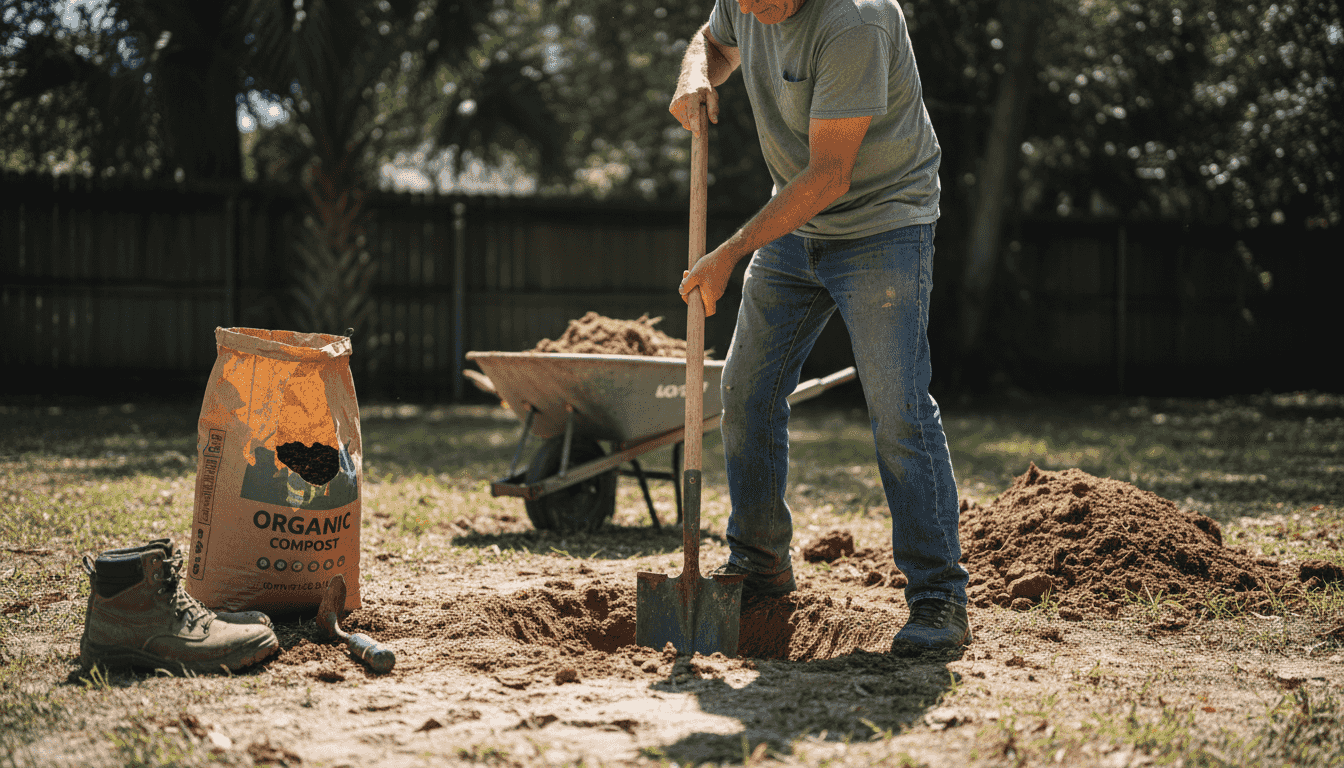
Inspect the roots before planting. If they’re tightly wound around the ball, gently loosen them with your fingers or a small rake. Matted roots won’t penetrate surrounding soil, choking the tree’s growth. This step prevents long-term problems from taking hold.
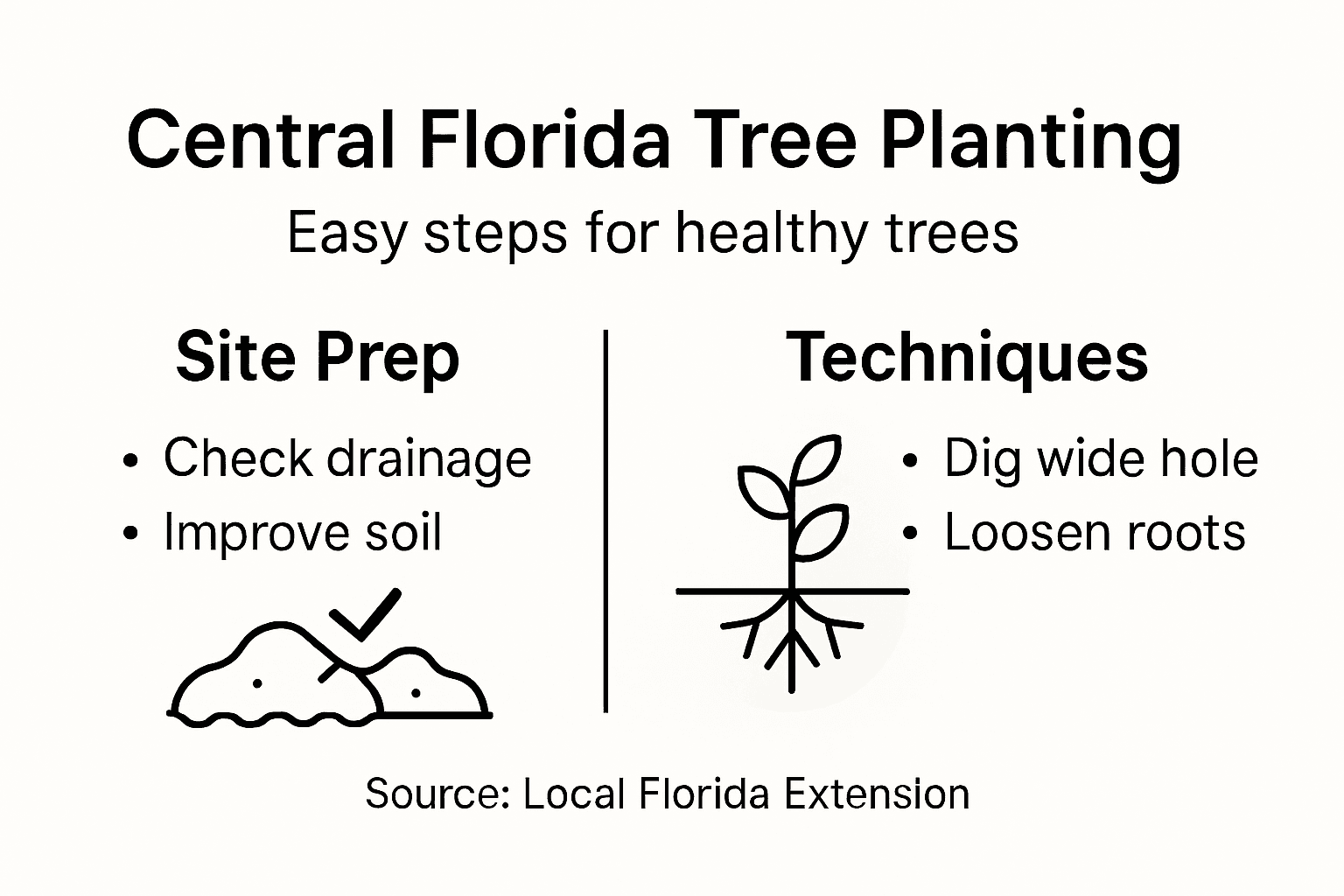
Place your tree in the hole and check that the root collar sits at soil level. The root collar is where roots meet the trunk. This area must stay above ground or the tree risks root rot and disease. Planting too deep is one of the most common planting mistakes that shortens tree lifespan.
Follow these planting steps in order:
- Position the tree upright in the hole
- Backfill halfway with native soil (no amendments)
- Water thoroughly to settle soil
- Finish backfilling to ground level
- Water again to eliminate air pockets
- Create a mulch ring around the base
Research-based guidelines for planting trees emphasize avoiding common mistakes like amended backfill and excessive planting depth. Your tree roots need to venture into surrounding soil to establish fully.
Apply 2 to 4 inches of mulch around the base, keeping it a few inches away from the trunk. Mulch retains moisture and moderates soil temperature, crucial in Central Florida’s heat. Don’t pile mulch against the trunk like a volcano.
Plant at the correct depth with the root collar at soil surface level, and your tree will spend decades rewarding your effort.
Pro tip: Water immediately after planting and keep the soil moist (not soggy) for the first growing season; this helps roots establish faster and reduces transplant shock.
Step 4: Verify Health and Support Growth
After planting, your job shifts from preparation to monitoring. The first year determines whether your tree becomes established or struggles. Regular health checks catch problems early when they’re easiest to fix.
Start by inspecting your tree weekly during the first growing season. Look at the leaves for color and vitality. Green, full foliage means the tree is adjusting well. Yellowing or wilting leaves signal stress that needs attention.
Check the soil moisture by probing a few inches down with your finger. The soil should feel like a wrung-out sponge, not waterlogged or bone-dry. Adjust watering based on rainfall and temperature. Central Florida’s heat means more frequent watering in summer.
Monitor for pests and diseases common to your tree species. Look at leaf undersides for insects or spots. Early detection prevents infestations from spreading. Remove dead branches as they appear.
Key health indicators to track:
- Leaf color and fullness
- Branch flexibility and strength
- Trunk firmness without soft spots
- Root collar visibility above soil
- New growth appearing each season
As your tree grows, consider hiring a certified arborist for professional assessments. A certified arborist can spot issues you might miss and recommend pruning that shapes strong structure. This investment pays dividends in tree longevity and safety.
After the first year, trees typically need less frequent watering unless drought conditions persist. Water deeply but less often to encourage deep root growth. Shallow, frequent watering creates weak, surface-dependent roots.
Regular monitoring in the first year catches stress early, preventing years of poor growth or tree loss.
Prune strategically to build structure. Remove crossing branches, weak angles, and competing leaders. Good pruning now prevents storm damage later and creates a healthier canopy.
Pro tip: Take photos of your tree monthly to track growth visually, making it easier to spot changes in health that might otherwise go unnoticed.
Ensure Your Central Florida Trees Thrive with Expert Care
Planting the right tree in the right place can transform your yard but it comes with challenges such as selecting suitable species, preparing sandy soils, and using proper planting techniques. Many homeowners struggle with ensuring healthy root establishment and protecting young trees from Central Florida’s storm risks and heat. You want trees that grow strong, look beautiful, and require less maintenance over time.
McCullough Tree Service offers trusted solutions tailored to your landscape needs. Our certified arborists bring deep expertise in site assessment, soil preparation, and tree planting best practices that follow proven guidelines. We help you avoid common pitfalls like improper planting depth or poor soil amendments while choosing native and resilient trees fit for your location. From expert planting to ongoing tree health monitoring we stand by your side to achieve lasting success.
Get professional guidance and hands-on support from McCullough Tree Service today. Visit McCullough Tree Service to request a tree planting consultation or health assessment. Secure your home’s natural beauty now before the next storm season. Don’t leave your trees’ future to chance—partner with licensed experts committed to your landscape’s health and safety. Learn more about our certified arborist services and start your project with confidence.
Frequently Asked Questions
What should I assess in my yard before planting trees?
Before planting trees, evaluate your yard’s sunlight, drainage, soil type, and any existing obstacles. Observe the landscape during different times of day and dig a small hole to examine soil texture. Clear the planting zone of grass and debris, and prepare for healthier trees.
How do I choose the right trees for my Central Florida yard?
Select trees that are native to Central Florida, as they are well-adapted to the local conditions. Consider factors such as mature size, shape, and specific site conditions like sunlight and soil type to ensure long-term success. Use the right tree, right place principle to match tree requirements with your yard’s reality.
What is the correct planting technique for new trees?
To plant new trees correctly, dig a hole as deep as the root ball and two to three times wider. Position the tree so that the root collar is at ground level, then backfill the hole and water thoroughly. This ensures that roots can establish properly and reduces the risk of planting too deep.
How can I verify the health of my newly planted trees?
Inspect your trees weekly for signs of stress, such as yellowing or wilting leaves. Check soil moisture by feeling a few inches down; it should be like a wrung-out sponge. Early detection of problems allows for prompt action, which is crucial in the first year after planting.
What maintenance should I provide to support tree growth after planting?
After planting, water your trees regularly during the first growing season, adjusting based on rainfall and temperature. Monitor for pests and diseases, and prune strategically to build a strong structure. This consistent care helps your trees adapt and thrive in their new environment.
How often should I water my trees in Central Florida?
Water your trees deeply but less frequently to encourage deep root growth, especially as they establish. During hot summer months, you may need to water every 7 to 10 days if rainfall is limited. This routine helps avoid shallow roots that can weaken your trees in adverse conditions.
Recommended
- Tree Planting Considerations for Central Florida Homes
- Tree Planting for Commercial Properties: Boosting Value and Compliance
- 7 Best Tree Species for Orlando Yards: Expert Picks
- 7 Essential Tree Care Tips for Homeowners in Florida
- Tree Service Orlando FL
- Tree Service Winter Springs FL