By: Shelby McCullough| Published: February 25, 2026
Every Central Florida homeowner knows the relief of a shady spot under mature trees during peak summer. That comfort is no accident—healthy trees in your yard result from strategic urban tree care tailored to our region’s climate. Paying attention to trimming, selection, and health checks protects your investment and ensures your property stays both beautiful and safe through Central Florida’s storms and heat.
Table of Contents
- Defining Urban Tree Care and Its Benefits
- Selecting and Planting the Right Urban Trees
- Best Practices for Trimming and Health Assessment
- Legal Rules for Tree Work in Central Florida
- Avoiding Common Tree Care Mistakes
Key Takeaways
| Point | Details |
|---|---|
| Urban Tree Care is Essential | Actively managing tree health contributes to community safety and environmental benefits. |
| Selecting Appropriate Species Matters | Choosing the right tree for Central Florida’s climate increases survival rates and reduces maintenance. |
| Proper Planting Techniques Enhance Longevity | Using correct planting methods improves tree growth and resilience to environmental stresses. |
| Regular Health Assessments Prevent Problems | Conducting timely inspections by certified professionals can identify issues before they escalate. |
Defining Urban Tree Care and Its Benefits
Urban tree care goes beyond planting trees and hoping they survive. It’s a strategic approach to establishing and maintaining healthy trees throughout your neighborhood, on your property, and across Central Florida’s urban landscape.
Urban tree care means actively managing trees in developed areas to maximize their health, safety, and the benefits they provide to your community. This includes everything from selection and planting to ongoing maintenance, pruning, and health assessments.
What Counts as Urban Tree Care?
Urban tree care encompasses several interconnected practices:
- Planting appropriate species suited to Central Florida’s climate and soil conditions
- Watering and mulching young trees to establish strong root systems
- Regular trimming and pruning to promote growth and remove hazardous branches
- Health assessments to catch diseases or pest damage early
- Storm cleanup and removal when trees become hazardous
- Stump grinding to reclaim yard space after removal
These practices work together to keep your trees alive, attractive, and safe for decades.
The Real Benefits for Your Home and Community
Healthy urban trees deliver tangible value to homeowners. Research shows that tree canopy benefits include cooling during Florida’s intense heatwaves, improving air quality, and reducing flood risk. For many Central Florida residents, mature trees also mean stronger property values and improved curb appeal.
Beyond personal benefits, urban trees address a critical issue in our region. Shade and canopy cover disparities exist across neighborhoods, with wealthier areas typically enjoying more tree coverage than lower-income communities. Intentional urban tree care helps distribute these environmental and health benefits equitably.
Here’s a quick overview of how urban tree care impacts both individual properties and entire communities:
| Impact Area | Homeowner Benefits | Community Benefits |
|---|---|---|
| Property Value | Increases home resale price | Raises neighborhood desirability |
| Energy Efficiency | Lower cooling costs in summer | Reduced urban heat island effect |
| Flood Reduction | Less water runoff onto property | Improved stormwater management |
| Air Quality | Cleaner air around the house | Healthier regional environment |
| Aesthetics | Better curb appeal | Attractive green spaces |
Properly maintained urban trees reduce surface temperatures by several degrees, directly lowering heat-related health risks for you and your neighbors.
Why Proper Tree Care Matters Now
Central Florida’s climate creates unique pressures on urban trees. High heat, humidity, storms, and occasional freezes stress trees that aren’t properly maintained. A tree that receives regular professional trimming establishes better branch structure, heals faster, and resists disease more effectively than a neglected tree.
This isn’t just cosmetic. A poorly maintained tree becomes a liability. Weak branches fail during storms, creating safety hazards. Diseased or stressed trees can fail completely, damaging property or causing injury.
Pro tip: Start tree care early in a tree’s life with proper pruning and health checks; early intervention prevents expensive problems and extends tree lifespan by decades.
Selecting and Planting the Right Urban Trees
Choosing the wrong tree species or planting it incorrectly wastes money and creates long-term headaches. The right selection process combined with proper planting technique dramatically increases your tree’s chances of survival and success in Central Florida.
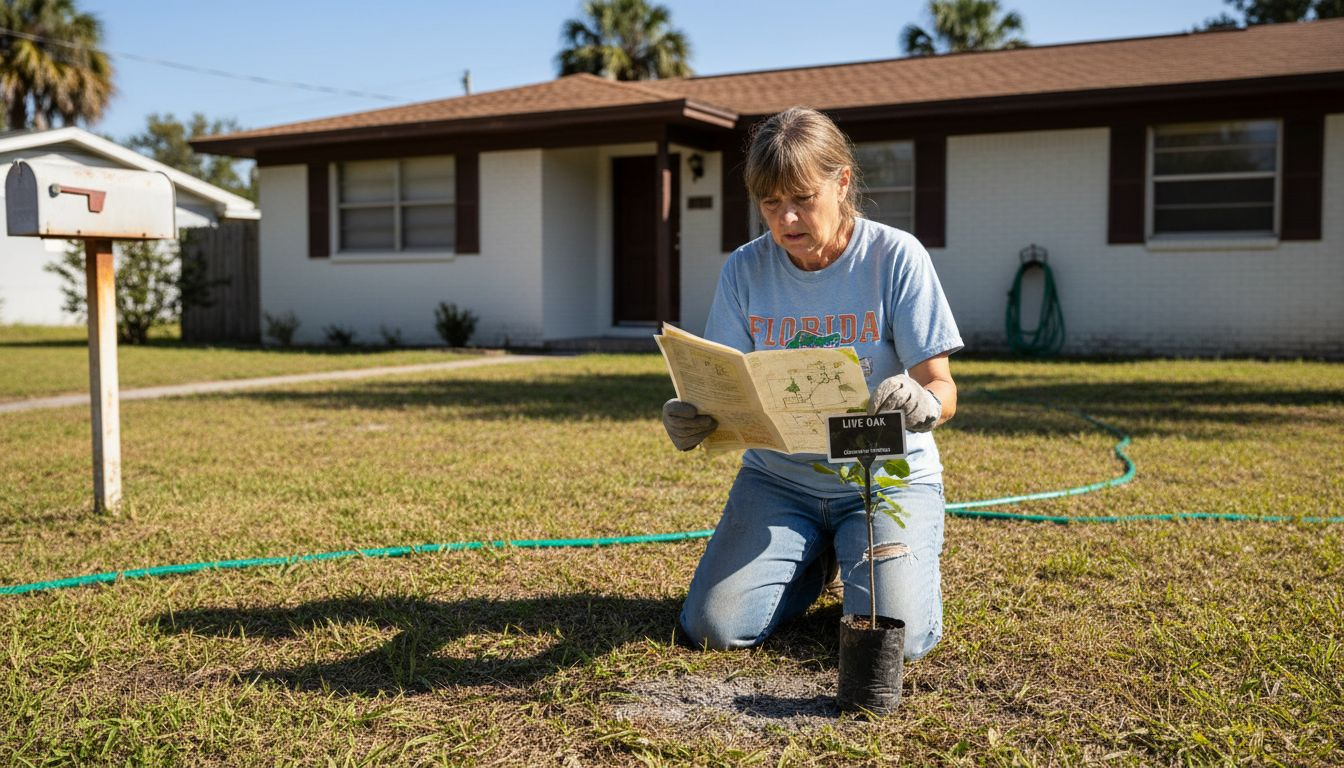
Assessing Your Planting Site
Before you even think about which tree to buy, evaluate where you want to plant it. This single step prevents most planting failures.
Check these site conditions:
- Light availability (full sun, partial shade, or full shade)
- Soil quality and drainage (clay, sandy, or loamy soil)
- Available space for root spread and mature canopy growth
- Underground utilities (call 811 before digging)
- Above-ground obstacles (power lines, structures, setback requirements)
Central Florida’s sandy soils and intense sun create specific challenges. A tree that thrives in northern states may struggle here. Conversely, a native or adapted species will establish faster and require less maintenance.
Selecting Species Suited to Your Conditions
Not all trees are created equal for urban environments. Species adapted to urban stressors and climate conditions perform dramatically better than randomly chosen ornamentals.
For Central Florida homeowners, consider:
- Live oak, laurel oak, and sweetbay magnolia for shade and native appeal
- Crape myrtle for flowering and manageable size
- Bald cypress for wet areas or storm-prone locations
- Sabal palm for tropical character and storm resilience
Consult a certified arborist to match species to your specific site. This expertise prevents costly mistakes. A professional can also assess considerations for planting trees on your property, including zoning, setbacks, and neighborhood patterns.
Compare suitable urban tree species for Central Florida and their advantages:
| Species | Best Location | Distinct Benefit |
|---|---|---|
| Live Oak | Large yards, street side | Long lifespan, dense shade |
| Crape Myrtle | Smaller spaces, sunny | Colorful blooms, minor maintenance |
| Bald Cypress | Wet or flood-prone spots | Storm tolerance, unique form |
| Sabal Palm | Tropical landscapes | Wind resilient, low water needs |
| Sweetbay Magnolia | Partial shade, moist soils | Native beauty, fragrant blooms |
Selecting a species adapted to your specific microclimate cuts maintenance needs by half and increases survival rates dramatically.
The Planting Process Matters More Than You Think
Correct planting technique directly affects tree longevity. Research shows that post-planting care including proper watering increases survival rates significantly.
Proper planting requires:
- Digging a hole two to three times wider than the root ball, but no deeper
- Removing the tree from its container and gently loosening compacted roots
- Placing the tree so the root collar sits at ground level, not buried
- Backfilling with native soil, not amended topsoil
- Creating a shallow basin for watering without creating a mound around the trunk
A common mistake is planting too deep. This suffocates roots and invites disease. Another error is over-watering initially, which causes root rot.
Pro tip: Plant in early fall or late winter when trees are dormant; this reduces transplant shock and allows roots to establish before heat stress arrives.
Best Practices for Trimming and Health Assessment
Trimming and health assessment aren’t optional extras—they’re the foundation of keeping your urban trees alive, safe, and attractive for decades. Done correctly, they prevent disasters. Done wrong, they invite disease and structural failure.
Why Proper Trimming Matters
Tree pruning serves multiple critical purposes beyond aesthetics. Proper tree pruning removes dead or damaged limbs, reduces failure risk, and guides structural development as your tree grows.
Bad pruning damages trees irreversibly. Flush cuts, topping, and removing too much foliage stress trees and invite pests. Trees with improper pruning have shortened lifespans and increased vulnerability to storm damage.
Trimming objectives include:
- Removing dead, diseased, or damaged branches that pose hazards
- Improving structure by eliminating crossing or weak branches
- Reducing weight on limbs prone to failure
- Maintaining clearance from structures and power lines
- Enhancing light penetration into the canopy
Central Florida’s humidity and storm activity make proper structure especially critical. A well-pruned tree survives hurricanes better than an overgrown one.
Conducting a Health Assessment
Before trimming, understand what your tree needs. Health assessment involves understanding site stressors like soil compaction and drought affecting your specific tree.
A certified arborist inspects:
- Trunk and branch condition for cracks, cavities, or peeling bark
- Foliage appearance (color, density, size of leaves)
- Signs of disease or pest damage including discoloration or oozing
- Structural defects like codominant stems or poor branch angles
- Environmental stressors including root damage, soil issues, or competition
Early detection changes outcomes dramatically. A tree showing early decline from disease can often be managed back to health. A severely declining tree may need removal.
Regular inspection by trained arborists identifies problems early, allowing timely interventions that save trees and prevent costly failures.
When to Call a Professional
Trimming large trees requires specialized equipment, training, and certification. DIY trimming on anything taller than 12 feet creates serious injury risk.
Hire a certified arborist for:
- Any branches over your head or near structures
- Dead wood in the canopy (hidden hazards)
- Storm damage assessment and cleanup
- Health evaluations when your tree looks stressed
- Major structural work requiring specific technique
Tree trimming safety protocols exist because climbing trees with chainsaws kills people. Professional arborists carry insurance, use proper equipment, and follow industry standards.
Pro tip: Schedule health assessments in late winter or early spring before active growth begins; trees respond better to pruning during dormancy and you can see structural issues more clearly.
Legal Rules for Tree Work in Central Florida
Tree work in Central Florida isn’t a free-for-all. Local and state laws regulate what you can trim, remove, or modify on your property. Ignoring these rules creates fines, liability, and legal headaches.
Understanding Florida State Law
Florida Statute 163.045 outlines legal provisions for tree removal and care on private property, specifying conditions under which homeowners may remove trees without prior government permission.
Under state law, you have the right to remove certain trees on your own land. However, this right isn’t absolute. Protected species, heritage trees, and trees in historic districts face restrictions.
Key state-level points:
- You can remove most trees on private property without state permits
- Some species receive special protection under environmental regulations
- Removal must not violate local ordinances or HOA rules
- Documentation and professional assessment may be required for protected species
Central Florida’s specific cities add additional layers. What’s legal in one municipality may require permits in another.
City and County Requirements
Your city determines most tree regulations affecting homeowners. Permitting requirements vary by zoning and historic district status, with specific size criteria and fees outlined.
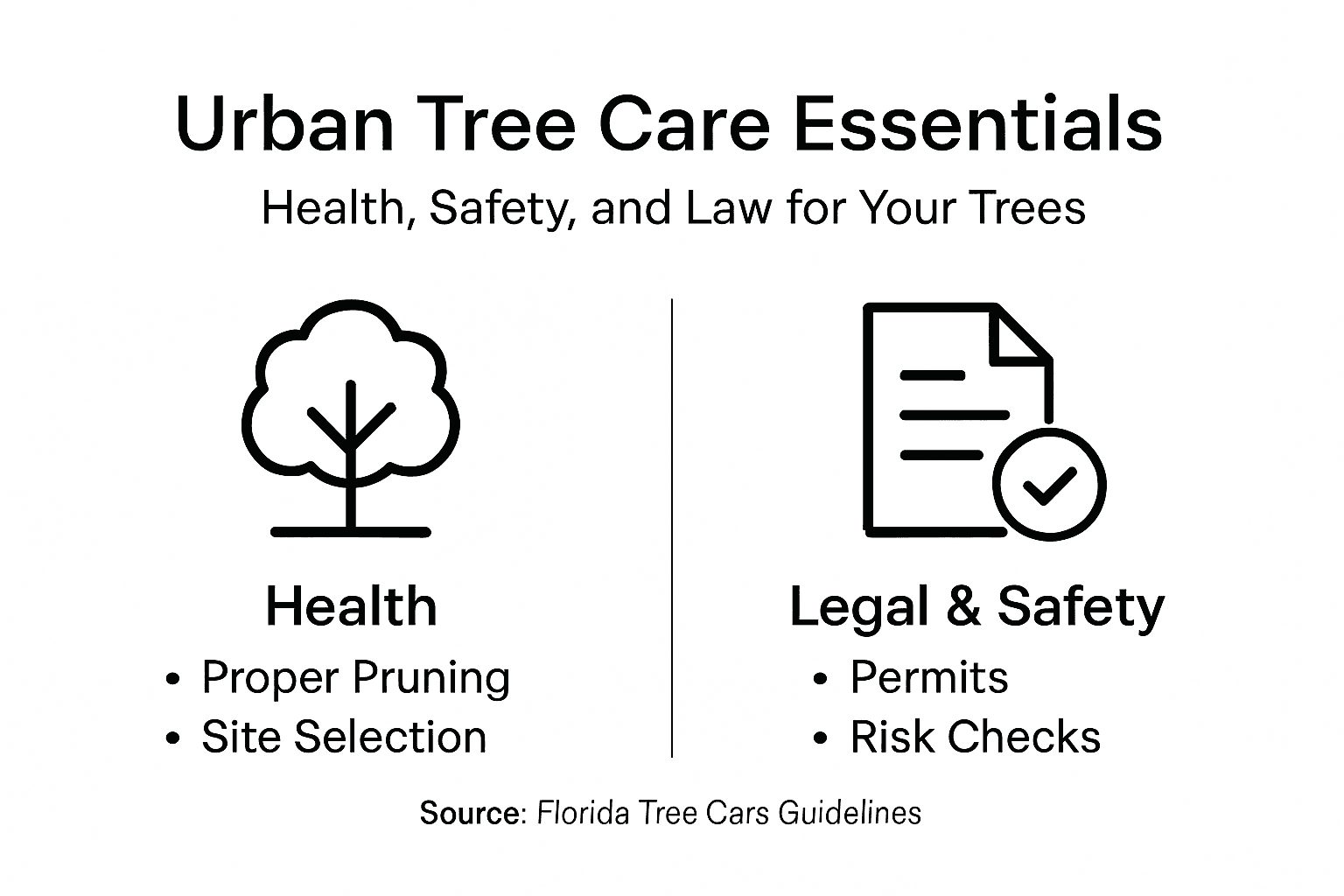
Orange County, Seminole County, and individual cities like Orlando, Winter Park, and Altamonte Springs all have distinct tree ordinances. Some require permits for any tree over a certain diameter. Others require them only in historic districts or for heritage trees.
Common permit requirements:
- Diameter thresholds (often 6 inches, sometimes larger)
- Heritage or historic tree designations requiring protection
- Public right-of-way work needing city approval
- Development and construction requiring tree surveys and protection plans
Ignoring these requirements brings real consequences. Fines exceed $500 per violation, sometimes reaching thousands for protected species.
What Requires Professional Help
Protected trees demand certified arborist assessment and documentation. Species like gumbo limbos, mahogany, and native oaks often require permits.
Hire professionals when:
- Removing trees larger than local size thresholds
- Working in historic districts or on protected properties
- Working near utilities or structures
- Removing or significantly trimming heritage designations
- Any work visible from the public right-of-way
Professional arborists understand local codes, obtain required permits, and document work properly, protecting you from fines and liability.
Before You Call a Contractor
Verify that any tree service carries proper licensing and insurance. Ask about permits. Legitimate companies obtain them automatically. Cheap contractors who avoid permits create your legal liability.
Check your city’s website for permit requirements and approved contractor lists. Many cities maintain certified arborist registries.
Pro tip: Contact your city’s urban forestry or parks department before removing any tree larger than 6 inches diameter; a quick call prevents costly permit violations and ensures compliance with local rules.
Avoiding Common Tree Care Mistakes
One wrong decision about your tree can trigger years of decline or sudden failure. Most tree problems aren’t mysterious diseases—they’re preventable mistakes homeowners make through well-intentioned but harmful actions.
The Topping Trap
Topping ranks as the most destructive mistake people make. Cutting the main trunk to force bushier growth sounds reasonable but devastates trees.
Topping causes:
- Massive wounds that invite disease and pest colonization
- Weak branch regrowth that fails easily in storms
- Stress that shortens tree lifespan by years or decades
- Permanent structural deformity
This isn’t a minor cosmetic issue. Topped trees often die within five to ten years. If they survive, they become hazardous structures with weak, competing branches.
Instead, hire a certified arborist for proper pruning techniques that promote health and structure. Real pruning removes specific problem branches, not the entire top.
Wrong Species in Wrong Places
Planting a water-loving tree in dry sandy soil dooms it from day one. Choosing unsuitable species wastes money and creates maintenance nightmares.
Choosing the right tree for the place prevents years of struggle and improves urban canopy health dramatically.
Before planting, verify:
- Light conditions at maturity (not just now)
- Soil type and drainage patterns
- Available space for mature root and canopy spread
- Winter hardiness for Central Florida freezes
- Water availability without excessive irrigation
A tree planted in the wrong spot becomes a constant problem requiring frequent intervention or eventual removal.
Soil Compaction and Root Damage
Soil compaction and mechanical injuries from lawn equipment damage roots and invite decline or death in urban environments.
Your tree’s root zone extends far beyond the visible canopy. Running mowers, parking vehicles, or storing equipment over roots strangles the tree slowly. Avoid this by:
- Keeping turf and hardscape away from the base
- Creating mulch rings that protect soil from compaction
- Installing root barriers if the tree’s near structures
- Avoiding soil disturbance near the trunk
Once roots are damaged, recovery takes years—if it happens at all.
Watering Mistakes
Both too much and too little water kill trees. Most homeowners overwater, creating root rot.
Correct watering means:
- Deep, infrequent watering for established trees
- Soil that dries between waterings (not soggy)
- Mulch to retain moisture without waterlogging
- Morning watering when possible
- Less frequent watering in rainy season
Most urban tree problems stem from preventable human actions, not disease or pests—protect your tree from soil damage and improper care from day one.
Pro tip: After the first year, most Central Florida trees need watering only during droughts; overwatering causes more damage than underwatering, so let rainfall do most of the work.
Protect Your Trees With Expert Urban Tree Care Today
Understanding the importance of urban tree care is the first step toward keeping your trees healthy, safe, and compliant with local laws. If you are dealing with challenges like proper pruning, tree health assessments, or navigating Florida’s complex tree regulations this article highlighted the need for professional help to avoid costly mistakes and safety hazards.
Choose McCullough Tree Service as your trusted partner in Orlando and Central Florida for certified arborist expertise. We specialize in tree trimming, removal, storm cleanup, stump grinding, and tree planting all handled with full licensing and insurance. Protect your home and community by acting now because healthy, well-maintained trees increase property value, reduce storm risks, and improve neighborhood beauty. Visit us at McCullough Tree Service and discover how our tailored services ensure your trees thrive safely and legally. Contact us today for a detailed health assessment or estimate and make the best decision for your urban canopy.
Learn more about proper tree trimming and what to consider when planting trees on your property to extend your trees’ life and beauty.
Frequently Asked Questions
What is urban tree care and why is it important?
Urban tree care refers to the management and maintenance of trees in developed areas to ensure their health, safety, and the benefits they provide to the community. It is crucial for maximizing tree health, preventing hazards, and enhancing property values and aesthetics.
How can I assess the health and needs of my trees?
Conducting a health assessment involves checking the trunk and branches for cracks, examining foliage for color and density, and looking for signs of disease or pests. Hiring a certified arborist can help you understand site stressors and provide professional guidance on tree health.
What are the best practices for tree trimming and pruning?
Best practices for tree trimming include removing dead, damaged, or crossing branches, maintaining clearance from structures, and enhancing light penetration into the canopy. It’s important to avoid topping, as this can cause long-term harm to the tree.
What legal considerations should I be aware of when caring for my trees?
Local and state laws regulate tree removal and modification on private property. Some trees are protected under specific ordinances, requiring permits for trimming or removal. Always check local regulations before proceeding with tree work to avoid fines and legal issues.
Recommended
- Commercial Tree Maintenance – Why Compliance Matters
- Commercial Tree Care Explained: Orlando Property Impact
- Tree Care Best Practices 2025—Health and Storm Safety
- Licensed Tree Service: Why Safety Matters in Florida
- Tree Service Orlando FL
- Tree Service Winter Springs FL