By: Shelby McCullough| Published: February 25, 2026
Sorting out where to start with land clearing can be overwhelming for Central Florida homeowners eager to transform their property. Clearing land safely and legally is more involved than just removing trees or brush, especially with county rules and environmental requirements in play. By focusing on certified arborist expertise and thorough site evaluation, you protect your investment and lay the groundwork for a smooth landscaping or building process.
Table of Contents
- Step 1: Assess Site And Identify Obstacles
- Step 2: Secure Permits And Prepare Workspace
- Step 3: Remove Trees And Vegetation Safely
- Step 4: Clear Debris And Level Soil
- Step 5: Verify Site Readiness For Landscaping
Quick Summary
| Key Insight | Explanation |
|---|---|
| 1. Assess Site First | Thorough assessment identifies obstacles like utilities, slopes, and hazardous trees, preventing costly mistakes and ensuring safety during clearing. |
| 2. Secure Necessary Permits | Obtaining the correct permits keeps your project compliant with local regulations and avoids fines or delays in the clearing process. |
| 3. Hire Professionals for Removal | Engage certified arborists for tree removal to ensure safety and efficiency, preventing injuries and property damage during clearing. |
| 4. Clear and Grade Soil Properly | Proper debris removal and grading prevent future flooding issues and create a level surface for landscaping or construction. |
| 5. Verify Site Readiness Post-Clearing | Conduct a final check to ensure debris removal, effective drainage, and compliance with permits, ensuring the site is ready for the next steps. |
Step 1: Assess Site and Identify Obstacles
Before bringing equipment onto your property, you need to understand what you’re working with. A thorough site assessment prevents costly mistakes, keeps your family safe, and ensures the clearing process moves efficiently.
Start by walking the entire property and documenting what you see. Take photos from different angles, note the vegetation density, and identify any structures or utilities that might complicate the work.
Key obstacles to document:
- Power lines, water lines, and septic systems
- Existing structures like sheds, fences, or pools
- Mature trees you want to preserve
- Steep slopes or areas with erosion concerns
- Rocks, stumps, or debris already on the ground
- Wetlands or environmentally sensitive areas
Call your utility provider before digging or clearing anything. They’ll mark underground lines at no cost, and this step prevents dangerous accidents and expensive repairs.
Look for hazardous trees while you’re assessing. Dead branches, leaning trunks, or signs of disease can pose risks during clearing operations. When evaluating vegetation health and stability, understanding how to identify dangerous trees helps you spot trees that may need professional attention before clearing begins.
Check the soil condition too. Wet or sandy soil affects equipment access and drainage planning. If your property has poor drainage or clay-heavy soil, you’ll want to account for this when planning grading work.
Take measurements of the area you want cleared. Knowing square footage helps contractors provide accurate quotes and time estimates. Rough measurements work fine at this stage—just get a sense of scale.
Walking your property with a professional eye reveals the hidden challenges that affect your clearing timeline and budget.
Document seasonal water flow patterns. Where does rainwater collect? Are there natural drainage channels? This information matters when planning grading and preventing future flooding issues.
Pro tip: Record a video walkthrough of your property while narrating obstacles and concerns, then share it with contractors for more accurate estimates and clearer communication about your goals.
The following table compares common land obstacles and recommended actions:
| Obstacle Type | Common Issue | Best Action |
|---|---|---|
| Utility Lines | Underground hazards | Mark and avoid during clearing |
| Mature Trees | Preservation concern | Tag and protect, consult arborist |
| Steep Slopes | Erosion risk | Plan for extra drainage solutions |
| Wetlands | Environmental limits | Obtain special permits |
| Rocks/Debris | Equipment risk | Remove prior to grading |
Step 2: Secure Permits and Prepare Workspace
Permits aren’t just bureaucratic hurdles—they protect you legally and ensure your project follows environmental regulations. Central Florida has specific requirements that vary by county, so getting ahead of this step saves time and prevents costly delays.
Start by contacting your local building or development department. They’ll explain what permits you need based on your property location and clearing scope. Most counties require land clearing permits in Florida that address tree protection, environmental impact, and erosion control.
Common permits you’ll likely need:
- Tree removal or clearing permits
- Environmental assessment approvals
- Erosion and sediment control plans
- Wetland impact assessments if applicable
- Water management district coordination
- Utility location clearance
Request utility locates early. Florida has a free service called Call Before You Dig—call 811 or visit their website. They’ll mark underground power, water, gas, and communication lines at no charge. This step is non-negotiable and prevents dangerous accidents.
Check local tree protection ordinances. Some Central Florida municipalities have specific rules about which trees you can remove and which you must preserve. Violating these can result in fines or project halts.
Prepare your workspace once permits are in hand. Clear marked pathways for equipment access and establish staging areas for debris. Notify your neighbors about the project timeline so they’re not surprised by activity.
Set up erosion control measures if required by your permit. These might include silt fences, sediment traps, or temporary grading adjustments. Your contractor will handle installation, but you need to understand what’s coming.
Getting permits upfront costs less than dealing with violations, fines, or project shutdowns mid-way through.
Request a copy of all permits and keep them accessible. You’ll need them if inspectors visit, and they document that your project meets local standards.
Confirm your contractor carries proper licensing and insurance. They should be able to pull permits on your behalf or guide you through the process. Many certified arborists can handle permit coordination as part of their service.
Pro tip: Contact your county’s permit office 2-3 weeks before you want to start clearing, as some permits take time to process; starting early prevents frustrating delays once your contractor is ready to begin work.
Step 3: Remove Trees and Vegetation Safely
This is where your land clearing project takes physical shape. Removing trees and vegetation correctly prevents injuries, protects your property, and ensures efficient debris management.
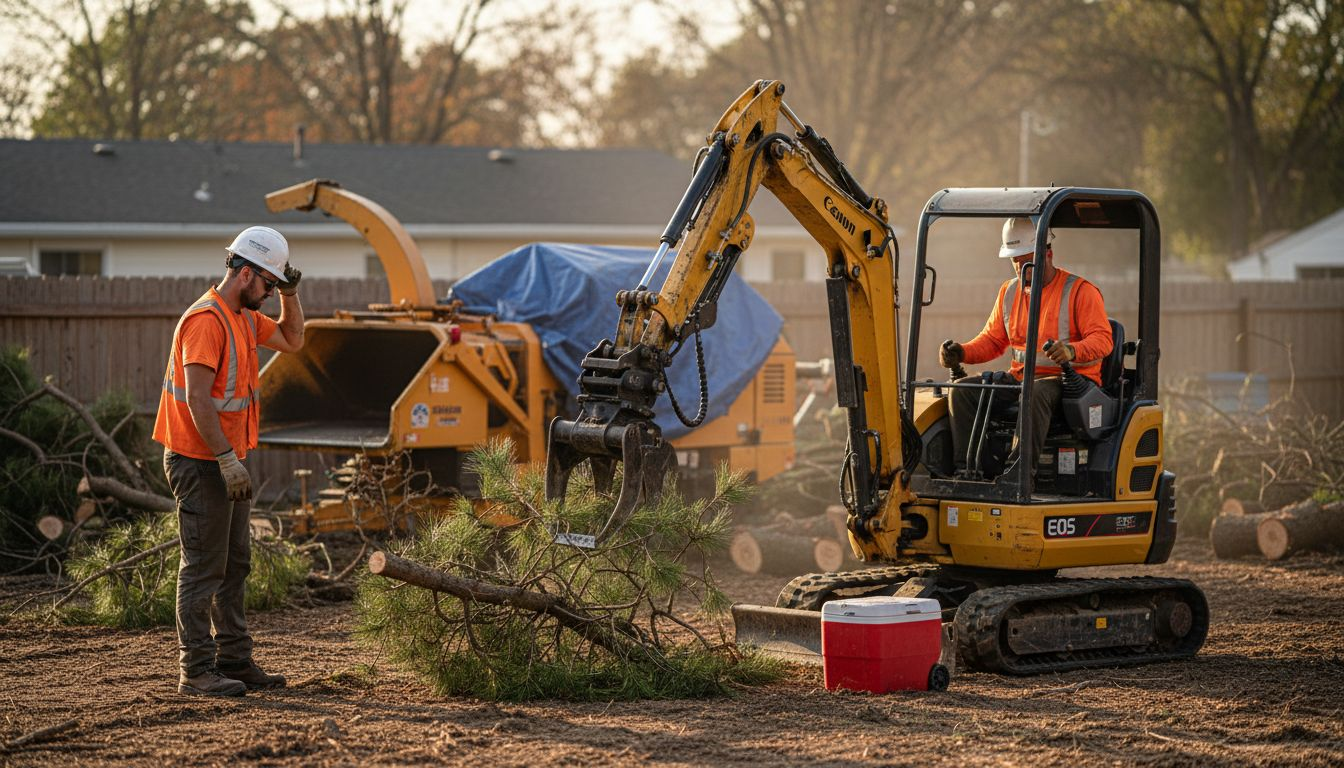
Don’t attempt large tree removal yourself. Professional equipment and expertise are necessary for safety. Even small mistakes with chainsaws or falling branches can cause serious injury or property damage.
Hire a certified arborist or licensed tree removal contractor for the heavy work. They understand proper cutting techniques and have insurance to cover accidents. Understanding how to cut down a tree safely helps you understand what professionals should be doing and what precautions matter most.
What your contractor should handle:
- Assessing tree health and fall direction
- Securing the area to prevent debris from hitting structures
- Using proper equipment like chippers and stump grinders
- Removing branches systematically from top to bottom
- Processing logs for removal or repurposing
- Clearing brush and smaller vegetation
Removal order matters. Contractors typically start with smaller trees and hazardous vegetation, then move to larger specimens. This prevents cleared debris from blocking access to remaining work.
Ask your contractor about debris removal options. Some properties benefit from chipping debris for mulch, while others need complete hauling. Discuss costs upfront since removal can be expensive depending on volume.
Small vegetation like shrubs and saplings can often be cleared more quickly. Your contractor may use mulching equipment to process this material on-site, reducing hauling costs.
Professional tree removal costs money upfront but saves thousands in potential injuries, property damage, and legal liability.
Request your contractor remove stumps once trees are down. Stump grinding is faster and cleaner than chemical removal, though it does cost extra. Removing stumps now prevents tripping hazards and prepares the area for grading.
Document the removal process with photos. This creates a record for your permit compliance and insurance purposes. It also helps you understand what work was completed if questions arise later.
Monitor the work and ask questions if something seems off. Your property, your rules. A good contractor welcomes oversight and communication.
Pro tip: Request your contractor leave larger wood pieces suitable for firewood or milling if you’re interested, as this can reduce hauling costs and provide useful materials for your property.
Step 4: Clear Debris and Level Soil
With trees and vegetation removed, your property looks bare but rough. This step transforms cleared land into a usable, functional space by removing debris and creating proper grading for drainage and future use.
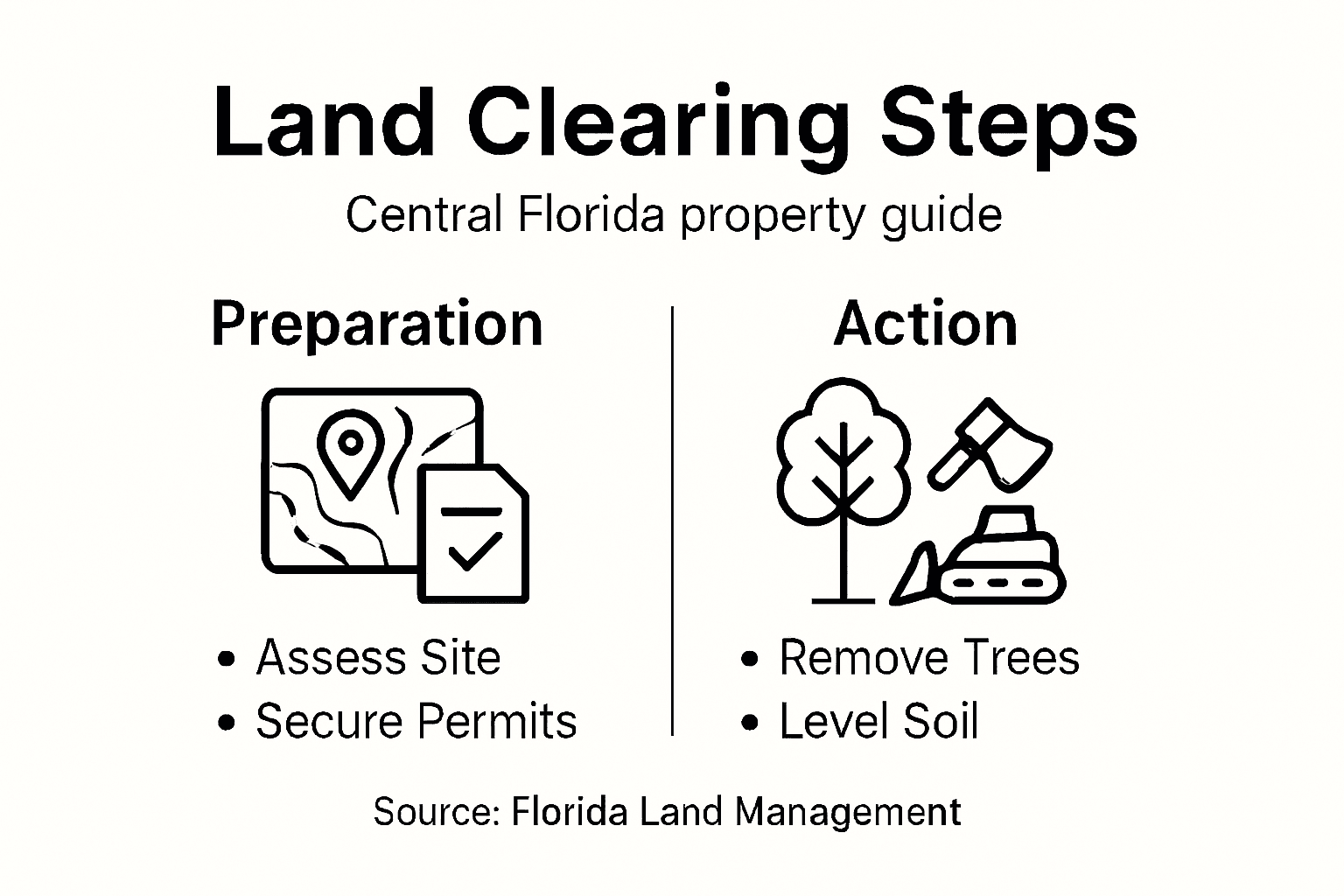
Start with comprehensive debris removal. Your contractor should haul away all remaining logs, branches, and wood chips unless you’ve arranged to keep material for mulch or firewood. Leaving debris behind creates fire hazards and prevents proper soil preparation.
Once the area is clear, assess the soil condition. Florida’s sandy and clay-heavy soils often need attention. Understanding what land clearing entails for your property helps you recognize whether your soil needs amendment or specialized grading work.
Key debris removal steps:
- Remove all wood debris, stumps, and root balls
- Clear rocks and construction materials if present
- Haul away chipped material unless you’re keeping it
- Grade the property to remove high spots and low areas
- Check for buried obstacles like old metal or concrete
Proper grading prevents water problems. Your contractor should slope the land away from structures to direct rainwater away from foundations and utilities. Flat or inward-sloping yards trap water and cause flooding.
Request your contractor address drainage concerns if your property had them. This might mean adding swales, installing French drains, or creating slight elevation changes. Getting drainage right now prevents expensive water damage later.
Ask about soil quality and whether amendments are needed. Some Central Florida properties benefit from adding topsoil for landscaping or fill for low areas. Your contractor can recommend appropriate materials based on your future plans.
Proper grading at the clearing stage costs less than fixing drainage problems after you’ve invested in landscaping or structures.
Inspect the final grade before considering the work complete. Walk the property after rain to see how water flows. If water pools or runs toward structures, request adjustments before your contractor leaves.
Take photos of the graded property for your records. These serve as your baseline before any landscaping or construction work begins.
Once the land is clear and graded, you’re ready for whatever comes next—whether that’s planting new trees, building structures, or simply enjoying open space.
Pro tip: Save excavated topsoil if your property has good quality soil, as you can use it for future planting areas or landscaping rather than paying to haul it away and buying new soil later.
Step 5: Verify Site Readiness for Landscaping
Before you start planting or building, confirm that your cleared property meets the standards for whatever comes next. A thorough site verification prevents problems that cost thousands to fix later.
Walk the entire property with a critical eye. Check that debris removal is complete, grading looks even, and the soil is stable. Look for any remaining obstacles like rocks, metal, or wood that could interfere with landscaping or construction.
Verify proper drainage by observing water flow patterns. Pour water in various spots and watch where it goes. Professional site preparation services ensure proper grading and drainage to guarantee water moves away from structures and doesn’t pool in low areas.
Essential verification checkpoints:
- All debris and stumps completely removed
- Soil properly graded and compacted
- Water drains away from structures
- No remaining obstacles or hazards
- Boundary lines are clearly marked
- Erosion control measures in place if required
- Utility markings still visible if needed
Test soil compaction by walking across the property. Soft or spongy areas indicate inadequate compaction and may need additional grading. Properly compacted soil supports landscaping and prevents settling issues.
Check that erosion control measures are functional if your property requires them. Silt fences should be intact, and any temporary swales should direct water appropriately.
Take new photographs of the prepared site from multiple angles. These create a documented baseline for any future work and prove the site met standards when clearing was complete.
A verified and documented site prevents disputes with contractors and protects your investment in the clearing work.
Request a final walkthrough with your contractor. Ask them to point out grading work, drainage solutions, and any site-specific considerations you should know about before landscaping begins.
Obtain any final certifications or documentation from your contractor. This includes proof of debris removal, compliance with permits, and any environmental compliance documents.
Review your permits one more time to confirm all requirements have been met. This protects you if any future issues arise.
Pro tip: Create a detailed site plan or sketch noting the location of utilities, property boundaries, drainage patterns, and any areas needing special attention before you start any landscaping or construction work.
Here is a quick summary of land clearing steps and their primary goals:
| Step | Main Goal | Key Outcome |
|---|---|---|
| Assess Site | Identify obstacles | Document hidden risks |
| Secure Permits | Legal and safe clearing | Compliance with local codes |
| Remove Vegetation | Safe tree and plant removal | Professional debris handling |
| Clear & Level | Debris removal and grading | Flood prevention, smooth surface |
| Verify Site | Confirm readiness | Ready for landscaping or building |
Take Control of Your Central Florida Land Clearing Project Today
Clearing your property involves overcoming many challenges—from navigating local permits and protecting mature trees to ensuring proper debris removal and effective grading. The detailed steps in the “Complete Land Clearing Guide for Central Florida Homes” highlight how crucial professional guidance is to avoid costly mistakes and secure a safe, compliant, and well-prepared site for your future plans. Whether you need expert tree removal, stump grinding, or site preparation, trusting a certified arborist service can provide peace of mind and protect your investment.
Do not wait until hidden obstacles or permit delays slow your land clearing project. At McCullough Tree Service, we specialize in comprehensive land clearing and tree services tailored for Orlando and Central Florida properties. Our licensed professionals handle everything from safe tree removal and debris clearing to securing necessary permits and preparing your site for landscaping or construction. Explore how our expertise in tree care and removal ensures your property is cleared safely and efficiently. Contact us today to schedule your free consultation and take the first step toward a beautifully prepared property.
Frequently Asked Questions
What are the first steps to assess my property for land clearing?
Start by walking the entire property to identify obstacles such as power lines, existing structures, and mature trees you wish to preserve. Document your findings with photos and notes to inform contractors about what you’re working with.
Do I need permits for land clearing in Central Florida?
Yes, obtaining the necessary permits is crucial for legal compliance and environmental protection. Contact your local building or development department to understand which permits you need and request them at least 2-3 weeks before starting your clearing project.
How do I safely remove trees and vegetation from my property?
Hire a certified arborist or licensed tree removal contractor to handle tree removal safely. They will assess tree health, use proper cutting techniques, and manage debris removal to prevent accidents and ensure your property is safe.
What should I do with the debris after clearing the land?
Your contractor will typically handle debris removal, which includes hauling away logs, branches, and wood chips. Discuss your options in advance, including whether you want to keep material for mulch or firewood to reduce hauling costs.
How can I verify my site is ready for landscaping after clearing?
Conduct a walkthrough to check that all debris is removed, grading is even, and soil compaction is adequate. Look for proper drainage and any remaining obstacles to ensure the site is prepared before beginning landscaping activities.
What are the common drainage issues to consider during land clearing?
Drainage issues can arise from poor grading, which may cause water to pool around structures. Plan for grading that slopes away from foundations to ensure effective water runoff and prevent future flooding problems.
Recommended
- Land Clearing Regulations 2025: New Rules for Central Florida
- Expert Tips on the Land Clearing Process
- Land Clearing Process Guide for Property Owners
- Land Clearing Process Guide for Property Owners
- Tree Service Orlando FL
- Tree Service Winter Springs FL