By: Shelby McCullough| Published: March 15, 2026
Urban trees in Central Florida deliver measurable benefits, from cutting cooling costs by up to 10% to boosting property values, but they also introduce risks during hurricane season. Homeowners and property managers must balance these advantages with proper maintenance to protect structures and preserve tree health. This guide covers proven techniques for selecting, pruning, and managing urban trees to maximize their value while minimizing storm damage and safety hazards. You’ll learn how to evaluate tree health, implement effective pruning schedules, and decide when professional services outperform DIY efforts in our unique subtropical climate.
Table of Contents
- Criteria For Selecting And Maintaining Urban Trees
- Best Pruning And Training Techniques For Healthy Urban Trees
- Managing Urban Trees For Hurricane Resilience And Energy Efficiency
- Comparing Tree Care Options: Diy Versus Professional Services In Central Florida
- Explore Professional Tree Care Services In Central Florida
- Frequently Asked Questions
Key takeaways
| Point | Details |
|---|---|
| Native species reduce maintenance | Native trees require less supplemental irrigation and fewer fertilizers once established in Central Florida. |
| Early pruning prevents future problems | Training young trees with proper scaffold limbs and dominant leaders avoids costly removals and decay later. |
| Strategic placement cuts energy costs | Trees shading east and west sides can lower indoor temperatures by up to 10 degrees and reduce AC energy consumption. |
| Hurricane resilience requires planning | Proper positioning and regular pruning minimize wind damage risks while protecting homes and power lines. |
| Professional care enhances safety | Certified arborists apply best practices tailored to Central Florida’s climate and storm patterns for optimal tree health. |
Criteria for selecting and maintaining urban trees
Choosing the right trees and maintaining them properly starts with understanding what works in Central Florida’s subtropical environment. Native trees adapt naturally to local soil, rainfall, and temperature patterns, reducing your need for constant watering and fertilization. This saves time, money, and resources while supporting local ecosystems. When you select species already thriving in the region, you’re setting yourself up for long-term success with minimal intervention.
Placement matters as much as species selection. Position trees to provide shade on the east and west sides of your home for maximum cooling benefits, but keep them away from power lines to prevent outages and fire hazards. Early pruning establishes a strong framework by promoting a single dominant leader and well-spaced scaffold limbs. This tree planting guide central florida approach prevents structural weaknesses that lead to storm damage or expensive removals down the road.
Maintaining a live crown ratio greater than 60% keeps trees vigorous and photosynthetically active. This ratio measures the portion of the tree covered in living branches and foliage compared to the total height. Trees with adequate crown coverage resist pests, diseases, and environmental stress more effectively. Prevent branches from growing larger than half the trunk diameter, as oversized limbs create weak attachment points prone to decay and breakage. Regular monitoring and early intervention keep your urban forest healthy and safe.
Key selection and maintenance criteria:
- Choose species native to Central Florida for lower water and fertilizer needs
- Position trees for shade benefits while avoiding power line conflicts
- Establish dominant leaders and scaffold limbs through early pruning
- Maintain live crown ratios above 60% for tree vitality
- Prevent large branch growth that exceeds half the trunk diameter
Best pruning and training techniques for healthy urban trees
Pruning young trees correctly sets the stage for decades of healthy growth and storm resilience. Establish and maintain dominant leader by starting at planting and continuing for 25 years to develop good branch and trunk structure. This long-term commitment pays off by reducing the need for major corrective work later. Focus on creating a single central trunk with evenly spaced lateral branches that won’t compete for dominance or create weak crotches.
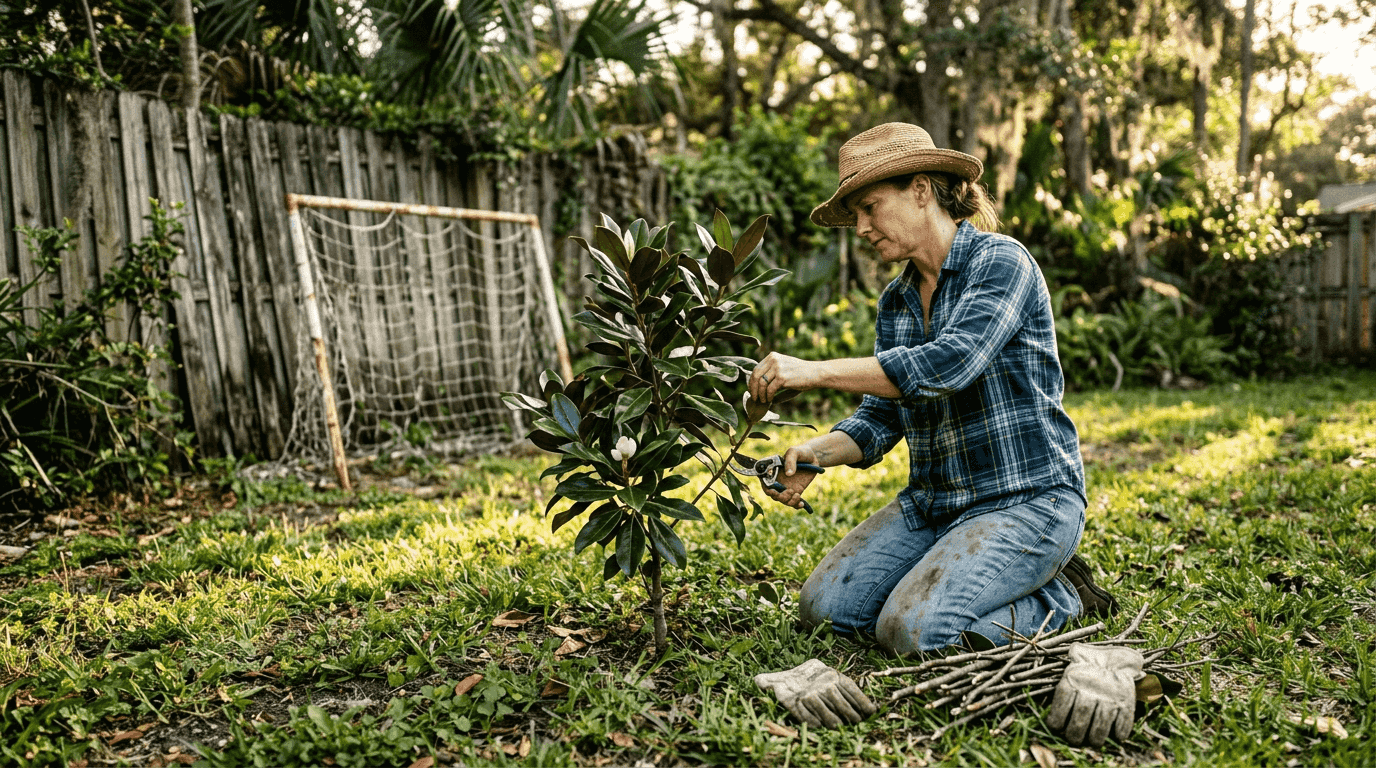
Avoid removing large branches once trees mature, as this initiates decay that weakens the entire structure. Instead, shorten low branches early when they’re small, guiding growth upward without causing significant wounds. Position the lowest scaffold limbs high enough to prevent drooping as the tree ages, eliminating the need for removal that leaves large scars. This pruning trees tips and guidance method preserves structural integrity while maintaining aesthetic appeal.
Consistent pruning over multiple years builds a resilient canopy that withstands Central Florida’s hurricane winds. Remove crossing branches, water sprouts, and poorly attached limbs during each session. Maintain that critical 60% live crown ratio to support photosynthesis and energy production. Well-trained trees not only survive storms better but also require less emergency intervention, saving you money and stress during peak hurricane season.
Pro Tip: Schedule pruning sessions in late winter or early spring before new growth begins. This timing minimizes stress on trees while giving you clear visibility of branch structure without dense foliage blocking your view.
Effective pruning practices:
- Train a single dominant leader from planting through maturity
- Shorten low branches early rather than removing large limbs later
- Space scaffold limbs evenly to prevent competition and weak attachments
- Remove crossing branches and water sprouts annually
- Preserve live crown ratios above 60% for optimal health
Understanding the difference between tree care 101 trimming vs pruning helps you communicate clearly with professionals and execute proper techniques yourself. Trimming focuses on shaping and maintaining appearance, while pruning addresses health, safety, and structural integrity. Both play essential roles in urban tree management.
Managing urban trees for hurricane resilience and energy efficiency
Friend or foe: Are trees protecting your home from hurricanes? depends entirely on proper positioning and maintenance. Trees deflect wind when surrounded by protective landscape elements, but isolated trees near structures become projectiles during severe storms. Plant strategically to shade your home’s east and west sides, where Tampa’s tree canopy losses and impacts show shade near AC units can reduce energy consumption by up to 10%. This dual benefit of cooling and protection makes thoughtful placement essential.
Avoid planting near power lines, as falling limbs cause outages and fire hazards that endanger entire neighborhoods. Post-hurricane canopy loss creates ecosystem vulnerability, exposing soil to erosion and properties to increased wind exposure. Regular pruning and hazardous limb removal strengthen your trees’ ability to flex with wind rather than snap under pressure. This proactive urban tree care central florida approach protects both your investment and your community.
Preparing trees before hurricane season arrives makes the difference between minor cleanup and catastrophic damage. Inspect for cracks, decay, and weak attachments that signal imminent failure. Remove dead wood and thin dense canopies to reduce wind resistance. These tree trimming preparation steps take hours but prevent days of recovery work and potential injury.
| Tree benefit | Energy impact | Hurricane consideration |
|---|---|---|
| East/west shade | Reduces cooling costs up to 10% | Position away from structures |
| AC unit shading | Lowers energy consumption | Avoid overhead branches |
| Wind deflection | Minimal direct impact | Requires surrounding landscape |
| Canopy density | Increases shade effectiveness | Thin to reduce wind resistance |
Pro Tip: Document your trees’ condition with photos before each hurricane season. This visual record helps insurance claims and tracks changes that signal declining health or increasing risk over time.
Comparing tree care options: DIY versus professional services in Central Florida
DIY tree care offers cost savings and immediate control over your landscape, but it requires knowledge, proper tools, and physical capability to execute safely. You can handle basic tasks like mulching, watering, and removing small dead branches with minimal investment. However, Challenges in urban forestry programs reveal that municipal urban forestry programs often face funding and staffing limitations, making private professionals crucial for complex work. Homeowners attempting major pruning without training risk causing decay, creating safety hazards, or even injuring themselves.
Professional services bring expertise tailored to Central Florida’s unique climate and storm patterns. Certified arborists understand proper pruning techniques, recognize disease symptoms early, and safely remove hazardous trees near structures or power lines. They carry insurance that protects you from liability if accidents occur during service. While professional professional tree trimming costs more upfront, it prevents expensive mistakes that compromise tree health or property safety.
The decision between DIY and professional care often depends on task complexity and risk level. Simple maintenance like watering young trees or applying mulch suits DIY approaches. Complex tasks like removing large limbs, working near power lines, or addressing storm damage require professional intervention. Many homeowners find a hybrid approach works best, handling routine care themselves while scheduling professionals for annual pruning and hazard assessments.
| Aspect | DIY approach | Professional services |
|---|---|---|
| Cost | Lower immediate expense | Higher upfront, prevents costly errors |
| Expertise | Limited to homeowner knowledge | Certified arborists with specialized training |
| Safety | Higher risk for complex tasks | Insured professionals with proper equipment |
| Scope | Basic maintenance and small jobs | Pruning, removal, storm prep, risk assessment |
| Time | Requires personal availability | Scheduled service on your timeline |
Consider professional professional tree removal when trees show signs of severe decline, lean dangerously toward structures, or suffered major storm damage. These situations demand expertise and equipment beyond typical homeowner capabilities. Understanding tree trimming in Florida regulations and best practices ensures compliance with local ordinances while protecting your trees and property.
Key considerations for choosing your approach:
- Assess your skill level honestly before attempting complex pruning
- Factor in equipment costs and safety gear for DIY projects
- Schedule professional inspections annually even if you handle routine care
- Recognize when tree size or location exceeds safe DIY limits
- Verify professional credentials and insurance before hiring
Explore professional tree care services in Central Florida
Maintaining healthy urban trees requires expertise that goes beyond basic yard work. After learning about proper selection, pruning techniques, and hurricane preparation, you might recognize the value of professional support for your property. McCullough Tree Service brings certified arborists who understand Central Florida’s unique challenges, from subtropical pests to hurricane-force winds. Our tree trimming services enhance structural integrity while preserving the aesthetic appeal that makes your property stand out.
When trees become hazards rather than assets, safe removal protects your home and family. Our tree removal services handle everything from small declining specimens to large storm-damaged trees near structures. We assess risk factors you might miss, preventing property damage and injury. Working with certified arborist services means getting science-based recommendations tailored to your landscape goals and budget. Whether you need storm preparation, routine maintenance, or emergency response, professional care delivers peace of mind and long-term value.
Frequently asked questions
What are the best times to prune urban trees in Central Florida?
Late winter through early spring offers optimal pruning windows before new growth begins. This timing minimizes stress while providing clear visibility of branch structure without dense foliage. Avoid pruning during active hurricane season from June through November, as fresh wounds make trees more vulnerable to storm damage.
How often should I inspect my trees for storm damage risk?
Conduct thorough inspections at least twice yearly, ideally in early spring and late fall before hurricane season peaks. Look for cracks in trunks or major limbs, dead branches, fungal growth indicating decay, and leaning that suggests root problems. Schedule additional checks immediately after severe storms to identify new hazards before they cause property damage.
Are native trees better for urban home landscapes in Central Florida?
Yes, native trees require less irrigation and fertilization once established, making them ideal for sustainable urban landscapes. They’ve adapted to local soil conditions, rainfall patterns, and pest pressures over thousands of years. Native species also support local wildlife and require fewer chemical treatments, reducing environmental impact and maintenance costs.
How can urban trees reduce my energy bills?
Properly positioned trees create shade that blocks solar heat gain on your home’s exterior walls and roof. Trees planted on east and west sides provide maximum cooling benefits during morning and afternoon sun exposure. Tampa’s tree canopy energy benefits research shows shade near air conditioning units can reduce energy consumption by up to 10%, translating to significant savings over cooling seasons.
What are the risks of improper pruning or tree care?
Removing large branches improperly initiates decay and weakens tree structure, creating hazards that worsen over time. Topping trees or making flush cuts eliminates natural defense zones that prevent pathogen invasion. Poor pruning techniques compromise structural integrity, making trees more likely to fail during storms and potentially causing property damage or injury. Always follow proper techniques or hire certified professionals for significant pruning work.
Recommended
- Urban Tree Care Explained: Health, Safety, and Law
- Tree Planting Guide Central Florida for Homeowners
- Municipal tree management in Central Florida: expert guide
- Tree Planting Considerations for Central Florida Homes