By: Shelby McCullough| Published: March 5, 2026
Proactive tree management can reduce storm damage costs by 40% in Central Florida municipalities, yet many property managers struggle to identify reliable arborist services. Certified arborists provide essential expertise in safety compliance, storm readiness, and tree health assessments that protect public spaces and budgets. This guide covers evaluating arborist services, meeting regulatory requirements, and implementing effective maintenance strategies.
Table of Contents
- Understanding The Role Of Certified Arborists In Municipal Tree Management
- Navigating Regulatory Compliance For Municipal Trees In Central Florida
- Strategies For Storm Damage Prevention And Emergency Tree Response
- Best Practices For Municipal Tree Health Assessment And Maintenance
- Common Misconceptions And Pitfalls In Municipal Tree Management
- Making Informed Decisions: Evaluating Municipal Arborist Services And Contracts
- Conclusion: Implementing Effective Municipal Tree Management Plans
- Trusted Certified Arborist Services For Central Florida Municipalities
Key takeaways
| Point | Details |
|---|---|
| Certified arborists ensure regulatory compliance and reduce hazards | Professional credentials validate expertise in safety protocols and environmental standards required by law. |
| Proactive maintenance lowers storm damage costs by 40% | Scheduled pruning and removal minimize hazards before severe weather strikes. |
| Regular tree health assessments prevent costly failures | Inspections every 1 to 3 years identify structural issues and disease early. |
| Topping trees increases branch failure risk significantly | This harmful practice weakens structure and creates long-term safety problems. |
| Contracts must include emergency response guarantees | Service agreements should specify 24 to 48 hour response times after storms. |
Understanding the role of certified arborists in municipal tree management
Certified arborists hold credentials from the International Society of Arboriculture, validating their expertise in tree biology, safety protocols, and environmental compliance. Their training covers proper pruning techniques, disease diagnosis, hazard assessment, and storm preparation strategies essential for municipal tree programs. Over 80% of U.S. municipalities require certified arborists for major tree works, recognizing their critical role in preventing costly tree-related hazards.
Municipal tree risk mitigation depends on professional assessment and maintenance. Certified arborists identify structural weaknesses, root problems, and disease symptoms that untrained personnel might miss. They apply research-based methods to strengthen trees against wind damage and reduce liability from falling limbs or toppled trunks.
Pro Tip: Verify arborist credentials directly through the ISA online database before signing any municipal contract. This simple check prevents costly mistakes from working with unqualified providers.
Central Florida’s unique challenges include hurricane season threats, sandy soils, and subtropical pests. Arborist certification in Central Florida ensures professionals understand regional tree species, soil conditions, and storm preparation requirements. Municipal contracts benefit from certified arborist expertise that combines local knowledge with national safety standards.
Key responsibilities of certified arborists in municipal settings include:
- Conducting systematic tree health assessments and hazard evaluations
- Developing pruning schedules that promote structural integrity
- Recommending removals when trees pose unacceptable risks
- Coordinating emergency response after severe weather events
- Documenting maintenance activities for compliance records
Municipalities should follow essential tips for hiring certified arborists to ensure they select qualified professionals. The investment in certified expertise pays dividends through reduced insurance claims, lower liability exposure, and healthier urban forests that enhance property values.
Navigating regulatory compliance for municipal trees in Central Florida
Florida municipalities operate under strict tree protection ordinances that govern removal, pruning, and maintenance activities. Florida Tree Protection Ordinances impose fines over $10,000 for violations, making compliance a financial imperative. Local codes specify permit requirements, protected species lists, and replacement obligations that vary by jurisdiction.
Public safety concerns drive many regulatory requirements. Trees near power lines, roadways, and buildings require special attention to prevent injuries and property damage. Municipal tree programs must document inspection schedules, maintenance activities, and removal decisions to demonstrate due diligence if accidents occur.
Compliance responsibilities include:
- Obtaining permits before removing or significantly pruning protected trees
- Following species-specific protection rules for heritage and specimen trees
- Documenting tree condition assessments and maintenance decisions
- Meeting replacement planting requirements after authorized removals
- Coordinating with utility companies for clearance pruning near infrastructure
Statistic: Non-compliance penalties in Florida can exceed $10,000 per violation, with additional civil liability for damages from improperly maintained trees.
Certified arborists understand regulatory frameworks and help municipalities navigate permit processes. They prepare required documentation, recommend appropriate maintenance methods, and ensure work meets legal standards. Understanding Florida tree protection regulations prevents expensive violations and legal disputes.
Local ordinances often mandate specific qualifications for tree work contractors. Many Central Florida cities require proof of certification, licensing, and insurance before issuing permits for municipal tree projects. These requirements protect public interests by ensuring only qualified professionals handle sensitive tree care tasks.
Regulatory adherence enhances public safety by establishing clear standards for tree maintenance. Systematic compliance programs reduce liability risks while preserving valuable urban forest resources. Municipal managers should review ordinances annually to stay current with regulatory changes and maintain consistent enforcement.
Strategies for storm damage prevention and emergency tree response
Central Florida faces annual hurricane threats that cause substantial tree damage. Storms cause $50 million to $75 million in annual tree damage across the region, straining municipal budgets and emergency response systems. Proactive maintenance significantly reduces these costs while improving public safety during severe weather.
Scheduled pruning removes weak branches and reduces wind resistance before storm season. Strategic canopy thinning allows wind to pass through trees rather than creating sail effects that topple entire specimens. Certified arborists identify structural defects and recommend corrective actions or removals to eliminate hazards.
Proactive strategies deliver measurable benefits. Municipalities can reduce storm damage costs by 40% through systematic pruning programs and hazard tree removal. These savings come from fewer emergency callouts, reduced cleanup expenses, and lower insurance claims after major weather events.
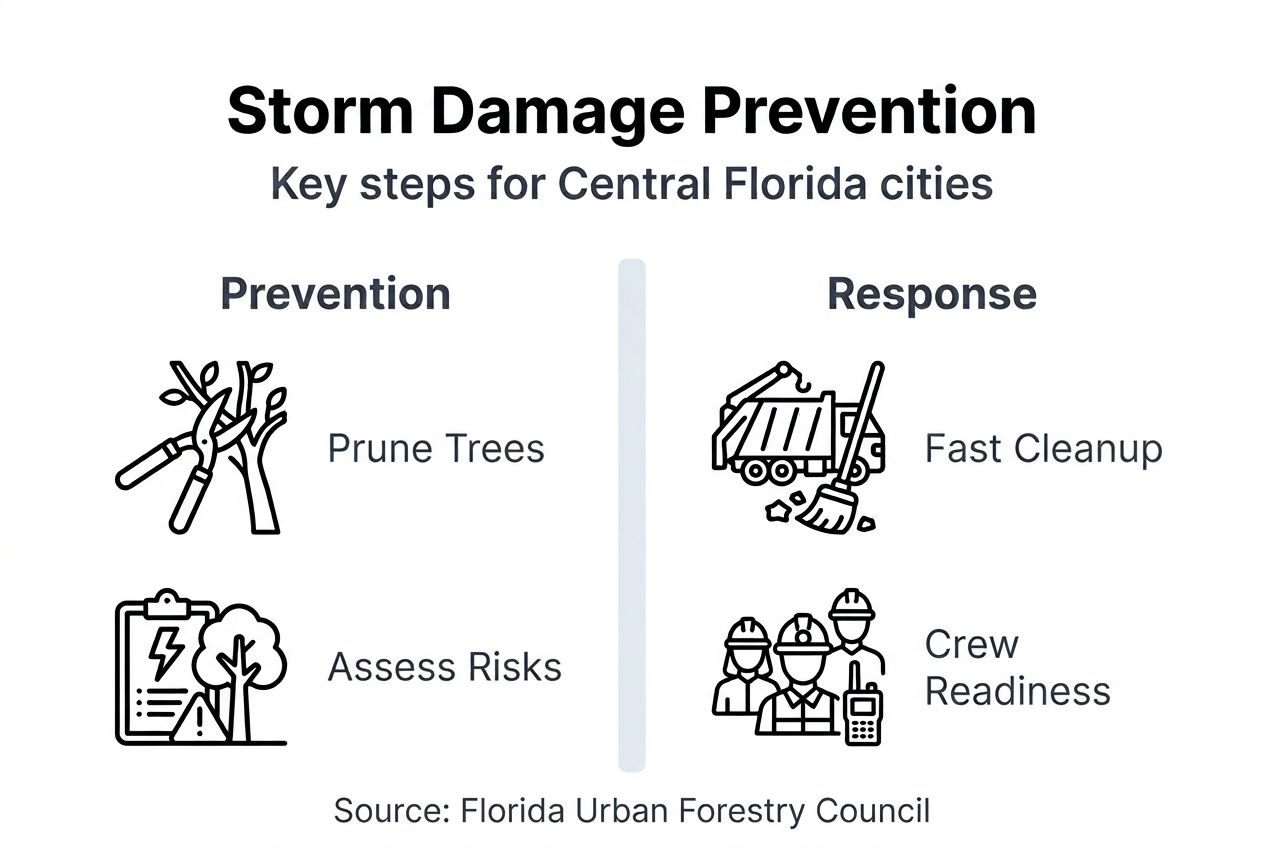
Pro Tip: Schedule major pruning work in late winter or early spring, well before hurricane season begins in June. This timing allows trees to compartmentalize wounds before facing storm stress.
Essential elements of municipal emergency response plans:
- Pre-storm assessment protocols identifying high-risk trees near critical infrastructure
- Written agreements with certified arborists specifying response timeframes
- Equipment staging procedures to enable rapid deployment after storms
- Communication systems coordinating between public works, emergency management, and contractors
- Documentation processes capturing damage assessments and response activities
Statistic: Emergency response guarantees typically require 24 to 48 hour arborist availability following storm events to address immediate public safety hazards.
Municipal contracts should specify guaranteed response times, equipment commitments, and crew availability during emergencies. Clear pre-event agreements prevent disputes and ensure rapid mobilization when public safety depends on quick action. Review emergency tree response guidance to understand best practices.
Cost comparisons favor proactive approaches. Reactive cleanup after major storms typically costs two to three times more than preventive maintenance programs. Emergency rates, extensive debris removal, and property damage repairs add substantial expenses that scheduled maintenance avoids.
Best practices for municipal tree health assessment and maintenance
Systematic inspection programs form the foundation of effective municipal tree management. Routine health assessments every 1 to 3 years identify developing problems before they become emergencies. Assessment frequency depends on tree age, species, location, and condition history.
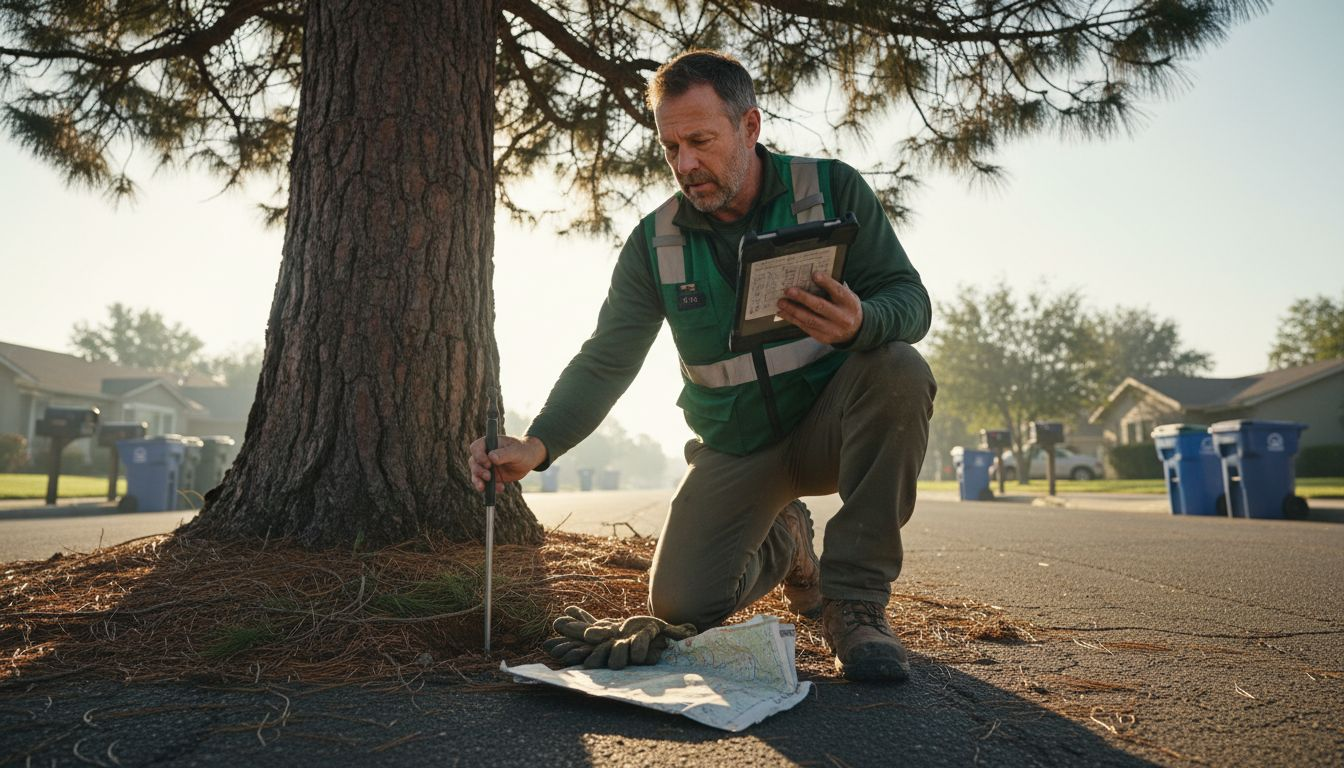
Comprehensive inspections evaluate multiple factors affecting tree stability and health. Root systems require examination for decay, girdling roots, and soil compaction that compromise anchoring. Canopy assessments identify dead wood, crossing branches, and structural weaknesses. Pest and disease evaluations detect infestations early when treatment options remain viable.
Key assessment components:
- Root collar examination checking for decay, wounds, and proper flare exposure
- Trunk inspection identifying cracks, cavities, fungal fruiting bodies, and bark damage
- Canopy evaluation assessing branch structure, deadwood percentage, and foliage density
- Pest screening detecting insects, diseases, and environmental stress symptoms
- Site analysis reviewing soil conditions, drainage, and conflicts with infrastructure
Proper pruning techniques promote tree health while reducing hazards. Certified arborists follow ANSI A300 standards that specify correct cut placement, branch removal limits, and seasonal timing. Poor pruning damages trees and creates entry points for decay organisms that weaken structure over time.
| Assessment Type | Frequency | Primary Focus |
|---|---|---|
| Young trees | Annually | Training pruning, stake removal, establishment |
| Mature trees | Every 2-3 years | Structural integrity, deadwood, hazard reduction |
| High-value specimens | Annually | Health monitoring, pest management, preservation |
| Post-storm evaluation | As needed | Damage assessment, hazard identification, removal decisions |
Documentation systems track assessment findings and maintenance history for each tree. Digital platforms enable efficient record keeping, work order generation, and compliance reporting. Historical data helps identify recurring problems and inform long-term management decisions.
Comprehensive tree assessments extend urban forest lifespan by catching problems early. Professional evaluations provide objective data supporting budget requests and strategic planning. Municipalities investing in systematic programs enjoy healthier trees, lower emergency costs, and reduced liability exposure.
Consult the urban tree health assessment guide for detailed protocols and training resources. Standardized assessment methods improve consistency across municipal programs and enable meaningful performance tracking over time.
Common misconceptions and pitfalls in municipal tree management
Harmful myths persist despite clear evidence of their negative consequences. Tree topping represents the most damaging misconception, with practitioners claiming it reduces storm risk. In reality, topping increases branch failure risk by 60% by creating weak sprout attachments and large decay columns. This practice shortens tree lifespan while creating ongoing maintenance problems.
Cost-focused bidding often backfires when municipalities prioritize low prices over qualifications. Non-certified providers are involved in over 60% of municipal contract disputes, according to industry data. These contractors frequently lack proper insurance, use improper techniques, and create liability exposure that far exceeds any initial savings.
Common misconceptions include:
- Trees require no maintenance once established in the landscape
- Topping controls size and prevents storm damage effectively
- Any tree service company can handle municipal projects safely
- Cheapest bids deliver adequate results for routine tree work
- Internal staff can manage all tree care needs without certified expertise
“Municipalities that prioritize low bids over certified expertise consistently experience higher long-term costs from poor work quality, safety incidents, and regulatory violations. The cheapest option rarely proves economical over time.”
Quality guarantees matter more than initial price quotes. Certified arborists carry required insurance, follow safety protocols, and use research-based methods that protect municipal assets. Their work meets industry standards and regulatory requirements that untrained providers often violate.
Another persistent myth suggests trees planted correctly need minimal attention. Young trees require regular watering, mulching, and training pruning to develop strong structure. Neglecting establishment care leads to poor form, structural defects, and premature removal that wastes planting investments.
Municipal managers must educate decision-makers about true costs and risks of substandard tree care. Short-term budget pressures should not compromise public safety or create long-term liabilities. Proper tree management requires appropriate investment in certified expertise and proven methods.
Making informed decisions: evaluating municipal arborist services and contracts
Typical municipal tree costs range from $500 to $2,000 per tree depending on size, location, and complexity. Large specimen removals near buildings or power lines command premium pricing due to specialized equipment and safety requirements. Routine maintenance including pruning and health assessments costs substantially less than emergency removals.
Contract elements protecting municipal interests include service guarantees, emergency response commitments, and compliance certifications. Written agreements should specify crew qualifications, insurance requirements, and quality standards for all work. Clear performance metrics enable objective evaluation of contractor performance.
Verification checklist for arborist qualifications:
- Current ISA Certified Arborist credential with valid certification number
- State contractor license appropriate for scope of work
- Commercial general liability insurance with minimum $2 million coverage
- Workers’ compensation insurance for all crew members
- Recent safety training records and OSHA compliance documentation
- References from similar municipal projects within past two years
| Factor | Certified Arborist | Non-Certified Provider |
|---|---|---|
| Safety protocols | ANSI Z133 compliance required | Often lacking or inconsistent |
| Technical knowledge | Research-based, current standards | Variable, potentially outdated |
| Insurance coverage | Comprehensive, verified | May be insufficient or absent |
| Regulatory compliance | Familiar with local ordinances | Frequent violations |
| Long-term costs | Lower due to proper techniques | Higher from repeated corrections |
Negotiation strategies focus on value rather than price alone. Request detailed scope descriptions, timeline commitments, and warranty provisions. Compare proposals on equivalent bases by standardizing specifications across all bidders. Evaluate contractor qualifications alongside pricing to identify best overall value.
Understanding the importance of certified arborist credentials helps municipal managers make informed selections. Professional certification demonstrates commitment to ongoing education and adherence to industry standards. These qualifications translate directly into better outcomes for municipal tree programs.
Multi-year contracts with performance incentives often deliver superior results compared to annual competitive bidding. Established relationships enable contractors to develop institutional knowledge about specific tree populations and municipal priorities. Consider structured agreements balancing cost control with continuity benefits.
Conclusion: implementing effective municipal tree management plans
Integrated management approaches combining certified arborist expertise, regulatory compliance, and proactive maintenance deliver optimal outcomes. Integrated management plans extend urban tree lifespan by 25% while reducing safety incidents and emergency costs. Strategic programs balance preservation goals with public safety requirements.
Successful implementation requires commitment from multiple stakeholders. Municipal leadership must allocate adequate resources for systematic programs rather than reactive responses. Property managers need training to recognize tree problems and coordinate with certified professionals. Community engagement builds public support for necessary removals and ongoing maintenance investments.
Core elements of effective municipal tree management:
- Partnership with certified arborists providing technical expertise and emergency response
- Systematic inspection programs identifying problems before they become hazards
- Proactive maintenance schedules reducing storm damage and extending tree life
- Documentation systems supporting compliance and informed decision making
- Budget planning reflecting true costs of professional tree care services
Central Florida municipalities face unique challenges requiring specialized knowledge and experience. Hurricane preparedness, sandy soils, and subtropical conditions demand approaches tailored to regional realities. Certified arborists familiar with local species and weather patterns provide essential guidance.
Implement these practices to achieve safer, healthier urban forests that enhance community quality of life. Regular assessments, proper maintenance techniques, and emergency preparedness protect public investments while minimizing liability risks. The long-term benefits of professional tree management far exceed costs through reduced damages, extended asset life, and improved environmental outcomes.
Trusted certified arborist services for Central Florida municipalities
Managing municipal trees requires expertise you can trust when public safety and budgets are at stake. McCullough Tree Service brings decades of certified arborist experience to Central Florida municipalities seeking reliable, compliant tree care solutions.
Our team understands the regulatory landscape, storm preparation needs, and maintenance strategies that protect your community. From comprehensive health assessments to emergency response, we deliver municipal tree trimming services that meet professional standards and local ordinances. When storms strike, our emergency tree response services mobilize quickly to restore safety and clear debris. Contact us to discuss how our certified arborists can support your municipal tree management program with expertise, reliability, and responsive service.
FAQ
What certifications should municipal arborists have?
ISA Certified Arborist credentials represent the primary professional standard for municipal tree work. This certification validates expertise in tree biology, safety protocols, and proper maintenance techniques. Additional state contractor licenses and local permits may also apply depending on project scope and jurisdiction requirements.
How quickly should emergency tree response occur after a storm?
Emergency response typically happens within 24 to 48 hours following severe weather events to address immediate public safety hazards. Response timeframes should be explicitly specified in municipal service contracts. Faster mobilization may be necessary for trees blocking critical infrastructure or creating imminent dangers.
Are there financial assistance programs for municipal tree management?
Several state and federal grant programs support urban forestry projects and storm resilience initiatives. The Florida Department of Environmental Protection and US Forest Service administer funding opportunities for qualifying municipalities. Consult these agencies about current programs, application requirements, and eligible project types.
What are signs a tree needs immediate removal?
Visible root rot, large trunk cracks, extensive limb decay, and severe storm damage indicate urgent removal needs. Leaning trees with exposed roots or those that have lost major structural support require immediate professional assessment. Certified arborist inspections diagnose these hazards and recommend appropriate action to protect public safety.
How often should contracts be reviewed or updated?
Municipal tree service contracts warrant annual review to ensure terms remain current and competitive. Major storms, ordinance changes, or significant budget adjustments also trigger necessary updates. Regular contract evaluation maintains service quality, clarifies expectations, and ensures responsive emergency coverage when communities need it most.
Recommended
- Tree Planting Guide Central Florida for Homeowners
- Comprehensive Guide to Tree Services in Orlando
- Safe Tree Removal Central Florida: 85% Injury Cut Guide
- Guide to Tree Removal in Orlando