By: Shelby McCullough| Published: April 2, 2026
TL;DR:
- Proper preparation and permits are essential to avoid costly fines and property damage in Central Florida tree work.
- Clear access, utility marking, and communication with crews help ensure a safe, efficient process.
- Following standards like limiting removal to 25% of foliage preserves tree health and legal compliance.
Skipping proper preparation before tree work starts is one of the most expensive mistakes Central Florida property owners make. Fines for unpermitted tree removal can reach thousands of dollars, and a single misstep with heavy equipment can destroy irrigation systems, damage neighboring property, or put workers at serious risk. Whether you’re scheduling a routine trim or removing a large oak, the steps you take before the crew arrives determine how smoothly everything goes. This guide walks you through permits, site prep, the right sequence of steps, and how to avoid the mistakes that turn a simple job into a costly headache.
Table of Contents
- Understand permits, regulations, and risks in Central Florida
- Gather necessary tools, documents, and clear access
- Step-by-step tree work preparation process
- Avoiding common mistakes and what to expect after tree work
- A hard-earned perspective: Why proper prep makes all the difference
- Ready for safe, stress-free tree work? We can help
- Frequently asked questions
Key Takeaways
| Point | Details |
|---|---|
| Legal compliance matters | Properly check local permit laws before any tree work to avoid fines or liability. |
| Preparation prevents damage | Clearing access and securing valuables keeps your property and tree crews safe. |
| Work with certified pros | Hiring an ISA Certified Arborist helps ensure safety, health, and law compliance. |
| Limit pruning impact | Never remove more than 25% live foliage per session to keep trees healthy. |
Understand permits, regulations, and risks in Central Florida
Before you call in the crews, you must first check what’s legally required, and here’s where most property owners go wrong.
Central Florida’s tree regulations vary by municipality, but one rule applies almost everywhere: protected and grand trees require a permit before any work begins. A grand tree is typically defined by its diameter at breast height (DBH), which is measured 4.5 feet above ground. Depending on your city or county, permits are required for most grand or protected trees, with exemptions available for hazardous trees certified by a licensed arborist. DBH thresholds that trigger permit requirements generally range from 6 inches to 24 inches depending on the jurisdiction.
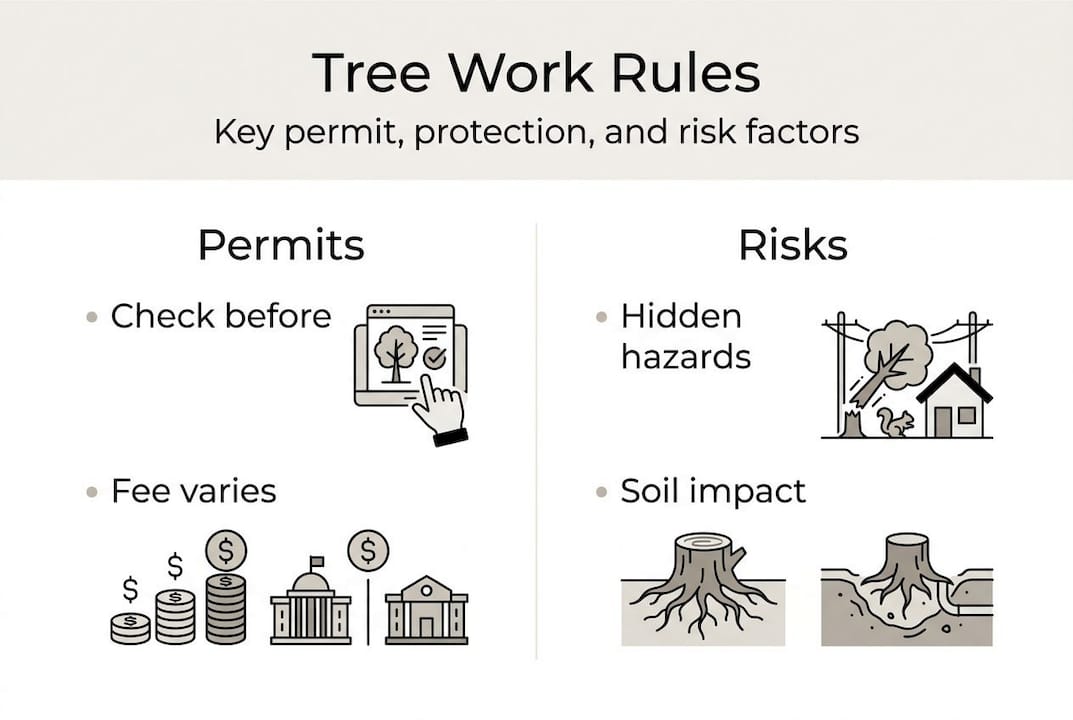
The good news is that Florida Statute 163.045 provides permit exemptions when an ISA Certified Arborist documents that a tree is dead, diseased, or poses a genuine hazard. An ISA Certified Arborist is a professional credentialed by the International Society of Arboriculture, trained to assess tree health and safety. Without that documentation, removing a protected tree without a permit can result in fines ranging from hundreds to thousands of dollars, plus mandatory replanting requirements.
Commercial property owners face stricter scrutiny than residential owners. For a deeper look at what those rules mean for your business, the commercial tree removal guide breaks down the key differences. If you’re managing a shopping center, office park, or multi-family property, reviewing the process for removing commercial trees safely before you schedule anything is a smart move.
Warning: Proceeding without the correct permits doesn’t just risk fines. It can void your property insurance coverage for any related damage and create legal liability if a tree falls on a neighboring structure.
When do you need a permit in Central Florida?
- Residential: Permit required for grand trees above the local DBH threshold (often 12″ or more); exemptions for hazardous trees with arborist certification
- Residential: No permit typically needed for small ornamental trees below the threshold
- Commercial: Permit almost always required for any significant removal; mitigation or replanting often mandatory
- Both: Emergency removals after storms may qualify for expedited review, but documentation is still required
| Area | Typical DBH threshold | Permit fee range | Notes |
|---|---|---|---|
| Orange County | 12″ DBH | $50 to $200 | Mitigation required for grand trees |
| Hillsborough County | 6″ DBH (protected) | $75 to $300+ | Strict replanting rules for commercial |
| City of Orlando | 8″ DBH | $50 to $150 | Hazard exemption with arborist letter |
| Seminole County | 18″ DBH (grand) | $100 to $250 | Residential exemptions more common |
Always verify current fees with your local municipality, as these figures are subject to change. The UF/IFAS pruning guidelines are also a useful reference for understanding what qualifies as acceptable tree work under Florida standards.
Gather necessary tools, documents, and clear access
Once you’re clear on legalities, gathering the right tools and prepping access sets the stage for a smooth operation.
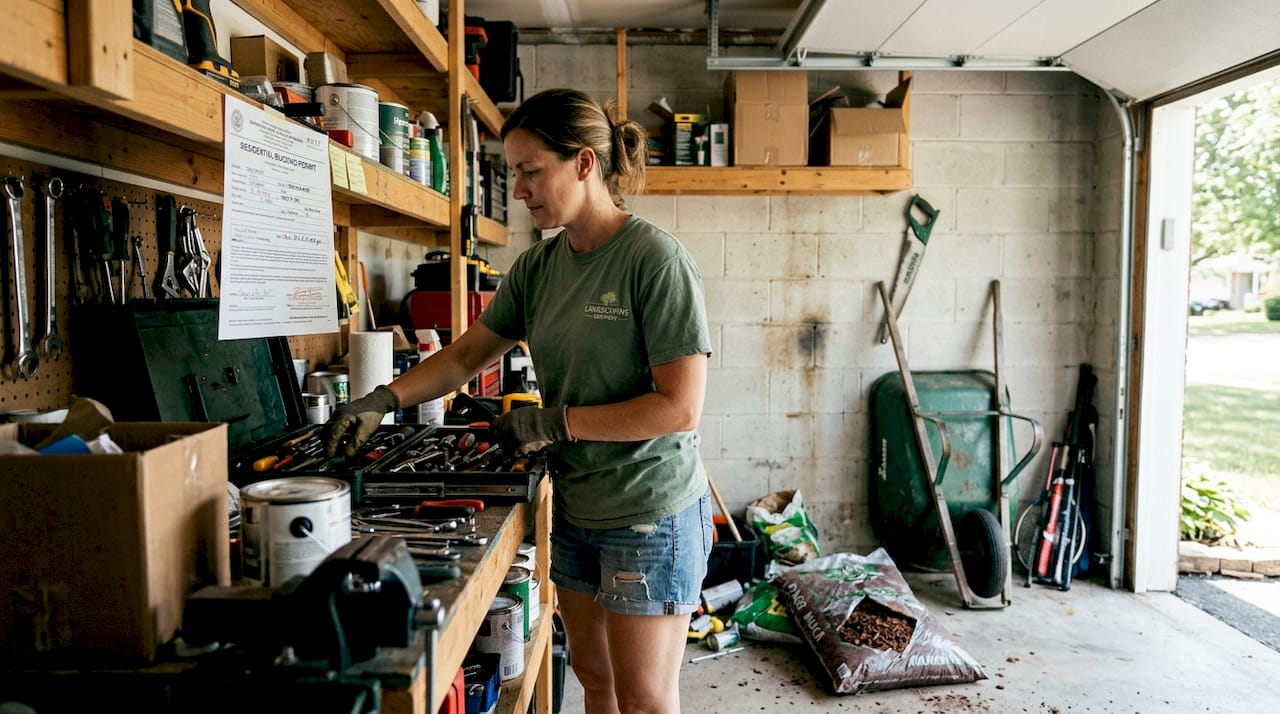
A disorganized job site wastes time and creates real safety hazards. Preparation should prioritize removing obstacles and ensuring clear access for personnel, equipment, and vehicles. Before the crew shows up, you want everything in order so the team can move efficiently from the moment they arrive.
Your pre-work checklist:
- Permits pulled and printed, ready to show the crew or inspector
- Utility lines marked (call 811 to have underground utilities flagged at no cost)
- Site survey or property map available if the job involves boundary trees
- Pets secured indoors or off the property entirely
- Vehicles moved well away from the work zone
- Gates unlocked and wide enough for equipment entry
- Irrigation heads near the work area flagged with bright markers
Protecting your existing landscaping is just as important as protecting the tree. Use the tree trimming preparation guide to make sure nothing gets overlooked. Reviewing tree trimming safety protocols ahead of time also helps you understand what the crew will be doing and where the risk zones are.
Steps to minimize accidental damage:
- Place stakes or flags around garden beds, irrigation heads, and decorative edging
- Lay down plywood sheets on soft lawn areas where heavy equipment will travel
- Move potted plants, outdoor furniture, and decorative items at least 20 feet from the work zone
- Photograph your yard before work begins so you have a baseline record
Pro Tip: Walk the property with your crew foreman before work starts. Point out anything fragile, unusual, or valuable. A five-minute conversation at the start prevents a two-hour problem at the end.
| Prep element | Residential | Commercial |
|---|---|---|
| Permits | Sometimes required | Almost always required |
| Utility marking | Call 811 | Call 811 plus notify facilities manager |
| Equipment access | Standard gate width | May need temporary fencing removal |
| Neighbor notification | Courtesy recommended | Often legally required |
| Site documentation | Photos recommended | Photos plus written records |
Step-by-step tree work preparation process
With your property properly staged and paperwork in order, it’s time to actually prepare for the tree crews’ arrival.
Following a clear sequence keeps you from missing critical steps under pressure. Here’s the order that works best for both residential and commercial properties.
- Confirm permits are approved and on-site. Never assume approval. Have the physical permit or digital confirmation ready before work begins.
- Call 811 to mark underground utilities. Do this at least three business days before the scheduled work date. This is free and legally required in Florida before any digging.
- Clear the work zone. Remove all vehicles, furniture, toys, and portable items from the area. Extend your clearing radius at least 30 feet beyond the tree’s canopy edge.
- Alert your neighbors. Let adjacent property owners know about the schedule, especially if branches overhang their yard or equipment will be near the property line.
- Secure all pets and children. Keep them inside or off the property for the full duration of the job, not just during the loudest phases.
- Mark hazards and fragile features. Use bright flags or paint to identify irrigation lines, buried cables, decorative stones, and low-clearance structures.
- Review the work plan with your contractor. Go over the scope, the equipment being used, and any last-minute site conditions before the first cut is made.
Pro Tip: Stay available by phone during the job. Crews sometimes encounter unexpected conditions like hidden decay, buried roots near utilities, or unstable limbs that require a quick decision from you as the property owner.
One of the most important standards to know before any trimming work: never remove more than 25% live foliage in a single session, per ANSI A300 and UF/IFAS pruning standards. Removing too much at once stresses the tree, makes it vulnerable to disease, and can actually shorten its lifespan significantly. Protecting your lawn during and after the job is equally important, and the guide on preventing lawn damage after tree work covers the practical steps in detail.
If you’re unsure whether your chosen contractor follows these standards, the certified arborist directory from the Florida Chapter of ISA lets you verify credentials before you hire.
Avoiding common mistakes and what to expect after tree work
Even the best-laid plans can go awry, so here’s how to steer clear of the most common costly missteps and what happens next.
Most property damage during tree work is preventable. The mistakes below come up repeatedly, and each one is easy to avoid with a little advance planning.
Top mistakes to avoid:
- Forgetting underground utilities. Even experienced crews can hit irrigation lines or buried cables if utilities aren’t marked. Always call 811 first.
- Not moving vehicles. Falling branches and equipment movement can damage cars parked nearby. Move them to the street or a distant lot.
- Skipping neighbor notification. If debris lands in a neighbor’s yard or their fence gets clipped, you want to have already spoken to them. It turns a potential conflict into a manageable conversation.
- Assuming the crew handles all cleanup. Clarify debris removal in writing before the job starts. Some contracts include it; others don’t.
- Ignoring post-removal replanting rules. Commercial properties may be required to replant after removals, and failing to comply can result in additional fines.
Important: Skipping prep steps doesn’t just risk physical damage. It can expose you to liability for damage to neighboring property, trigger permit violations, and leave you responsible for cleanup costs that weren’t in your original quote.
After the work is done, expect some degree of ground disturbance. Heavy equipment compacts soil, and tire tracks are common. Debris piles, sawdust, and wood chips may remain depending on your contract terms. Give your lawn two to four weeks to recover before fertilizing or aerating. If stump grinding was part of the job, the area will need fresh soil and either sod or seed. For a detailed recovery plan, the guide on lawn protection after tree crews is worth bookmarking.
A hard-earned perspective: Why proper prep makes all the difference
Here’s something most articles won’t tell you: the property owner’s level of preparation is often a stronger predictor of job outcome than the crew’s skill level.
We’ve seen highly trained crews produce mediocre results because the site was chaotic, permits were missing, or the owner wasn’t reachable for decisions. Conversely, a well-prepped property lets even a standard crew perform at their best. The tree work itself is only half the equation.
There’s also a persistent myth that hiring professionals means you can hand off all responsibility. That’s not how it works, especially in Florida. You are the permit holder. You are liable for what happens on your property. Active involvement, reviewing tree trimming safety protocols and communicating clearly with your ISA Certified Arborist, protects your investment and your legal standing.
Proper prep also has a direct impact on property value. Trees that are trimmed correctly and maintained within ANSI standards add measurable curb appeal and structural integrity to your landscape. Rushed, underprepared jobs often leave behind stressed trees, damaged turf, and unresolved permit issues that surface during property sales.
Ready for safe, stress-free tree work? We can help
Professional support takes the guesswork out of permits, site prep, and compliance, especially for complex jobs involving grand trees, commercial properties, or storm-damaged limbs.
At McCullough Tree Service, our ISA Certified Arborists handle the documentation, assess hazard conditions, and coordinate every detail so you don’t have to figure it out alone. Whether you need professional tree removal, expert tree trimming, or a full consultation with ISA Certified Arborist support, we bring the credentials and experience to get it done right the first time. Contact us today for a free estimate and let’s make your next tree project smooth, legal, and stress-free.
Frequently asked questions
Do I always need a permit for tree work on my property?
You need a permit for most protected or grand trees, but dead, diseased, or hazardous trees may be exempt when an ISA Certified Arborist provides written certification.
What should I clear or secure before the tree crew arrives?
Move all vehicles, outdoor furniture, and pets out of the work zone, and make sure every gate is unlocked so equipment can access the site without delay. Site clearing and access are the top priorities for safety and efficiency.
How much of the tree can I have removed without damaging it?
Per ANSI A300 and UF/IFAS standards, never remove more than 25% of a tree’s live foliage in a single session to protect its long-term health.
What’s different about commercial versus residential tree work preparation?
Commercial properties face stricter permit requirements and are often required to replant or provide mitigation after removals, while residential rules tend to be more flexible depending on the municipality.
Recommended
- How to Trim Commercial Trees for Safety and Curb Appeal
- Commercial Tree Trimming Process for Safe Property Care
- Commercial Tree Removal Guide for Safe Property Management
- Tree Trimming Preparation for Storm
- How to Prepare for Lawn Service: Cut Time 30% & Boost Health