By: Shelby McCullough| Published: April 4, 2026
TL;DR:
- Tree roots in Central Florida grow mainly in the top 3 feet and spread widely.
- Roots grow along least resistance, not by pushing through solid concrete.
- Ongoing assessment and proper planting help prevent costly root-related property damage.
Most Central Florida property owners assume tree roots are the main culprit behind cracked sidewalks and broken driveways. The reality is more nuanced. Roots rarely crack intact concrete but instead take advantage of existing flaws, a distinction that changes how you should approach root management entirely. Understanding what roots actually do, and what they don’t do, puts you in a much stronger position to protect both your trees and your property. This guide walks through the science, the real risks, and the practical steps that work best for Central Florida landscapes.
Table of Contents
- Understanding tree root growth and risk factors
- How tree roots impact your landscape and hardscape
- Essential tree root management techniques
- When to seek professional help for tree root management
- The truth most property owners miss about tree root management
- Partner with Central Florida’s root management experts
- Frequently asked questions
Key Takeaways
| Point | Details |
|---|---|
| Roots rarely break concrete | Tree roots usually exploit cracks; prevention and maintenance matter most. |
| Certified help is crucial | Calling a certified arborist ensures safety and compliance with local rules. |
| Prevention beats repair | Root barriers and proper landscaping strategies minimize future headaches. |
| Permits often required | Check local regulations before pruning or removing roots to avoid penalties. |
Understanding tree root growth and risk factors
With misconceptions set aside, let’s explore the real science of how and where tree roots grow under Central Florida conditions.
Tree roots in Central Florida behave differently than in cooler, drier climates. Our sandy soils, high water table, and frequent rainfall push roots to stay shallow. Most roots grow in the top 3 feet of soil, with the finest, most active roots sitting even closer to the surface. Forget the image of a deep taproot anchoring a massive oak. In wet Florida soils, taproots rarely develop at all.

There are two main root types worth knowing. Structural roots are thick, woody, and anchor the tree. Non-structural roots (also called feeder roots) are thin, fibrous, and handle water and nutrient absorption. Structural roots are the ones most likely to interact with hardscapes. Feeder roots are more likely to seek out plumbing leaks or irrigation lines.
Here’s something that surprises most property owners: roots don’t push through solid material by brute force. Instead, roots flatten under about 48 psi of sidewalk pressure, growing along the path of least resistance. They find gaps, cracks, and soft spots, then expand over time.
Common risk indicators to watch for on your property:
- Visible surface roots within 10 feet of a structure or paved surface
- Soil heaving near the base of a tree
- Cracks in sidewalks or driveways near large trees
- Slow-draining or gurgling plumbing fixtures
- Leaning or tilting trees with exposed root flares
A certified arborist can assess which of these indicators represent real risks versus cosmetic concerns. Not every surface root is a problem, and not every crack near a tree means the tree caused it.
| Root characteristic | Central Florida behavior |
|---|---|
| Depth | Mostly top 3 feet due to wet soils |
| Spread | Often 2 to 3 times the canopy width |
| Taproot presence | Rare in high water table areas |
| Response to hardscape | Flattens and grows around, not through |
| Primary risk zone | Within 10 to 15 feet of trunk |
Pro Tip: If you’re planning new construction or landscaping near mature trees, consult an arborist in Central Florida before breaking ground. Root damage during construction is one of the leading causes of tree decline that shows up years later.
How tree roots impact your landscape and hardscape
Now that you know how roots form and grow, let’s see how those roots can truly affect your property and what doesn’t actually happen.
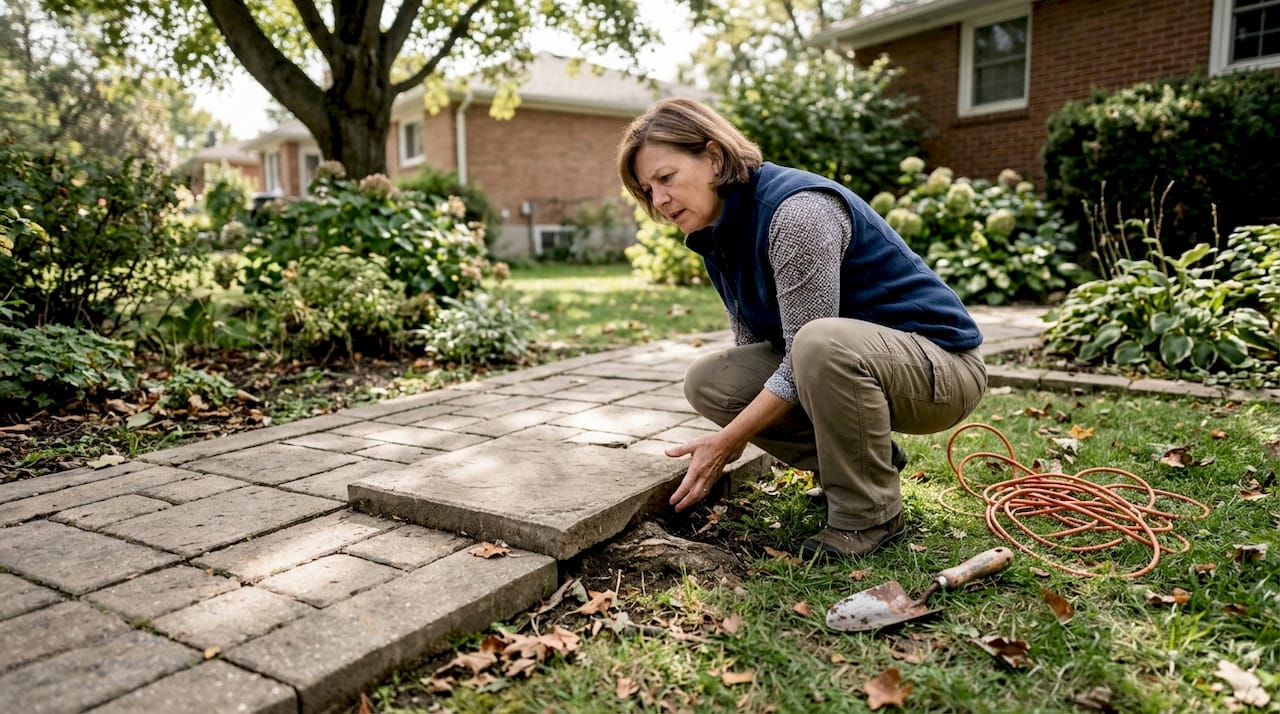
The most common complaint we hear is that tree roots cracked a sidewalk or driveway. In most cases, the sequence of events is more complicated. Roots don’t crack intact concrete but can widen existing cracks and cause uplift after those cracks form. A sidewalk with poor drainage, thin concrete, or age-related wear is far more vulnerable than a well-built one.
Driveways face similar dynamics. Roots grow under the slab, and as they thicken over years, they push upward from below. The damage looks dramatic, but it typically takes a decade or more to develop. Plumbing is a different story. Roots are attracted to moisture, so a small leak in an older clay or cast-iron pipe can draw feeder roots inside, causing real blockages.
“Understanding root behavior is the first step to making smarter decisions about tree placement, hardscape design, and long-term property maintenance.” — McCullough Tree Service certified arborists
Visual signs to monitor regularly:
- Lifting or uneven pavement sections near tree bases
- Recurring slow drains without an obvious cause
- New cracks appearing in concrete that was previously sound
- Soil pulling away from the base of a tree after dry spells
- Mushroom growth near roots, which may signal decay
Knowing the signs your tree may be a problem early gives you options. Waiting until the damage is severe limits what can be done without major expense.
| Myth | Fact |
|---|---|
| Roots crack solid concrete | Roots exploit existing cracks and weak points |
| Roots always invade plumbing | Only if pipes already leak or are damaged |
| Cutting roots fixes the problem | Improper cutting can destabilize the tree |
| Big trees always cause big damage | Risk depends on species, placement, and soil |
| Removing the tree stops root growth | Roots can persist and cause issues for years |
Monitoring unhealthy tree indicators alongside root behavior gives you a fuller picture of your property’s risk. A tree that is structurally compromised above ground is often showing stress below ground too. If you’re unsure whether a tree poses a real threat, resources to identify dangerous trees can help you make a more informed decision.
Essential tree root management techniques
Knowing what risks matter most makes it easier to take smart, proactive steps for your trees and property.
Root management is not a single action. It’s a sequence of decisions made over the life of your trees. Here’s a practical framework that works well for Central Florida properties:
- Assess before acting. Walk your property and note every tree within 15 feet of a structure, paved surface, or utility line. Document what you see with photos.
- Choose the right tree for the location. Many root problems start at planting. Aggressive-rooted species like laurel oaks or ficus should not go near driveways or sidewalks.
- Install root barriers during construction. Root barriers redirect, not block, roots; using deep gravel bases for sidewalks deflects roots downward and away from the surface slab.
- Maintain proper irrigation. Overwatering near structures encourages shallow root spread toward hardscapes. Water deeply and less frequently to encourage roots to grow downward.
- Schedule routine arborist inspections. Annual or biannual assessments catch early signs of root encroachment before they become expensive repairs.
- Check permit requirements before any root work. Many counties require permits for significant root pruning or tree removal. Review local regulations before you start.
Pro Tip: If you’re redesigning a patio or adding a walkway near existing trees, integrate root management into the design phase. Retrofitting barriers after construction is possible but far more costly and disruptive.
One statistic worth keeping in mind: improper root pruning, specifically cutting more than 25% of a tree’s root system, can cause the tree to become unstable or die within two to three years. This is why guessing at root work is risky. Knowing how to prevent damage after removal or major root work is just as important as the work itself.
When to seek professional help for tree root management
Even with good routine management, some situations require more than a DIY approach. Here’s when to make the call.
Some root situations are genuinely manageable with observation and basic landscaping adjustments. Others require a professional assessment before anything is touched. Knowing the difference protects both your property and your trees.
Call a certified arborist when you notice any of these:
- Pavement lifting more than one inch near a tree base
- Persistent plumbing backups with no clear cause
- Visible root decay, soft spots, or fungal growth at the root flare
- A tree leaning noticeably more than it did before
- Any root or tree work that may require a permit
Permits are often required for pruning or removing roots and trees in Hillsborough County and many other Central Florida jurisdictions. Working without a permit can result in fines and liability, especially if a tree fails and causes property damage.
Disease is another major trigger for professional intervention. Root rot caused by Armillaria fungi or other pathogens can silently compromise a tree’s structural integrity. In citrus, Huanglongbing (HLB) disease leads to 30 to 70% root loss before the tree shows obvious above-ground symptoms. That kind of hidden damage makes a tree a serious safety risk.
Pro Tip: Before calling an arborist, gather your property survey, any previous tree work permits, and photos of the problem area over time. This documentation helps the arborist assess the situation faster and give you a more accurate recommendation.
A qualified professional will also know when a situation calls for root pruning versus full removal, and can help you navigate the permit process. You can find a certified arborist who understands both the technical and regulatory side of root management. Reviewing a safe tree care checklist before your appointment can also help you ask the right questions.
The truth most property owners miss about tree root management
Here’s what years of working with Central Florida trees has taught us: most property owners only think about roots when something breaks. A sidewalk lifts. A drain backs up. A tree starts leaning. By that point, the root issue has usually been developing for five to ten years underground.
The real problem with reactive thinking is that quick fixes often create bigger problems. Cutting roots without understanding which ones are structural can destabilize a tree that looked perfectly healthy from the street. Pouring new concrete over root damage without addressing the cause just delays the same outcome.
What actually works is treating root management as ongoing stewardship, not emergency repair. That means planting the right species in the right place, building hardscapes with roots in mind, and scheduling regular assessments with a certified arborist who knows Central Florida’s specific soil and climate conditions. Trees that are monitored and cared for consistently are far less likely to become expensive problems. That’s not a sales pitch. It’s just what the data and experience consistently show.
Partner with Central Florida’s root management experts
If you’re ready to turn prevention into practice, here’s how local expertise can help.
At McCullough Tree Service, we work with property owners and managers across Central Florida to assess root risks before they become costly repairs. Our team includes certified arborist services with deep knowledge of local soil conditions, species behavior, and county permit requirements.
Whether you need a full root assessment, help designing a root-safe landscape, or expert guidance on tree trimming services that protect root health, we’re ready to help. We offer straightforward evaluations with no guesswork. Contact us today to schedule your property assessment and get ahead of root issues before they become structural ones.
Frequently asked questions
What is the main purpose of tree root management?
Tree root management balances tree health with property protection by controlling where and how roots grow. Done well, it extends the life of your trees while reducing the risk of damage to structures and landscapes.
Can tree roots really break concrete sidewalks?
Rarely. Roots don’t crack intact concrete but can widen existing cracks and cause uplift once those cracks form. Sidewalk quality and age matter more than root pressure alone.
When should I call a certified arborist for tree root issues?
Call an arborist if you see major landscape damage, need a permit, or suspect root disease or instability. Certified arborist assessment is especially critical when regulations or safety hazards are involved.
Are permits required for cutting tree roots in Central Florida?
Yes, in many counties. Permits are needed in counties like Hillsborough for significant root or tree cutting. Always check local rules before starting any root work.
What’s the most effective way to prevent root damage to sidewalks?
Gravel bases and root barriers installed beneath sidewalks redirect roots downward and reduce uplift risk. Combining these with proper species selection at planting gives you the best long-term protection.
Recommended
- Why regular tree maintenance matters for property owners
- Routine tree care: prevent damage and boost value
- Commercial Tree Removal Guide for Safe Property Management
- Protect Your Trees: The Risk of Included Bark