By: Shelby McCullough| Published: April 24, 2026
TL;DR:
- Land clearing enhances usable space, property value, and safety by removing overgrown vegetation.
- Proper assessment and permitting are essential to ensure environmental protection and legal compliance.
- Responsible, site-specific clearing methods support long-term land assets and ecosystem health.
Land clearing benefits for a usable, valuable property
Many property owners in Central Florida assume that leaving their lot untouched is the safest or most valuable choice. That assumption costs people time, money, and opportunity every year. Overgrown brush, dead trees, and invasive vegetation don’t just look bad — they create real hazards, reduce usable space, and can quietly drag down property values. Land clearing, when done thoughtfully and with the right professionals, turns a neglected lot into a productive asset. Whether you’re planning a new build, improving an existing property, or simply making your land safer, understanding the full picture of land clearing is the first step.
Table of Contents
- What is land clearing and why does it matter?
- Top benefits of land clearing for property owners
- Balancing benefits and environmental impacts
- Getting the most from your land clearing project
- Why responsible land clearing is more than just tree removal
- Enhance your property with expert land clearing services
- Frequently asked questions
Key Takeaways
| Point | Details |
|---|---|
| Boosts property value | Strategic land clearing increases property usability and supports higher resale value for owners. |
| Requires responsible methods | Site assessments and eco-friendly approaches protect local wildlife and natural resources. |
| Enables safe development | Clearing prepares your land for building, reduces fire risks, and prevents pest problems. |
| Professional help matters | Hiring experts ensures compliance, proper permits, and lasting value for your property. |
What is land clearing and why does it matter?
Land clearing is the process of removing trees, brush, stumps, roots, and debris from a piece of property to make it suitable for construction, landscaping, agriculture, or improved safety. It’s not simply cutting down a few trees. A proper land clearing project can involve grading the soil, removing invasive plant species, grinding stumps, hauling away debris, and restoring the land’s natural drainage patterns.
Understanding what land clearing involves is essential before you make any decisions about your property. The process is far more strategic than most people realize, and the method chosen can have lasting effects on your soil, drainage, and surrounding ecosystem.
The three main methods of land clearing are:
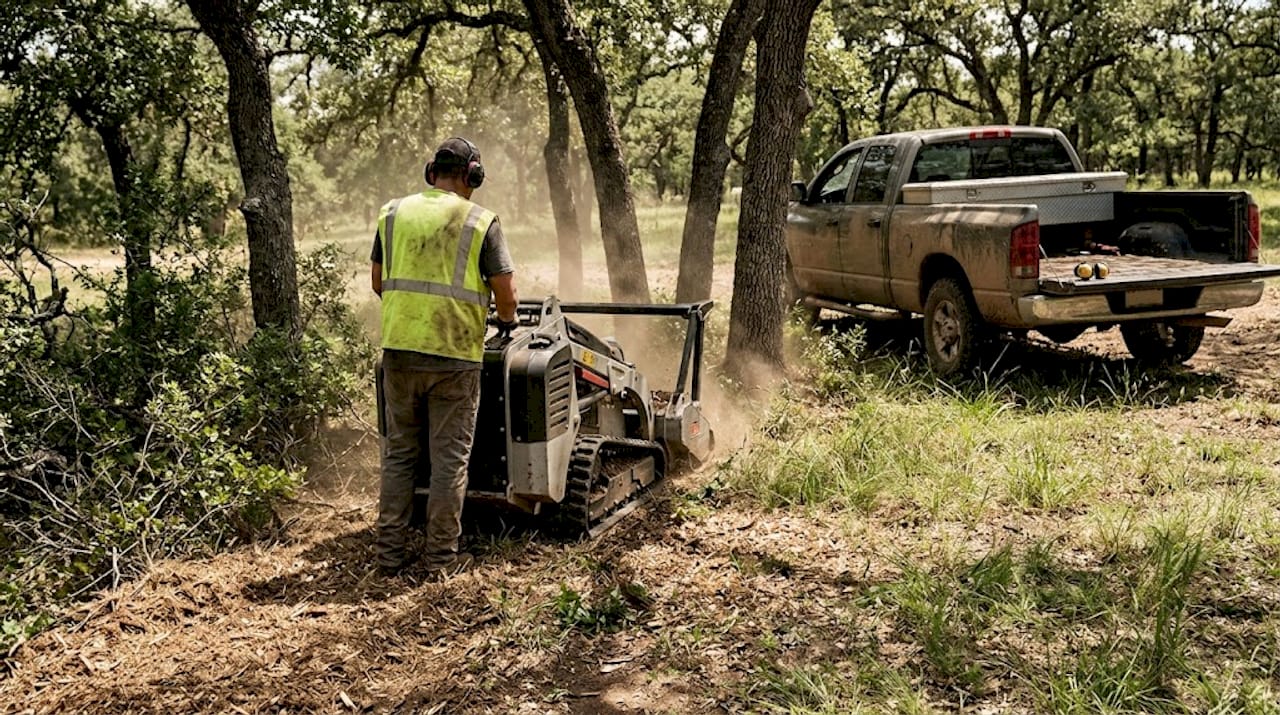
- Mechanical clearing: Using heavy equipment like bulldozers, excavators, and mulching machines to physically remove vegetation. This is fast and effective for large areas but can disturb the soil more aggressively.
- Manual clearing: Using hand tools and labor to selectively remove plants and trees. This gives more precision but takes more time, making it better suited for smaller or more sensitive areas.
- Chemical treatments: Applying herbicides to kill invasive species or unwanted vegetation. This method requires careful application to avoid harming desirable plants, water sources, or wildlife habitats.
Each method has its place depending on lot size, vegetation density, soil type, and local regulations. In Central Florida specifically, the sandy soil, high water table, and presence of protected species like gopher tortoises and scrub-jays make the choice of method especially important.
| Method | Best for | Key advantage | Main concern |
|---|---|---|---|
| Mechanical | Large lots, dense vegetation | Fast, high volume | Soil disruption |
| Manual | Small or sensitive areas | Precise, low impact | Labor intensive |
| Chemical | Invasive species control | Targets specific plants | Environmental risk |
Beyond method selection, two critical steps precede any actual clearing: a site assessment and permitting. A site assessment identifies protected species, drainage concerns, soil conditions, and property boundaries. Permitting ensures your project complies with county and municipal regulations, which vary significantly across Orange, Seminole, Lake, and Osceola counties. Skipping either step can result in fines, project halts, or long-term damage to the land. Research confirms that responsible clearing improves soil health and supports the return of native plant growth when managed correctly.
Top benefits of land clearing for property owners
Once you understand what land clearing actually involves, the range of benefits becomes clear. For both residential and commercial property owners in Central Florida, the payoff can be significant across several dimensions.
Here are the core benefits, ranked by impact:
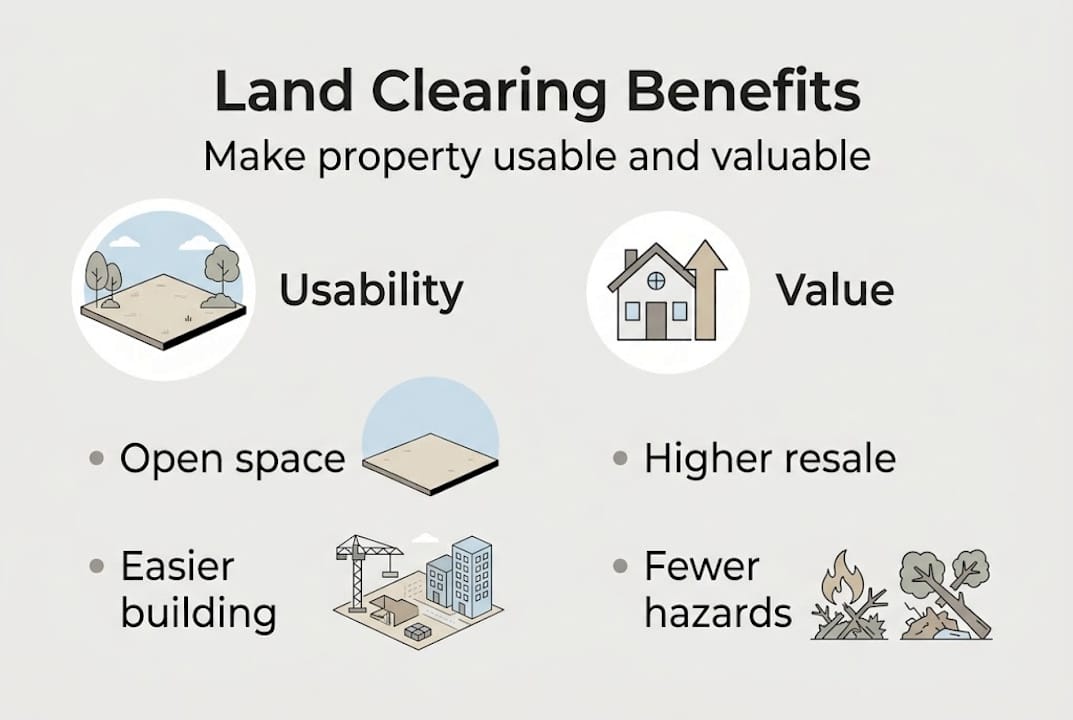
- Increased usable space: Overgrown lots are essentially wasted space. Clearing opens up land for patios, pools, driveways, additional structures, or simply a usable yard. For commercial owners, it can mean room for parking, storage, or new buildings.
- Higher property value: A well-cleared lot with defined landscaping and usable space consistently appraises higher than a neglected one. Research shows that cleared properties yield high ROI in growing markets like Central Florida’s.
- Improved safety: Dead trees, dense brush, and debris piles are fire hazards, pest habitats, and liability risks. Removing them protects your family, tenants, and neighbors.
- Pest and disease control: Thick vegetation creates ideal conditions for mosquitoes, termites, and rodents. Clearing reduces those breeding grounds and lowers the likelihood of infestations spreading to structures.
- Storm readiness: Florida’s hurricane season brings intense wind and rain. Clearing dead or weakened trees before storm season significantly reduces the chance of catastrophic damage to buildings, fences, and vehicles.
For homeowners thinking about boost property value through strategic landscaping, land clearing is often the necessary first step. You can’t build a beautiful outdoor living area on a lot choked with palmetto scrub and fallen oaks.
The construction angle is equally important. If you’re preparing for development, the lot must meet specific grading and soil standards before any foundation work can begin. Land clearing sets that foundation in motion.
Pro Tip: Before you budget for landscaping or construction, get a land clearing assessment first. Many property owners discover that clearing costs far less than expected and unlocks far more value than they anticipated.
A statistic worth noting: Central Florida’s real estate market continues to grow at one of the fastest rates in the country, and cleared, development-ready lots consistently command premium prices compared to overgrown parcels of the same size. Getting ahead of that curve with a strategic clearing plan puts you in a strong position whether you plan to build, sell, or lease.
Balancing benefits and environmental impacts
The benefits are real, but so are the trade-offs. Understanding the environmental impacts of land clearing isn’t just responsible — it protects you legally and helps you make smarter decisions about what to clear and what to leave.
“Woody plant removal can decrease animal diversity in cleared areas, but these impacts tend to decline over time when context-specific, responsible methods are applied.” — Research finding from a peer-reviewed environmental study
This is an important nuance. The initial disruption to wildlife is real, especially in Florida where so many species depend on scrub habitats and wetland edges. But when clearing is done selectively and responsibly, the ecosystem often rebounds and can even improve through replanting with native species that support local biodiversity.
Key environmental considerations for Central Florida properties:
- Soil erosion: Removing too much vegetation too quickly can expose soil to rain and wind, causing erosion and nutrient loss. Proper grading and erosion control measures are essential.
- Drainage disruption: Central Florida’s high water table means changes to vegetation can shift where water pools or drains. A poorly planned clearing project can create flooding issues that didn’t exist before.
- Wildlife habitat: Gopher tortoises, listed as a threatened species in Florida, often burrow in the sandy uplands common across the region. Disturbing their burrows without proper permits and relocation procedures is a violation of state law.
- Invasive vs. native species: Clearing is an opportunity to remove invasive species like Brazilian pepper and cogon grass while protecting or replanting native plants that support local birds and pollinators.
Here’s a comparison of the three primary clearing methods and their environmental profiles:
| Method | Biodiversity impact | Soil impact | Recovery time |
|---|---|---|---|
| Mechanical | Moderate to high | High | 1 to 3 years |
| Manual/selective | Low | Low | Less than 1 year |
| Chemical | Variable | Low to moderate | Varies by product |
Selective clearing, which involves removing only specific trees or brush while leaving healthy vegetation intact, is the most environmentally sound approach for most residential properties. It minimizes disruption while still achieving the usability goals you’re after. For guidance on expert tips on sustainable clearing tailored to Florida’s unique conditions, it’s worth reviewing what certified arborists recommend for your specific lot type.
You can also explore eco-friendly clearing methods that include mulching, where cleared vegetation is chipped and spread back over the soil to retain moisture and reduce erosion. This approach turns a potential waste stream into a soil amendment, which is a practical win for both the environment and your budget.
Getting the most from your land clearing project
Knowing the benefits and the risks is one thing. Executing a successful clearing project is another. Here’s a practical, step-by-step framework for maximizing your outcome in Central Florida.
- Start with a thorough site assessment. Before any equipment rolls onto your property, a qualified professional should walk the lot to identify protected species, drainage patterns, soil conditions, utility lines, and property boundaries. Research consistently confirms that site assessment for permits and endangered species relocation is a mandatory step, not an optional one. In Florida, disturbing a gopher tortoise burrow without proper survey and permitting can result in fines exceeding $50,000.
- Secure all required permits. Permitting requirements vary by county and municipality across Central Florida. Orange County, for example, has specific vegetation protection ordinances. Always contact your local planning or zoning office before clearing begins.
- Choose the right method for your goals and site. Based on the site assessment, your contractor should recommend a clearing method or combination of methods suited to your soil, vegetation type, and intended use of the land. Don’t let cost alone drive this decision — the wrong method can create expensive problems down the road.
- Select a licensed, certified contractor. This cannot be overstated. Unlicensed contractors may offer lower prices but often skip permits, ignore wildlife concerns, and leave you legally liable for violations. A certified arborist brings the knowledge to identify protected species, recommend appropriate methods, and execute the project within regulatory requirements.
- Plan for ongoing stewardship. Clearing your land is not a one-time event. After clearing, you’ll need a plan for erosion control, replanting, and ongoing maintenance to keep invasive species from returning. Consult your Central Florida clearing guide for region-specific maintenance timelines and recommendations.
Pro Tip: Schedule your clearing project during Florida’s dry season, typically November through April, when the ground is firmer, equipment causes less soil compaction, and the risk of erosion from rain is reduced.
Common mistakes to avoid include ignoring the permitting process entirely, assuming all clearing methods are equivalent, and hiring the cheapest contractor without verifying their licensing and insurance. Each of these shortcuts creates real financial and legal exposure that can easily exceed the cost saved upfront.
Why responsible land clearing is more than just tree removal
After years of working with property owners across Central Florida, we’ve observed a consistent pattern: the people who get the best results from land clearing are the ones who treat it as a strategic investment, not a quick fix.
Most people think land clearing means cutting things down. But the real work is in what happens before, during, and after the removal. Soil condition, drainage behavior, zoning restrictions, wildlife considerations, and long-term maintenance all shape whether your clearing project adds lasting value or creates a new set of problems.
We’ve seen property owners rush through clearing to get to construction faster, only to discover they disturbed a protected species habitat, failed to account for seasonal flooding, or removed vegetation that was stabilizing an eroded slope. Those oversights are expensive to fix and entirely avoidable.
The truth is, a site-specific approach is not optional for Central Florida properties — it’s the difference between a project that pays off and one that creates regret. Every lot is different. Sandy uplands behave differently from wetland-adjacent parcels. A lot near a retention pond has different drainage dynamics than a high-and-dry scrub parcel. Cookie-cutter clearing plans don’t account for those differences.
When you invest in responsible, professionally guided land clearing, you’re building the foundation for every future improvement to your property. That’s not just tree service — that’s long-term asset management.
Enhance your property with expert land clearing services
Putting these insights into practice is easier when you have experienced professionals guiding the process from assessment to completion. McCullough Tree Service works with residential and commercial property owners throughout Central Florida to deliver land clearing solutions that meet local codes, protect native ecosystems, and maximize your property’s long-term value.
Whether you need targeted brush removal, full-lot clearing for a new build, or storm preparation before hurricane season, our certified arborists bring the expertise to do it right. Explore our land clearing methods to find the best fit for your property, review our complete land clearing guide for step-by-step guidance, or browse examples from our professional tree removal portfolio. Contact us today for a site assessment and get a clear plan for your property.
Frequently asked questions
Is a permit required for land clearing in Central Florida?
Yes, most Central Florida municipalities require permits before significant land clearing begins. A proper site assessment helps identify what’s required in your specific county before any work starts.
Does land clearing affect local wildlife?
Woody removal can decrease animal diversity in the short term, so using context-appropriate methods and timing your project carefully are essential for minimizing that impact.
How does land clearing increase property value?
It converts unusable overgrown space into developable, functional land, reduces hazards, and supports future construction. Cleared properties yield strong returns on investment in fast-growing markets like Central Florida.
What are some eco-friendly land clearing methods?
Selective clearing, mulching cleared vegetation back into the soil, and replanting native Florida species are the most widely recommended eco-friendly approaches for Central Florida properties.
Recommended
- Land clearing in landscaping: boost your property value
- What Land Clearing Entails for Your Property
- Land Clearing Process Guide for Property Owners