By: Shelby McCullough| Published: May 10, 2026
TL;DR:
- Proper stump grinding requires thorough site preparation, safety precautions, and skilled techniques to prevent underground hazards and ensure complete removal.
- Following regional guidelines and manufacturer instructions minimizes risks, improves results, and protects properties from pest and structural damage.
- Professional equipment, expertise, and careful cleanup offer the most reliable and cost-effective solution for long-term land management and landscape health.
That leftover stump sitting in your yard is more than an eyesore. It’s a tripping hazard, a magnet for wood-boring pests, and a quiet drain on your property’s curb appeal and value. Whether you’re a homeowner in Orlando or managing a commercial property across Central Florida, dealing with stumps promptly is one of the smartest land management moves you can make. This guide covers everything you need, from safety gear and equipment setup to proper grinding technique, cleanup, and site restoration, so you can tackle the job confidently or know exactly when to call in the pros.
Table of Contents
- What you need before grinding stumps
- Step-by-step guide to grinding stumps
- Troubleshooting and common mistakes in stump grinding
- What to expect after grinding: Clean up and verification
- A professional’s take: Why proper stump grinding matters more than you think
- Get expert stump grinding and tree care help
- Frequently asked questions
Key Takeaways
| Point | Details |
|---|---|
| Safety is essential | Always follow manufacturer guidelines and use proper safety gear to prevent accidents. |
| Preparation prevents problems | Clearing the work area and checking equipment make grinding smoother and safer. |
| Follow each grinding step | Using the right technique at every stage leads to more efficient and complete stump removal. |
| Clean up thoroughly | Properly managing mulch, checking roots, and restoring your yard keeps your property healthy and attractive. |
What you need before grinding stumps
Proper preparation makes safe and efficient stump grinding possible. Before the grinder even starts, let’s walk through the essentials.
Stump grinding isn’t something you can wing. The equipment is powerful, the spinning cutting wheel can throw debris at high speed, and the work zone can hide surprises like buried roots, rocks, and utility lines. Understanding the stump grinding purpose behind complete removal helps reinforce why skipping prep is never worth it.
Safety gear you must have
Every person on the work site needs proper personal protective equipment before the grinder runs. No exceptions.
- Eye protection: Safety glasses or a full face shield to block flying chips and debris
- Ear protection: Stump grinders are loud, often exceeding 90 decibels; use earplugs or earmuffs
- Heavy work gloves: Protect against splinters, vibration, and debris
- Steel-toed boots: The grinder can throw rocks and wood fragments at ankle level
- Long pants and long sleeves: Fabric reduces skin exposure to flying debris
- High-visibility vest: Useful on commercial or roadside jobs with vehicle traffic nearby
Anyone not actively operating the machine should stand well back, at least 30 feet, while grinding is underway.
Equipment and supplies checklist
Beyond safety gear, gather these items before you start:
| Item | Purpose |
|---|---|
| Stump grinder (rented or owned) | Removes the stump via a spinning cutting wheel |
| Shovel and spade | Clears loose soil and debris around the stump |
| Rake | Moves wood chips and mulch out of the grinding zone |
| Pruning saw or chainsaw | Cuts the stump as low as possible before grinding |
| Spray paint or flags | Marks the grinding boundary and any obstacles |
| Water hose | Wets down dust during and after grinding |
| Wheelbarrow | Hauls away wood chips and debris |
Reducing the stump height by cutting it close to ground level before you start grinding saves significant time and wear on the machine’s cutting teeth.
Work site safety before you begin
Walk the entire work zone before you power anything on. Look for rocks, old fencing, landscape edging, and anything buried just below the soil surface. Call 811 (Florida’s free utility locate service) before any grinding that goes more than a few inches deep. Hitting an underground line is a serious hazard that’s completely preventable.
The stump grinding process in Central Florida often involves root systems that spread wider than you expect, particularly in sandy or loamy soils. Mark where the roots extend and plan your grinding path accordingly.
Pro Tip: Walk around the stump in a full circle and use spray paint to mark the outer edge of visible roots. This gives you a clear grinding perimeter and prevents accidentally missing root sections that will regrow or cause uneven ground later.
One critical point from equipment documentation: operator manuals state that you should never allow the blade or cutting wheel to touch the ground until it has fully stopped turning, and that you must follow the manufacturer’s specific start and engage sequence every single time. Read your machine’s manual before you attempt a single pass.
Step-by-step guide to grinding stumps
With your tools and work zone secured, move on to the main event: actually grinding the stump out of your life.
Following a consistent sequence keeps you safe and gets better results. Rushing through steps or improvising puts you and your property at risk. The Central Florida stump grinding guide covers regional considerations in more depth, but here is the core process every property owner should follow.
The grinding sequence
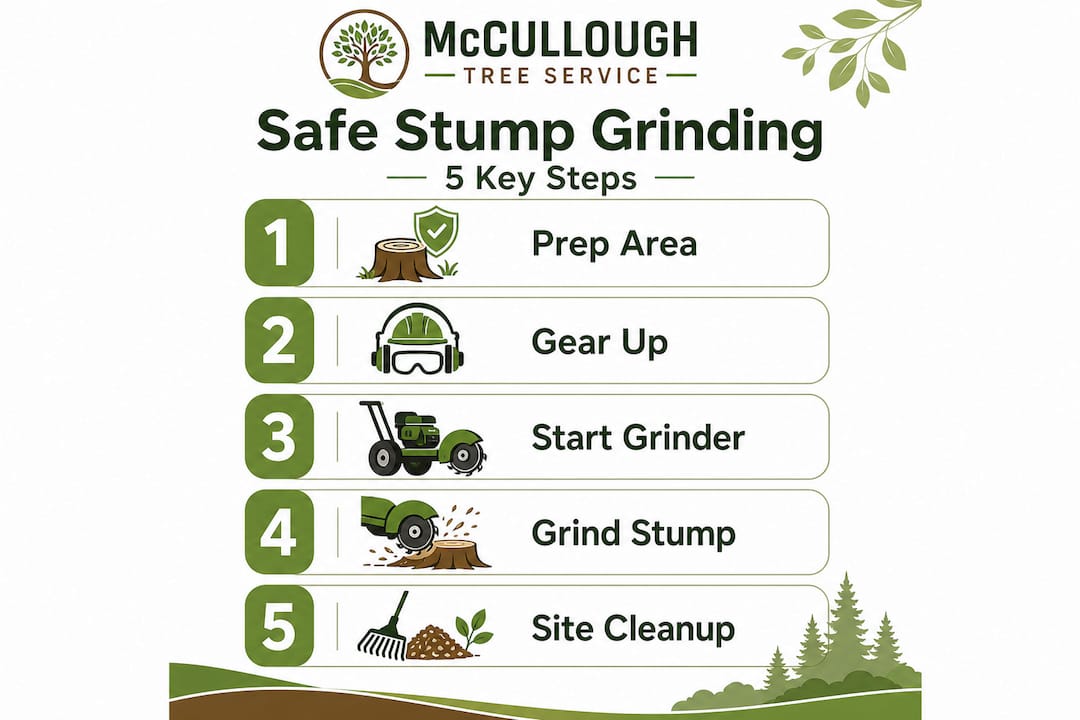
- Position the grinder correctly. Roll or walk the grinder to the stump so the cutting wheel is directly above the outer edge of the stump, not the center. Starting at the edge gives you better control and prevents the machine from jerking.
- Start the engine at idle. Power on the machine following the manufacturer’s start sequence. Let the engine warm up briefly before engaging the cutting wheel. Never engage the wheel at full throttle from a cold start.
- Raise the cutting wheel above the stump. Before engaging, the wheel must be raised clear of the stump surface. Confirm it is not touching any wood or soil.
- Engage the cutting wheel and bring it to full speed. Once the wheel is spinning at full operating speed, slowly lower it into the stump surface. Move the wheel side to side across the stump in a slow, controlled sweeping motion. Never plunge straight down.
- Work in shallow passes. Remove material in 2 to 3 inch passes rather than trying to grind deep in one shot. This protects the cutting teeth and keeps the machine stable.
- Move forward in increments. After each sweep, advance the grinder forward a few inches and repeat the side to side pass. Gradually work your way across the entire stump surface.
- Check your depth regularly. Stop periodically, disengage the wheel, and measure your grinding depth with a ruler or stake. Most jobs require grinding 4 to 6 inches below ground level.
- Disengage, raise the wheel, then shut down. When finished, disengage the cutting wheel, raise it completely clear of the ground, and let it come to a complete stop before moving the machine. The safety protocol states clearly that the blade must never contact the ground until it has fully stopped turning.
“Never allow the cutting wheel to contact the ground, stump, or any obstacle until the wheel has completely stopped rotating. Engage only after reaching full operating speed.” This is one of the most critical safety rules in any stump grinder’s operating manual.
DIY vs. professional process: What’s realistic
| Task | DIY approach | Professional approach |
|---|---|---|
| Equipment | Rented consumer grinder | Commercial-grade, high-horsepower machine |
| Root coverage | Surface and shallow roots | Deep roots addressed fully |
| Time per stump | 1 to 3 hours (small to medium) | 20 to 60 minutes |
| Safety oversight | Self-managed | Trained crew with safety protocols |
| Site cleanup | Done by homeowner post-job | Often included in the service |
| Large or multi-stump jobs | Difficult and tiring | Efficient with commercial equipment |
Pro Tip: For stumps under 12 inches in diameter, a rental grinder is usually manageable for a capable DIYer. For anything larger, hardwood species, or stumps near structures, the job gets complicated fast. Matching machine size to stump size is the most overlooked factor in DIY stump grinding.
Troubleshooting and common mistakes in stump grinding
No DIY project is without hiccups. Here’s how to recognize and fix problems if things go sideways as you grind.
Even experienced homeowners run into issues on their first or second stump grinding job. Knowing what to watch for makes a big difference in both safety and final results.
The most common mistakes
- Using dull cutting teeth: Dull teeth make the machine work harder, produce more vibration, and leave an uneven grind surface. Inspect cutting teeth before every job and replace any that show significant wear or chipping.
- Grinding too deep too fast: Trying to take large bites of material strains the engine, can cause the machine to kick back, and damages the cutting wheel. Always work in shallow, controlled passes.
- Skipping the pre-work cutdown: Starting with a tall stump instead of cutting it close to the ground first wastes time and dulls teeth faster. A chainsaw or handsaw pass before you start grinding always pays off.
- Not checking for hidden debris: Rocks, old metal fence stakes, wire, and landscape edging hidden under the soil can shatter cutting teeth instantly. Probe the area thoroughly before grinding.
- Failing to follow the start and engagement sequence: The manufacturer’s engagement sequence exists for a reason. Bypassing the proper startup steps risks equipment damage and personal injury.
- Rushing the job near structures: Grinding close to sidewalks, fences, or foundations requires slow, careful passes. High-speed debris can crack concrete, chip brick, and damage nearby plants.
Fixing uneven grinding and missed roots
If the finished surface is uneven or you notice sections of root that weren’t fully ground, don’t ignore them. Missed roots can regrow, especially from certain tree species common in Central Florida like oak and camphor. Run a follow-up pass over any areas that feel firm underfoot or look raised.
Understanding common stump removal problems specific to this region will help you anticipate what you’re dealing with before you start.
Pro Tip: After grinding, push a metal rod or screwdriver into the ground across the entire stump area. If it hits resistance within 4 inches, you haven’t ground deep enough and should run another pass. Soft, consistent resistance means you’ve done the job right.
For stumps near drainage areas, utility corridors, or in commercial settings where root damage liability is a concern, working with a professional stump grinding company eliminates the guesswork and protects you from costly errors.
What to expect after grinding: Clean up and verification
The grinding is done, but full success is in the cleanup and site restoration. Here’s how to finish strong.
Leaving the work site in good condition is the final step that separates a truly complete job from one that will cause headaches later. Wood chips, disturbed soil, and exposed root cavities all need attention.
Cleanup steps
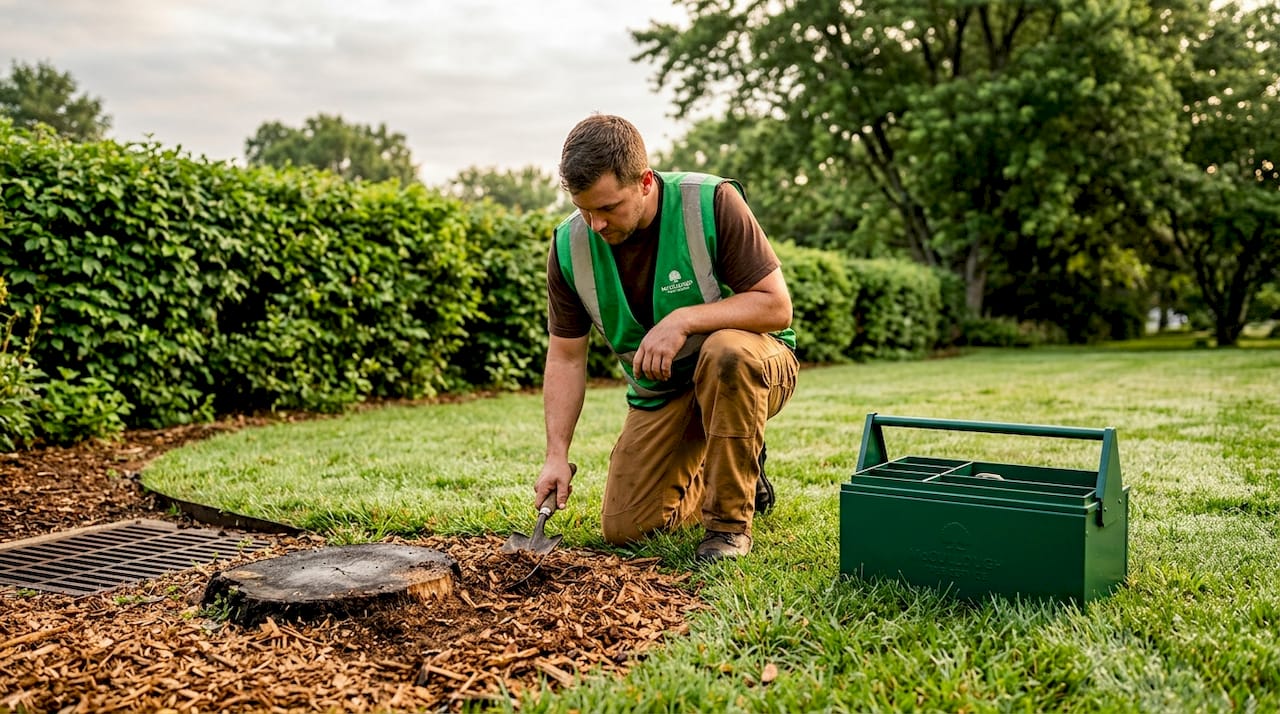
- Rake and remove all wood chips and mulch: You’ll be left with a large pile of ground material. Don’t leave it in the hole.
- Inspect the root zone: Look for any remaining roots that feel solid or sit close to the surface. Address these now before they cause uneven settling.
- Fill the hole with clean topsoil: Mix in some of the finer wood chip material, but fill primarily with soil to prevent the ground from sinking as debris decomposes.
- Tamp down and level the soil: Use a tamper or the back of a shovel to compact the fill material. This prevents future sinkholes and creates a stable surface.
- Reseed or sod: For residential yards, overseed with a Florida-appropriate grass blend and water daily for the first two weeks. Warm-season grasses like St. Augustine and Zoysia establish well in Central Florida.
- Water the area thoroughly: Helps settle the new soil and activates any grass seed you’ve applied.
Pro Tip: The wood chips produced by grinding are excellent mulch for garden beds and trees. Rather than hauling them away, spread a 2 to 3 inch layer around nearby plants. It retains moisture, which matters a lot during Florida’s dry season, and gradually enriches the soil as it breaks down.
The advantages of stump grinding over other removal methods become especially clear in the cleanup phase: there’s no excavation mess, no large hole, and the chips are immediately reusable.
Cleanup and verification checklist
| Task | DIY completion | Professional completion |
|---|---|---|
| Wood chip removal | Homeowner hauls away | Often included or left as mulch per owner preference |
| Root zone inspection | Visual and manual check | Arborist-level assessment |
| Soil backfill and leveling | Homeowner sources topsoil | Crew handles fill and grading |
| Grass reseeding | Homeowner purchases and applies seed | Optional add-on service |
| Final surface check | Personal judgment | Certified assessment |
Understanding how to handle preventing lawn damage after tree work protects the long-term health of your landscape and reduces the chance of having to redo the area within a season.
A professional’s take: Why proper stump grinding matters more than you think
You’ve read the how-to. Here’s what most guides leave out about doing stump grinding right.
The biggest mistake property owners make isn’t using the wrong equipment or skipping safety steps, though those matter. It’s underestimating what’s left behind. A stump you can see is just the top of a root system that might extend 10 to 15 feet in every direction underground. In Central Florida’s sandy, moisture-rich soil, those roots don’t just sit there. They attract termites, carpenter ants, and fungal rot that can spread to nearby healthy trees or even your home’s foundation over time.
We’ve seen properties where homeowners ground a stump down 4 inches, filled it in, and reseeded. Two years later, a section of lawn sank 8 inches because the decomposing root mass below created a void. That’s an expensive problem that proper grinding depth and thorough cleanup prevent.
Florida’s humidity accelerates decomposition, which sounds helpful, but it also accelerates pest colonization. A rotting root system is an open invitation for subterranean termites, which are extremely active across the Orlando area. Removing that stump thoroughly eliminates the habitat before it becomes a problem.
Here’s the insight most guides don’t include: the prep and cleanup phases matter as much as the grinding itself. Rushing through prep causes mechanical issues. Skimping on cleanup causes biological ones. Both lead to costs that dwarf what you’d have paid to do it right from the start. Professional equipment, trained eyes, and regional experience aren’t luxuries. For most stumps in Central Florida, they’re the most cost-effective choice you can make.
Get expert stump grinding and tree care help
If any part of this process sounds like more than you want to take on alone, that’s a practical, reasonable conclusion.

McCullough Tree Service provides professional stump grinding services in Orlando and across Central Florida, using commercial-grade equipment and certified arborists who understand the regional soil, species, and safety requirements. Whether you’re dealing with a single backyard stump or need land cleared for a larger project, we handle the full process from grinding to cleanup and site restoration. Our team also offers professional tree removal for standing trees that need to come down before grinding begins. Contact us today for a free estimate and let’s get your property looking its best.
Frequently asked questions
What safety gear is mandatory when grinding stumps?
At minimum, wear eye and ear protection, heavy gloves, and steel-toed boots before operating any stump grinder. The operator safety manual also requires reading all instructions before first use.
How deep should you grind a tree stump?
Most standard jobs call for grinding 4 to 6 inches below ground level, though replanting areas may need 8 to 12 inches to avoid interference with new root growth.
Can you rent a stump grinder and DIY the job?
Yes, rental grinders are widely available and manageable for small to medium stumps, but you must follow all machine safety protocols and consider a professional for large, hardwood, or structurally complex jobs.
What is the biggest mistake in DIY stump grinding?
The most dangerous error is lowering the cutting wheel to the stump or ground before it has reached full speed or come to a complete stop. The operator manual is explicit: never allow the blade to contact the ground until it has fully stopped turning.
How soon can you replant or landscape after stump grinding?
You can reseed or lay sod almost immediately after clearing debris and backfilling the area, but give the soil at least a week to settle before planting shrubs or trees to ensure proper root contact and stability.
Recommended
- Top 5 advantages of stump grinding for Central Florida
- Purpose of Stump Grinding
- What is stump grinding process: Central Florida guide
- Why Remove Stumps – Protecting Your Orlando Property