By: | Published: August 10, 2026
Expect to pay a wide range for professional land clearing, with costs varying substantially depending on the property and local conditions, according to national averages compiled by HomeGuide. A typical single-family home lot of a quarter to half an acre usually costs a few hundred to a few thousand dollars when vegetation is light to moderate. That number gives you a working budget before you call a single contractor.
What drives the big swings is almost never the acreage itself. It’s the combination of what’s growing on the land, how a crew gets equipment in, and what happens to the debris afterward. A half-acre lot covered in scrub brush clears for a fraction of what a half-acre of 60-foot oaks costs. A site visit and an itemized quote from a certified arborist or licensed contractor are the only way to pin down your actual number — but the ranges below will tell you whether a bid is in the right ballpark or wildly off.
Key Takeaways
Land clearing costs range from $1,200 to $8,000 per acre nationally, but a wooded acre with full haul-off in Central Florida commonly runs $7,450–$15,300 once tree removal, stumps, and debris are itemized.
| Point | Details |
|---|---|
| Per-acre baseline | Budget $1,200–$8,000 per acre; multiply by acreage and add 20–40% for trees, slope, or haul-off. |
| Biggest cost drivers | Vegetation density, tree size, debris disposal method, and site access matter more than acreage alone. |
| Permit and prework costs | Budget $400–$1,500+ for surveys and permits for municipal permits before finalizing any contractor quote. |
| Method trade-offs | Forestry mulching saves on hauling but leaves roots; grub-and-haul costs more and is required for building pads. |
| Mcculloughtreeservice | Provides itemized, certified-arborist-backed estimates for land clearing in Orlando and Central Florida. |
Table of Contents
- What does land clearing cost by property size?
- What factors drive land clearing prices the most?
- How much do individual clearing services cost?
- Which clearing method saves the most money?
- How long does land clearing take?
- What permits and prework should you budget for?
- How do you get accurate contractor quotes?
- How Mcculloughtreeservice estimates land clearing in Central Florida
- What a certified arborist wants you to know before you clear
- Mcculloughtreeservice handles land clearing in Central Florida
- Sources
What does land clearing cost by property size?
The table below reflects typical national ranges. Per-acre prices drop as acreage increases because contractors spread mobilization and equipment costs across more ground, as Burch Excavations explains in their cost breakdown.
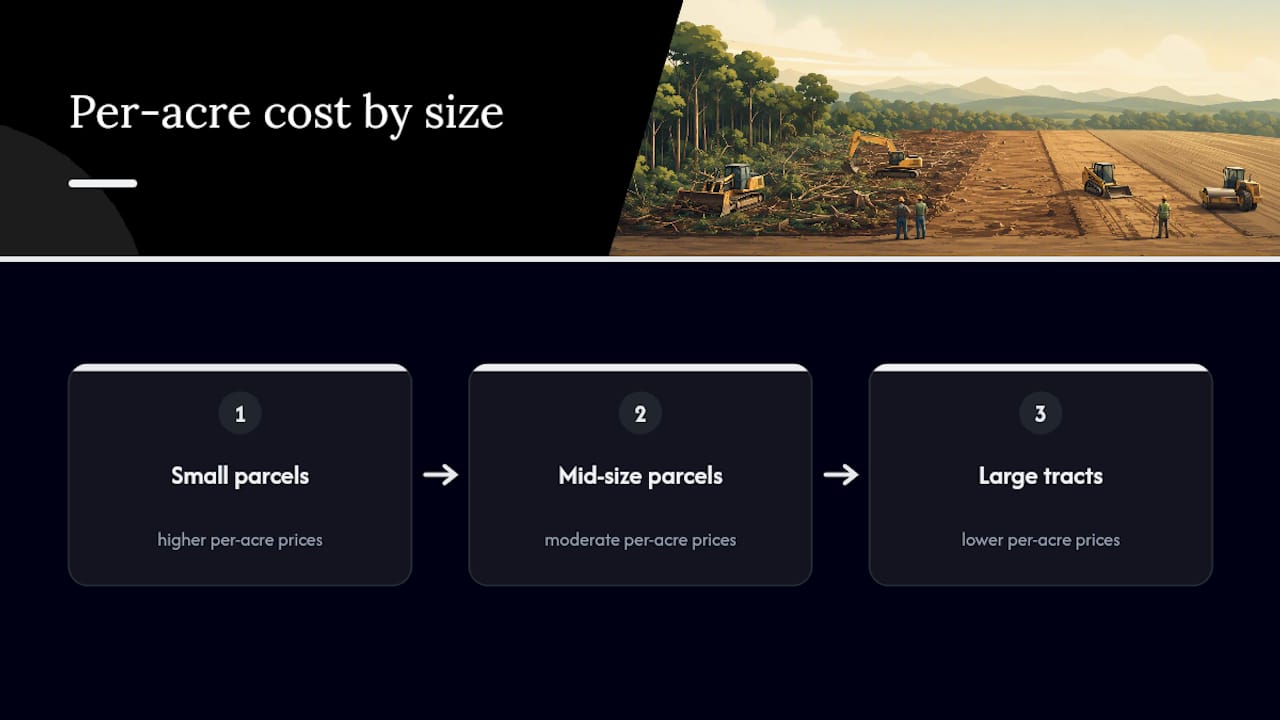
Angi’s aggregated data puts the professional per-acre range at a few thousand dollars, with site conditions driving most of the variation between the low and high ends.
A few situations push costs well above these ranges regardless of size. Rocky or caliche soil requires specialized equipment and slows every phase of work. Wetland parcels trigger environmental review and often require permits before a single tree comes down. Properties with confirmed protected species — gopher tortoises in Florida, for example — may need a wildlife survey and relocation plan before clearing can begin. Remote access, meaning a long haul from the nearest paved road, adds mobilization cost that doesn’t show up in any per-acre average.
What factors drive land clearing prices the most?
Vegetation type is the single biggest lever. A crew can mulch an acre of young pines in a few hours, or you might consider alternatives like those detailed in How To Sell A Hoarder House: Fast Options For Homeowners when dealing with heavily cluttered or debris-laden properties. An acre of mature live oaks with 30-inch trunks might take two days and specialized rigging. The difference in labor and equipment time translates directly into price.
Marks Clearing’s professional checklist identifies six core cost drivers that contractors use to build quotes: survey and site prep, equipment needs, debris handling, grading, permits, and tree-preservation choices. Here’s how each plays out in practice:
- Vegetation density and species: Saplings and brush clear fast. Mature hardwoods, palms, or dense bamboo require more time, heavier equipment, and sometimes crane work.
- Terrain and slope: Steep grades limit equipment options and slow every pass. Rocky ground can damage standard mulching heads, forcing contractors to switch to excavators.
- Site access: A narrow driveway, low-hanging power lines, or a soft-soil entry path can add hours to mobilization alone. If a large track machine can’t reach the site, smaller equipment runs longer.
- Debris removal method: Hauling debris off-site is the most expensive option. On-site chipping or mulching costs less. Open burning is cheapest but requires a permit and isn’t allowed in many municipalities.
- Permits and utility marking: Clearing without a permit in a regulated area can result in stop-work orders and fines. Utility marking through 811 is required before any ground disturbance and takes two to three business days to schedule.
- Soil and hidden obstacles: Buried concrete, old septic systems, or abandoned wells discovered mid-job add cost that no initial estimate can anticipate.
Pro Tip: One cost driver most homeowners miss is the tree-preservation buffer. If you want to keep specific trees near the clearing boundary, contractors must hand-clear or use smaller equipment in those zones, which adds time at the same hourly rate as the rest of the job. Mark the trees you want to keep before any contractor walks the site.
How much do individual clearing services cost?
Land clearing is rarely a single line item. Most projects combine several services, and understanding what each costs separately helps you read a quote critically.
HomeGuide’s per-service data provides these national reference ranges:
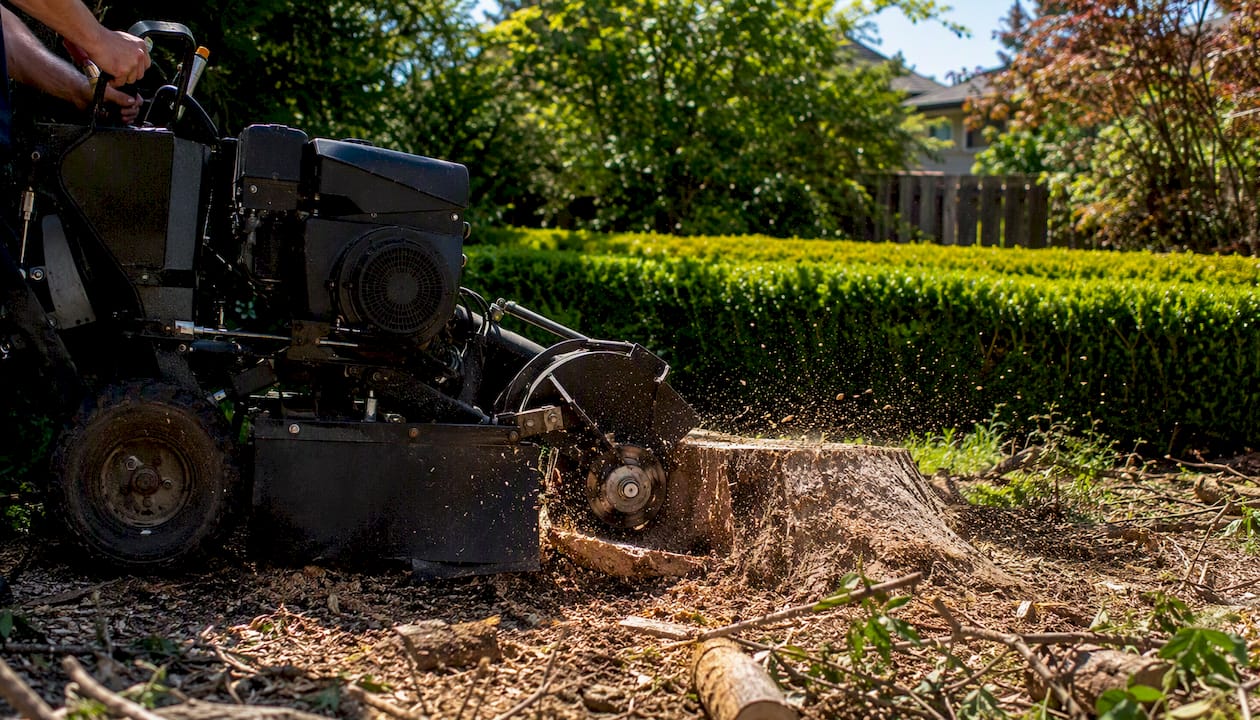
A few things worth knowing about these line items. Stump grinding leaves the root system in place, which is fine for landscaping but creates problems if you’re pouring a foundation or installing a septic system. Full stump removal costs more but gives you a clean subgrade. You can read more about when each approach makes sense on Mcculloughtreeservice’s stump grinding guide.
For very large trees, a 100-foot specimen with a significant lean toward a structure can run $1,500–$3,000 when specialized rigging and a larger crew are required. That’s before stump work.
Debris hauling fees vary by region. In Central Florida, tipping fees at local transfer stations add to the per-load cost, so on-site mulching or chipping often makes financial sense when the clearing area is large enough to absorb the mulch.
Which clearing method saves the most money?
The cheapest method depends on what you’re clearing and what you plan to do with the land afterward. There’s no single right answer, but the trade-offs are predictable.
DIY and small-equipment rental works for light brush, small saplings, and lots under a quarter acre. A rented skid steer or brush cutter handles manageable vegetation. The hidden cost is time, disposal, and the real risk of hitting a buried utility or destabilizing a tree that falls the wrong way. For anything with trees over 6 inches in diameter, DIY becomes a safety and liability problem quickly. See effective land clearing methods for all budgets for a side-by-side comparison.
Forestry mulching is often the fastest professional option for wooded lots that don’t need a building pad. A single machine grinds trees, brush, and stumps into mulch that stays on-site, eliminating hauling costs. Per-acre rates typically run $500–$1,000. The trade-off: large root systems remain underground, which complicates foundation work, and the mulch layer needs time to decompose before you can grade or plant.
Bulldozer or excavator grub-and-haul produces the cleanest result. Everything comes out, stumps and roots included, and the site is ready for grading. It’s the right choice for building pads, driveways, and septic installations. It’s also the most expensive option because you’re paying for equipment time plus hauling and tipping fees.
Burning is the cheapest disposal method on paper, but it requires a permit in most jurisdictions, is banned outright in many Florida municipalities during dry season, and creates smoke-liability issues with neighbors. The permit process often takes longer than the clearing itself.
- DIY: Best for light brush under 1/4 acre; risky with trees; no insurance coverage for accidents.
- Forestry mulching: Fast, low-haul cost, good for wooded lots not destined for construction.
- Grub-and-haul: Cleanest result, highest cost, required for most building projects.
- Burning: Lowest disposal cost, highest regulatory friction, not viable in many areas.
Pro Tip: If you’re planning to build within 12 months, skip forestry mulching as your primary method. The decomposing biomass layer can cause differential settling under slabs and driveways. Spend the extra money on grub-and-haul now rather than dealing with foundation issues later.
How long does land clearing take?
A lightly vegetated lot under one acre can often be cleared in a single day by a professional crew with the right equipment. That’s the optimistic end. Big Frog Mulching’s timeline guidance puts it plainly: small properties under 1 acre can often be completed in one day, while 1–5 acre jobs commonly take multiple days, and larger or denser projects may run a week or more.
Dense hardwood lots, steep terrain, and debris hauling all stretch the schedule. Every truck load that leaves the site is time the crew isn’t clearing. A job that would take two days with on-site mulching might take four with full haul-off.
Scheduling lead time matters too. In Central Florida, the busy season runs from late winter through spring, when property owners are preparing lots before summer construction starts. Booking a crew during that window often means two to four weeks of lead time. Wet-season restrictions (June through September in much of Florida) can pause work on low-lying or poorly drained parcels, so building weather delays into your project timeline is smart planning.
What permits and prework should you budget for?
Skipping prework is the most common reason clearing projects stall or get fined. Budget for these items before you finalize any contractor quote:
- Property survey: A basic boundary survey typically costs $400–$1,500+ depending on lot size and topography. Required when property lines are unclear or when a permit application demands one.
- Topographic survey: Needed for grading plans and building permits. Adds cost above a standard boundary survey.
- Utility marking (811): Free to request, but must be scheduled two to three business days before any ground disturbance. Most licensed contractors require it before mobilizing.
- Municipal clearing permit: Many Florida counties require a tree removal or land-clearing permit, especially for lots over a certain size or within protected tree canopy zones. Fees vary by municipality.
- Burning permit: Required in all Florida counties if you plan to burn debris on-site. Seasonal restrictions apply.
- Wetlands or environmental review: If any portion of your lot falls within a wetland boundary or a protected species habitat, you may need a state or federal environmental review before clearing. This can add weeks and several hundred to several thousand dollars to the project.
- HOA approval: Many Central Florida communities require written HOA approval before clearing begins, separate from any municipal permit.
The land clearing process guide for property owners walks through the permit sequence in more detail for Florida-specific projects.
How do you get accurate contractor quotes?
The difference between a useful quote and a useless one is specificity. A lump-sum number with no line items tells you almost nothing about what’s included or what gets added later.
Here’s what to include when you describe your scope to a contractor:
- Total acreage and approximate dimensions of the clearing area.
- Which trees stay and which come down (mark them if possible).
- Whether stumps need to be ground or fully removed.
- Desired debris disposition: haul-off, on-site mulch, or burning.
- Any grading or leveling needed after clearing.
- Known obstacles: buried utilities, old structures, wet areas, protected trees.
- Your target completion date and any permit status.
A quote should itemize at minimum: mobilization fee, equipment hours or per-acre rate, per-tree removal count and cost, stump grinding count and cost, debris hauling (number of loads or per-acre), and any permit or survey costs the contractor is handling. If a bid arrives as a single dollar amount with no breakdown, ask for the line items. If the contractor refuses, that’s a red flag.
Pro Tip: Before emailing contractors, take 10–15 photos of the site from multiple angles and drop a pin on Google Maps showing the access point. Attach both to your quote request. Contractors who can see the vegetation density and access constraints before visiting will give you a more accurate first estimate, and it filters out crews who aren’t equipped for your job.
Get at least three itemized bids. For lots over two acres or projects that include grading, a paid site visit from a certified arborist or licensed contractor is worth the fee. It produces a scope document you can hand to every bidder, which makes the quotes directly comparable.
Sample scope paragraph you can paste into a quote request:
“I need clearing on approximately [X] acres at [address]. The lot has [describe vegetation: e.g., mixed scrub brush and approximately 15 mature oaks ranging 40–60 feet]. I want to keep [describe trees to preserve]. All stumps should be ground to below grade. Debris should be [hauled off / mulched on-site]. No grading is needed at this time / rough grading to [describe]. Utilities have been / have not been marked. Please provide an itemized quote including mobilization, per-tree removal, stump grinding, debris disposal, and any permit costs you will handle.”
How Mcculloughtreeservice estimates land clearing in Central Florida
Mcculloughtreeservice uses a consistent methodology for every land clearing estimate in the Orlando and Central Florida area. Here’s how the process works:
- Site visit: A crew member or certified arborist walks the property to measure the clearing area, assess vegetation density, and identify any protected trees, wet areas, or access constraints.
- Tree count and sizing: Each tree slated for removal is counted and measured. Trees over 24 inches DBH (diameter at breast height) are flagged for separate pricing.
- Slope and access assessment: Steep grades or tight access points that require smaller equipment or hand-clearing are noted and priced separately.
- Utility and permit check: The team confirms 811 marking status and reviews local permit requirements for the municipality.
- Disposal recommendation: Based on site conditions and the client’s intended use, the team recommends mulching, haul-off, or a combination.
A sample itemized estimate for a 1-acre Central Florida lot with moderate vegetation (mixed scrub, 10 mid-size oaks, flat terrain, haul-off requested):
This range aligns with EarthWorx’s regional data, which puts clearing alone for a 1–3 acre lot at $3,000–$12,000, with total sitework climbing significantly when grading and utilities are added.
For this type of lot, Mcculloughtreeservice would typically recommend haul-off over on-site mulching because the client intends to build.
What a certified arborist wants you to know before you clear
The mistake most homeowners make is treating land clearing as a single event rather than the first step in a sequence. Clearing without a clear plan for what comes next — grading, drainage, construction, landscaping — often means paying twice. A crew that clears to the wrong grade, or removes trees that were providing erosion control on a slope, creates problems that cost more to fix than the original clearing job.
Permits are not optional, and they’re not just bureaucratic friction. In Florida, removing a protected tree species without a permit can result in fines that exceed the cost of the clearing project itself. The permit process also forces a useful discipline: it requires you to document what’s on the lot before anything comes down, which protects you if a neighbor or municipality disputes the work later.
Budget conservatively. The $1,200–$8,000 per-acre range is real, but the high end is more common than most homeowners expect once you account for tree removal, stump work, and debris hauling as separate line items. A realistic budget for a wooded acre with haul-off is closer to $8,000–$15,000 when all services are included.
Mcculloughtreeservice handles land clearing in Central Florida
Mcculloughtreeservice offers the full scope of services a Central Florida clearing project requires: land clearing, tree removal, stump grinding, brush clearing, and certified arborist consulting. The team handles permit research, 811 coordination, and debris disposal, so you’re not managing three separate contractors.
What sets a Mcculloughtreeservice estimate apart is the certified arborist involvement from the first site visit. You get a line-item quote, not a lump sum, and a clear recommendation on disposal method based on your intended land use. For property owners dealing with a heavily wooded lot or an unusual site condition, that expertise changes the outcome. Request an on-site estimate to get an itemized quote for your specific property.
Sources
The figures and ranges in this article draw from the following sources.
- Land clearing cost — HomeGuide
- How Much Does It Cost to Clear Land? 2026 Data | Angi
- Land Clearing Cost Breakdown: What factors affect your total budget? — Burch Excavations
Recommended
- Land Clearing Methods Compared: 2026 Costs and Best Picks
- Effective Land Clearing Methods for All Budgets
- Land Clearing in Central Florida: Methods, Costs & Tips
- Land clearing in landscaping: boost your property value