By: Shelby McCullough| Published: March 21, 2026
Commercial property managers in Central Florida face significant financial exposure from tree-related liabilities, with improper maintenance leading to fines up to $15,000 and storm damage claims accounting for 60% of Florida’s tree incidents. Many underestimate the complexity of local regulations like Orlando’s Grand Tree ordinances and the technical expertise required for proper care. This guide explains how expert tree maintenance enhances safety, ensures regulatory compliance, protects aesthetics, and increases property values while reducing long-term costs and liabilities for commercial properties.
Table of Contents
- Key takeaways
- Understanding the importance of tree maintenance on commercial properties
- Core methodologies and standards for effective tree maintenance
- Economic and safety benefits of proactive tree maintenance
- Navigating Central Florida tree regulations and seasonal considerations
- Expert tree maintenance services for Central Florida commercial properties
- What permits are required for tree removal on commercial properties in Central Florida?
Key Takeaways
| Point | Details |
|---|---|
| Regulatory compliance | Orlando’s Grand Tree ordinance requires permits for trees over 6 inches in diameter and violations can incur fines up to $15,000. |
| ANSI A300 standards | The ANSI A300 pruning standards guide proper techniques that minimize stress and ensure safe, sustainable maintenance. |
| Risk reduction benefits | Proper maintenance reduces storm damage, liability exposure, and repair costs while protecting buildings and sidewalks. |
| Proactive maintenance ROI | Proactive care by certified arborists delivers better return on investment than reactive emergency responses. |
| Property value and aesthetics | Well maintained trees boost curb appeal and can increase property value while attracting quality tenants. |
Understanding the importance of tree maintenance on commercial properties
Trees represent substantial assets on commercial properties, directly impacting tenant satisfaction, operational costs, and legal compliance. Well-maintained landscapes create positive first impressions that influence leasing decisions and customer perceptions. However, neglected trees become serious liabilities, threatening infrastructure, pedestrian safety, and regulatory standing.
Central Florida’s unique climate and regulations create specific challenges for property managers. Orlando’s Grand Tree ordinance requires permits for trees over 6 inches diameter, with violations incurring fines up to $15,000. These protected species cannot be removed or significantly altered without proper documentation and approval from municipal authorities. Understanding these requirements prevents costly penalties and project delays.
Beyond aesthetics, trees pose physical risks when improperly maintained. Overhanging branches threaten buildings, vehicles, and pedestrians during storms. Root systems damage sidewalks, parking lots, and underground utilities, creating trip hazards and expensive repair obligations. Dead or diseased trees can fall without warning, resulting in property damage and potential injury claims.
Critical maintenance considerations include:
- Structural integrity assessments identifying weak branch unions and decay
- Clearance requirements for buildings, walkways, and utility lines
- Root management near hardscapes and underground infrastructure
- Disease and pest monitoring to prevent widespread tree loss
- Storm preparation pruning to reduce wind resistance
Utility clearance presents another compliance dimension. Trees growing near power lines require specialized pruning following both ANSI standards and utility company specifications. Failure to maintain proper clearances can result in service interruptions, fire hazards, and liability for damages.
“Commercial property managers must balance aesthetic goals with safety obligations and regulatory requirements, making professional tree care an essential operational component rather than an optional landscape expense.”
The complexity of these intersecting concerns makes professional expertise invaluable. Certified arborists understand local ordinances, recognize species-specific care requirements, and apply proven methodologies that protect both trees and property investments.
Core methodologies and standards for effective tree maintenance
Professional tree maintenance follows established scientific standards that ensure both tree health and safety outcomes. The ANSI A300 pruning standards provide the foundation for proper care, specifying techniques that minimize stress while achieving management objectives.
ANSI A300 defines four primary pruning types, each serving distinct purposes. Cleaning removes dead, diseased, or weakly attached branches that pose hazards. Raising eliminates lower branches to provide clearance for vehicles, pedestrians, and buildings. Reduction decreases tree height or spread by cutting back to lateral branches, managing size without topping. Thinning selectively removes branches throughout the canopy to reduce density and wind resistance.
A critical principle limits foliage removal to 25% annually. Exceeding this threshold stresses trees, triggering excessive regrowth, reducing energy reserves, and increasing vulnerability to pests and diseases. Proper timing and incremental approaches maintain tree vitality while achieving necessary modifications.
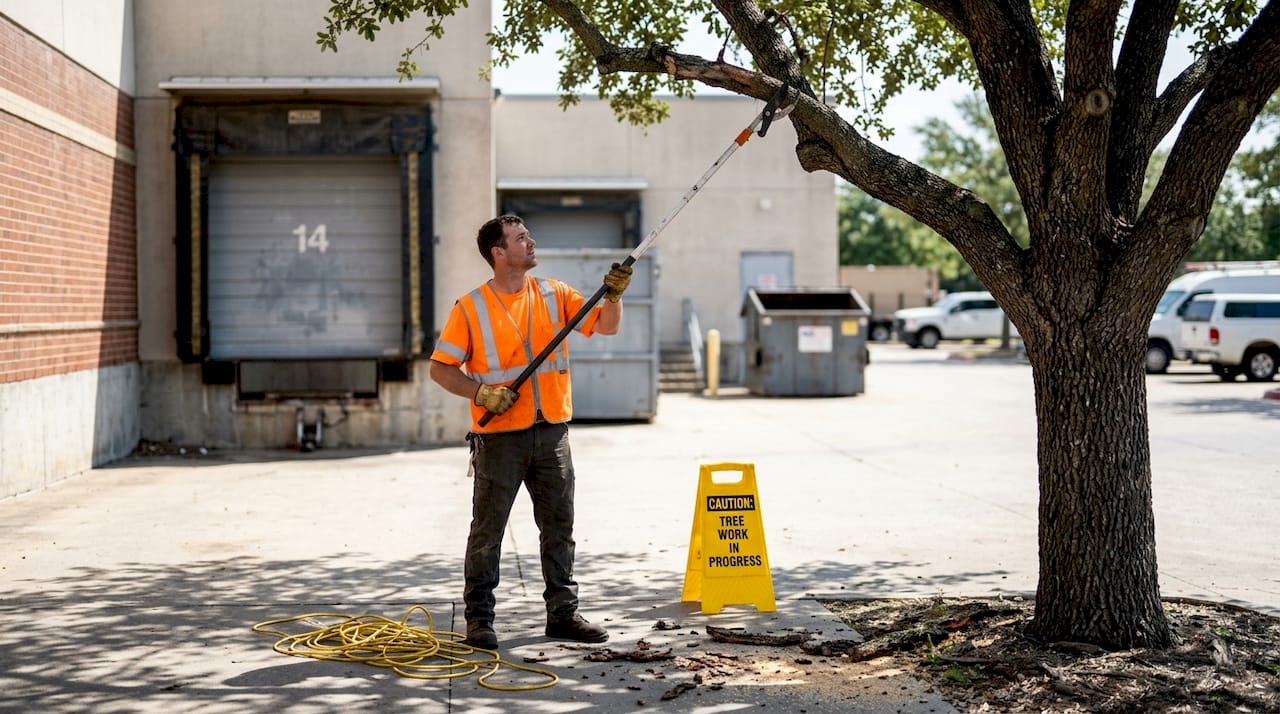
The three-cut method prevents bark tearing on larger branches. The first cut creates an undercut several inches from the trunk. The second cut removes the branch from above, slightly farther out. The final cut removes the remaining stub just outside the branch collar, the swollen area where branch meets trunk. Preserving this collar allows proper wound closure and prevents decay from entering the main trunk.
Pro Tip: Never allow contractors to top trees by cutting main stems between lateral branches. This practice, sometimes called hat-racking, creates weak regrowth, increases storm damage risk, and significantly shortens tree lifespan. Insist on reduction pruning to lateral branches instead.
Integrated tree health care extends beyond pruning to address underlying physiological needs. Soil analysis reveals nutrient deficiencies, compaction issues, and pH imbalances affecting root function. Targeted fertilization programs correct deficiencies without over-application that can harm trees and contaminate groundwater. Mulching maintains soil moisture, moderates temperature extremes, and gradually improves soil structure as organic matter decomposes.
Pest and disease management requires early detection through regular monitoring. Integrated pest management prioritizes cultural and biological controls before resorting to chemical treatments. Proper pruning, adequate irrigation, and stress reduction often prevent problems that would otherwise require intervention.
| Maintenance Component | Frequency | Key Actions |
|---|---|---|
| Visual Inspection | Quarterly | Check for dead branches, pest signs, structural defects |
| Structural Pruning | Annual | Remove hazards, maintain clearances, reduce storm risk |
| Soil Testing | Biennial | Analyze nutrients, pH, compaction; adjust care programs |
| Deep Root Fertilization | Annual | Apply balanced nutrients to root zone |
| Pest/Disease Monitoring | Monthly | Identify problems early; implement targeted treatments |
Following the tree maintenance checklist ensures comprehensive care addressing all critical components. Urban tree care best practices account for the unique stresses commercial trees face, including compacted soils, limited root space, heat island effects, and mechanical damage from vehicles and equipment.
Routine arborist inspections by certified professionals optimize maintenance timing and identify emerging issues before they become expensive problems. These assessments document tree conditions, providing valuable records for insurance and regulatory purposes.
Economic and safety benefits of proactive tree maintenance
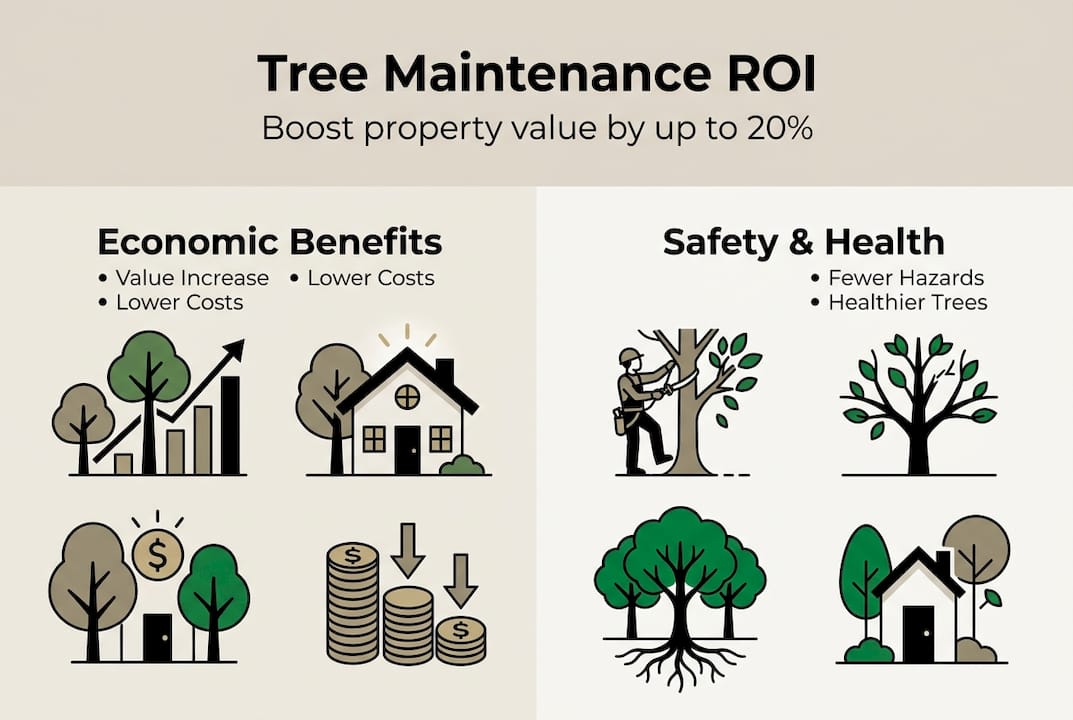
Investing in systematic tree care delivers measurable financial returns through multiple mechanisms. Property values increase 7-20% with well-maintained landscapes, directly impacting asset worth and rental income potential. Quality landscaping differentiates properties in competitive markets, attracting premium tenants and reducing vacancy periods.
Energy cost reductions represent another significant benefit in Central Florida’s climate. Strategically placed trees provide shade that reduces cooling loads, with studies documenting substantial savings. Properly maintained trees maximize these benefits by ensuring healthy canopies that provide optimal coverage without interfering with buildings or creating moisture problems.
Storm damage prevention offers perhaps the most dramatic cost avoidance. Proactive structural pruning reduces wind resistance and eliminates weak branches before hurricanes strike. This preparation significantly decreases property damage and liability exposure compared to properties with neglected trees.
Financial advantages of proactive maintenance:
- Lower insurance premiums through demonstrated risk management
- Reduced emergency response costs by preventing failures
- Extended tree lifespan protecting long-term landscape investments
- Decreased liability claims from falling branches or trip hazards
- Avoided regulatory fines through consistent compliance
The contrast between proactive and reactive approaches becomes clear in cost comparisons. Emergency tree removal after storm damage costs two to three times more than scheduled maintenance. Liability claims from preventable accidents can reach six or seven figures. Regulatory fines for unpermitted work or protected tree violations add thousands in avoidable expenses.
| Approach | Annual Cost | Risk Level | Long-term Outcome |
|---|---|---|---|
| Proactive Program | Moderate, predictable | Low | Healthy trees, compliance, value preservation |
| Reactive Response | High, unpredictable | Elevated | Degraded trees, violations, emergency expenses |
| Neglect | Minimal short-term | Severe | Tree loss, fines, liability, property damage |
Pro Tip: Budget 1-2% of property value annually for comprehensive tree care. This investment typically returns 3-5 times its cost through energy savings, avoided damages, and property value enhancement over a five-year period.
Certified arborists provide the expertise necessary to maximize these returns. Their training in tree biology, structural assessment, and pest management ensures interventions achieve intended outcomes without unintended consequences. Insurance coverage protects property owners from liability if accidents occur during maintenance operations.
The benefits of regular tree maintenance extend beyond immediate cost savings to long-term asset protection. Trees represent decades of growth and substantial replacement costs. Proper care preserves these investments while newer plantings mature. Commercial tree care benefits include enhanced brand image, improved employee satisfaction, and demonstrated environmental stewardship that resonates with tenants and customers.
Documentation of maintenance activities provides additional value. Detailed records demonstrate due diligence in liability cases, support insurance claims, and satisfy regulatory reporting requirements. This paper trail becomes invaluable when disputes arise or compliance questions emerge.
Navigating Central Florida tree regulations and seasonal considerations
Central Florida’s regulatory landscape requires careful attention to multiple jurisdictional requirements. Commercial properties face stricter scrutiny than residential sites, with hazardous tree exemptions under Florida statute 163.045 applying only to single-family homes. Commercial managers must obtain permits even for trees posing immediate dangers in most municipalities.
Orlando’s protected tree ordinances establish size thresholds triggering permit requirements. Trees exceeding six inches diameter at breast height receive protection, requiring documented justification and approved mitigation plans before removal. Native species and specimen trees face additional restrictions. Violations carry substantial penalties, making compliance verification essential before any significant work begins.
Permit applications typically require professional documentation. Arborist reports must detail tree condition, justify proposed actions, and outline mitigation measures for removals. Processing times vary by jurisdiction, requiring advance planning for scheduled maintenance projects. Emergency situations may qualify for expedited review, but property managers should never assume exemptions without confirming with local authorities.
Regulatory compliance steps:
- Inventory all trees over six inches diameter with species identification
- Verify local ordinances and protected species lists for your municipality
- Obtain certified arborist assessments before planning significant work
- Submit permit applications with required documentation and fees
- Schedule work only after receiving official approval
- Maintain records of all permits, assessments, and completed work
Hurricane season creates unique timing pressures for commercial properties. Pre-storm structural pruning should occur during late winter or early spring, allowing trees to compartmentalize wounds before severe weather arrives. Waiting until hurricane warnings issue leaves insufficient time for proper preparation and may result in rushed work that damages trees or violates standards.
Root damage near sidewalks and utilities demands specialized approaches. ANSI A300 standards specify techniques that minimize harm while addressing infrastructure conflicts. Root pruning requires understanding of tree physiology to avoid destabilizing specimens or triggering decline. Utility clearance pruning must balance safety requirements with tree health, following specifications from both utility companies and municipal codes.
Seasonal considerations affect maintenance scheduling beyond storm preparation. Summer heat stress makes major pruning inadvisable during peak temperatures. Fungal diseases spread more readily during humid periods, requiring timing adjustments for susceptible species. Pest lifecycles influence treatment timing for maximum effectiveness.
Key seasonal actions:
- Winter: Major structural pruning, root work, planting
- Spring: Fertilization, pest monitoring, storm preparation pruning
- Summer: Light maintenance only, irrigation management, pest treatment
- Fall: Assessment and planning, pre-winter preparations
The tree removal guide for Orlando details specific local requirements and processes. Understanding these procedures prevents project delays and ensures legal compliance. Storm trimming preparation guidelines help property managers implement effective pre-hurricane protocols that protect both trees and buildings.
Invasive species present another regulatory dimension. Some non-native trees lack protection and may face removal requirements in certain contexts. However, property managers should verify status before assuming exemptions, as regulations change and local ordinances may provide broader protections than state law.
Documentation requirements extend beyond initial permits. Many jurisdictions require post-work reporting, photographic evidence, and updated landscape plans. Maintaining comprehensive records protects against future compliance questions and provides valuable information for ongoing management decisions.
Expert tree maintenance services for Central Florida commercial properties
Managing the complexities of commercial tree care requires specialized expertise and resources. Professional arborists bring the technical knowledge, equipment, and insurance coverage necessary for safe, compliant, and effective maintenance. For busy property managers juggling multiple responsibilities, partnering with qualified tree care providers ensures this critical aspect receives proper attention.
McCullough Tree Service specializes in commercial property tree maintenance throughout Central Florida, offering comprehensive solutions tailored to the unique needs of office parks, retail centers, industrial facilities, and multi-family complexes. Our ISA-certified arborists understand local regulations, possess extensive experience with regional tree species, and apply proven methodologies that protect your property investment.
Our tree trimming services include structural pruning, clearance maintenance, storm preparation, and aesthetic enhancement following ANSI A300 standards. We handle permit applications, provide required documentation, and maintain detailed records of all work performed. When removal becomes necessary, our tree removal guide for Orlando ensures compliant, safe execution. Pre-hurricane storm preparation trimming reduces risk and protects your property when severe weather threatens.
Our comprehensive maintenance programs provide predictable costs, consistent care, and peace of mind that your trees receive proper attention throughout the year. Contact us to discuss your property’s specific needs and develop a customized maintenance plan that preserves value, ensures compliance, and minimizes liability.
What permits are required for tree removal on commercial properties in Central Florida?
What permits are required for tree removal on commercial properties in Central Florida?
Commercial properties must obtain municipal permits before removing protected trees, typically those exceeding six inches diameter under ordinances like Orlando’s Grand Tree protections. Applications require certified arborist reports documenting tree condition and justifying removal. Violations can result in fines up to $15,000 per tree, making compliance verification essential before any significant work. The tree removal permits process in Orlando involves submitting detailed plans and awaiting approval before proceeding.
How often should commercial property trees be inspected and maintained in Central Florida?
Certified arborists recommend quarterly inspections for commercial properties to identify hazards, monitor tree health, and address emerging issues before they escalate. Inspection frequency may increase before and after hurricane season to ensure storm readiness and assess damage. Regular routine arborist inspections provide documentation supporting compliance and liability protection while optimizing maintenance timing for best outcomes.
What are the key pruning standards to follow for tree health and safety?
ANSI A300 standards limit annual pruning to 25% of tree foliage, specify the three-cut method for larger branches, and require preserving branch collars during removal. These techniques minimize stress, prevent decay, and support proper wound closure. Following established pruning versus trimming standards ensures work enhances rather than harms tree health while reducing liability risks from improper techniques.
How does proactive tree maintenance reduce storm damage on commercial properties?
Structural pruning removes weak branches, reduces wind resistance through canopy thinning, and eliminates hazards before hurricanes strike. This preparation significantly decreases property damage and liability exposure compared to neglected trees. Studies show proactive maintenance reduces storm-related claims by up to 60%, making pre-season preparation a cost-effective risk management strategy for Florida commercial properties.
What qualifications should I look for when hiring commercial tree care providers?
Seek ISA-certified arborists with comprehensive liability insurance, workers compensation coverage, and documented experience with commercial properties. Verify licensing with local authorities and request references from similar properties. Qualified providers understand Central Florida regulations, follow ANSI standards, and maintain detailed documentation supporting compliance and liability protection for property managers.
Recommended
- Trees Boosts Property Value: Enhance Your Home’s Worth
- Regular Tree Maintenance Cuts Branch Failures 50% in FL
- Tree Planting for Commercial Properties: Boosting Value and Compliance
- The Benefits of Regular Professional Tree Trimming