By: Shelby McCullough| Published: March 21, 2026
Knowing when a tree poses a risk to your Central Florida property can save you thousands in damage and protect your family’s safety. Healthy trees add beauty and value, but diseased, damaged, or unstable trees become liabilities during our intense storm seasons. This guide walks you through the critical warning signs that indicate it’s time for removal, helping you make informed decisions before a hazardous tree causes serious problems. You’ll learn to spot danger signals early and understand when professional assessment becomes essential.
Table of Contents
- Key takeaways
- How to evaluate if your tree needs removal
- Key signs your tree needs removal
- Comparing removal options and safety considerations
- Deciding when to remove trees in Central Florida’s climate
- Professional tree removal and care services in Central Florida
- FAQ
Key Takeaways
| Point | Details |
|---|---|
| Early risk identification | Identifying potential hazards early helps prevent property damage and keeps families safe. |
| Common warning signs | Look for signs like visible decay, leaning trees, and dead or hanging branches as early indicators. |
| Proactive removal benefits safety | Removing at risk trees proactively reduces safety threats and can protect property value. |
| Professional assessment advised | When signs are unclear or risk seems high, involve a certified arborist for evaluation. |
How to evaluate if your tree needs removal
Systematic evaluation helps you distinguish between trees needing minor care and those requiring complete removal. Start by examining overall tree health from multiple angles, looking for asymmetry, discoloration, or sparse foliage that signals underlying problems. Check the trunk for cracks, splits, or areas where bark has fallen away, exposing wood underneath.
Central Florida’s storm-prone climate makes structural integrity your top priority. Trees growing within falling distance of your home, power lines, or frequently used outdoor areas demand closer scrutiny. A tree’s height determines its potential impact zone, so measure the distance from trunk to structure and compare it to the tree’s total height.
Consider these critical evaluation factors:
- Physical damage like vertical cracks, missing bark sections, or exposed heartwood
- Root problems including heaving soil, visible root decay, or fungal growth at the base
- Storm vulnerability from hollow sections, heavy lean, or poor branch attachment
- Species-specific issues such as shallow root systems in sandy soil or disease susceptibility
- Age-related decline showing reduced growth, thinning canopy, or widespread dieback
Tree age and species condition significantly influence removal decisions. Older trees naturally lose vigor, but sudden changes often indicate serious problems requiring professional evaluation.
Pro Tip: Walk around your tree during different weather conditions. Wind reveals weak branches and unstable lean that you might miss on calm days, giving you a clearer picture of structural integrity.
Document your observations with photos and notes over several months. Patterns of decline become obvious when you track changes systematically rather than relying on memory alone.
Key signs your tree needs removal
Physical symptoms tell you when a tree has crossed from manageable decline into dangerous territory. Dead branches that remain attached after storms indicate the tree lacks the strength to shed them naturally, creating falling hazards. These limbs often break unpredictably, especially during Central Florida’s afternoon thunderstorms.
Fungal conks, the mushroom-like growths appearing on trunks, signal advanced internal decay that compromises structural integrity. The visible fungus represents only a fraction of the rot inside, meaning the tree is already severely weakened by the time you notice external signs.
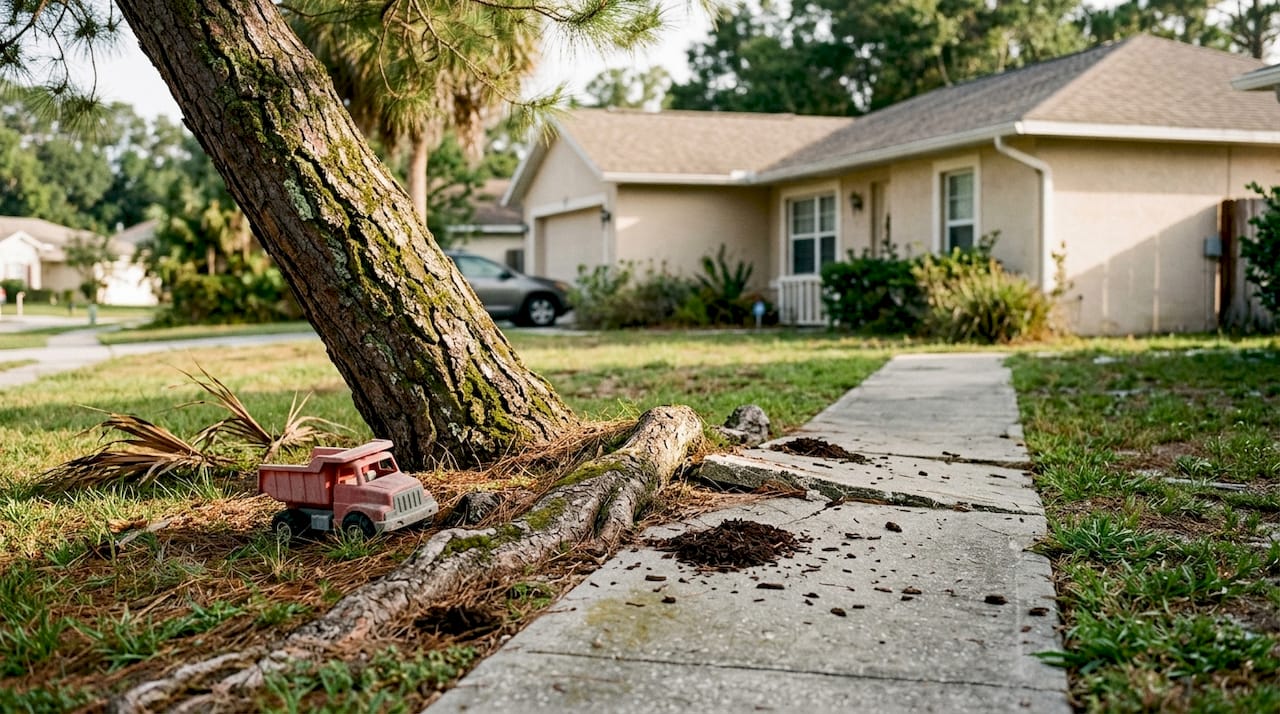
Leaning trees with exposed or cracked roots have lost their anchor in the ground. While some trees naturally grow at angles, sudden lean or increasing tilt indicates root failure. Sandy Central Florida soil makes this particularly dangerous, as roots lose grip more easily than in clay-heavy regions.
Hollow trunks create structural weakness even when the outer shell appears intact. Tap the trunk with a rubber mallet at different heights. Solid wood produces a dull thud, while hollow sections sound distinctly different, almost drum-like.
Visible signs such as dead branches, leaning trunks, fungal growths, and root damage strongly suggest removal is needed before the tree fails catastrophically.
| Warning Sign | Safety Implication | Health Indicator |
|---|---|---|
| Multiple dead branches | High falling risk | Advanced decline |
| Fungal conks on trunk | Structural failure potential | Severe internal rot |
| Lean exceeding 15 degrees | Imminent toppling risk | Root system failure |
| Hollow trunk sections | Snap or collapse likely | Extensive decay |
| Canopy dieback over 50% | Branch failure zones | Irreversible health loss |
Additional concerning signs include:
- Bark peeling in large sections revealing discolored wood underneath
- Sawdust or frass around the base indicating boring insect infestation
- Root flare buried or absent, suggesting girdling roots choking the tree
- Branch attachments with included bark creating weak union points
- Sudden leaf drop outside normal seasonal patterns
Pro Tip: Check for multiple symptoms rather than relying on a single sign. Trees showing two or more major warning signals almost always require professional assessment, as combined problems accelerate failure risk exponentially.
The combination of symptoms matters more than individual issues. A tree with minor lean and small fungal growth might survive years, but the same tree with significant hollow sections needs immediate attention.
Comparing removal options and safety considerations
Choosing between DIY and professional removal involves weighing risks against costs and capabilities. Small trees under 15 feet with no nearby structures might suit experienced homeowners with proper equipment, but most removal scenarios demand professional expertise.
Professional tree removal services ensure safety and efficiency, especially with hazardous or large trees that could cause injury or property damage during amateur attempts.
The professional removal process follows strict protocols:
- Certified arborist assessment determines removal strategy and identifies hazards
- Site preparation including establishing safety perimeter and protecting nearby structures
- Strategic limbing removes branches in sections from top down, controlling fall direction
- Trunk sectioning cuts the main stem into manageable pieces using rigging systems
- Stump grinding eliminates the remaining base below ground level
- Debris removal and site cleanup restores your property to usable condition
Safety precautions homeowners must take include maintaining a distance twice the tree’s height during removal, ensuring no one enters the work zone, and verifying the removal company carries proper insurance coverage.
| Factor | DIY Removal | Professional Removal |
|---|---|---|
| Cost | Equipment rental plus time | Service fee covers all aspects |
| Safety risk | High injury potential | Insured, trained specialists |
| Equipment needs | Chainsaw, ropes, safety gear | Specialized machinery included |
| Disposal | Your responsibility | Complete debris removal |
| Suitable tree size | Under 15 feet, clear area | Any size, any location |
| Time required | Full weekend or more | Hours to single day |
| Liability | Homeowner assumes all risk | Company insurance coverage |
Professional removal becomes non-negotiable when trees lean toward structures, have power lines nearby, exceed 20 feet in height, or show signs of disease that make them unpredictable. The cost difference rarely justifies the risk of serious injury or property damage that DIY attempts create.
Deciding when to remove trees in Central Florida’s climate
Timing tree removal around Central Florida’s weather patterns maximizes safety and minimizes complications. Hurricane season runs June through November, making late winter through early spring the ideal removal window. February through April offer the calmest weather and driest ground conditions, allowing equipment access without damaging your lawn.
Removing hazardous trees before hurricane season reduces property risk significantly in Central Florida, where sustained winds and heavy rain expose structural weaknesses that calm weather conceals.
Schedule removal of vulnerable trees by May to eliminate threats before peak storm months. Trees already showing decline, significant lean, or decay become projectiles during hurricanes, threatening not just your property but neighboring homes as well.
Seasonal considerations for your landscape after removal:
- Spring removal allows immediate replanting with young trees that establish before summer heat
- Summer removal requires extensive watering for any replacement plantings
- Fall timing positions new trees to develop roots during cooler months
- Winter removal in Central Florida works well since we rarely face ground frost
Practical scheduling tips include booking removal services 4-6 weeks ahead during peak season, as certified arborists stay busy February through May. Emergency removals after storms cost significantly more than planned removal, providing another incentive for proactive action.
Drought periods actually benefit removal operations by firming sandy soil, giving equipment better traction and reducing lawn damage. However, extended dry spells make trees more brittle, requiring adjusted cutting techniques that professionals understand.
Monitor weather forecasts two weeks before scheduled removal. Postpone if major storms approach, as wet conditions create hazards and prevent proper cleanup. The few days’ delay beats risking worker safety or incomplete debris removal that leaves your property messy.
Professional tree removal and care services in Central Florida
When you’ve identified trees that need removal, working with experienced professionals ensures the job gets done safely and completely. McCullough Tree Service brings certified expertise to every Central Florida removal project, handling everything from initial assessment through final cleanup.
Our tree removal services follow strict safety protocols using specialized equipment that protects your property throughout the process. Beyond removal, we offer comprehensive tree trimming services that can often save borderline trees through strategic pruning and health restoration. Our certified arborist services provide expert diagnosis, helping you make informed decisions about which trees truly need removal versus those that might recover with proper care. We understand Central Florida’s unique challenges, from hurricane preparation to managing storm damage, and we’re available when you need reliable tree care solutions.
FAQ
How can I safely tell if a tree is dangerous?
Look for unstable lean exceeding 15 degrees, vertical trunk cracks wider than your finger, and dead branches throughout the canopy from a safe distance at least twice the tree’s height away. Never climb or shake a potentially dangerous tree to inspect it, as this can trigger sudden failure. If you notice multiple warning signs or feel uncertain about stability, identify a dangerous tree through professional inspection rather than risking assessment yourself.
What risks do dead or decaying trees pose to my home?
Dead or decaying trees risk falling branches during routine thunderstorms or complete collapse during hurricanes, causing roof damage, broken windows, vehicle destruction, or serious injury to anyone nearby. Internal decay weakens structural integrity invisibly, meaning trees can fail without obvious external warning during moderate wind events. The cost of removing trees near your house proactively is far less than repairing damage from a fallen tree, which often exceeds insurance deductibles and creates weeks of disruption.
Is professional tree removal always necessary?
Large trees over 20 feet, those leaning toward structures, or any tree with visible decay require professionals for safety and liability protection. Small ornamental trees under 10 feet in open areas with no overhead lines can sometimes be handled by experienced homeowners with proper safety equipment and knowledge. However, tree trimming safety protocols apply even to smaller removals, and most homeowners lack the specialized training to recognize hidden hazards that make seemingly simple jobs dangerous.
When is the best time to remove trees in Central Florida?
Late winter through early spring, specifically February through April, provides the best conditions with calm weather, dry ground, and time to prepare before hurricane season begins in June. This timing allows equipment access without creating mud ruts and gives you the option to plant replacements that establish roots before summer heat stress. Following optimal timing for tree removal protects your property during peak storm months when vulnerable trees become serious hazards to structures and safety.
Recommended
- Signs Your Tree Needs Removal
- Guide to Tree Removal in Orlando
- Safe Tree Removal Central Florida: 85% Injury Cut Guide
- Why remove hazardous trees: key benefits for properties