By: | Published: June 26, 2026
TL;DR:
- Storm cleanup involves removing debris, preventing structural damage, and restoring properties safely after storms. Homeowners in Central Florida must follow safety precautions, document damages thoroughly, and engage licensed professionals to manage water and tree hazards promptly. Acting within critical time windows is essential to preserve insurance claims, prevent mold, and ensure property safety.
Storm cleanup is the process of safely removing debris, mitigating structural damage, and restoring your property after a major weather event using professional standards and proven safety practices. Central Florida homeowners face this reality every hurricane season, and the 2025 storm season reinforced how quickly recovery can go wrong without a clear plan. Insurance deadlines are tight, tree hazards are serious, and mold can take hold in under 48 hours in Florida’s humidity. This guide walks you through every phase of post-storm recovery, from the first safety check to final landscape restoration, so you know exactly what to do and when.
What are the essential safety precautions during storm cleanup?
Safety is the first and non-negotiable step in any home storm damage repair guide. Before you touch a single piece of debris, you need to assess your property for hazards that are invisible to the untrained eye.
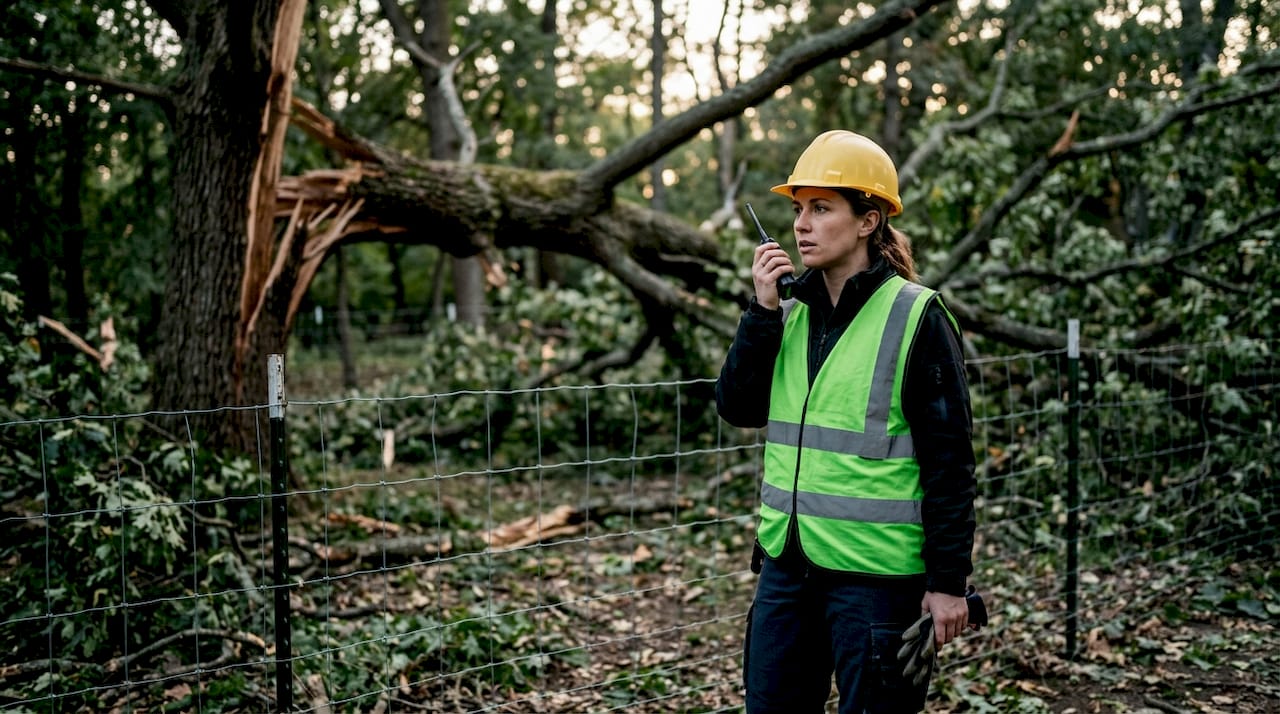
Check for structural hazards first. Walk the perimeter of your home before entering. Look for cracks in the foundation, sagging rooflines, and broken load-bearing walls. If the structure looks compromised, do not enter until a licensed inspector clears it.
Identify downed power lines and gas leaks. Treat every downed line as live and energized. Keep a minimum distance of 30 feet from any fallen wire. If you smell gas, leave the property immediately and call your utility provider from a safe distance.
Key safety steps every homeowner should follow:
- Wear personal protective equipment (PPE): heavy work gloves, steel-toed boots, safety glasses, and a hard hat
- Establish a safety perimeter. Safe debris management requires a perimeter at least twice the height of any fallen tree or limb
- Never work alone. Assign a communication signal with a partner before starting any debris work
- Avoid operating a chainsaw without proper training. Chainsaws are the most dangerous hand tools and pose heightened risk during storm cleanup
- Keep children and pets completely off the property until all hazards are cleared
Pro Tip: If you see a tree leaning against your home or power lines, do not attempt to cut it yourself. The tension in those branches creates a lethal spring-back effect that even experienced homeowners misjudge.
“The most dangerous moment in storm cleanup is when homeowners feel the urgency to act fast and skip the hazard assessment. Slow down before you speed up.” — IFAS Extension, University of Florida
How to document and protect your property to maximize insurance claims?
Thorough documentation is the single most important step you can take before touching any damaged material. Your insurance claim lives or dies on the evidence you collect in the first hours after a storm.
Follow this sequence before any cleanup begins:
- Photograph and video every room and exterior surface. Capture wide shots and close-ups. Record timestamps on all media files.
- Do not discard any damaged material. Damaged items like wet drywall and carpets must be documented and stored safely before disposal to preserve claim evidence.
- Perform emergency mitigation immediately. Roof tarping and window boarding are usually required by insurance policies to prevent further loss and preserve claim eligibility.
- File your claim within 72 hours. Insurance claims must typically be filed within 72 hours for optimal processing, and emergency mitigation should begin within the first 48 hours to minimize structural deterioration.
- Never sign an Assignment of Benefits (AOB) agreement without reading it fully. Signing AOB agreements can jeopardize your insurance claim by transferring control to contractors. This is one of the most common and costly mistakes Florida homeowners make.
Pro Tip: Use your phone’s video function to narrate a walkthrough of every damaged area. Spoken descriptions of what you see add context that photos alone cannot capture.
“Proper emergency mitigation involves certified restoration contractors who document their work and provide insurance-valid receipts. That paper trail is what supports your claim.” — Restoration Industry Best Practices
What are the best practices for water damage control and mold prevention?
Water damage control is a race against the clock in Florida. Mold grows rapidly in Florida’s climate if water intrusion is not addressed within 24 to 48 hours. That window is shorter than most homeowners expect.
The steps below apply whether you are dealing with roof leaks, flooding, or storm surge:
- Extract standing water immediately. Wet vacuums handle small volumes. For flooded rooms, you need a professional water extraction service with truck-mounted equipment.
- Run industrial dehumidifiers continuously. Household dehumidifiers are not powerful enough after a major flood. Restoration-grade units pull many times more moisture per day.
- Remove wet materials quickly. Saturated drywall, insulation, and carpet act as mold incubators. Cut out and bag wet drywall sections within 24 hours of the event.
- Dry subfloors and wall cavities. Use air movers aimed at wall cavities and under flooring. Moisture meters confirm when materials reach safe dryness levels.
- Monitor for mold signs for at least two weeks. Musty odors, discoloration, and respiratory symptoms in occupants all signal active mold growth.
| Situation | Recommended Action | Timeline |
|---|---|---|
| Standing water in rooms | Professional extraction service | Within 6 hours |
| Wet drywall and insulation | Remove and bag for disposal | Within 24 hours |
| Saturated carpets and pads | Remove entirely, do not dry in place | Within 24 hours |
| Wall cavity moisture | Air movers and moisture meter checks | Within 48 hours |
| Visible mold growth | Licensed mold remediation contractor | Immediately |
Call a licensed restoration professional if water has reached electrical panels, HVAC systems, or structural framing. Those situations require certified assessment before any drying work begins.
How to safely assess and manage storm-damaged trees on your property?
Tree assessment is where most homeowners make their most dangerous mistakes. A leaning tree looks like a clear removal job, but that is not always the right call. Certified arborists emphasize proper evaluation to distinguish hazards from salvageable trees, often saving them with cabling, bracing, and root damage assessment. Removing a tree that could have been saved costs you money and property value.
Use these criteria to decide your next step:
- Call a certified arborist before touching any damaged tree. A certified arborist evaluation is the only reliable way to determine whether a tree is structurally sound or a genuine hazard.
- Never cut a branch that is bent under tension. The spring pole effect makes cutting tensioned branches extremely dangerous. A branch under load can snap back with lethal force when the cut releases the tension.
- Respect the safety perimeter. Stay at least twice the height of any fallen tree away from the base while assessing it.
- Know when removal is the only option. Trees with more than 50% crown loss, split trunks, or exposed root balls that have lifted the soil are typically beyond saving.
- Understand Florida legal requirements. Some municipalities in Central Florida require permits for tree removal, even after storm damage. Your arborist can confirm local rules before work begins.
Pro Tip: Ask your arborist to document their findings in writing. That report supports your insurance claim and protects you if a neighbor disputes the removal of a shared boundary tree.
Professionals use techniques like crown reduction, cabling, and root collar excavation to stabilize trees that appear damaged but retain structural integrity. Mcculloughtreeservice offers storm-damaged tree assessment for Central Florida properties, helping homeowners make informed decisions rather than expensive ones.
What is the step-by-step post-storm recovery workflow?
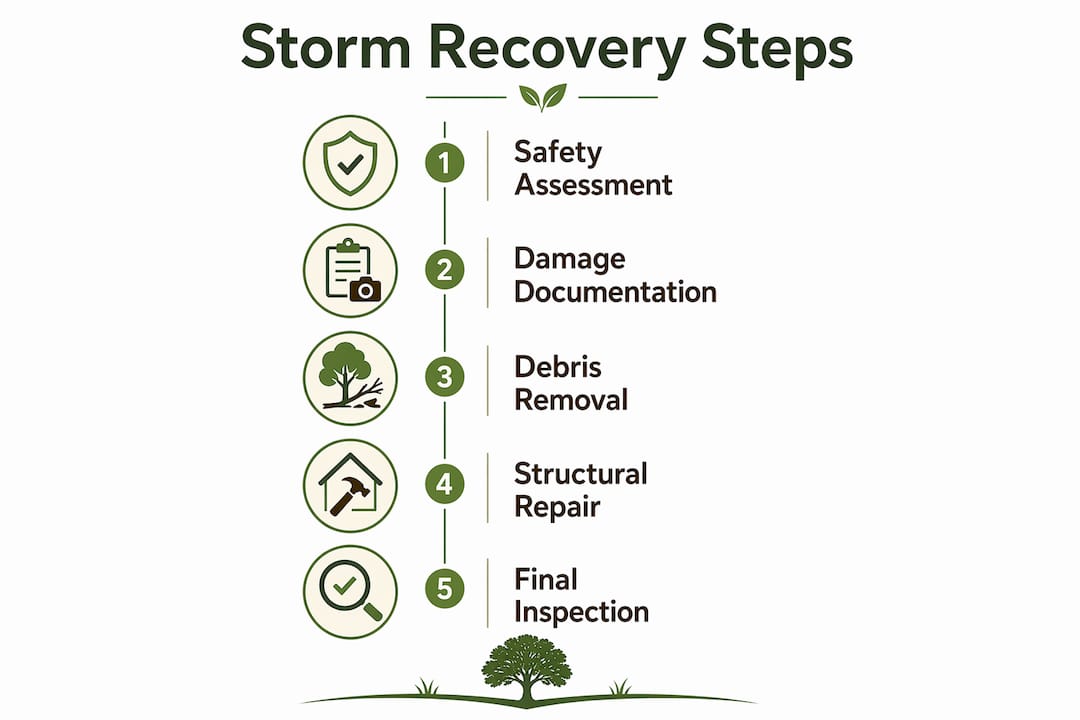
A structured recovery sequence prevents the most common post-storm errors: acting out of order, missing insurance deadlines, and creating new hazards while fixing old ones. This storm recovery checklist 2025 gives you the right sequence.
- Initial safety assessment. Check for structural damage, downed power lines, gas leaks, and standing water before entering the property.
- Document all damage. Photograph and video every affected area before moving or removing anything.
- Perform emergency mitigation. Tarp damaged roofs, board broken windows, and stop active water intrusion within 48 hours.
- Notify your insurance company. File your claim within 72 hours. Request a claim number and adjuster assignment immediately.
- Contact professional services. Schedule a certified arborist for tree assessment and a licensed restoration contractor for water damage. Use Mcculloughtreeservice’s emergency tree service for fast response in Central Florida.
- Begin debris removal. Clear non-hazardous debris from walkways and driveways first. Leave large tree sections and anything near power lines to professionals.
- Dry and treat for mold. Start extraction and dehumidification immediately. Monitor moisture levels daily.
- Landscape restoration. Once structural repairs are complete, address tree care, stump grinding, and replanting.
| Phase | Key Action | Who Performs It |
|---|---|---|
| Safety assessment | Hazard identification and perimeter setup | Homeowner with professional backup |
| Documentation | Photo and video of all damage | Homeowner |
| Emergency mitigation | Tarping, boarding, water extraction | Licensed contractor |
| Insurance notification | Claim filing and adjuster contact | Homeowner |
| Tree management | Assessment, removal, or stabilization | Certified arborist |
| Mold prevention | Drying, dehumidification, monitoring | Restoration professional |
| Final restoration | Repairs, replanting, stump removal | Contractor and arborist |
Following this sequence keeps you inside insurance deadlines and reduces the risk of compounding damage during cleanup.
Key Takeaways
Effective storm cleanup in Central Florida requires acting within strict time windows, documenting everything before touching it, and calling certified professionals for tree and water damage work.
| Point | Details |
|---|---|
| File claims within 72 hours | Insurance processing and mitigation deadlines begin immediately after the storm. |
| Document before you clean | Photograph and video all damage before removing or discarding any material. |
| Mold window is 24–48 hours | Begin water extraction immediately to stop mold growth in Florida’s humid climate. |
| Never cut tensioned branches | The spring pole effect can cause lethal snap-back; always call a certified arborist. |
| Not every damaged tree needs removal | Certified arborists can save leaning trees with cabling and bracing, protecting property value. |
What I have learned watching homeowners recover from Central Florida storms
The biggest mistake I see after every major storm is not the one you expect. Homeowners do not usually get hurt because they ignored obvious dangers. They get hurt because they felt confident after handling the easy debris and then walked into the hard part without realizing the shift.
The spring pole effect is the clearest example. A branch pinned under a fallen trunk looks like a simple cut. It is not. When the tension releases, that branch moves faster than any homeowner can react. I have seen experienced landscapers get caught by this. Untrained homeowners have no margin for error.
The insurance side is equally misunderstood. Most homeowners think the adjuster visit is the critical moment. The real critical moment is the 48 hours before the adjuster arrives. What you document, what you preserve, and what mitigation you perform in that window determines your claim outcome more than anything the adjuster does on site. Signing an AOB in that window, under pressure from a contractor who showed up uninvited, is the fastest way to lose control of your own claim.
My honest recommendation: hire a certified arborist before you hire anyone else. Trees are the most dangerous part of storm cleanup and the most misunderstood. A qualified arborist assessment costs a fraction of what a botched DIY removal costs in medical bills or property damage. Mcculloughtreeservice has handled enough post-storm calls in Orlando to know that the homeowners who call early recover faster and spend less.
— Results
Mcculloughtreeservice: professional storm cleanup for Central Florida properties
Central Florida property owners need fast, qualified help after a storm. Mcculloughtreeservice provides certified arborist services, emergency tree removal, and full storm cleanup support across Orlando and the surrounding region.
The team handles everything from hazardous tree removal to professional tree trimming that reduces storm risk before the next weather event hits. Every job is performed by licensed, insured professionals who understand Florida’s permit requirements and insurance documentation standards. If a storm has left your property with downed trees, debris, or structural risk, contact Mcculloughtreeservice for an assessment and get your property back to safe condition quickly.
FAQ
How soon should I start storm cleanup after a hurricane?
Begin your safety assessment immediately after the storm passes and conditions are safe. Emergency mitigation like tarping and water extraction must start within 48 hours to protect your insurance claim.
Can I remove a storm-damaged tree myself?
Small, clearly fallen trees with no tension in the branches can sometimes be handled by a homeowner with chainsaw experience. Any tree leaning against a structure, near power lines, or with bent branches requires a certified arborist.
What is the spring pole effect in tree cutting?
The spring pole effect occurs when a branch or trunk is bent under load and snaps back violently when cut. It is one of the leading causes of serious injury during post-storm tree cleanup and requires professional equipment to manage safely.
Should I sign an Assignment of Benefits agreement after storm damage?
Signing an AOB transfers control of your insurance claim to a contractor. Florida homeowners should avoid signing any AOB without first consulting their insurance company or a public adjuster.
How do I prevent mold after storm flooding?
Start water extraction within 24 hours of the event and run industrial dehumidifiers continuously. Remove saturated drywall and carpet within 24 hours. In Florida’s climate, mold can begin growing in under 48 hours if moisture is not addressed.
Recommended
- Storm Damage Cleanup Workflow for Central Florida
- Tree Storm Cleanup: Protect Your Central Florida Property
- Complete Land Clearing Guide for Central Florida Homes
- Emergency tree cleanup workflow for Central Florida