By: Shelby McCullough| Published: July 7, 2026
TL;DR:
- Tree protection zones safeguard tree roots and soil during construction, reducing the risk of damage. Properly establishing and maintaining TPZs, including fencing and monitoring, ensures compliance and preserves property value. Neglecting TPZs can lead to delayed tree decline, costly removals, and regulatory penalties.
A tree protection zone (TPZ) is a designated area around a tree that shields its roots, soil structure, and structural base from damage during construction. The role of tree protection zones goes far beyond drawing a circle on a site plan. TPZs are enforceable, physical buffers defined by certified arborists and backed by municipal codes, Tree Preservation Orders (TPOs), and standards from bodies like the Texas A&M Forest Service. Property owners and developers who treat them as optional paperwork face fines, stop-work orders, and trees that die years after the project closes. Getting this right from day one protects your asset, your timeline, and your compliance record.
What is the role of tree protection zones in construction?
A TPZ defines the ground area where no construction activity, soil disturbance, or equipment storage is permitted without arborist approval. The industry also uses the term Root Protection Zone (RPZ) to describe the same concept from a purely biological standpoint. Both terms refer to the same physical space. The distinction matters because local codes may reference one term while arborist reports use the other. Knowing both helps you read permit documents without confusion.
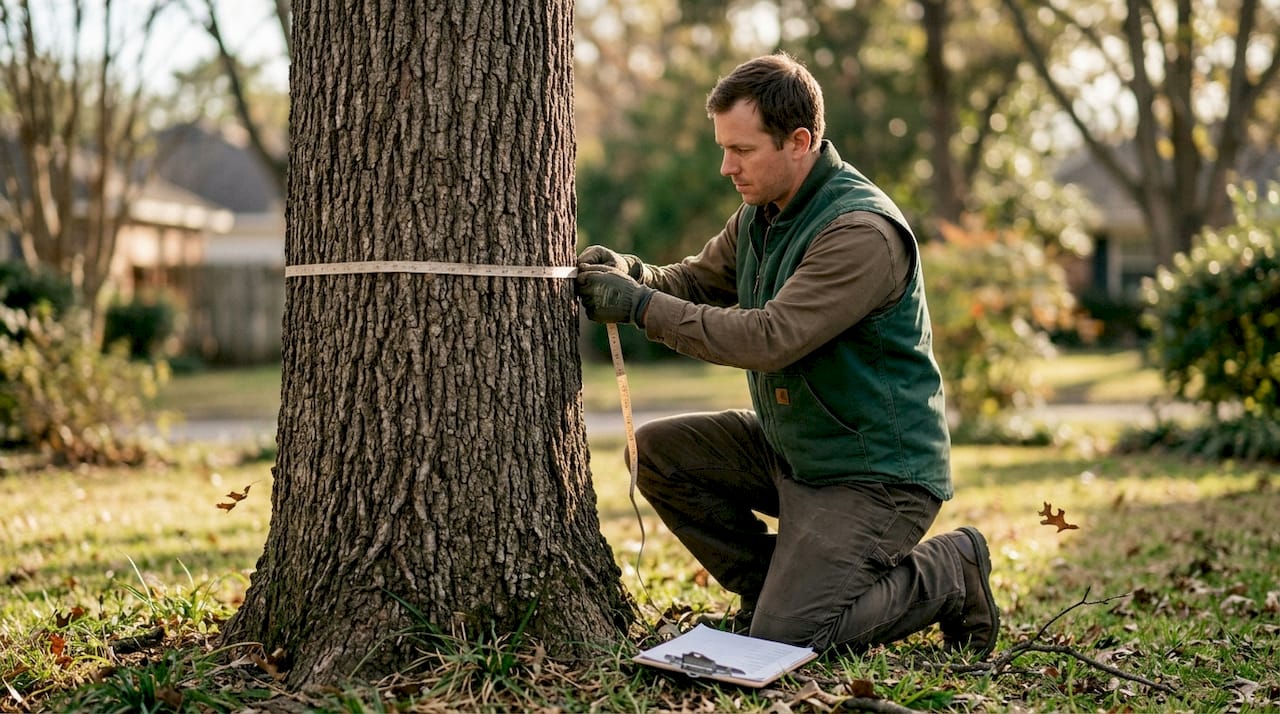
The Texas A&M Forest Service defines the standard calculation as 1 foot of protected radius for every 1 inch of trunk diameter. That means a tree with a 12-inch diameter trunk requires a 12-foot protection radius on all sides. This formula gives you a minimum. Species with wide-spreading root systems, such as live oaks common in Central Florida, may need larger zones based on arborist assessment.
TPZs exist because tree roots extend far beyond the visible canopy edge. Most feeder roots sit in the top 12–18 inches of soil, making them highly vulnerable to compaction, severance, and grade changes. A certified arborist calculates the zone, marks it on the site plan, and specifies the fencing type and placement before ground is broken.
How are tree protection zones determined and established?
The measurement process starts with trunk diameter at breast height (DBH), measured at 4.5 feet above grade. The arborist applies the 1-foot-per-inch rule to set the fence line. For a tree with an 18-inch DBH, the fence sits 18 feet from the trunk on every side.
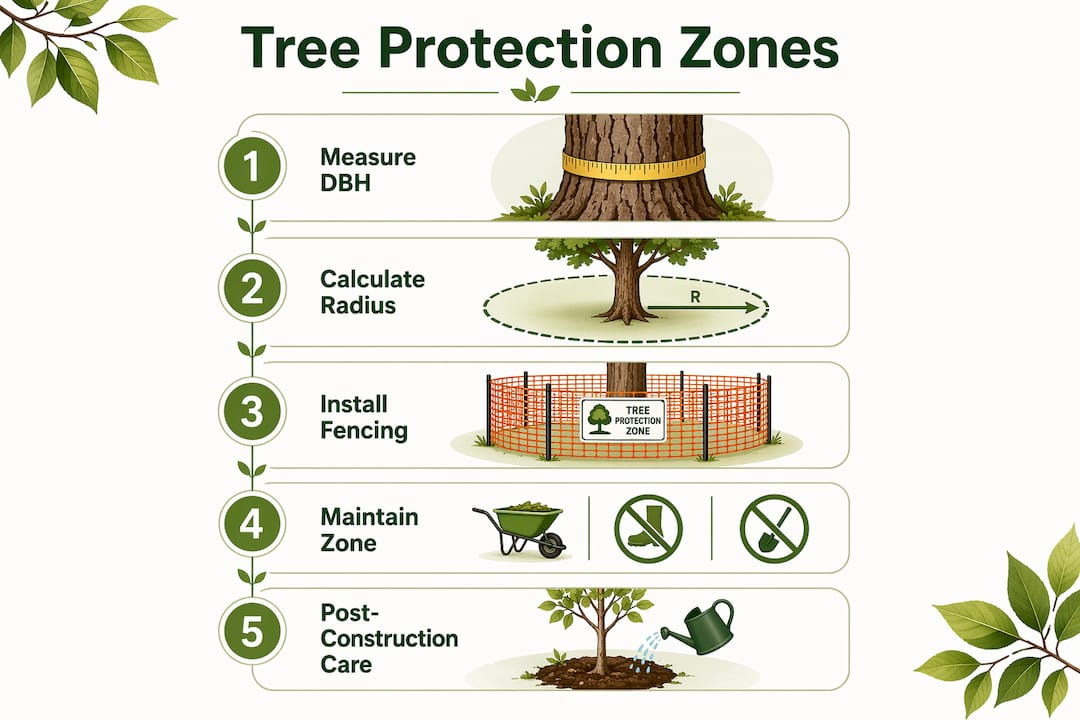
Fencing material is not a matter of preference. Rigid fencing is required. Chain link or heras-style panels are the accepted standard. Plastic tape and light snow fencing do not meet code requirements and provide no real barrier against equipment operators who may not notice them. Signage mounted directly on the fence panels must identify the area as a protected zone and list contact information for the site arborist.
Key steps for establishing a compliant TPZ:
- Hire a certified arborist before site plans are finalized to identify all trees requiring protection.
- Calculate the TPZ radius using the 1-foot-per-inch DBH rule as a minimum baseline.
- Install rigid fencing such as chain link panels at the calculated boundary before any equipment enters the site.
- Mount clear signage on every fence panel facing outward toward active work areas.
- Document the zone on official site drawings submitted with permit applications.
- Inspect fencing weekly and after any storm or equipment incident to confirm integrity.
Pro Tip: Mark TPZ fencing with high-visibility flagging tape at the top rail. Equipment operators spot bright orange or yellow tape faster than standard signage, reducing accidental encroachments during busy site days.
Zone dimensions also vary by species. A mature bald cypress or water oak may require a larger buffer than the DBH formula suggests due to its root architecture. Always defer to the arborist’s written recommendation over the formula alone.
What happens to trees without adequate protection during construction?
Soil compaction, grade changes, and root severance are the three primary causes of tree decline during and after construction. Each one damages the tree through a different mechanism, and all three can occur simultaneously on an active job site.
The most dangerous aspect of construction damage is that symptoms appear slowly. A tree can look completely healthy for one to three years after its root zone is compromised. By the time yellowing leaves, branch dieback, or canopy thinning appear, the damage is often irreversible. This delayed timeline fools developers into assuming the tree survived, only to face a structural failure or costly removal years later.
The sequence of damage typically follows this pattern:
- Soil compaction from heavy equipment eliminates air pockets in the soil. Roots suffocate because oxygen cannot reach them.
- Root severance from trenching or excavation cuts off water and nutrient pathways. The tree cannot replace severed roots quickly enough to compensate.
- Grade changes from fill additions or excavation alter drainage patterns. Altered drainage can flood roots or dehydrate them, leading to structural instability during storms and increased pest vulnerability.
- Delayed decline sets in months or years later, often after the contractor has left the site and liability is harder to assign.
- Legal exposure follows when a protected tree dies and the municipality investigates whether TPO requirements were met.
Tree root damage from construction is rarely visible at the time it occurs. Soil compaction and altered drainage cause tree decline that surfaces one to three years after the project ends. By then, the tree is often beyond recovery, and the property owner bears the cost of removal and potential regulatory penalties.
Many jurisdictions require six weeks’ notice before any work begins near trees with trunk diameters greater than 75mm (approximately 3 inches) under a Tree Preservation Order. Violating a TPO carries fines and can trigger stop-work orders that halt an entire development.
Best practices for implementing and maintaining tree protection zones
Early arborist engagement is the single most effective practice. Involving a certified arborist at the site planning stage prevents costly redesigns later. An arborist who reviews grading plans before earthwork begins can flag conflicts between proposed utility trenches and root zones before the excavator arrives.
Maintenance of the TPZ does not end after fencing goes up. The fence must remain intact and undisturbed for the entire construction period. A single breach, even a temporary one to move equipment, can cause compaction damage that kills the tree years later.
| Practice | Requirement | Why it matters |
|---|---|---|
| Fencing installation | Before any equipment enters the site | Prevents compaction from day one |
| Fill depth limit | 2–3 inches per year with aeration | Prevents root suffocation from soil addition |
| Equipment access | Steel plates or wood chips over geotextile | Distributes load to reduce compaction when access is unavoidable |
| Root pruning timing | At least 4–6 months before grade lowering | Allows root recovery before stress increases |
| Post-construction inspection | Within 30 days of project completion | Catches early stress signs before decline becomes irreversible |
When equipment must enter the TPZ, protective surface systems are the accepted solution. Steel plates or a thick layer of wood chips over geotextile fabric distribute the load and reduce soil compaction significantly. This is not a license to drive heavy machinery through the zone freely. It is a last-resort measure for unavoidable access points, used with arborist approval only.
Pro Tip: If grade lowering is planned within the TPZ, schedule proper root pruning with a certified arborist at least 4–6 months in advance. Follow up with scheduled irrigation to reduce stress on the tree while it recovers.
A well-documented Tree Protection Plan converts the TPZ from a line on a drawing into a set of enforceable site controls. The plan specifies fencing locations, exclusion zones, excavation controls, and supervision protocols. Every contractor on site receives a copy. This eliminates the “I didn’t know” defense and reduces disputes between trades about what is and is not permitted near protected trees.
Post-construction monitoring extends protection beyond the build phase. Schedule an arborist inspection within 30 days of project completion and again at six months. Root zone damage manifests slowly, and early intervention, such as deep-root fertilization or targeted irrigation, can save a tree that would otherwise decline unnoticed.
How do tree protection zones support compliance and property value?
Tree protection zones sit at the intersection of environmental law and property economics. Most municipalities in Florida and across the United States require developers to identify protected trees on site plans and demonstrate how TPZs will be maintained throughout construction. Failure to do so delays permit approval and can trigger mandatory tree replacement at the developer’s expense.
Tree Preservation Orders apply to trees above a defined size threshold. In many jurisdictions, trees over 75mm trunk diameter trigger mandatory notification periods of six weeks before any work begins. Developers who skip this step face enforcement action regardless of whether the tree was actually damaged.
Mature trees add measurable value to developed properties. Studies in urban forestry consistently show that preserved mature trees increase residential property values and improve the marketability of commercial sites. A tree that takes 50 years to reach maturity cannot be replaced on a developer’s timeline. Protecting it costs far less than removing it, paying fines, and replanting.
Clear TPZ plans also accelerate project approvals. Planning departments review TPZ documentation as part of the permit process. A complete, arborist-certified plan signals that the developer understands tree protection regulations and has built compliance into the project design. That reduces back-and-forth with reviewers and shortens approval timelines.
The financial case for compliance is direct. Fines for TPO violations, emergency tree removal costs, and project delays from stop-work orders consistently exceed the cost of proper TPZ implementation from the start. The benefits of tree protection extend to reduced liability, preserved ecosystem services like stormwater management, and long-term site aesthetics that attract tenants and buyers.
Key Takeaways
Tree protection zones are the most cost-effective tool a developer or property owner has to preserve mature trees, maintain regulatory compliance, and protect long-term property value during construction.
| Point | Details |
|---|---|
| TPZ calculation standard | Use 1 foot of radius per inch of trunk diameter as the minimum fence placement distance. |
| Fencing requirement | Install rigid chain link or heras fencing before any equipment enters the site. |
| Fill depth limit | Restrict soil fill within the root zone to 2–3 inches per year with proper aeration. |
| Regulatory compliance | Trees over 75mm diameter often require six weeks’ notice under Tree Preservation Orders. |
| Post-construction monitoring | Schedule arborist inspections at 30 days and six months after project completion to catch delayed decline. |
Why developers consistently underestimate TPZs
Most developers I work with understand that trees need protection in theory. The gap shows up in execution. The TPZ gets drawn on the plan, the fence goes up on day one, and then a subcontractor needs to run conduit through the zone and the fence comes down “just for a few hours.” That is where tree deaths begin.
The other misconception I see constantly is treating the TPZ as a static document rather than an active site control. A Tree Protection Plan is only as good as the people enforcing it on the ground. Signage matters. Weekly fence inspections matter. Arborist site visits during critical construction phases matter. The plan does not protect the tree. The physical barrier and the people respecting it protect the tree.
Post-construction decline is the outcome that surprises property owners most. A tree that looks fine at project closeout can be dead within two years. The root damage was done, the symptoms just had not appeared yet. Scheduling a certified arborist inspection after construction ends is not optional if you want to catch problems while intervention is still possible.
My strongest advice: bring the arborist in before the architect finalizes the grading plan. That conversation costs far less than redesigning a utility corridor around a protected tree after permits are submitted.
— Results
Mcculloughtreeservice: professional TPZ support for your property
Property owners and developers in Orlando and Central Florida have a direct resource for certified TPZ planning and implementation. Mcculloughtreeservice provides certified arborist consultations that cover TPZ calculation, site plan review, fencing specifications, and post-construction monitoring. Every engagement is backed by licensed arborist credentials and direct field experience with Florida’s tree protection regulations.
Mcculloughtreeservice also handles the full range of tree care that follows construction, including professional tree trimming to restore canopy health, damage assessment for stressed trees, and removal of trees that did not survive the build phase. If your project involves protected trees, contact Mcculloughtreeservice before ground breaks. Getting the TPZ right from day one is the most cost-effective decision you can make for your site.
FAQ
What does a tree protection zone actually protect?
A TPZ protects the root zone, soil structure, and base of a tree from compaction, severance, and grade changes during construction. The goal is to preserve the tree’s ability to absorb water and nutrients after the project ends.
How far from the trunk should TPZ fencing be placed?
The standard rule is 1 foot of fencing distance for every 1 inch of trunk diameter, measured at 4.5 feet above grade. A 10-inch diameter tree requires fencing at least 10 feet from the trunk on all sides.
What type of fencing is required for a tree protection zone?
Rigid fencing such as chain link or heras panels is required. Plastic tape and light snow fencing do not meet code standards and provide no real barrier against construction equipment.
Can I add soil fill inside a tree protection zone?
Fill within a root zone must be limited to 2–3 inches per year with proper aeration techniques. Exceeding this amount suffocates roots by cutting off oxygen, which leads to tree decline within one to three years.
Do tree protection zones apply to all trees on a development site?
TPZ requirements typically apply to trees above a defined size threshold, often 75mm trunk diameter or larger, and to any tree covered by a Tree Preservation Order. Your local municipality and a certified arborist can confirm which trees on your site require formal protection plans.
Recommended
- Role of Arborists in Development: 80% Tree Damage Cut
- The Role of Local Tree Ordinances in Florida
- Understanding the Drawbacks of Planting Trees
- Tree Planting for Central Florida Developers: 50% Survival Boost