By: Shelby McCullough| Published: March 3, 2026
Developers planting trees in Central Florida face a harsh reality: many newly installed trees fail within their first year. Poor site preparation, incorrect planting depth, and mismatched species selections drain budgets and delay projects. You can change this outcome by applying proven techniques tailored to local sandy soils and climate. Properly planted trees with root flare above soil grade increase longevity by up to 50%, transforming landscapes and ensuring regulatory compliance. This guide delivers expert strategies for species selection, site prep, planting methods, and maintenance that maximize survival rates in Central Florida developments.
Table of Contents
- Key Selection Criteria For Tree Planting In Central Florida Developments
- Choose The Right Tree Species: Native Vs Non-Native
- Site Preparation Best Practices For Central Florida’s Sandy Soils
- Proper Planting Techniques: Depth, Root Flare, And Handling
- Irrigation And Mulching Strategies For Newly Planted Trees
- Complying With Central Florida Tree Regulations
- Cost Considerations And Long Term Maintenance Trade-Offs
- Summary Comparison And Situational Recommendations
- Enhance Your Central Florida Development With Expert Tree Services
Key Takeaways
| Point | Details |
|---|---|
| Native species thrive | Native trees require 25% less irrigation and show 30% higher survival in sandy soils. |
| Seasonal timing matters | Planting during late fall to early winter reduces transplant shock by 25%. |
| Root flare positioning is critical | Planting root flare 1-2 inches above grade prevents suffocation and boosts longevity significantly. |
| Mulching conserves resources | Three inches of organic mulch reduces water evaporation by 30% and moderates soil temperature. |
| Compliance avoids penalties | Early engagement with local officials increases compliance rates by 35% and prevents costly delays. |
Key Selection Criteria for Tree Planting in Central Florida Developments
Before you select a single tree species, evaluate the factors that determine survival and compliance in Central Florida. Your site’s soil composition, predominantly sandy and drought prone, dictates which trees will establish healthy root systems. Planting trees during Central Florida’s late fall to early winter reduces transplant shock and improves establishment success by 25%, making timing a critical element of your planning.
Regulatory requirements shape every development project. Orlando’s Tree Preservation Ordinance and similar county rules mandate specific preservation ratios and replacement standards. Failing to account for these early creates expensive redesigns and project delays. Budget considerations extend beyond initial purchase costs. You must factor in irrigation infrastructure, ongoing water expenses, and long term maintenance needs.
Key criteria to assess include:
- Soil compatibility with sandy, low nutrient profiles common in Central Florida
- Optimal planting windows aligned with seasonal conditions
- Regulatory compliance for tree preservation and replacement ratios
- Water availability and irrigation system capacity
- Growth projections and mature size impacts on utilities and structures
- Initial costs versus long term maintenance expenses
Successful tree planting for commercial properties starts with thorough site analysis. Walk your property with a certified arborist to identify drainage patterns, underground utilities, and existing root zones. This groundwork prevents conflicts that compromise tree health and project timelines.
Choose the Right Tree Species: Native vs Non-Native
Native species offer compelling advantages for Central Florida developments. Live oak, bald cypress, and slash pine evolved in local conditions, developing root systems that handle sandy soils and seasonal droughts efficiently. Native trees require 25% less irrigation over their first three years and have a 30% higher survival rate compared to non-native alternatives, directly reducing your maintenance budgets.
Non-native species tempt developers with rapid growth or unique aesthetics. However, these trees often struggle in Florida’s heat and soil conditions. Many require supplemental fertilization, frequent irrigation, and intensive pest management. Your irrigation costs climb while survival rates drop, especially during drought periods.
Compliance benefits favor native selections. Local ordinances increasingly prioritize native species for preservation credits and mitigation banking. Installing natives can accelerate permit approvals and satisfy environmental requirements more easily. Aesthetic value holds steady too. Florida natives like Southern magnolia and dahoon holly provide visual appeal while supporting local ecosystems.
Consider these factors when comparing options:
- Water requirements over the establishment period and mature life
- Root system compatibility with sidewalks, utilities, and structures
- Pest and disease resistance in Central Florida’s humid climate
- Mature size and growth rate relative to site constraints
- Seasonal characteristics like flowering or fall color
- Availability from local nurseries and typical transplant success rates
Pro Tip: Visit established developments in your area to observe how different species perform after five to ten years. Real world performance reveals maintenance demands that specifications alone cannot capture.
Review native Florida tree examples to identify candidates matching your site conditions. Match species to specific zones within your development, placing high water users near irrigation sources and drought tolerant varieties in areas with limited access.
Site Preparation Best Practices for Central Florida’s Sandy Soils
Proper site preparation determines whether roots establish strong foundations or struggle in compacted, nutrient poor conditions. Start by excavating planting holes twice the width of the root ball but no deeper than the root ball height. Wide holes encourage lateral root growth, essential for stability in sandy soils that lack structural cohesion.
Avoid adding amendments to planting holes in most Central Florida sites. Research shows that amended soil creates a textural boundary that roots hesitate to cross, essentially creating a container effect in the ground. Native sandy soil, when properly loosened, allows roots to expand freely. Focus your effort on breaking up compacted layers rather than changing soil composition.
Structural considerations matter for long term health. Using structural soil and root barriers during site prep reduces root damage by 20% when trees mature near hardscapes. Install root barriers along sidewalks and building foundations before planting. These barriers guide roots downward instead of lifting pavement, preventing costly repairs.
Handle root balls carefully during transport and positioning. Dropped or roughly handled trees suffer root damage that reduces survival rates. Use equipment appropriate to tree size, supporting the root ball from beneath rather than lifting by the trunk.
Site prep checklist:
- Dig holes 2-3 times root ball width for lateral root expansion
- Maintain original root ball depth to prevent settling
- Remove rocks, debris, and compacted layers from planting area
- Install root barriers near hardscapes to prevent future damage
- Loosen soil on hole sides to eliminate glazing from auger equipment
- Mark utility locations to avoid conflicts with root growth zones
Pro Tip: Stake trees only when absolutely necessary for stability. Excessive staking restricts trunk movement needed to develop strength. If staking is required, remove stakes within the first year.
Your land clearing guide for Central Florida provides additional context for preparing development sites while preserving existing trees. Coordinate clearing activities to protect root zones of trees designated for preservation.
Proper Planting Techniques: Depth, Root Flare, and Handling
Planting depth makes or breaks tree survival. Correctly planting root flare 1-2 inches above soil grade increases tree longevity by up to 50%. The root flare, where trunk transitions to roots, must remain visible above the soil line. Buried flares suffocate roots, creating entry points for disease and preventing oxygen exchange.
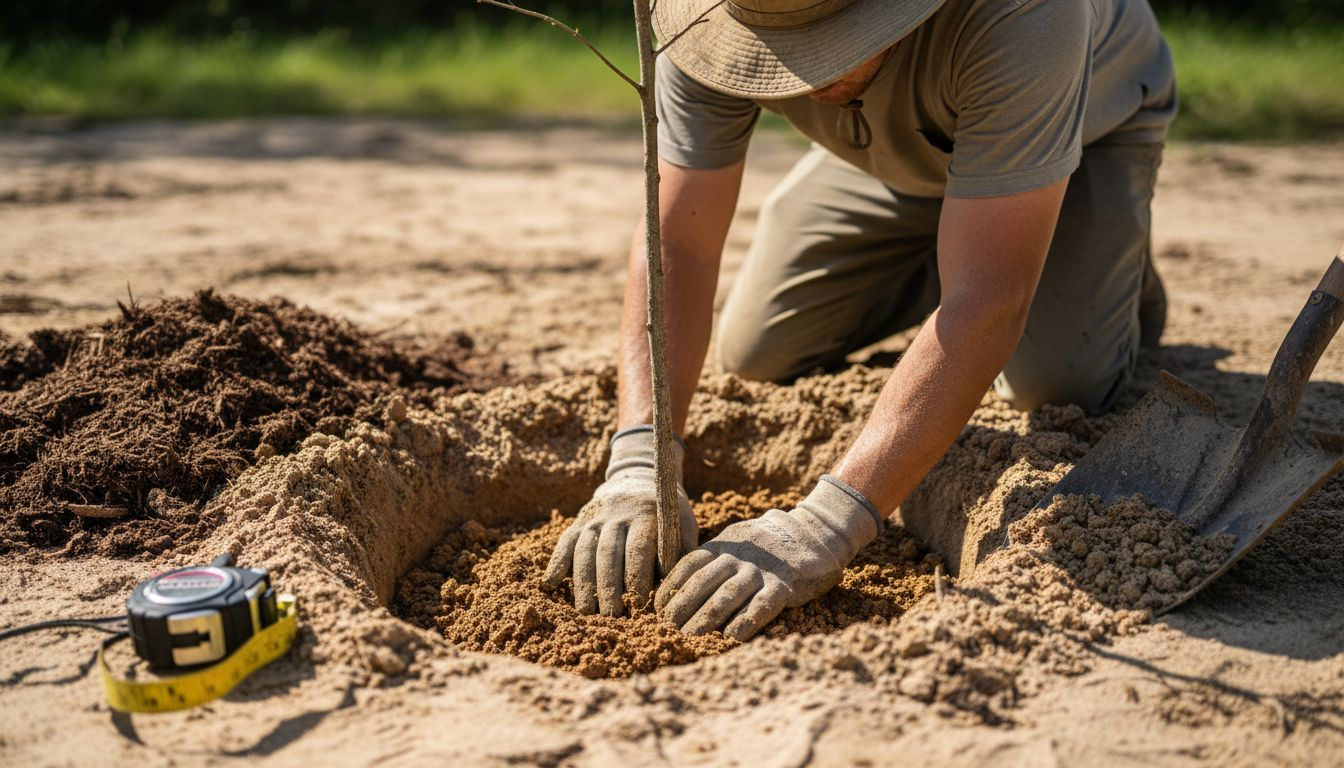
Many nursery trees arrive planted too deeply in their containers. Before planting, carefully remove soil from the top of the root ball until you locate the true root flare. This step is not optional. You may need to remove several inches of media to find where roots actually begin.
Follow this sequence for consistent results:
- Position the tree in the hole with root flare 1-2 inches above surrounding grade
- Check orientation from multiple angles to ensure the tree stands straight
- Backfill with native soil, tamping gently to eliminate air pockets
- Create a shallow watering basin at the edge of the root ball
- Remove all synthetic materials, tags, and wire baskets from the root zone
- Water thoroughly immediately after planting to settle soil
- Apply mulch layer while keeping material away from trunk
Pro Tip: Remove burlap and wire baskets completely rather than leaving them in place. Synthetic burlap does not decompose and can girdle roots as trees grow. Natural burlap breaks down slowly, but removing it ensures no future complications.
Root handling during installation requires attention to detail. Never lift trees by their trunks. Support the root ball from underneath using straps or equipment designed for tree moving. Dropped root balls shear feeder roots that trees need for water uptake during establishment.
Professional tree planting and installation in Orlando services bring experience with proper techniques and equipment. Certified arborists identify potential problems before planting, adjusting methods to site specific conditions. Their expertise prevents the common mistakes that lead to early tree failure.
Irrigation and Mulching Strategies for Newly Planted Trees
Water management during the first year determines establishment success. Newly planted trees need consistent moisture to grow roots into surrounding soil. Water deeply once weekly with 10-15 gallons per tree during the establishment period. Deep watering encourages roots to grow downward rather than remaining shallow and vulnerable to drought.
Sandy soils drain quickly, creating challenges for water retention. Schedule irrigation carefully to avoid runoff while ensuring thorough soil saturation. Early morning watering reduces evaporation losses and allows foliage to dry before evening, minimizing disease pressure.
Applying 3 inches of organic mulch reduces water evaporation by 30% and moderates soil temperature fluctuations. Spread mulch in a ring extending to the edge of the planting hole, keeping material 3-4 inches away from the trunk. This gap prevents moisture accumulation against bark, which invites fungal problems and insect damage.
Mulch volcanoes, where mulch piles against and up the trunk, reduce tree health by approximately 40%. These mounds trap moisture, hide pest activity, and bury the critical root flare. Always maintain clear space around the trunk base.
Irrigation best practices include:
- Weekly deep watering with 10-15 gallons per tree in year one
- Adjust frequency based on rainfall, reducing irrigation after significant rain
- Monitor soil moisture at 6-8 inch depth, watering when soil feels dry
- Transition to every two weeks in year two as roots establish
- Reduce irrigation frequency in year three for drought adapted species
Mulch application guidelines:
- Use organic materials like pine bark, wood chips, or pine straw
- Maintain 3 inch depth across the root zone
- Refresh mulch annually as materials decompose
- Keep mulch 3-4 inches away from trunk to prevent rot
- Extend mulch ring to drip line as canopy grows
Implement tree planting irrigation best practices consistently across your development. Automated systems simplify management but require proper zone design and scheduling. Group trees with similar water needs together to avoid over or under watering.
Complying with Central Florida Tree Regulations
Tree preservation ordinances in Orlando and surrounding counties impose strict requirements on development projects. These regulations typically mandate 2:1 replacement ratios for removed trees, measured by caliper inches. Removing a 10 inch diameter tree requires installing two 5 inch trees or equivalent replacements. Understanding these rules before site design prevents costly revisions.
Early engagement with local tree officials increases compliance rates by 35% and streamlines permit approvals. Schedule pre application meetings to review your planting plan and preservation strategies. Officials can identify potential issues before formal submission, saving weeks of review cycles.
The Orlando Tree Preservation Ordinance specifically protects grand trees, defined as trees measuring 24 inches or greater in diameter. Removing or damaging grand trees triggers enhanced mitigation requirements. Survey your site thoroughly to identify protected specimens and design around them.
Permit requirements typically include:
- Tree survey showing existing trees with species, size, and condition
- Preservation plan for trees remaining on site
- Mitigation calculations for removed trees
- Planting plan with species, sizes, and locations
- Maintenance schedule for the establishment period
Document all communications with regulatory agencies. Written records protect you if disputes arise about permit conditions or compliance status. Photograph tree conditions before, during, and after development activities to demonstrate proper care.
Work with commercial tree planting compliance specialists who understand local requirements. They navigate ordinances daily and maintain relationships with reviewing officials. Their expertise prevents violations that trigger stop work orders and penalties. Review land clearing regulations 2025 to understand current standards before starting site work.
Cost Considerations and Long Term Maintenance Trade-Offs
Tree installation costs in Central Florida range from $150 to $600 per tree depending on species, size, and site preparation requirements. Larger caliper trees cost more initially but provide immediate impact and canopy coverage. Smaller trees reduce upfront expense but require more years to achieve landscape maturity.
Native species typically cost 15-25% less than exotic alternatives due to better local availability. However, the real savings emerge over time through reduced irrigation, fertilization, and pest management expenses. Native trees adapted to local conditions need less intervention to maintain health and appearance.
Irrigation infrastructure represents a significant cost factor. Developments installing automated systems spend $2-4 per square foot for design, equipment, and installation. Wells or reclaimed water connections provide long term savings compared to potable water sources. Factor these infrastructure costs into project budgets early.
Maintenance expenses continue throughout the tree’s life. Native species generally require 30-40% less maintenance spending than non-natives. Fast growing species like eucalyptus need frequent pruning to manage size and prevent storm damage. Slow growing natives like live oak require minimal intervention once established.
| Factor | Native Trees | Non-Native Trees |
|---|---|---|
| Initial cost | $150-400 per tree | $200-600 per tree |
| Irrigation needs | 25% less water | Standard to high |
| Maintenance frequency | Annual pruning | Bi-annual or more |
| Survival rate | 85-95% | 55-75% |
| Compliance benefit | Enhanced credits | Standard credits |
Pro Tip: Invest in professional installation for trees in high visibility areas like entries and common spaces. The improved survival rates and appearance justify higher initial costs. Use more economical approaches for buffers and perimeter plantings where standards allow.
Balance your budget across initial installation and ongoing maintenance. Trees that fail require replacement, doubling costs and delaying landscape maturity. Spending appropriately on quality stock, proper installation, and establishment care prevents expensive do overs. Consider the economic impact of tree planting in developments when evaluating budget allocations.
Summary Comparison and Situational Recommendations
Different development scenarios require tailored approaches to tree selection and installation. Your site conditions, budget constraints, and regulatory requirements determine the optimal strategy. Use this comparison to match methods with your specific situation.
| Scenario | Best Tree Selection | Optimal Planting Approach | Key Priority |
|---|---|---|---|
| Drought prone site | Native oaks, pines, cypress | Wide holes, minimal irrigation | Water conservation |
| High visibility area | Natives with seasonal interest | Professional installation, quality stock | Aesthetic impact |
| Tight budget | Smaller caliper natives | Efficient site prep, DIY mulching | Cost control |
| Rapid maturity needed | Fast growing natives | Larger stock, enhanced care | Quick canopy |
| Strict compliance | Protected native species | Early permitting, documentation | Regulatory approval |
Small scale developments benefit from focusing resources on fewer, higher quality trees in strategic locations. Concentrate your budget on entries, amenity areas, and street frontages where trees create immediate value. Use more economical approaches for required buffers and perimeter screening.
Large scale developments require systematic approaches that balance cost efficiency with consistent quality. Standardize your tree palette to simplify procurement, installation, and maintenance. Volume purchasing reduces per tree costs while ensuring availability. Develop relationships with regional growers who can supply your specific cultivar requirements.
Drought resilience becomes critical as water restrictions increase across Central Florida. Prioritize species with proven performance during dry periods. Deep rooted natives like slash pine and laurel oak access moisture unavailable to shallow rooted alternatives. Design irrigation systems with flexibility to adjust zones independently as trees mature and water needs decline.
Regulatory compliance drives species selection in jurisdictions with prescriptive ordinances. Some municipalities maintain approved tree lists or restrict certain species known for maintenance issues. Verify local requirements before finalizing your planting plan to avoid redesigns during permit review.
Enhance Your Central Florida Development with Expert Tree Services
Your development deserves trees that thrive for decades, not struggle through their first summer. McCullough Tree Service brings certified expertise to every project phase, from initial species selection through establishment care. Our arborists understand Central Florida’s unique challenges and design solutions that maximize survival while meeting regulatory requirements.
We handle complex site preparation in sandy soils, ensuring proper drainage and root zone development. Our installation crews follow proven techniques that position root flares correctly and eliminate common errors that compromise tree health. Professional tree planting services include warranty protection and establishment monitoring.
Ongoing tree trimming services maintain structure and health as your landscape matures. Regular pruning by certified arborist experts prevents storm damage, manages growth, and extends tree lifespan. We work around your development schedule, minimizing disruption to residents and operations. Partner with us to transform your property with trees that enhance value and meet community standards.
FAQ
What is the best season for planting trees in Central Florida?
Late fall to early winter planting improves establishment success by 25% by reducing transplant shock. Cooler temperatures and seasonal rainfall allow roots to establish before summer heat arrives. This timing gives trees maximum opportunity to develop the root systems needed for survival during their first summer. Avoid planting during peak summer months when heat stress overwhelms newly installed trees.
How do native trees compare to non-native species in terms of water needs?
Native trees require 25% less irrigation in the first three years and show significantly higher survival rates in Florida’s sandy soils. Their root systems evolved to access moisture efficiently in local conditions. Choosing natives reduces your irrigation infrastructure costs and ongoing water expenses. Non-natives often require supplemental watering throughout their lives to maintain health and appearance.
What is the proper way to plant a tree to avoid root suffocation?
Plant root flare 1-2 inches above soil grade to prevent suffocation and increase longevity by 50%. The root flare must remain visible above the soil line to allow oxygen exchange and prevent disease. Remove excess soil from nursery containers to locate the true root flare before planting. Never bury the trunk base, as this creates conditions for rot and eventual tree failure.
How can developers ensure compliance with Central Florida tree preservation laws?
Engage early with local tree officials to understand ordinance requirements for your specific site. Plan for 2:1 tree replacement ratios and preservation strategies that satisfy legal standards. Document all existing trees with accurate surveys showing species, sizes, and conditions. Maintain detailed records of communications with regulatory agencies to demonstrate compliance efforts. Working with experienced commercial tree planting professionals who understand local regulations streamlines the approval process and prevents costly violations.
Recommended
- Tree Planting Guide Central Florida for Homeowners
- Tree Planting for Commercial Properties: Boosting Value and Compliance
- Tree Planting Considerations for Central Florida Homes
- Tree Planting & Installation in Orlando & Central Florida