By: Shelby McCullough| Published: April 19, 2026
TL;DR:
- Proper tree hazard evaluation identifies hidden risks that visual inspection may miss.
- Central Florida’s climate and soil conditions increase storm-related tree hazards significantly.
- Ongoing assessments and informed mitigation help protect property and prolong tree health.
A tree can look perfectly healthy from the curb and still be one strong storm away from crushing your roof. In Central Florida, where hurricane season brings sustained winds and saturated ground, that gap between appearance and actual safety is where property losses happen. Tree hazard evaluation, done by credentialed professionals, is what closes that gap. This guide breaks down the evaluation process step by step so you know what to expect, what the ratings mean, and how to act on the results before a storm forces the decision for you.
Table of Contents
- What is tree hazard evaluation and why does it matter?
- How tree hazard evaluation works: the standard risk matrix explained
- Central Florida’s unique risks: storms, soils, and resilient species
- From evaluation to action: Mitigation options and decision-making
- Expert debates: Risk matrix limits, assessor bias, and alternative views
- Why every property owner should demand more than a checklist
- Protect your property with trusted tree experts
- Frequently asked questions
Key Takeaways
| Point | Details |
|---|---|
| ISA evaluation is essential | Standardized tree hazard evaluation offers reliable risk ratings and guides smarter decisions for your property. |
| Local context matters | Central Florida’s storms, soil, and native species require tailored hazard assessment and management. |
| Mitigation beats removal | Many high-risk trees can be made safer with expert intervention instead of immediate removal. |
| Credentialed experts reduce bias | Certified ISA TRAQ arborists deliver the most objective and actionable risk assessments. |
What is tree hazard evaluation and why does it matter?
Most people assume a tree is fine unless it looks obviously damaged. But tree risk exists on a spectrum, and the most dangerous failures often come from defects buried deep in the root system or hidden inside the trunk. That is why the industry moved toward a structured, science-backed process.
Tree risk assessment follows ISA standards structured around three core factors: likelihood of failure, likelihood of impact, and consequences of failure. The International Society of Arboriculture, commonly called the ISA, sets those standards globally. Working with a certified arborist trained in these methods ensures your evaluation reflects current best practices rather than a visual guess.
In Central Florida specifically, several factors push tree risk higher than in other regions:
- Repeated hurricane exposure causes cumulative root and trunk damage that weakens trees over years, not just one season.
- High water tables saturate the soil and reduce the anchoring strength roots rely on during wind events.
- Non-native species planted for aesthetics often lack the structural traits needed to survive Florida’s wind loads.
- Target value matters enormously: a tree near a playground or roof carries far more consequence than one in an open field.
“No tree is risk-free, but proper evaluation prevents most losses.” That mindset is what separates proactive property management from reactive storm cleanup.
Hazard evaluation is not about cutting down every tree that looks old. It is about knowing which trees pose real risk to people and structures, and making informed decisions from that knowledge.
How tree hazard evaluation works: the standard risk matrix explained
Professional arborists do not eyeball a tree and make a judgment call. They use a structured matrix that combines three measured variables into a final risk rating. Here is how the process actually works.
A standard assessment follows these steps:
- Site inspection: Walk the property and identify all trees near structures, roads, or occupied spaces.
- Visual defect check: Look for cracks, decay, dead branches, root damage, and lean.
- Likelihood of failure rating: Estimate how probable it is that the tree or a part of it fails under normal or storm conditions.
- Likelihood of impact rating: Assess whether a failure would strike a person, vehicle, or structure.
- Consequence rating: Weigh the severity of the outcome if failure occurs.
- Final matrix score: Combine all three into a risk level.
The ISA standardized matrix produces four categories: Low, Moderate, High, and Extreme. An Extreme rating demands action within 24 hours. ISA TRAQ assessors also use specific probability brackets when rating likelihood of failure: Improbable is under 24%, Possible runs from 25 to 54%, Probable from 55 to 79%, and Imminent at 80% or above.
| Risk level | Likelihood of failure | Recommended action |
|---|---|---|
| Low | Improbable (under 24%) | Monitor; reassess in 5 years |
| Moderate | Possible (25-54%) | Schedule mitigation soon |
| High | Probable (55-79%) | Prioritize corrective action |
| Extreme | Imminent (80%+) | Act within 24 hours |
Pro Tip: Always ask your arborist whether the assessment follows the ISA TRAQ methodology. This credential ensures consistency and reduces the chance of subjective bias inflating or deflating your result. You can find more detail on evaluation best practices in our risk assessment tips for Central Florida owners.
Central Florida’s unique risks: storms, soils, and resilient species
The risk matrix works everywhere, but the inputs change dramatically depending on where you live. Central Florida’s combination of climate, soil, and tree population creates hazard conditions that most national guides underestimate.
High water tables sitting just 2 to 5 feet below surface level, combined with repeated hurricane exposure, raise tree hazard rates significantly compared to drier inland regions. When soils stay saturated, roots lose their grip. A tree that stood fine for 30 years can uproot in a moderate tropical storm simply because the ground can no longer hold it.
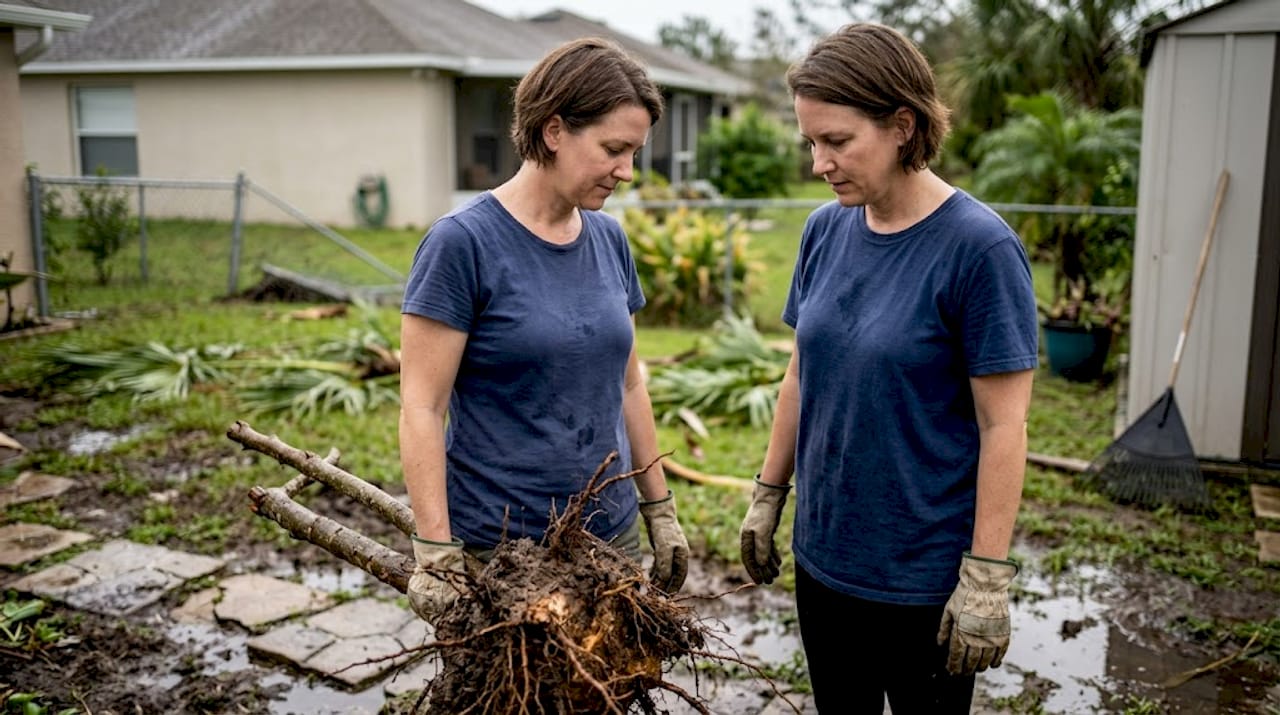
Species selection also plays a measurable role. UF/IFAS post-hurricane research found that live oaks consistently showed the highest survival rates compared to other species during extreme storms. That matters when you are deciding which trees to replant after removal or how much concern a specific tree should get during an assessment.
| Species | Storm survival tendency | Notes |
|---|---|---|
| Live oak | High | Deep root system; native to Florida |
| Laurel oak | Moderate | Shorter lifespan; more decay risk |
| Australian pine | Low | Shallow roots; very high failure rate |
| Queen palm | Moderate | Flexible trunk; crown damage common |
Here are the environment-driven risk factors you should know before any evaluation:
- Root zone compaction from driveways or construction limits root spread and structural anchoring.
- Soil saturation after heavy rain temporarily increases failure probability for any tree.
- Canopy size versus root plate imbalance, common in fast-growing exotic species, creates instability.
- Prior storm damage that was never professionally assessed can hide progressive internal decay.
You can review local hazard examples specific to Central Florida properties to see how these factors play out in real-world situations.
From evaluation to action: Mitigation options and decision-making
Getting your risk rating is only half the process. Knowing what to do with it is where most property owners need guidance. The good news is that not every concerning tree requires removal.
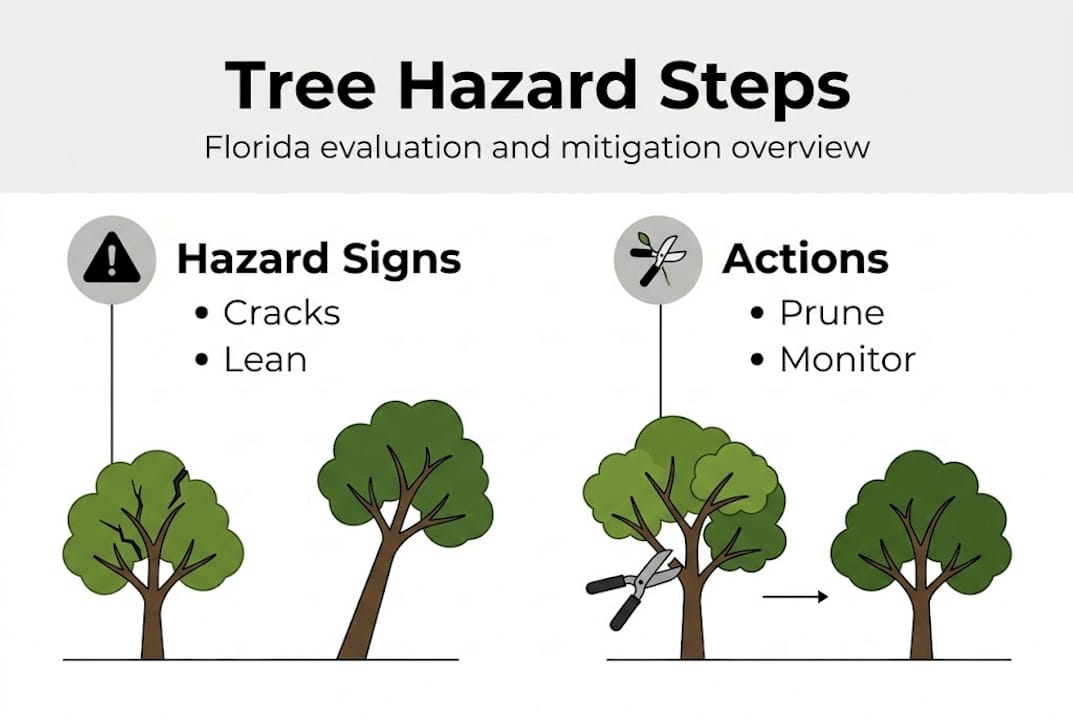
Mitigation options range widely depending on risk level: pruning deadwood, installing cabling systems, performing root excavation to inspect anchor zones, or in low risk cases, simply monitoring for five years and reassessing. Extreme risk is the exception where immediate action is required.
Here is a practical sequence to follow once a risk result is in hand:
- Review the written report with your arborist and ask which defects drove the rating.
- Ask about mitigation first before assuming removal is the only path forward.
- Get a timeline for action based on your risk level (immediate vs. months vs. years).
- Document everything including photos, the written report, and mitigation work done.
- Schedule reassessment after any mitigation work or after the next significant storm.
For trees flagged as dangerous, visit our guide on identifying dangerous trees to understand what warning signs look like before calling an arborist. If removal is necessary, our hazardous tree removal services page covers how that process works safely. Property owners dealing with damage claims can also find guidance on tree damage claims assistance for insurance-related situations.
Pro Tip: Do not let fear or emotion drive the decision. A tree with sentimental value may score Low or Moderate and need nothing more than a trim. An ISA TRAQ credentialed arborist gives you data, not drama.
“Smart mitigation saves property and often saves the tree too.” Removal is the last resort, not the default answer.
Expert debates: Risk matrix limits, assessor bias, and alternative views
The ISA risk matrix is the most widely adopted tool in professional arboriculture, but it is not a perfect system. Understanding its limits helps you ask better questions and get better results.
Research on assessor variability and observer bias shows that the matrix involves significant judgment calls. Assessor experience, client anxiety, and even property context can push ratings higher than the data alone would support. TRAQ credentialed arborists show less deviation from standardized results compared to uncredentialed evaluators, which is a key reason to ask about credentials upfront. An alternative framework called QTRA uses annual probability estimates rather than categorical ratings, offering a more probabilistic view that some arborists find more precise.
Key limits of current evaluation practices include:
- Subjectivity in defect severity ratings means two qualified arborists can reach different conclusions on the same tree.
- One-time assessments miss progressive decay that develops between inspection cycles.
- Client pressure has been documented to push assessors toward higher ratings and more aggressive recommendations.
- Visual inspection alone cannot detect internal decay without additional tools like resistograph testing or sonic tomography.
“The goal of assessment is informed decision-making, not guaranteed outcomes.” Knowing the tool’s limits helps you use it wisely.
Choosing an arborist with TRAQ credentials reduces but does not eliminate these variables. The most reliable evaluations combine standardized methodology with local experience and documented evidence.
Why every property owner should demand more than a checklist
Here is the perspective we have developed from years of working with Central Florida property owners: a risk score is a starting point, not a final answer. The checklist and the matrix give you a framework. Context, local knowledge, and ongoing observation are what turn that framework into smart property management.
Many owners treat a single evaluation like a warranty. It is not. Trees change. Storms alter root zones, canopy balance shifts, and new defects emerge after every major weather event. The owners who protect their property best are the ones who treat tree assessment as an ongoing relationship, not a one-time transaction. They use owner-focused tips to stay informed between formal assessments, and they ask their arborist specific questions: What changed since last year? Which trees are trending toward higher risk? What would make this tree safer without removing it?
The greatest value in a professional evaluation is rarely the final score. It is the conversation that follows it and the informed decisions that come from understanding your specific trees, your specific soil, and your specific storm exposure.
Protect your property with trusted tree experts
For owners ready to turn knowledge into action, here is where real peace of mind begins. At McCullough Tree Service, our team includes ISA TRAQ credentialed arborists who follow standardized risk assessment protocols built for Central Florida’s specific conditions.
We offer full-service support from initial evaluation through mitigation and ongoing care. Whether your trees need assessment before storm season, targeted pruning from our tree trimming experts, or full removal handled by our professional tree removal crew, our certified arborist team is ready to help. Schedule your evaluation today and go into the next storm season with clear, professional data behind every decision.
Frequently asked questions
What are the main signs a tree is hazardous?
Visible cracks, a leaning trunk, decayed wood, dead branches, or sudden soil movement near the root zone are key warning signs that require professional evaluation. None of these should be ignored, even if the rest of the tree looks healthy.
How often should trees be evaluated for hazards in Central Florida?
Annual evaluations are recommended, and you should always schedule an assessment after any severe storm or hurricane. UF/IFAS recommends post-storm evaluation because new hazards frequently emerge after major weather events.
Who is qualified to perform tree hazard evaluations?
An ISA TRAQ credentialed arborist is the most qualified professional for this work, using standardized risk methodology that reduces subjectivity and ensures consistent, reliable results.
Should a tree always be removed if rated high risk?
Not always. Pruning or cabling can reduce risk for many trees rated High, and your arborist should walk you through all options before removal is decided. Monitoring and follow-up reassessment are standard parts of the process.
What’s the benefit of choosing native tree species?
Native trees like live oaks have structural and root traits adapted to Florida’s wind and soil conditions. Live oaks showed higher storm survival in UF/IFAS research compared to exotic and ornamental species commonly planted across Central Florida.
Recommended
- Spot Tree Hazards: Real Examples & Solutions for Central Florida
- Tree risk assessment tips for Central Florida owners
- Tree Health Assessment Guide for Central Florida Owners
- Tree inspections: protect your property and stay compliant