By: Shelby McCullough| Published: April 9, 2026
TL;DR:
- Regular tree inspections detect hidden decay, root damage, and pests before failure occurs.
- Compliance with local permits and documentation can prevent costly fines and legal issues.
- Hiring ISA certified and TRAQ qualified arborists ensures accurate assessments and proper documentation.
Skipping annual tree inspections is one of the most expensive mistakes Central Florida homeowners make. A tree that looks perfectly healthy from your driveway can hide internal decay, root damage, or disease that puts your home, family, and wallet at serious risk. Local regulations in Orange, Hillsborough, and Pinellas counties make some inspections legally required, not just recommended. This guide breaks down what the rules actually say, what a professional inspection covers, how much it costs compared to ignoring the problem, and how to choose the right arborist before a storm or a fine forces your hand.
Table of Contents
- The hidden risks: What can happen without regular inspections
- Understanding Central Florida’s tree regulations and compliance
- Health, safety, and cost: The real value of regular inspections
- Choosing the right arborist and inspection approach
- Our perspective: What most Central Florida property owners miss about tree inspections
- Protect your property with expert tree inspection services
- Frequently asked questions
Key Takeaways
| Point | Details |
|---|---|
| Avoid costly fines | Skipping required inspections or permits can result in steep local penalties. |
| Boost safety and health | Regular checks catch invisible risks and keep trees strong, especially in storms. |
| Protect your investment | Inspections cost far less than repairing storm or failure damage. |
| Choose expert help | Select ISA or TRAQ-certified arborists for defensible, high-quality reports. |
| Stay compliant | Understanding local rules and keeping documentation shields you from legal trouble. |
The hidden risks: What can happen without regular inspections
Most property owners think about tree care only when something goes wrong. A branch falls on the roof, a neighbor complains, or a county inspector shows up. By then, the damage is already done and the costs are already climbing. Regular routine arborist inspections are designed to catch problems before they reach that point.
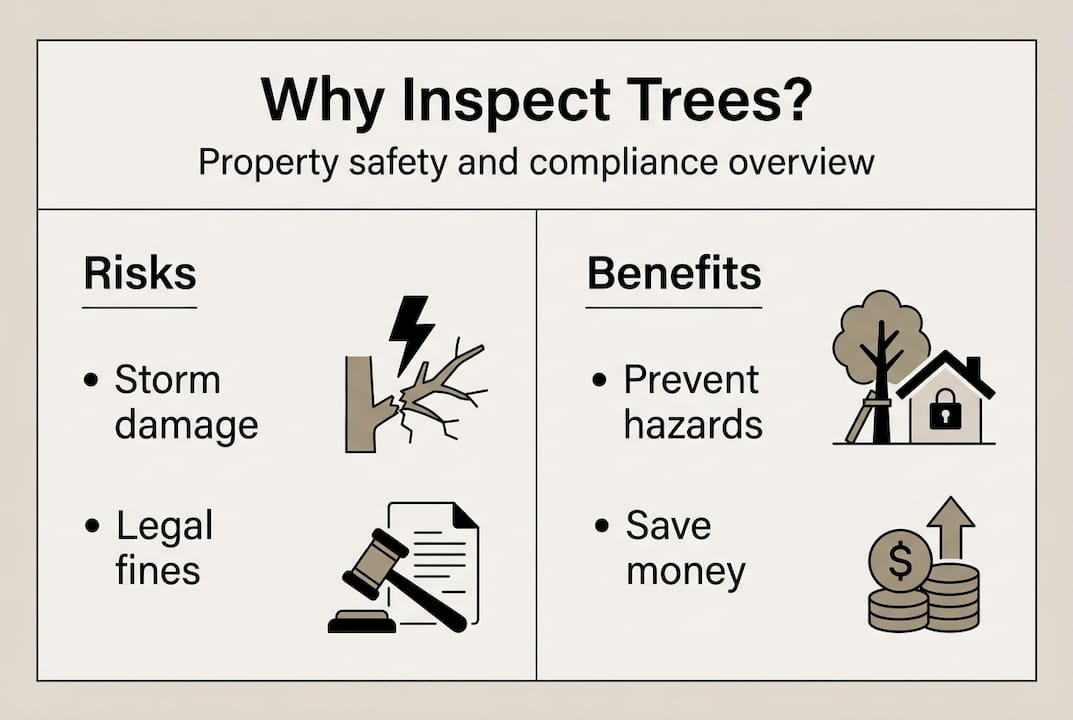
The physical risks are real and well-documented. Trees with hidden decay or compromised root systems are far more likely to fail during Florida’s hurricane season. A single falling limb can damage a vehicle, destroy a fence, or punch through a roof. Full tree failures can be catastrophic. Beyond the physical danger, there are serious legal and financial consequences for property owners who skip required steps.
Fines in Tampa, Pinellas, and Hillsborough can range from $500 to $5,000 per tree without proper permits or documentation.
That’s not a worst-case scenario. That’s the standard penalty range for non-compliance. And it applies even when a homeowner genuinely didn’t know the rules. Ignorance of local ordinances is not a legal defense.
Here’s a quick look at the risks that build up when inspections are skipped:
- Hidden decay and disease that weakens structural integrity without any visible signs
- Root damage from construction, drought, or soil compaction that destabilizes the entire tree
- Pest infestations like laurel wilt or citrus greening that spread to neighboring trees
- Liability exposure if a neglected tree damages a neighbor’s property or injures someone
- Permit violations if you remove or prune a protected tree without proper documentation
The financial math is straightforward. An inspection costs a fraction of what storm damage or code violations will run you. Understanding the different tree risk assessment levels helps you know exactly what kind of evaluation your trees need. Knowing the local tree permit requirements before you act is the single easiest way to avoid a fine that could have been prevented with one phone call.
Understanding Central Florida’s tree regulations and compliance
Florida’s tree laws are layered. State statutes set a baseline, but counties and municipalities add their own rules on top. What’s allowed in one city may trigger a fine in the next. That’s why so many property owners get caught off guard.
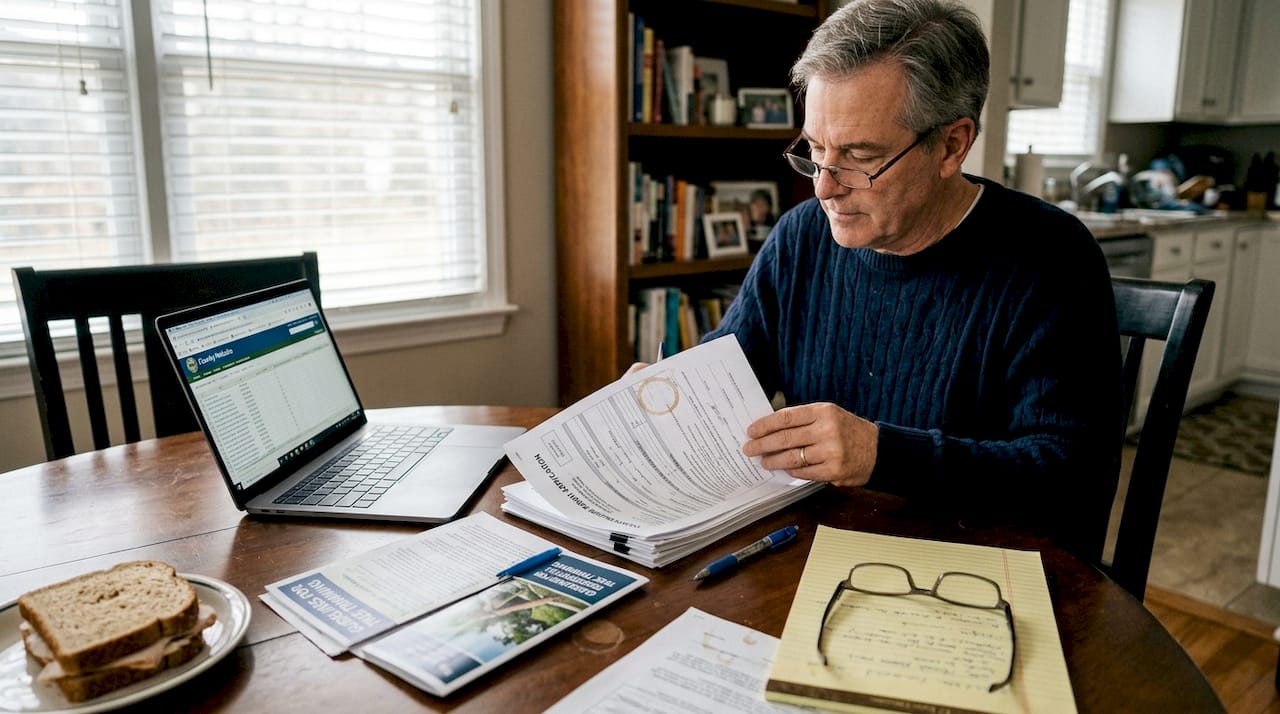
Under FL Stat. §163.045, homeowners can remove trees that pose a documented hazard without a permit, but only if a certified arborist or landscape architect provides a written report confirming the risk. Without that report, you’re not protected, even if the tree genuinely was dangerous. This is where the certified arborist role becomes critical. Their documentation is what makes your removal legally defensible.
Most protected trees are defined by their diameter at breast height, commonly called DBH. In many Central Florida jurisdictions, any tree above 4 inches DBH requires a permit before removal or significant pruning. Some species, like live oaks and certain palms, carry additional protections regardless of size.
| Scenario | Permit required? | Arborist report needed? |
|---|---|---|
| Removing a tree under 4″ DBH | Usually no | No |
| Removing a protected species | Yes | Yes |
| Hazard tree removal under §163.045 | Possible exemption | Yes, required |
| Routine trimming of non-protected tree | No | Recommended |
| New tree planting compliance after removal | Sometimes | Depends on county |
Common compliance pitfalls include:
- Assuming a dead tree doesn’t need a permit (it often still does)
- Hiring an unlicensed crew that skips the documentation step
- Not knowing which species are locally protected
- Failing to replace removed trees when replacement is required by ordinance
Pro Tip: Before any tree work on your property, check with your county’s urban forestry or development services office. A quick call can save you thousands. You can also review Tampa tree ordinances directly to understand what triggers a permit in your area.
Getting tree removal safety right means handling both the physical work and the paperwork. One without the other still puts you at risk.
Health, safety, and cost: The real value of regular inspections
Let’s talk numbers, because this is where the argument for regular inspections becomes impossible to ignore.
Level 3 professional inspections typically cost $400 to $900, while tree failure can cause $10,000 to $20,000 in property damage. That’s a potential 20x return on a single inspection. And that doesn’t factor in the cost of fines, legal fees, or increased insurance premiums after a claim.
| Cost item | Typical range |
|---|---|
| Level 1 visual inspection | $75 to $150 |
| Level 2 basic tools inspection | $150 to $400 |
| Level 3 in-depth assessment | $400 to $900 |
| Tree failure property damage | $10,000 to $20,000 |
| Non-compliance fine per tree | $500 to $5,000 |
Beyond the numbers, regular inspections deliver practical benefits that compound over time. A certified arborist can spot early signs of fungal disease, bark beetle activity, or root girdling long before they become structural problems. Early detection means lower treatment costs and a much higher chance of saving the tree entirely.
Here’s what a professional inspection typically covers:
- Visual crown assessment for dead wood, thinning, or unusual leaf patterns
- Trunk and bark evaluation for cracks, cavities, fungal growth, or pest damage
- Root zone inspection for soil compaction, erosion, or surface root damage
- Structural risk rating based on the tree’s load, lean, and attachment points
- Written report with findings, risk level, and recommended action steps
Pro Tip: Ask your arborist to provide a written report even for routine inspections. That document becomes your paper trail if you ever need to prove compliance or file an insurance claim.
The benefits of professional tree trimming go hand in hand with inspection findings. When an arborist identifies weak or overextended limbs during an inspection, addressing them through proper trimming reduces storm risk significantly. And regular maintenance importance extends the life of your trees while protecting everything around them. TRAQ arborist credentials are the gold standard for this kind of documented, defensible work.
Choosing the right arborist and inspection approach
Not every tree service is qualified to perform a legally defensible inspection. In Central Florida, where inspections can directly affect permit decisions, insurance claims, and code compliance, credentials matter more than price.
Here’s what to look for when hiring:
- ISA Certification: The International Society of Arboriculture credential confirms the arborist has passed a rigorous exam and maintains ongoing education
- TRAQ Qualification: Tree Risk Assessment Qualification means the arborist is specifically trained to evaluate and document tree risk at a professional standard
- Florida state licensing: Required for tree removal and certain pruning work in most counties
- Liability insurance and workers’ comp: Protects you if something goes wrong on your property
- Written inspection reports: Any qualified arborist should provide documentation, not just verbal feedback
TRAQ-qualified arborists are preferred for insurance and court documentation, and Level 1 post-storm surveys often flag higher risk trees for deeper assessments. That last point matters a lot in Florida. After a hurricane or tropical storm, a quick Level 1 walkthrough of your property can identify which trees need urgent Level 2 or Level 3 evaluation before the next weather event.
When you contact an arborist, ask these questions directly:
- Are you ISA certified and TRAQ qualified?
- Will I receive a written report with risk ratings?
- Is your company licensed and insured in Florida?
- Can your report be used for permit applications or insurance purposes?
You can find a certified arborist who meets all of these standards and understands Central Florida’s specific regulatory environment. For ongoing peace of mind, scheduling routine tree inspection guidance annually, and after every major storm, is the most reliable way to stay ahead of problems. ISA arborist credentials are publicly verifiable, so you can confirm your arborist’s qualifications before signing anything.
Our perspective: What most Central Florida property owners miss about tree inspections
Here’s the honest truth we see playing out on properties across Orlando and Central Florida every season: most homeowners wait for a visible problem before calling anyone. A dead branch, a leaning trunk, a neighbor’s complaint. But by that point, the tree has often been declining for years.
The trees that cause the most damage in storms are rarely the ones that looked sick. They’re the ones that looked fine. Internal decay, root loss, and structural weakness don’t announce themselves. That’s exactly why why maintenance matters goes beyond aesthetics or curb appeal. It’s about catching what you can’t see.
Proactive documentation is also your best legal protection. If a storm drops a tree on your neighbor’s fence, having an arborist report showing the tree was healthy and well-maintained is the difference between a covered insurance claim and a costly dispute. Inspections aren’t just tree care. They’re property management.
Protect your property with expert tree inspection services
Understanding the risks, the regulations, and the real cost of neglect puts you in a much stronger position as a property owner. The next step is acting on that knowledge before a storm, a fine, or a fallen tree forces the issue.
At McCullough Tree Service, our certified arborist services cover everything from routine annual inspections to post-storm risk assessments and full compliance documentation. Whether you need a written arborist report for a permit application or want a professional eye on a tree you’re not sure about, we’re ready to help. Our tree removal experts handle the full process when removal is the right call. Start with the basics at our tree care 101 resource, or contact us today to schedule your inspection and protect what matters most.
Frequently asked questions
How often should tree inspections be done in Central Florida?
Most experts recommend annual inspections plus post-storm checks after significant weather events. Central Florida’s hurricane season makes that post-storm step especially important for catching new structural damage quickly.
Are tree inspections a legal requirement for homeowners?
In many Central Florida counties, permits for protected trees require an arborist inspection and report before any removal or major work is approved. Skipping this step can result in fines even if the work itself was necessary.
What qualifications should I look for in an arborist?
Look for ISA certification and TRAQ qualification as the minimum standard. These credentials ensure the arborist can produce documentation that holds up for insurance claims, permit applications, and legal purposes.
Can I be fined for removing a tree without inspection or a permit?
Yes. Fines range from $500 to $5,000 per tree for non-compliance in Tampa, Pinellas, and Hillsborough counties. The fine applies whether or not you knew a permit was required.
What is usually included in a tree inspection?
A professional inspection assesses crown health, trunk integrity, root zone conditions, structural risk, disease or pest activity, and produces a written report with recommended next steps and risk ratings.
Recommended
- Tree Trimming Safety Protocols to Remember
- Commercial Tree Removal Guide for Safe Property Management
- Why regular tree maintenance matters for property owners
- Tree root management: protect your property and trees
- Požiarna ochrana v bytových domoch | HASPO.sk