By: Shelby McCullough| Published: September 4, 2026
Plan on $60 to $1,300 per tree installed, depending mostly on size. A small sapling runs $60 to $300, a young tree up to 10 feet costs $200 to $700, and a large or mature specimen over 10 feet climbs to $400 to $1,300 or more. Species, site access, and equipment needs swing the price within those bands, and planting several trees in one visit usually knocks down the per-tree rate.
TL;DR:
- Large trees over 10 feet typically cost $400 to $1,300 to install, due to heavier equipment and more labor required for safe movement.
- Species such as ornamental or rare cultivars can be two to three times more expensive for the plant alone, especially in high demand seasons.
- Labor costs usually range from $50 to $150 per hour, with a full large tree installation often exceeding $600 for crew and equipment fees.
- Site conditions like rocky soil, urban obstructions, or permitting can add substantial hours and costs, sometimes increasing the total by hundreds of dollars.
- Combining multiple trees in one visit can reduce costs per tree by 10 to 25 percent, thanks to shared mobilization and site preparation efforts.
Table of Contents
- How Much Does Tree Planting Cost by Size?
- Does Tree Species Change the Planting Price?
- What Do Labor and Equipment Actually Cost?
- How Do Site Conditions Affect Tree Planting Costs?
- Do You Get a Discount for Planting Multiple Trees?
- Should You Plant a Tree Yourself or Hire a Pro?
- What Should You Expect From a Certified Arborist’s Process?
- What’s a Realistic Budget for Your Tree Planting Project?
- Is the Upfront Cost Worth It Long-Term?
- A Publisher’s Note on Tree Planting Cost
- Get a Written Estimate From a Certified Central Florida Crew
- Useful Tools for Checking Local Tree Planting Prices
- Sources
How Much Does Tree Planting Cost by Size?
Size drives price more than almost any other factor, and the jump from sapling to mature tree is steep enough to surprise a lot of first-time buyers. A small sapling installed costs $60 to $300 total, while a large 10 to 20 foot tree can run $400 to $1,300 once you add labor and equipment. LawnStarter’s research puts the average professionally planted semi-mature tree at roughly $565 to $680, with the exact number swinging by city based on local transport and crew rates.
| Tree Size | Tree/Plant Cost | Installation Cost | Total Installed |
|---|---|---|---|
| Sapling (under 3’) | $20–$100 | $40–$200 | $60–$300 |
| Small (3’–6’) | $50–$200 | $150–$400 | $200–$600 |
| Medium (6’–10’) | $100–$400 | $200–$500 | $300–$700 |
| Large/Mature (10’–20’+) | $200–$800 | $300–$700 | $400–$1,300 |
The jump in cost is not just about a bigger root ball. Larger trees need bigger holes dug with heavier machinery, more crew hours to stage and set the tree, and often a flatbed or specialized trailer just to get the stock to the site. A 20 foot tree with a wrapped root ball can weigh several hundred pounds, and moving that weight safely is where the price tag really grows.
Does Tree Species Change the Planting Price?
Species matters almost as much as size. A fast-growing shade tree in a common size is usually the cheapest option to source and plant, while a mature ornamental or a rare cultivar can cost two to three times more for the plant alone.
- Shade trees (oak, maple, elm): moderate cost, widely available, usually the most budget-friendly per foot of height.
- Ornamental trees (Japanese maple, dogwood, crepe myrtle): higher plant cost due to slower growth rates and smaller nursery supply.
- Fruit trees: mid-range cost but often need extra soil amendments and staking for early stability.
- Evergreens (cypress, pine, holly): heavier root balls at a given height, which raises installation labor.
- Privacy hedge plantings: lower per-plant cost but higher total cost when ordered in bulk rows.
Rare cultivars or trees requiring a large, intact rootball to transplant safely almost always carry a premium, and nursery stock availability shifts seasonally, so a species in high demand during spring planting windows can cost more than the same tree ordered in fall.
What Do Labor and Equipment Actually Cost?
Labor is usually billed by the crew hour, not a flat per-tree rate, and that is where a lot of quotes get confusing. Typical crew rates run $50 to $150 per hour depending on region and crew size, which is worth checking against Bureau of Labor Statistics wage data for landscaping and grounds crews in your area.
- Labor-only cost for a small to medium tree: roughly $75 to $250 per tree.
- Labor-only cost for a large tree needing multiple crew members: $200 to $600 or more.
- Skid steer or auger rental surcharge: $100 to $300 per job.
- Crane or tree spade for large transplants: $300 to $1,500, depending on tree size and site distance.
- Mobilization or trip fee: often a flat $50 to $150 added to every job regardless of tree count.
Pro Tip: Ask whether the quoted hourly rate already includes equipment mobilization. Some crews fold it in; others tack it on as a separate line, and that difference alone can shift a quote by a few hundred dollars.
Most crews also set a minimum charge per visit, so a single small tree planted on its own can cost nearly as much per tree as a job with three or four trees, simply because the mobilization fee gets spread thinner.
How Do Site Conditions Affect Tree Planting Costs?
Soil and access problems add hours fast. Compacted clay, rocky subsoil, or a steep grade all slow digging and sometimes require different equipment than a flat, loamy yard would need.
- Compacted or rocky soil: adds 30 minutes to several hours of extra digging time per tree.
- Poor truck or equipment access: may require hand digging or smaller machinery, both slower and pricier.
- Utility locates: often required before digging near buried lines, and the utility company typically marks lines free, but delays can push back your schedule.
- Local permits: some municipalities require a permit for removing or planting trees near property lines, easements, or protected zones, and the homeowner or contractor usually covers that fee.
Pro Tip: If you’re planting several trees, ask your contractor to schedule site prep, like clearing brush or leveling grade, as one combined visit rather than piecemeal jobs. Batching site work is one of the more reliable ways to trim total cost.
Do You Get a Discount for Planting Multiple Trees?
Mobilization and minimum fees are the main reason multi-tree jobs cost less per tree than single installs. Once a crew is on-site with equipment, adding a second or third tree costs far less than the first.
- Planting 3 to 5 trees in one visit: commonly saves 10% to 25% per tree versus single installs.
- Larger volume projects (10+ trees): can push savings higher, especially when trees are similar in size and species.
- Bundling site prep, like grading or irrigation trenching, across multiple planting spots reduces redundant setup time.
Should You Plant a Tree Yourself or Hire a Pro?
DIY makes sense for small, container-grown trees under 6 feet, where material and tool costs might run $50 to $250 total. Beyond that size, the math and the risk both shift toward hiring a crew.
- Small trees (under 6’): A homeowner with a shovel, some compost, and basic mulch can plant successfully for a fraction of professional rates.
- Medium to large trees: Root ball weight and correct planting depth become harder to manage alone, and mistakes here are the leading cause of long-term tree decline, according to University of Florida research on planting depth and girdling roots.
- Any tree needing equipment, transplant work, or placement near structures or utility lines: this is where a certified arborist earns the fee, both for safety and for survival odds.
What Should You Expect From a Certified Arborist’s Process?
A professional planting job usually follows a set sequence: site assessment, root ball inspection, careful placement at the correct grade, backfilling with amended soil, staking if needed, an irrigation check, and a walk-through on watering for the first few weeks. Mcculloughtreeservice follows this kind of structured approach on residential and commercial planting jobs across Central Florida, and it is the reason licensed crews often charge more than an unlicensed laborer.
Ask any contractor for these items in writing before you sign:
- Planting depth confirmed at or slightly above the root collar.
- Soil amendment plan matched to your yard’s existing soil type.
- Staking method and removal timeline (most stakes should come out within a year).
- Irrigation tie-in or a clear watering schedule for the first growing season.
- Written warranty period covering tree health, not just installation.
Pro Tip: A contractor who can’t answer how they’ll handle root ball transition and soil blending in one sentence probably hasn’t planted many large trees. This is where a portion of professional pricing actually goes, not just the labor hours.
What’s a Realistic Budget for Your Tree Planting Project?
Before hiring, ask contractors for hours quoted, equipment needed, mobilization fees, warranty length, and a first-year care plan, then compare at least two or three written estimates against local labor rates.
Is the Upfront Cost Worth It Long-Term?
Planting cost is only the entry fee. Watering a newly planted tree properly through its first one to two years typically means 10 to 15 gallons per week during dry spells, and pruning to establish good structure usually starts in year two or three, running $75 to $200 per visit depending on tree size. Pest and disease monitoring is cheap to do yourself with routine visual checks, but a professional health assessment on a valuable specimen tree might cost $100 to $300 if problems show up.
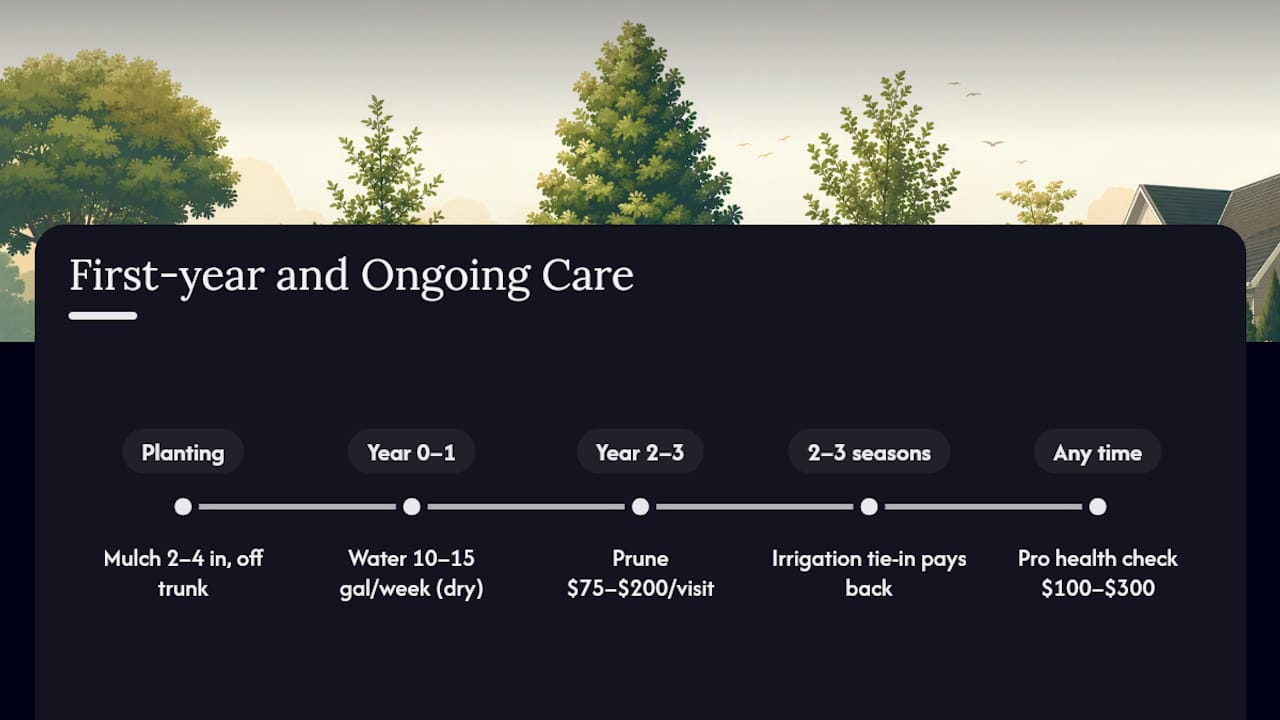
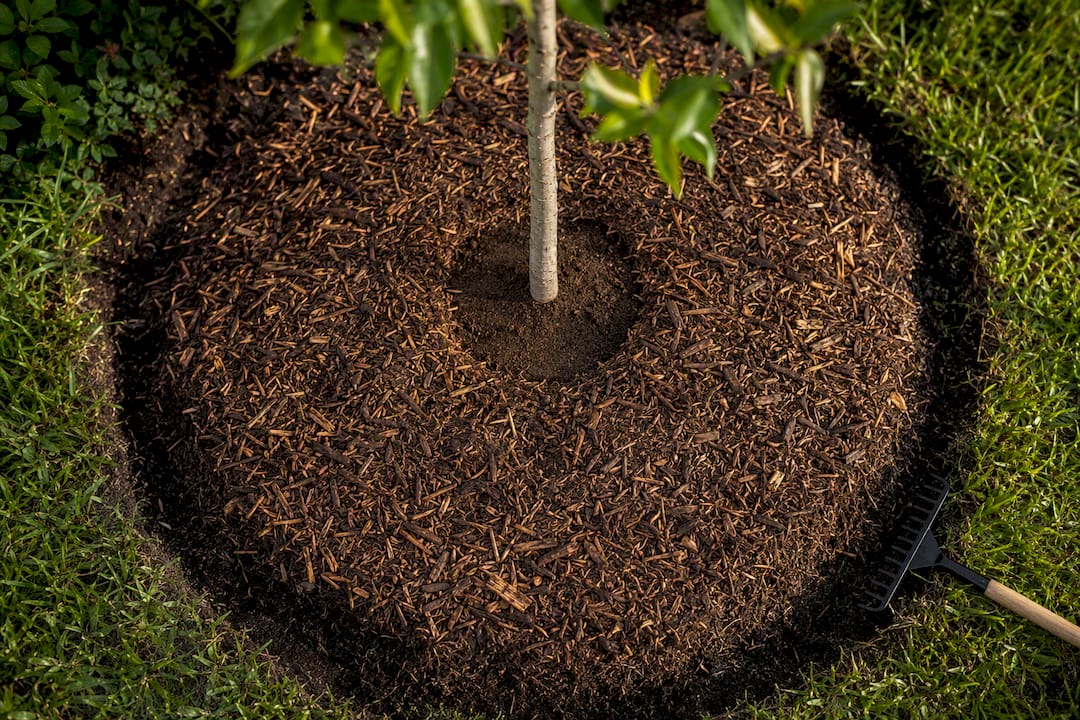
The bigger long-term cost usually comes from skipping care in year one. A tree that gets inconsistent watering or no follow-up monitoring is far more likely to need replacement, and replacing a mature tree costs several times more than the maintenance would have. Mulching correctly, at 2 to 4 inches deep and kept away from the trunk, cuts watering frequency and suppresses competing weeds, which lowers labor costs over time.
Fertilization and soil amendments are optional in most years unless a soil test flags a deficiency, and over-fertilizing young trees can actually do more harm than good. Irrigation tie-ins, if installed at planting, usually pay for themselves within two or three dry seasons by reducing manual watering labor. Property owners managing several trees across a commercial site often find that a basic annual health check, bundled with regular tree trimming service, catches problems while they’re still cheap to fix.
A Publisher’s Note on Tree Planting Cost
The upfront number matters less than most people think. A $700 tree planted correctly, with the right species for the site and a year of proper watering behind it, almost always beats a $300 tree that gets replaced twice. Match the species to the site before anything else, and budget for that first year of follow-up care. It’s the cheapest insurance you’ll buy on the investment. Read more on how tree planting affects property value before you finalize a budget.
— Results
Get a Written Estimate From a Certified Central Florida Crew
A certified arborist crew is the alternative to guessing at online calculators when you need a real number for your Central Florida property. Instead of averaging a national range that might not reflect your soil, your access, or your local labor market, a certified-arborist site visit gives you an exact quote built around your yard.
A McCullough estimate typically covers a site walk, species recommendation for your soil and sun exposure, a written breakdown of planting and any equipment needs, and a first-year care plan so you know what to expect before committing. The company also handles the flip side of the equation, from stump grinding to make room for a new tree, to land clearing for larger planting projects, to storm cleanup when severe weather damages existing trees on your property. For clients pairing tree work with broader site upgrades, partners like Syn Green handle turf installation on the landscaping side. Request a free estimate through Mcculloughtreeservice and get a real number for your property, not a national average.
Useful Tools for Checking Local Tree Planting Prices
Run your zip code through Homewyse’s calculator and use i-Tree Tools to estimate a mature tree’s long-term value.
Sources
- 2026 Cost to Plant a Tree | Tree Cost by Size & Type
- How Much Does it Cost to Plant a Tree in 2026?
- Cost to Plant Tree – 2026 Cost Calculator (Customizable)
- Bureau of Labor Statistics – Occupational Employment Statistics
- Beyond bugs: two hidden causes of tree decline – IFAS blog
Recommended