By: Shelby McCullough| Published: April 8, 2026
TL;DR:
- Trees in Central Florida improve property value, reduce energy bills, and help manage stormwater. Proper species selection and placement are crucial for maximum benefits and storm resilience. Ongoing care and professional guidance ensure long-term success and safety of the trees.
Trees on your Central Florida property do far more than look good. They work around the clock to lower your energy bills, manage stormwater, and protect your home from wind. Ecosystem services like shade cooling, water runoff mitigation, and property value boosts are real, measurable, and documented. Most homeowners think of tree planting as a landscaping upgrade. The truth is, it is a financial and environmental investment that pays dividends for decades. This guide breaks down exactly what trees deliver, which species and placements matter most, and how to protect that investment long term.
Table of Contents
- The essential benefits of tree planting
- How tree location and species affect value and outcomes
- Tree planting for sustainability: Environmental and resilience impact
- Tree care and common pitfalls: Ensuring long-term success
- What most homeowners miss about tree planting in Central Florida
- Connect with Central Florida’s trusted tree experts
- Frequently asked questions
Key Takeaways
| Point | Details |
|---|---|
| Value boost | Strategic tree planting can increase your Central Florida property’s value by up to 24 percent. |
| Sustainability impact | Trees cut energy bills, store carbon, and support storm resilience when managed correctly. |
| Species and placement matter | Select native trees and place them to maximize shade, minimize risk, and simplify care. |
| Aftercare is essential | Consistent watering, mulching, and maintenance ensure trees thrive and deliver long-term returns. |
| Expert guidance pays off | Relying on local expertise helps avoid costly mistakes and truly unlocks the value of trees. |
The essential benefits of tree planting
With that broad perspective in mind, let’s look at why trees are considered such valuable assets for Central Florida homeowners. The benefits fall into three clear categories: economic, environmental, and social. Understanding all three helps you see trees not as decoration, but as working parts of your property.
Economic benefits are the most immediate motivator for most property owners. Trees boost property value by making homes more attractive to buyers and reducing ongoing utility costs. Shade from a well-placed tree can cut summer cooling loads significantly, and that adds up fast in Florida’s brutal heat.
“Trees in Gainesville, FL save $1.9 million annually in energy costs across the city.”
That figure is not abstract. It reflects real savings on real utility bills, spread across a Florida city with similar climate conditions to Orlando. When you scale that down to a single property with two or three strategically placed trees, the annual savings on air conditioning alone can offset planting and early maintenance costs within a few years.
Environmental benefits are equally compelling. Trees intercept rainfall, which reduces runoff and flooding risk on your property. Their root systems hold soil in place, preventing erosion during heavy summer storms. They filter air pollutants, absorb carbon dioxide, and cool local temperatures through a process called evapotranspiration, where water evaporates from leaves and cools the surrounding air. You can learn more about trees and energy savings through University of Florida research that quantifies these effects in Florida’s specific climate.
Social and health benefits round out the picture. Neighborhoods with mature tree canopies consistently report better mental health outcomes, lower crime rates, and higher community satisfaction. Trees also create habitat for birds, pollinators, and other wildlife, turning your yard into a functioning ecosystem.
Key benefits at a glance:
- Increased property resale value
- Lower monthly energy bills
- Reduced stormwater runoff and flooding
- Improved air and water quality
- Better mental health and neighborhood appeal
- Wildlife habitat creation
Tree care’s value impact grows with the size and health of your trees. Larger, well-maintained trees consistently deliver bigger returns than small or neglected ones. The ecosystem services trees provide compound over time, making early investment and consistent care the smartest approach.
How tree location and species affect value and outcomes
Understanding the wide benefits makes it clear, but maximizing them depends on where and what you plant. Not every tree in every location delivers the same return. Research shows that placement and species choice can be the difference between a 24% property value boost and a liability.
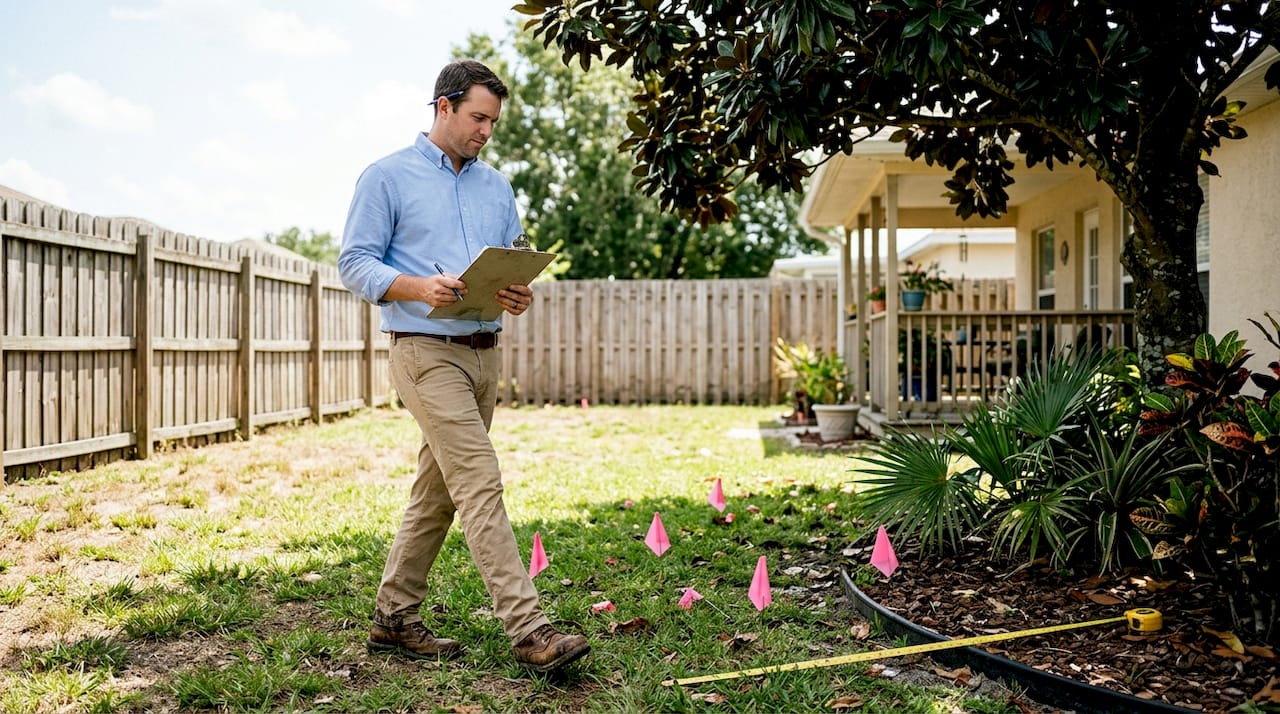
Shade trees boost value by up to 24% in high-impact cities, but only when positioned strategically near the home. A tree planted at the back of a large lot, far from the house, contributes far less than one positioned to shade the west or southwest side of your roof during peak afternoon heat. Location is not just about aesthetics. It is about function.
Species selection is equally critical. Native Florida trees like live oak can add up to $30,000 in property value and are far better adapted to local soil conditions, rainfall patterns, and storm stress than non-native species. Live oaks develop deep, wide root systems that anchor them during hurricanes. They also provide dense canopy shade that non-native ornamental trees simply cannot match.
| Tree type | Value impact | Storm resistance | Maintenance demand |
|---|---|---|---|
| Live oak (native) | Very high | Excellent | Low to moderate |
| Southern magnolia (native) | High | Good | Moderate |
| Crape myrtle (non-native) | Moderate | Fair | Moderate to high |
| Laurel oak (native) | Moderate to high | Good | Low |
| Invasive exotic species | Negative | Poor | Very high |
For tree selection in Central Florida, the guiding principle is right tree, right place. The right tree, right place framework from University of Florida Extension helps property owners match species to soil type, sun exposure, and available root space before planting.
Pro Tip: Avoid planting large-canopy trees directly under power lines or within 10 feet of your foundation. The cost of removal later will far exceed any short-term value gain.
Common placement mistakes to avoid:
- Planting too close to the home’s foundation
- Ignoring overhead utility lines
- Choosing fast-growing but weak-wooded species for shade
- Planting in poorly drained spots without soil prep
If you are unsure where to start, the planting trees in Central Florida guide and the list of best trees for Orlando are solid starting points. And before you plant anything, check out common tree planting mistakes that cause early failure in local landscapes.
Tree planting for sustainability: Environmental and resilience impact
Selecting the right species and location is just the first step. Understanding their bigger impact on sustainability and resilience matters too, especially in a region where hurricanes and extreme heat are annual realities.
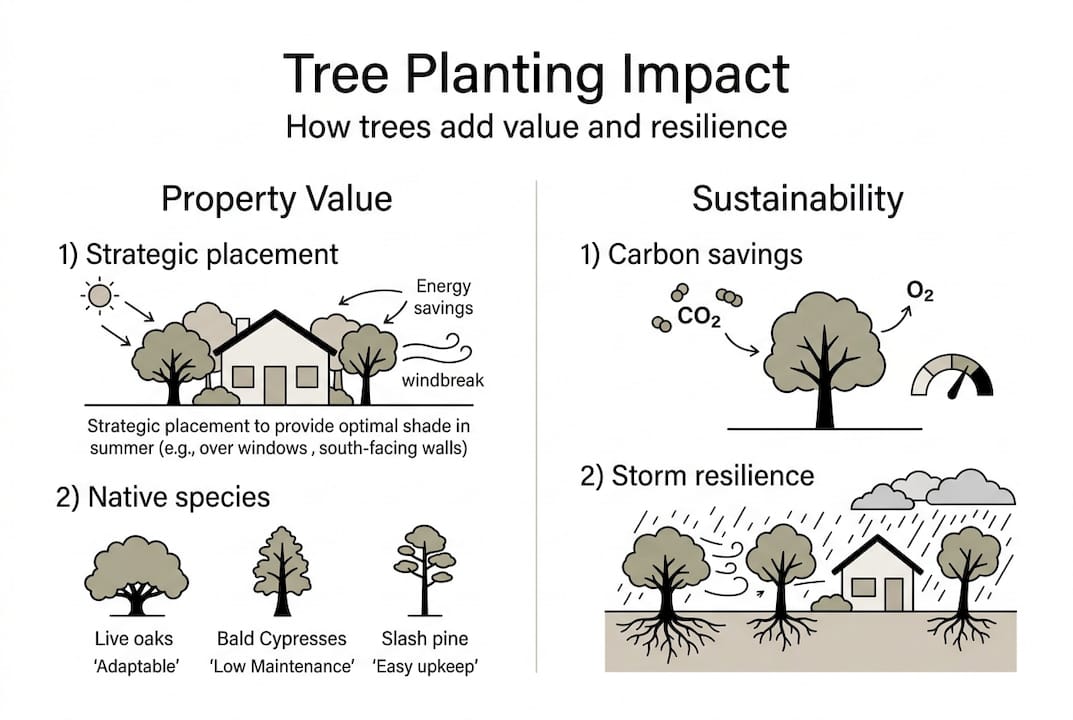
Trees are one of the most cost-effective tools for reducing your household carbon footprint. Trees sequester CO2 and improve net energy savings within 30 years of planting, making them a genuine long-term climate investment. The shade they cast reduces air conditioning demand, and their windbreak effect lowers heating costs in cooler months. Both effects compound as the tree matures.
| Sustainability benefit | Timeframe | Estimated impact |
|---|---|---|
| Carbon sequestration | Ongoing from year 1 | 20 to 48 lbs CO2 per tree per year |
| Energy bill reduction | 5 to 10 years post-planting | Up to 25% cooling cost savings |
| Stormwater management | Immediate | Intercepts hundreds of gallons annually |
| Urban heat island reduction | 10 to 20 years | Up to 9°F cooler under canopy |
For Central Florida homeowners, storm resilience is just as important as carbon savings. Proper tree management reduces wind risk, and getting your trees ready before hurricane season is not optional. A poorly maintained tree becomes a projectile in a strong storm. A well-pruned, structurally sound tree can actually shield your home from wind.
Steps to improve sustainability and storm resilience:
- Plant native species with strong root architecture in wind-exposed areas
- Schedule structural pruning before June each year
- Remove dead or crossing branches that create failure points
- Mulch the root zone to retain moisture and reduce heat stress
- Inspect trees after every major storm for hidden damage
Pro Tip: Deep planting is one of the most common mistakes that weakens trees over time. Research on deep planting impact shows that burying the root flare stresses trees and makes them more vulnerable to wind failure.
For hurricane tree preparation and year-round care for storm resilience, proactive management is always cheaper than emergency cleanup.
Tree care and common pitfalls: Ensuring long-term success
Understanding what trees deliver is one thing. Securing their longevity is another. Here is how to make sure your investment pays off.
The first two years after planting are the most critical. Trees need consistent watering, proper mulching, and protection from mechanical damage (like lawnmower strikes) while their root systems establish. Skipping early care is the fastest way to lose a tree that cost you hundreds of dollars and years of potential growth.
“Deep planting isn’t always immediately fatal, but best practice is to keep the root flare at or just above soil level to prevent long-term decline.”
Most homeowners plant too deep without realizing it. The root flare, the visible widening at the base of the trunk, should be visible above the soil line. Covering it with soil or mulch restricts oxygen to the roots and invites fungal disease. The right tree, right place guide covers proper planting depth in detail.
Ongoing maintenance checklist for property owners:
- Water deeply twice a week for the first year, then reduce as the tree establishes
- Apply 3 to 4 inches of mulch in a ring around the tree, keeping it away from the trunk
- Prune for structure in the first three years to establish a strong branching pattern
- Inspect for pests and disease each spring before the growing season peaks
- Schedule a professional assessment every two to three years
Pro Tip: Do not pile mulch against the trunk in a “mulch volcano.” It traps moisture and causes rot. Keep mulch a few inches away from the bark.
Common pitfalls that undercut your investment include poor site preparation, ignoring drainage issues before planting, and over-watering established trees. For more specific guidance, the tree planting survival tips page covers what developers and property managers do differently to improve survival rates. If you have recently had a tree removed, check out how to prevent post-removal damage to the surrounding landscape.
What most homeowners miss about tree planting in Central Florida
After years of working with property owners across Orlando and Central Florida, one pattern stands out. Most people think that planting a tree is the hard part. It is not. The hard part is everything that comes after.
The idea that any tree in any spot is better than no tree is a costly misconception. A poorly placed water oak near your foundation will cost you $3,000 to $8,000 to remove in 15 years. A non-native species with weak wood structure becomes a liability the moment a named storm enters the Gulf. The savings and value gains only materialize when the right tree goes in the right place and gets the right care.
Storm resilience is not luck. It is the result of species selection, structural pruning, and consistent monitoring. We see it every hurricane season. Properties with well-managed trees come through with minor cleanup. Properties with neglected trees face roof damage, downed fences, and expensive emergency calls.
The biggest hidden cost in tree ownership is not planting. It is the removal and damage repair that follows a bad decision made years earlier. Our expert planting guide exists specifically to help you avoid those outcomes from the start.
Connect with Central Florida’s trusted tree experts
Now that you know what makes tree planting really matter, here is who can help you take the next step.
At McCullough Tree Service, we combine certified arborist expertise with deep knowledge of Central Florida’s soils, storm patterns, and native species. Whether you need help choosing the right trees for your property, scheduling pre-hurricane tree trimming preparation, or understanding the difference between trimming vs pruning for long-term tree health, our team is ready to help. Our certified arborists bring licensed, professional judgment to every job, from new planting consultations to storm prep and ongoing maintenance. Contact us today for an estimate and let us help you turn your trees into lasting assets.
Frequently asked questions
Which trees add the most value to Central Florida properties?
Native species like live oak add the most value because they thrive in local conditions, withstand storms, and require less maintenance than non-natives. Live oak can add up to $30,000 in property value.
How do trees help lower my energy bills?
Strategically placed trees cool homes by shading the roof and walls during peak heat hours, directly reducing air conditioning demand. Florida cities like Gainesville see city-wide energy savings of $1.9 million annually from urban tree canopy.
How often do newly planted trees fail in Central Florida?
Up to 50% fail locally, making correct species selection, proper site preparation, and consistent aftercare essential for survival.
Is planting a tree too close to my house dangerous?
It depends on the species and root pattern. With the right native tree and proper maintenance, proximity to the home can safely maximize shade and boost property value rather than create risk.
Can trees really protect my home during hurricanes?
Yes, when managed properly. Well-pruned, structurally sound trees reduce wind speed around your home, but pre-hurricane structural pruning before each season is essential to prevent them from becoming hazards instead of shields.
Recommended
- Tree planting benefits Central Florida properties 2026
- How tree care boosts property value in Central Florida
- Tree Planting for Commercial Properties: Boosting Value and Compliance
- Commercial tree maintenance: Boost property value by 20%