By: Shelby McCullough| Published: July 5, 2026
TL;DR:
- Tree species selection in Central Florida involves matching trees to site conditions and environmental constraints for long-lasting landscape success. Proper planning considers USDA zones, soil quality, root space, biodiversity, and local regulations to reduce risks and enhance ecological resilience. Choosing native, medium-growth, and diverse species supports storm safety, pest resistance, and sustainable landscapes.
Tree species selection is the deliberate process of matching tree types to specific site conditions, functional roles, and environmental constraints for lasting landscape success. Get it right in Central Florida and you gain shade, property value, and ecological resilience. Get it wrong and you spend years managing a tree that never thrives, or worse, one that damages your foundation or fails in a hurricane. The four phases of tree selection cover functional role, USDA hardiness zone confirmation, site constraints, and regulatory clearance. Central Florida sits in USDA zones 9a and 9b, which sets hard limits on cold tolerance and shapes every species decision you make.
What are the key factors in tree species selection?
The tree selection process follows four phases: define the tree’s function, confirm your USDA hardiness zone, assess site constraints, and clear local regulatory requirements. Skipping any phase increases the risk of early tree failure or costly removal. Mcculloughtreeservice works through all four phases on every planting consultation in the Orlando area.
Start by defining what you need the tree to do. Shade over a patio, screening from a neighbor, ornamental color, wildlife habitat, or windbreak protection each point toward a different species list. A tree planted for the wrong function rarely satisfies over time, no matter how healthy it grows.
Central Florida’s USDA zones 9a and 9b mean average annual minimum temperatures between 20°F and 30°F. That range rules out many temperate species and favors subtropical and tropical natives. Checking your specific zone before visiting a nursery saves you from buying a tree that a single cold snap can kill.
Site constraints narrow the list further. Consider these factors before finalizing any species:
- Mature size: Will the canopy clear power lines, rooflines, and neighboring structures at full height?
- Sun exposure: Full sun, partial shade, or deep shade each favor different species.
- Soil drainage: Poorly drained sites exclude species intolerant of wet feet.
- Root spread: Mature root systems can extend 2–3 times the canopy width, threatening foundations and utilities.
- Municipal approved lists: Many Central Florida municipalities maintain approved species lists that affect permitting.
Pro Tip: Before you buy, pull your city or county’s approved tree list. Orlando, Orange County, and Osceola County each publish one. Planting an unapproved species can create permitting headaches during future renovations or sales.
Why does biodiversity beat monoculture planting?
Mixed-species plantings produce up to 73% more biomass annually than monocultures. That figure comes from large-scale research planting more than 33,000 trees across diverse species combinations. The productivity gain alone makes a strong case for variety, but the ecological benefits go further.
Diverse plantings support 50% more natural insect pest predators than single-species stands. More predators mean less chemical intervention and lower maintenance costs over time. For Central Florida homeowners managing year-round pest pressure, that is a practical financial benefit, not just an ecological talking point.
Ecologist John Parker notes that biodiversity in tree plantings increases productivity and reduces risk from pests and diseases compared to monocultures. Monocultures also increase fire risk and create conditions where a single pathogen can wipe out an entire planting. Florida’s history with citrus greening and laurel wilt disease shows exactly how fast a single-species vulnerability can spread.
Planting a single species for visual uniformity trades short-term aesthetics for long-term fragility. A landscape with three to five complementary species delivers better canopy cover, more wildlife value, and far greater resilience against Florida’s storms and pest cycles.
For Central Florida properties, a practical mixed approach might combine a native canopy tree like a live oak with a mid-story flowering tree and a fast-establishing understory species. Each layer serves a different function while the mix protects the whole planting from single-point failure.
| Planting approach | Biomass output | Pest resilience | Disease risk |
|---|---|---|---|
| Monoculture | Baseline | Low | High |
| Mixed species (3–5 species) | Up to 73% higher | High | Low |
| Diverse native mix | High | Very high | Very low |
How do soil and space affect your species choice?
Central Florida’s soils are predominantly sandy and nutrient-poor. That combination creates drainage that is too fast for many species and a low organic matter content that limits root establishment. Soil testing to depths of 18–24 inches measures pH, organic matter, and drainage rate, giving you the data to match species accurately rather than guessing at the nursery.
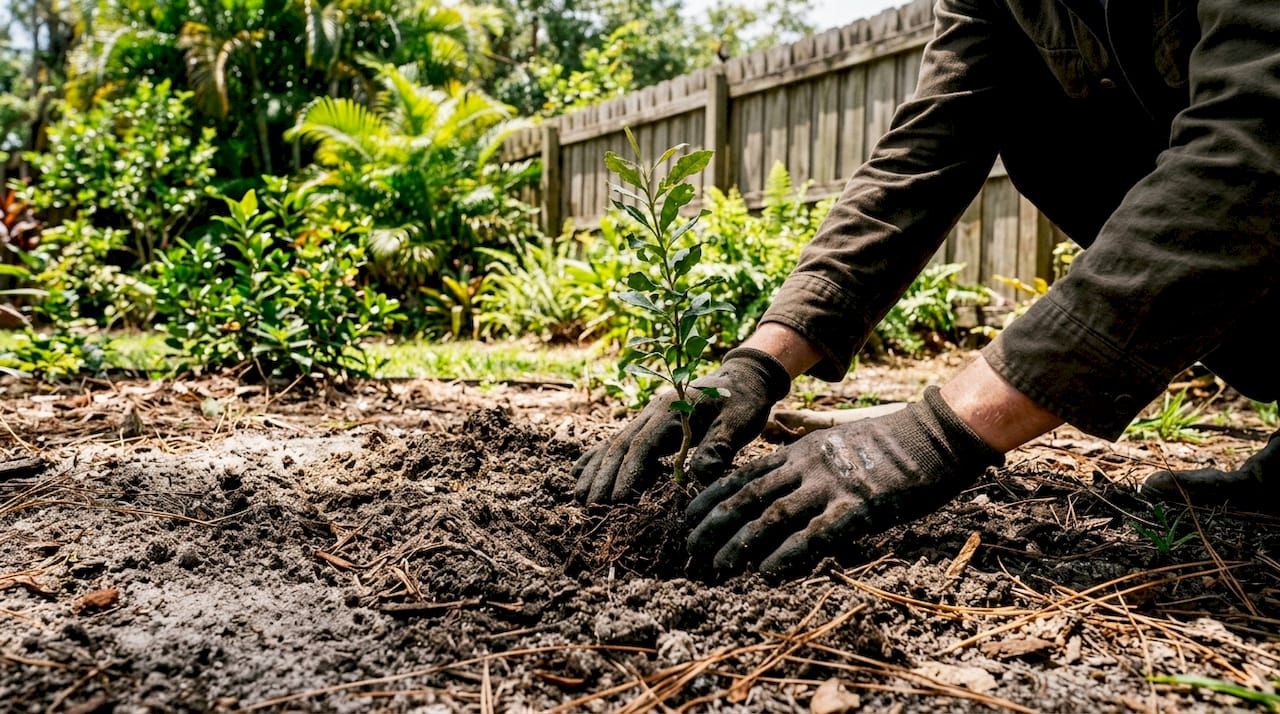
Incompatible soil chemistry shows up fast. A tree planted in soil with the wrong pH cannot absorb nutrients even when they are present. Sandy, nutrient-poor soils cause deficiency symptoms like chlorosis (yellowing leaves) and stunted growth within the first growing season. Fixing a soil mismatch after planting is expensive and often ineffective.
Space planning prevents the most common and costly homeowner mistake. Root systems extend 2–3 times the canopy width at maturity. A tree that looks perfectly placed as a 10-foot sapling can crack a driveway, lift a pool deck, or invade a sewer line within 15 years. Measure the available root zone before selecting any species, not after.
Pro Tip: For sites near pools, driveways, or structures, prioritize species with non-invasive root systems. Ask your arborist specifically about root behavior, not just canopy size. Many homeowners learn this lesson the hard way after a $5,000 pool repair.
Growth rate also affects structural strength. Fast-growing species tend to produce weaker wood, increasing the risk of limb failure during storms. Central Florida averages multiple named storms per decade. A medium-growth species with dense wood fiber will outperform a fast-growing shade tree when a Category 1 hurricane passes through. The medium-growth advantage is especially relevant here because Florida’s tropical storm exposure is not occasional. It is a recurring design condition.
Urban forestry experts confirm that environmental constraints like soil compaction and heat island effects must be evaluated before species selection. Developed lots in Central Florida often have compacted subsoil from construction equipment, which restricts root growth regardless of surface conditions.
What steps lead to lasting tree selection success?
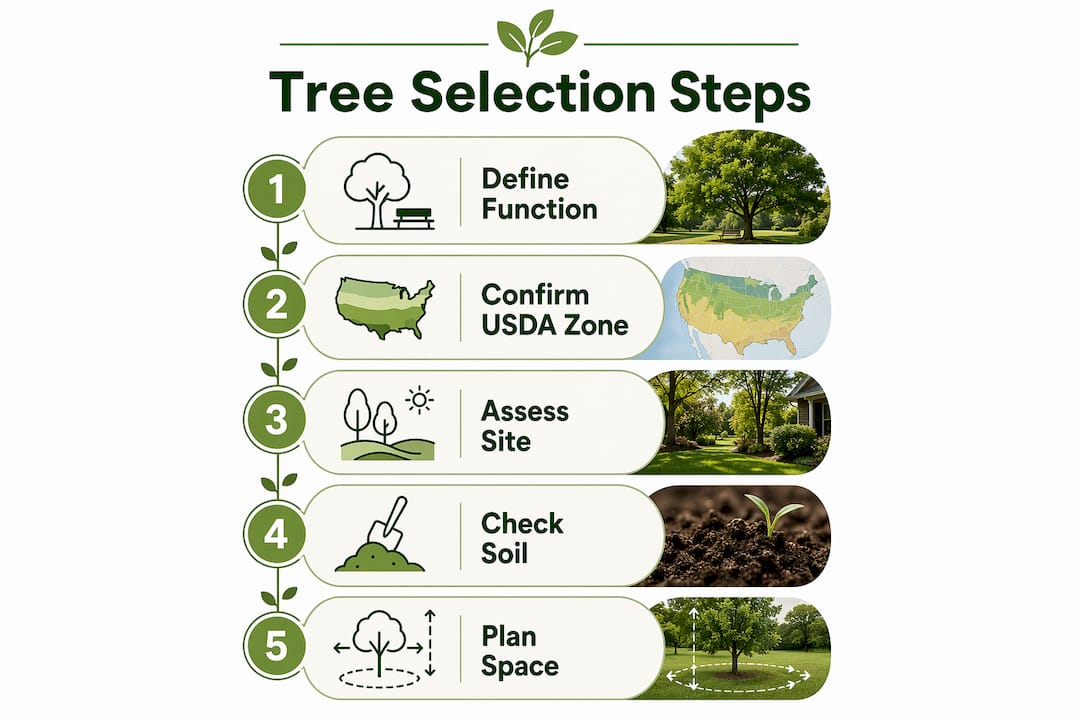
A clear framework prevents the most common mistakes homeowners and developers make when choosing tree species for Central Florida properties.
- Define the primary function. Shade, screening, ornamental interest, wildlife support, or windbreak protection each narrow the species list before any other factor is considered.
- Confirm your USDA zone. Central Florida zones 9a and 9b set the cold-tolerance floor. Use the USDA Plant Hardiness Zone Map to verify your specific address.
- Get a professional soil test. Test to 18–24 inches for pH, organic matter, and drainage. Match species to actual soil chemistry, not assumed conditions.
- Check local approved lists. Orlando, Orange County, and surrounding municipalities publish approved species lists. Regulatory compliance protects your investment and avoids permitting delays.
- Plan for biodiversity. Select at least three species for any planting of five or more trees. Avoid repeating the same species in adjacent positions.
- Map the mature footprint. Mark the mature canopy spread and root zone on a site plan before purchasing. Confirm clearance from structures, utilities, and paved surfaces.
- Evaluate maintenance realities. Some species drop heavy seed pods, produce allergenic fluff, or fruit prolifically near pools and patios. Factor in nuisance characteristics before committing.
- Consult a certified arborist. Arborists stress that tree selection is a long-term investment requiring structural integrity over nursery appearance. Local expertise accounts for microclimates, soil variation, and storm history that no online guide can fully replicate.
Pro Tip: The best trees for Orlando yards are not always the ones at the front of the nursery. Native species like the Southern live oak, bald cypress, and East Palatka holly are proven performers in Central Florida’s conditions and require less intervention once established.
Key Takeaways
Correct tree species selection in Central Florida requires matching species to USDA zones 9a and 9b, local soil chemistry, mature root space, and biodiversity goals before a single tree is purchased.
| Point | Details |
|---|---|
| Define function first | Shade, screening, or wildlife goals each point to a different species list before site factors are assessed. |
| Test soil before buying | Sandy Central Florida soils require pH and drainage testing to 18–24 inches to avoid chlorosis and stunted growth. |
| Plan for mature root spread | Root systems extend 2–3 times canopy width; map clearance from structures before selecting any species. |
| Choose mixed species | Diverse plantings produce up to 73% more biomass and support 50% more pest predators than monocultures. |
| Prioritize medium-growth species | Medium-growth trees produce denser wood that withstands Florida’s storm season better than fast-growing alternatives. |
What I’ve learned from watching homeowners plant the wrong tree
The most expensive mistake I see repeatedly is choosing a tree for how it looks at the nursery rather than how it behaves at maturity. A 6-foot crape myrtle in a container looks harmless. A poorly sited one 20 years later is lifting a sidewalk and blocking a sightline. The tree did nothing wrong. The selection process failed.
The second mistake is planting a single species across an entire property for visual consistency. I understand the appeal. Uniform rows of the same tree look intentional and clean on day one. But Central Florida’s pest and disease pressure, combined with its storm cycles, punishes monocultures. When one tree fails, they often all fail. Biodiversity is not a luxury for large-scale developers. It is basic risk management for any property.
The third mistake is skipping soil testing because it feels like an extra step. Central Florida’s sandy soils look fine on the surface. They are not. A $50 soil test has saved homeowners from planting trees that would have struggled for a decade and eventually required professional removal. The test is not optional. It is the foundation of every good planting decision.
My honest advice: slow down before you plant. A tree is a 30-year decision. Spend two weeks on research and one afternoon with a certified arborist. The trees you plant this year will still be on that property when you sell it, when your kids grow up, and when the next hurricane season arrives. Make the decision accordingly.
— Results
Mcculloughtreeservice: your Central Florida tree selection partner
Choosing the right tree species for your property is a decision that pays off for decades. Mcculloughtreeservice brings certified arborist expertise and deep knowledge of Central Florida’s soils, climate, and local regulations to every consultation.
From site analysis and species recommendations to professional tree trimming that keeps your trees healthy after planting, Mcculloughtreeservice handles every stage of tree care for Orlando-area homeowners and developers. If a previous planting choice has created a hazard or a headache, the team also provides expert tree removal in Orlando to clear the way for a better plan. Contact Mcculloughtreeservice for a personalized site consultation and start your planting project with the right species in the right place.
FAQ
What is tree species selection?
Tree species selection is the process of matching tree types to specific site conditions, functional roles, and environmental constraints. The goal is long-term tree health, structural safety, and ecological benefit.
Which USDA zones cover Central Florida?
Central Florida falls within USDA hardiness zones 9a and 9b, with average annual minimum temperatures between 20°F and 30°F. These zones define which species can survive local winter conditions.
Why does soil testing matter before planting in Central Florida?
Central Florida’s sandy, nutrient-poor soils cause pH and drainage mismatches that produce chlorosis and stunted growth in incompatible species. Professional soil testing to 18–24 inches prevents these problems before planting.
How far do tree roots spread at maturity?
Mature root systems typically extend 2–3 times the width of the canopy. Planting without accounting for that spread risks damage to foundations, driveways, pools, and underground utilities.
Are fast-growing trees a good choice for Florida properties?
Fast-growing trees generally produce weaker wood that is more prone to limb failure during storms. Medium-growth species offer better structural strength and are a safer long-term choice for Central Florida’s active storm season.
Recommended
- Tree Planting Guide Central Florida for Homeowners
- Top ornamental trees for Central Florida: expert picks
- Tree Planting Considerations for Central Florida Homes
- Central Florida tree planting guide: steps for lasting results