By: Shelby McCullough| Published: March 28, 2026
Picture a backyard where a sprawling Live Oak filters the afternoon sun, drops your cooling bill, and stands firm through a Category 1 storm. That’s not luck. It’s the result of choosing the right tree, planting it correctly, and giving it solid first-year care. Central Florida’s sandy soils, intense heat, and hurricane season create real challenges for new trees, but those same conditions reward homeowners who do the homework. This guide walks you through every stage, from picking your species to keeping your tree healthy well into its second decade.
Table of Contents
- Why plant trees in Central Florida?
- Gathering your tree planting essentials
- How to choose the best tree species
- Site selection and analysis: Right tree, right place
- Step-by-step: Planting your new tree
- First-year tree care: Ensuring survival and growth
- Troubleshooting common pitfalls
- Quick reference: Central Florida tree planting process
- Let professionals help your Central Florida trees thrive
- Frequently asked questions
Key Takeaways
| Point | Details |
|---|---|
| Choose native species | Planting natives like Live Oak or Red Maple ensures lower maintenance and better storm resilience. |
| Analyze your site first | Matching tree needs to soil, sun, and space boosts survival and reduces problems. |
| Use proper planting depth | Set trees so the root flare is at ground level to avoid root rot and girdling. |
| Prioritize first-year care | Regular watering and mulching in year one doubles your tree’s chance to thrive. |
| Avoid invasive species | Check local lists to keep your landscape—and Florida’s ecosystems—healthy. |
Why plant trees in Central Florida?
Trees do more for your property than any other landscaping investment. A single mature shade tree can cut cooling costs by up to 25%, and that’s before you factor in the wildlife habitat, cleaner air, and curb appeal it adds. For property managers, trees also signal long-term stewardship, which matters to tenants and buyers alike.
The benefits of tree planting go well beyond aesthetics. Here’s what healthy trees deliver for Central Florida properties:
- Shade and energy savings: Canopy cover reduces surface temperatures around your home.
- Storm buffering: Properly placed trees act as windbreaks during hurricane season.
- Wildlife habitat: Native species support local birds, pollinators, and beneficial insects.
- Property value: Mature trees can add 10-15% to a home’s appraised value.
- Air and water quality: Trees filter pollutants and slow stormwater runoff.
Native trees provide shade, wildlife habitat, and withstand local conditions better than non-natives. That’s a critical point for Central Florida, where non-native species often struggle with sandy, low-nutrient soils and the region’s wet-dry seasonal cycle.
“Choosing native species isn’t just an environmental preference. It’s a practical decision that reduces your maintenance burden and improves long-term survival rates.”
With the benefits in mind, the next step is to understand what you’ll need to successfully plant new trees.
Gathering your tree planting essentials
Before you dig a single hole, gather your supplies. Running back to the hardware store mid-project wastes time and breaks your momentum. Site analysis and the right equipment are critical for planting success, so treat this checklist seriously.
Basic supplies you’ll need:
- Round-point shovel and a garden hoe
- Garden hose with an adjustable nozzle
- Organic mulch (pine bark or wood chips work well)
- Starter fertilizer or compost
- Native tree sapling from a reputable nursery
- Soil test kit
- Tree stakes and soft ties
- Safety gloves and glasses
| Supply | Purpose | Optional? |
|---|---|---|
| Soil test kit | Identifies pH and nutrient gaps | Recommended |
| Compost | Improves moisture retention in sandy soil | Strongly recommended |
| Tree stakes | Stabilizes young trees in wind | Situational |
| Starter fertilizer | Supports early root growth | Recommended |
| Mulch | Retains moisture, suppresses weeds | Required |
Dress for the Florida sun. Light, long-sleeved clothing, a hat, and sunscreen are not optional when you’re working outside in Central Florida. Hydrate before you start, not just when you feel thirsty.
Pro Tip: Run a basic soil test before planting. Central Florida soils are often low in organic matter and slightly acidic. Knowing your baseline lets you amend correctly rather than guessing.
Once you’re equipped with your supplies, it’s time to select the right tree for your yard.
How to choose the best tree species
Species selection is where most homeowners make their biggest mistake. They pick a tree based on how it looks at the nursery, not how it will behave at 40 feet tall in a Category 2 storm. Use the UF/IFAS recommendation tool to match species to your specific zone and site conditions.
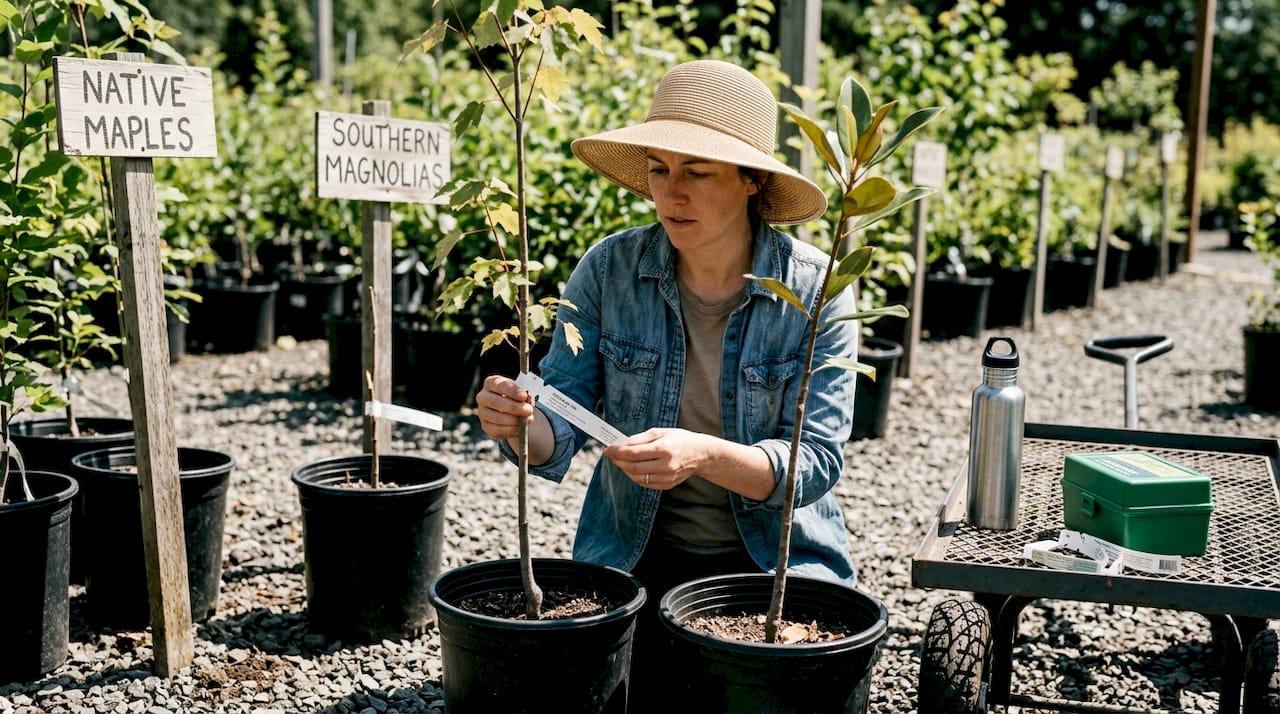
Native trees outperform non-natives in local adaptation and resilience. Avoid any species listed by the Florida Exotic Pest Plant Council (FLEPPC) as invasive. Invasive trees can spread aggressively, crowd out native plants, and create liability issues on your property.
Top recommended species for Central Florida:
- Live Oak (Quercus virginiana): Massive canopy, excellent storm resistance, long-lived.
- Southern Magnolia (Magnolia grandiflora): Evergreen, fragrant, tolerates wet and dry cycles.
- Sabal Palm (Sabal palmetto): Florida’s state tree, extremely wind-tolerant, low maintenance.
- Red Maple (Acer rubrum): Fast-growing, great fall color, handles wet soils well.
Explore more options in our guide to best trees for Orlando and our list of native trees for Florida yards.
| Species | Mature height | Sun needs | Storm resistance | Maintenance |
|---|---|---|---|---|
| Live Oak | 40-80 ft | Full sun | Excellent | Low |
| Southern Magnolia | 60-80 ft | Full/partial | Good | Moderate |
| Sabal Palm | 30-65 ft | Full sun | Excellent | Very low |
| Red Maple | 40-60 ft | Full/partial | Good | Low |
Pro Tip: Always check the mature canopy spread, not just the height. A tree that grows 60 feet wide will eventually conflict with your roof, driveway, or power lines if planted too close.
With your species selected, it’s time to assess where exactly in your yard to plant for optimal survival and benefits.
Site selection and analysis: Right tree, right place
Site analysis including soil, wind, and flood factors ensures trees thrive in Central Florida’s zones 9b through 10a. Skipping this step is the fastest way to lose a tree in year two.
Here’s how to analyze your planting site step by step:
- Track sunlight: Walk your yard at 9 a.m., noon, and 3 p.m. Note which areas get full sun (6+ hours), partial sun (3-6 hours), or shade.
- Check drainage: After a heavy rain, identify spots that hold standing water for more than 30 minutes. Avoid these for most species.
- Measure clearance: Stay at least 15 feet from structures, 10 feet from driveways, and follow utility setback rules for overhead lines.
- Call 811: Before digging, contact Florida’s free utility locating service to mark underground pipes and cables.
- Match tree to site: Cross-reference your site data with your chosen species’ requirements.
Review our full planting considerations guide and the site factors for tree planting checklist for a deeper look at each variable.
You’ve picked your planting spot. Now let’s break down the step-by-step planting process tailored for Central Florida’s environment.
Step-by-step: Planting your new tree
Good planting technique is the difference between a tree that thrives and one that slowly declines. Follow these steps carefully.
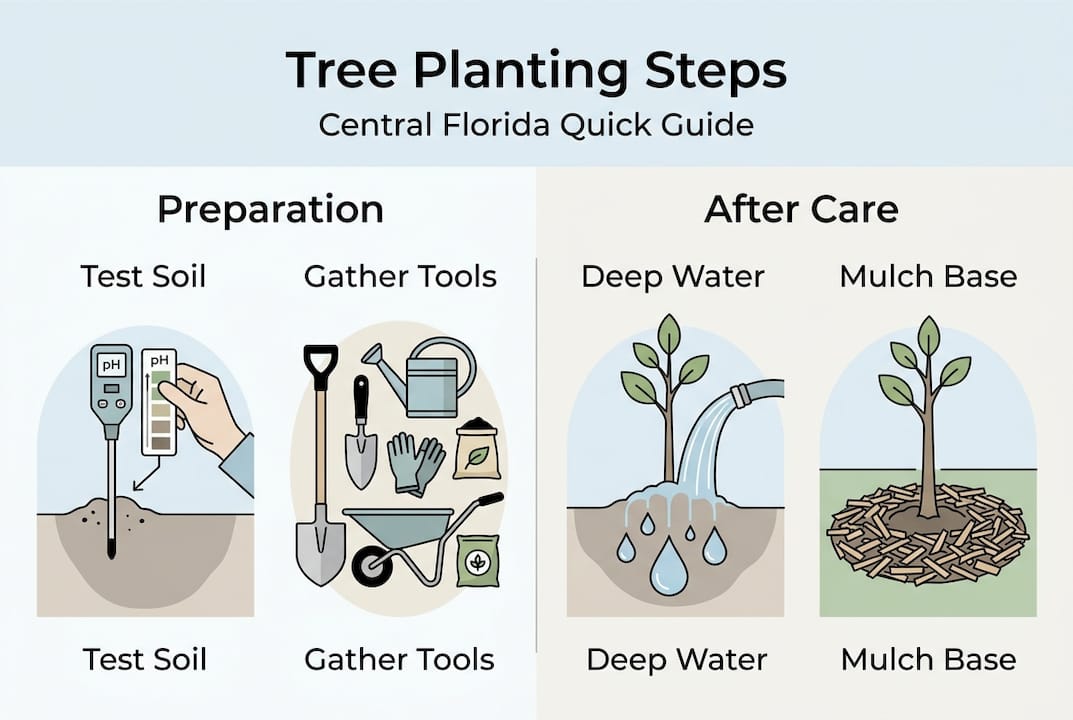
- Dig the hole: Make it twice as wide as the root ball and exactly as deep. Width matters more than depth.
- Loosen the walls: Score the sides of the hole with your shovel to help roots penetrate outward.
- Amend the soil: Mix compost into the backfill. Central Florida’s sandy soils benefit from added organic matter to retain moisture.
- Set the tree: Place the root ball so the trunk flare (where the trunk widens at the base) sits at or just above ground level. Never bury the flare.
- Backfill and firm: Fill in with amended soil, gently tamping to remove air pockets. Do not compact aggressively.
- Water deeply: Soak the entire root zone immediately after planting.
- Mulch: Apply a 2 to 3 inch layer of mulch in a wide ring around the tree. Keep mulch 3 inches away from the trunk.
- Stake if needed: Use two soft-tie stakes for trees in exposed or windy locations. Check monthly and remove after one year.
Pro Tip: The most common planting mistake in Florida is setting the tree too deep. If you can’t see the trunk flare after backfilling, pull the tree up and reset it. A buried flare leads to root rot and early tree death.
“A properly planted tree needs no staking after its first year. If it still wobbles at 12 months, investigate the root system rather than adding more support.”
For more on soil prep for planting, visit our developer-focused planting tips page.
With your tree securely planted, care in the first year is crucial for long-term success.
First-year tree care: Ensuring survival and growth
Proper aftercare in the first year can double tree survival rates in Central Florida. That statistic alone should motivate you to stay consistent with the basics.
First-year care checklist:
- Water 2 to 3 times per week for the first 3 months, then taper to once weekly as roots establish.
- Replenish mulch each spring to maintain a 2 to 3 inch layer.
- Install a mulch ring to protect the trunk from lawn mowers and string trimmers.
- Inspect monthly for wilting, yellowing leaves, insect damage, or fungal spots.
- After any storm, check for broken branches and address them quickly with clean cuts.
Pro Tip: Set a phone reminder every two weeks to check your new tree. Early problems, like scale insects or root stress, are easy to fix when caught early and expensive to fix when ignored.
Good tree care tips pay off in property value and tree longevity. If you’d rather leave the planting to the pros, our tree planting service covers everything from species selection to installation.
After your tree is established, understanding ongoing issues can help preserve its health year after year.
Troubleshooting common pitfalls
Even well-planted trees run into problems. Knowing what to watch for saves you from losing a tree you’ve invested time and money in.
- Overwatering: Soggy soil suffocates roots. If the soil feels wet 2 inches down, skip the watering session.
- Underwatering: Wilting and leaf curl during dry spells signal drought stress. Increase frequency, not volume.
- Planting too deep: Keep the trunk flare visible at all times. A buried flare is a slow death sentence.
- Root girdling: Roots that circle the trunk can strangle it over time. Correct this at planting by loosening circling roots before setting the tree.
- Hurricane damage: Broken limbs need clean removal cuts, not jagged tears. Torn bark invites disease.
Native trees minimize ongoing maintenance compared to non-natives, especially regarding pests and drought tolerance. That’s a strong argument for sticking with the recommended species list.
“If you see mushrooms growing at the base of your tree, that’s a red flag for root rot or internal decay. Call a certified arborist before the problem spreads.”
For properties that need clearing before planting, our land clearing guide covers the full process.
With pitfalls in mind, let’s recap the planting process for future reference.
Quick reference: Central Florida tree planting process
Use this table as a fast checklist before, during, and after planting day.
| Stage | Key action | Watch out for |
|---|---|---|
| Planning | Choose native species, check FLEPPC list | Invasive species, wrong zone |
| Site prep | Test soil, call 811, check drainage | Buried utilities, flood zones |
| Supplies | Gather mulch, compost, stakes, hose | Missing soil test kit |
| Planting | Dig wide, set trunk flare at grade | Planting too deep |
| Watering | Soak root zone immediately after planting | Overwatering in first week |
| Mulching | 2-3 inch ring, clear of trunk | Volcano mulching against bark |
| First-year care | Water 2-3x weekly, inspect monthly | Ignoring early stress signs |
| Storm prep | Check stakes, prune broken limbs fast | Leaving damaged wood in place |
- Choose your species using the UF/IFAS tool.
- Analyze your site for sun, drainage, and clearance.
- Gather all supplies before digging.
- Plant at the correct depth with amended backfill.
- Water, mulch, and stake on planting day.
- Follow the first-year care schedule without skipping.
- Inspect after every major storm.
Finally, if you’d like expert help or want your trees maintained for the long run, here’s how McCullough Tree Service can assist.
Let professionals help your Central Florida trees thrive
DIY planting is rewarding, but some situations call for a certified arborist. Whether you’re dealing with a large specimen tree, a tight planting site near utilities, or a yard that took storm damage last season, professional guidance protects your investment.
At McCullough Tree Service, we handle everything from species selection and installation to storm preparation trimming and full tree removal services when a tree can’t be saved. Our certified arborists know Central Florida’s soils, storm patterns, and native species inside and out. Before hurricane season hits, it’s worth reviewing our trimming and pruning guide to make sure your existing trees are structurally sound. Contact us today for a free consultation and let’s build a tree plan that works for your property.
Frequently asked questions
What are the best shade trees for Central Florida yards?
Live Oak, Southern Magnolia, Sabal Palm, and Red Maple are top shade choices because they adapt well to local soils, heat, and storm conditions. These recommended native trees are widely available at Florida nurseries.
Should I add fertilizer when planting a new tree?
Mild starter fertilizer or compost works well in sandy soils needing organic matter, but skip high-nitrogen products that can burn young roots before they establish.
How much water does a newly planted tree need in the first year?
Water deeply 2 to 3 times per week for the first 3 months, then reduce frequency as roots spread. Follow aftercare guidelines from UF/IFAS for zone-specific adjustments.
Do native trees really require less maintenance?
Yes. Native trees outperform non-natives in maintenance requirements because they evolved with local soils, rainfall patterns, and pest pressures, which means less watering, fewer treatments, and stronger long-term survival.
Where can I check if a tree is invasive in Florida?
Consult the Florida Exotic Pest Plant Council (FLEPPC) list or use the UF/IFAS recommendation tool to confirm your chosen species is safe to plant in your county.
Recommended
- Tree Planting Guide Central Florida for Homeowners
- Tree Planting for Central Florida Developers: 50% Survival Boost
- Tree Planting Considerations for Central Florida Homes
- Tree planting benefits Central Florida properties 2026