By: Shelby McCullough| Published: February 28, 2026
Up to 48% of insured property damage from trees stems from preventable structural failures. For Central Florida homeowners and property managers, this statistic underscores the critical importance of regular tree trimming benefits. Proper maintenance not only mitigates damage risks but also enhances tree health and aesthetic appeal, addressing safety and upkeep concerns that keep you up at night.
Table of Contents
- Introduction To Tree Maintenance Importance
- Why Regular Tree Maintenance Promotes Tree Health
- Enhancing Tree Health And Resilience Through Maintenance
- Aesthetic Benefits Of Regular Tree Maintenance
- Common Misconceptions About Tree Maintenance
- When And How To Perform Tree Maintenance
- Benefits Of Professional Regular Tree Maintenance
- Practical Implementation Of Regular Tree Maintenance
- Protect Your Central Florida Property With Expert Tree Services
- Frequently Asked Questions About Regular Tree Maintenance
Key Takeaways
| Point | Details |
|---|---|
| Storm resilience | Regular maintenance reduces storm-related branch failures by 50%, protecting your property during hurricane season. |
| Health improvement | Proper pruning removes diseased material and improves pest resistance, keeping trees vigorous and strong. |
| Property value boost | Well-maintained trees enhance curb appeal and can increase property value by up to 36%. |
| Professional expertise | Certified arborists tailor care to species-specific needs and seasonal timing for optimal results. |
| Improper care risks | DIY or incorrect pruning can increase pest problems by 30%, making professional guidance essential. |
Introduction to Tree Maintenance Importance
Central Florida’s humid subtropical climate presents unique challenges for tree health. The region’s intense heat, humidity, and hurricane exposure demand proactive care strategies that keep trees thriving under stress. Without proper attention, trees become vulnerable to structural failures that threaten both property and personal safety.
Homeowners and property managers face legitimate concerns about their landscape investments. Safety hazards from weakened branches, escalating maintenance costs, disease spread, and declining aesthetic appeal all weigh heavily on decision-making. Tree maintenance in Orlando addresses these worries head-on by establishing preventive care routines that keep problems from escalating.
Regular care prevents hazardous conditions that lead to costly emergency removals. When you ignore maintenance, small issues compound into major expenses and safety risks. Understanding the reasons to trim trees regularly empowers you to make informed decisions about your property’s landscape health.
Common concerns driving maintenance decisions include:
- Storm damage risk during hurricane season
- Disease and pest infestations spreading through canopies
- Aesthetic decline reducing property appeal
- Safety hazards from dead or weakened branches
- Structural failures threatening buildings and power lines
Why Regular Tree Maintenance Promotes Tree Health
Pruning removes diseased and dead material, stopping the spread of pathogens before they compromise entire trees. This selective removal creates healthier growing conditions by eliminating breeding grounds for harmful organisms. Your trees respond by channeling energy into vigorous new growth rather than fighting infections.
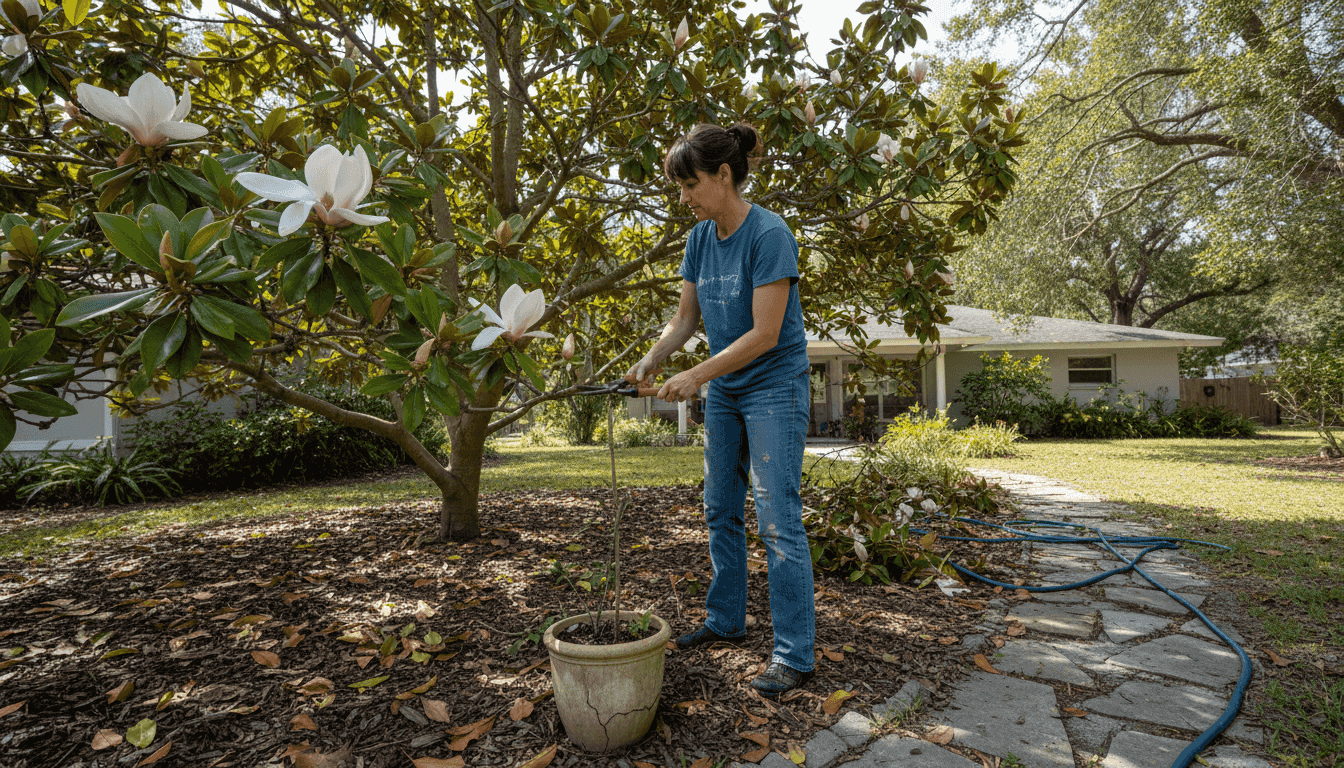
Pest populations thrive in dead wood and overgrown canopies. By reducing these habitats through regular pruning, you lower infestation risks by up to 30%. Cleaner branch structures provide fewer hiding spots for insects and create conditions that naturally discourage pest establishment.
Proper maintenance stimulates new, healthy growth that improves leaf density and overall vigor. When you remove competing or crossing branches, remaining limbs receive more nutrients and sunlight. This targeted approach strengthens the tree’s natural defenses and promotes robust development.
Maintaining proper airflow and sunlight exposure reduces fungal diseases that plague humid climates. Dense, unpruned canopies trap moisture and create ideal conditions for pathogens. Strategic thinning allows air circulation that keeps foliage dry and healthy.
Key health benefits include:
- Elimination of disease vectors and infected tissue
- Reduced pest habitat and infestation pressure
- Stimulated growth and improved canopy density
- Enhanced air circulation preventing fungal problems
- Stronger natural defenses against environmental stress
Pro Tip: Always prune during species-specific optimal windows to minimize tree stress. Timing matters enormously because pruning during active growth phases can shock trees and invite problems.
Enhancing Tree Health and Resilience Through Maintenance
Well-maintained trees have 50% fewer branch failures during high wind events, a critical advantage for Central Florida properties facing annual hurricane threats. This dramatic reduction in failure rates translates directly to fewer insurance claims and safer properties. Your investment in maintenance pays dividends when storms strike.
Maintenance improves branch structure to withstand hurricane force winds that regularly impact the region. Certified arborists identify weak attachment points, codominant stems, and structural defects that compromise stability. Addressing these vulnerabilities before storm season arrives prevents catastrophic failures that endanger lives and property.
Removing weak, dead, or structurally unsound limbs eliminates the most dangerous elements from your canopy. These problem branches act as projectiles during high winds, threatening windows, roofs, and vehicles. Proactive removal keeps your property safe and reduces liability exposure.
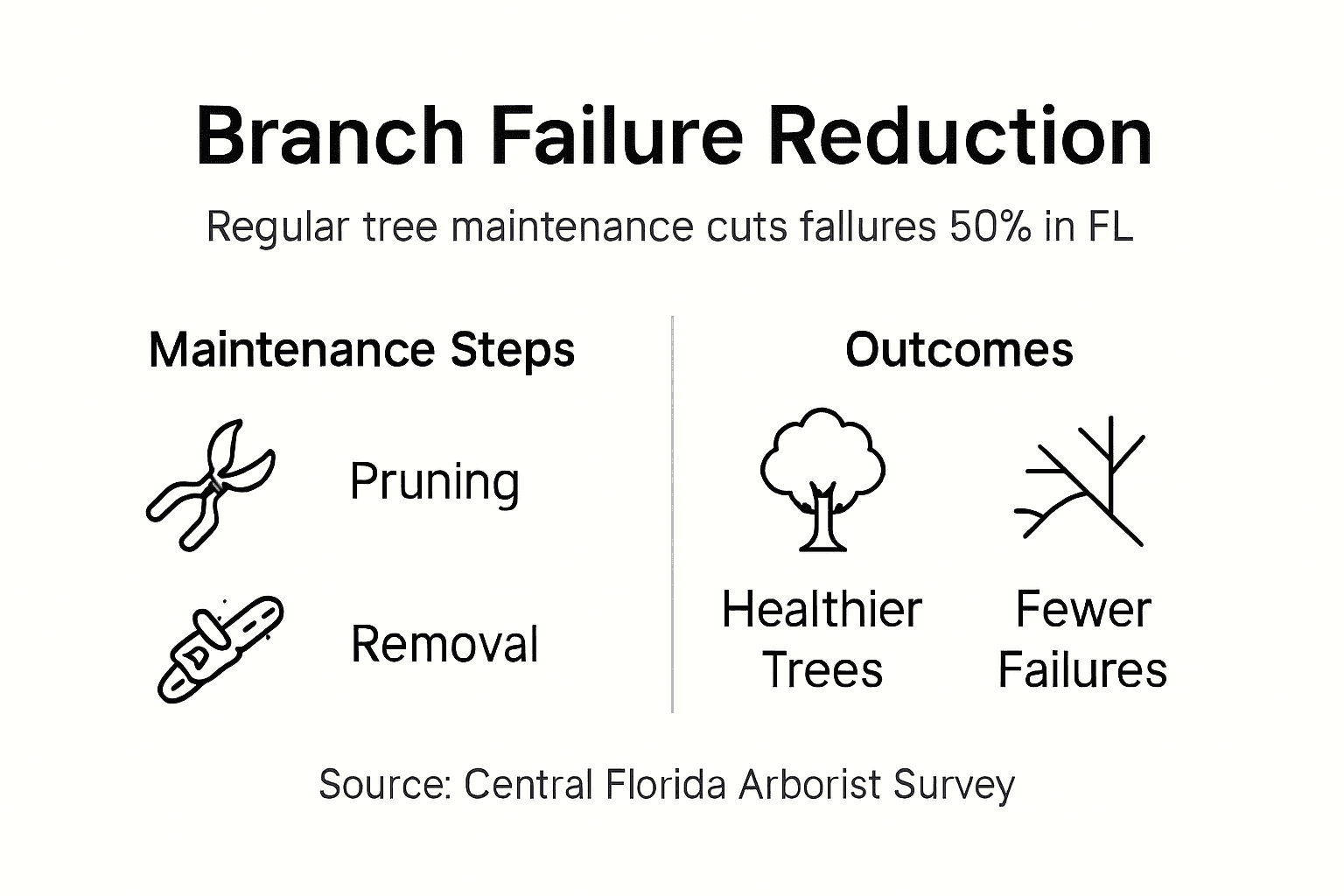
Proper trimming reduces wind resistance by creating open canopy structures that allow air to flow through rather than against tree crowns. This aerodynamic shaping dramatically lowers the mechanical stress trees experience during storms. Your trees bend with the wind instead of breaking against it.
Central Florida’s storm season vulnerability makes maintenance non-negotiable for responsible property owners. The period from June through November brings heightened risks that demand preparation. Trees properly maintained before storms arrive stand strong while neglected specimens fail spectacularly.
Structural benefits include:
- Improved branch attachment strength and stability
- Reduced wind resistance through strategic thinning
- Elimination of hazardous deadwood and weak limbs
- Enhanced storm resilience and reduced failure rates
- Protection of property and infrastructure during severe weather
Aesthetic Benefits of Regular Tree Maintenance
Pruning sculpts attractive canopy shapes that enhance overall landscape design and visual harmony. Skilled arborists create balanced, proportional forms that complement architectural styles and property layouts. Your trees become design elements rather than overgrown obstacles.
Denser, healthier foliage provides lush visual appeal while increasing valuable shade coverage. Well-maintained trees produce more leaves and fuller canopies that cool properties and reduce energy costs. The aesthetic and functional benefits work together to maximize your landscape investment.
Maintenance correlates with up to 36% increase in perceived property value, making it one of the highest-return landscape investments available. Buyers and tenants pay premiums for properties with mature, well-maintained trees that signal quality and care. Your maintenance costs return multiple times over in market value.
| Tree Condition | Property Value Impact | Curb Appeal Rating | Maintenance Cost |
|---|---|---|---|
| Well-Maintained | +36% premium | Excellent | $300-600/year |
| Moderate Care | +15% premium | Good | $150-300/year |
| Neglected | -10% penalty | Poor | $1000+ emergencies |
| Recently Removed | Variable impact | Reduced | One-time $500-3000 |
Key aesthetic advantages include:
- Sculpted canopy shapes enhancing landscape design
- Fuller, healthier foliage increasing visual appeal
- Improved property curb appeal attracting buyers
- Enhanced shade coverage and cooling benefits
- Significant property value increases justifying maintenance investment
Tree maintenance directly impacts property value through both aesthetic improvements and demonstrated care quality. This connection makes maintenance a financial decision as much as an aesthetic one.
Common Misconceptions About Tree Maintenance
Myth: All pruning harms trees. Reality: Proper pruning promotes health by removing problematic tissue and stimulating vigorous growth. The key lies in technique and timing, not whether to prune at all. When done correctly, pruning strengthens rather than weakens trees.
Myth: DIY pruning suffices for tree care. Reality: Certified arborists provide vital species-specific expertise that prevents costly mistakes. Different species require different approaches, and timing matters enormously. What works for oaks can damage palms, and vice versa.
Myth: More frequent pruning always helps. Reality: Over-pruning stresses trees and invites pests, potentially increasing pest risk by 30%. Trees need foliage to produce energy and maintain health. Excessive removal weakens natural defenses and creates entry points for pathogens.
Many homeowners believe they can match professional results with online tutorials and basic tools. The reality involves understanding tree biology, recognizing disease symptoms, and making cuts that promote proper healing. Mistakes cost far more than professional services would have.
Common misconceptions contrasted with facts:
- Myth: Topping trees controls height. Truth: Topping creates weak, hazardous regrowth and shortens tree lifespan.
- Myth: Trees heal themselves regardless of cut quality. Truth: Proper cuts close faster and resist decay better.
- Myth: Any time works for pruning. Truth: Wrong timing stresses trees and reduces effectiveness.
- Myth: Removing lower branches helps trees grow taller. Truth: Lower branches provide energy for growth and should remain.
- Myth: Paint or sealant helps cuts heal. Truth: Trees heal best when cuts remain untreated.
Pro Tip: Always verify arborist certification before hiring to ensure expert care. ISA certification demonstrates proven knowledge and adherence to industry standards that protect your investment.
When and How to Perform Tree Maintenance
Optimal pruning seasons vary by species, generally avoiding active growth periods when trees are most vulnerable. Certified arborists schedule pruning outside growth phases to minimize stress and maximize healing. Dormant seasons often provide ideal windows for major structural work.
Recommended maintenance frequency includes annual or biannual inspections and pruning for most Central Florida species. Young trees benefit from more frequent attention to establish proper form. Mature specimens require less frequent but more skilled intervention to maintain health and structure.
| Approach | Advantages | Disadvantages | Best For |
|---|---|---|---|
| DIY Maintenance | Lower immediate cost, flexible scheduling | High injury risk, potential tree damage, limited expertise | Minor cleanup only |
| Professional Service | Expert diagnosis, proper equipment, insurance protection | Higher upfront cost, scheduling required | Structural pruning, large trees |
| Hybrid Approach | Cost savings on simple tasks | Inconsistent results, delayed professional intervention | Small properties with mixed needs |
Steps for scheduling and executing proper maintenance:
- Schedule annual inspection with certified arborist to assess tree health and identify needs.
- Prioritize work based on safety risks, with hazardous branches receiving immediate attention.
- Plan major pruning for species-appropriate dormant or slow-growth periods.
- Execute work using proper techniques that promote healing and maintain structural integrity.
- Document maintenance history to track tree response and plan future interventions.
- Monitor trees between services for signs of stress, disease, or new hazards requiring attention.
Understanding pruning timing and methods makes the difference between beneficial maintenance and harmful intervention. Professional expertise ensures techniques match species requirements and seasonal conditions.
Benefits of Professional Regular Tree Maintenance
Certified arborists apply local knowledge to optimize tree care and safety in Central Florida’s unique environment. They understand which species thrive locally, what pests threaten them, and how seasonal patterns affect maintenance timing. This specialized expertise prevents problems that generic approaches miss.
Professional maintenance reduces emergency tree damage costs and improves long-term health outcomes. Preventive care costs far less than emergency removals or property repairs after failures. Your investment in regular maintenance prevents catastrophic expenses down the road.
Hiring professionals ensures adherence to safety, legal, and environmental standards that protect you from liability. Tree work involves serious risks that require proper training, equipment, and insurance. Professionals carry coverage that protects your property if accidents occur.
Key professional advantages include:
- Species-specific knowledge preventing costly mistakes
- Proper equipment for safe, efficient work at any height
- Insurance protection covering property damage and injuries
- Early problem detection before issues become emergencies
- Compliance with local regulations and permitting requirements
- Cost savings through preventive care versus emergency response
Certified arborists bring years of training and field experience that no amount of online research can replace. Their ability to diagnose problems early and recommend appropriate interventions protects both your trees and your investment.
Arborist certification demonstrates commitment to industry standards and ongoing education that keeps professionals current with best practices. This credential separates qualified experts from unlicensed operators who may cause more harm than good.
Practical Implementation of Regular Tree Maintenance
Schedule annual inspections and health assessments with certified arborists to establish baseline conditions and identify emerging issues. These regular checkups catch problems early when interventions remain simple and affordable. Think of them as preventive medicine for your landscape.
Routine pruning combined with stump grinding improves safety and aesthetics by eliminating hazards and creating clean, usable landscapes. Stumps harbor pests, create tripping hazards, and detract from property appearance. Complete removal prevents these problems while opening space for new plantings.
Post-removal care prevents new hazards and supports landscape health after major work. Proper cleanup, soil amendment, and replanting strategies maintain property value and ecological balance. Your landscape recovers faster with professional guidance through transitions.
Practical implementation steps include:
- Establish relationship with certified arborist for consistent care and documentation
- Create maintenance calendar marking optimal pruning windows for each species
- Budget for annual inspections and biannual maintenance as preventive investment
- Address hazards immediately rather than deferring until emergencies develop
- Keep records of all work performed to track tree response and plan future care
- Plan replacements for declining trees before removals become urgent
Establishing a proactive maintenance calendar ensures consistent care that prevents problems from developing. Regular attention costs less and achieves better results than reactive emergency responses. Your trees reward consistency with decades of beauty, shade, and value.
Protect Your Central Florida Property with Expert Tree Services
You’ve learned how regular maintenance cuts branch failures in half and enhances both tree health and property value. Now it’s time to put that knowledge into action with professional help you can trust. McCullough Tree Service brings certified expertise and local knowledge to every project.
Our professional tree trimming services apply the principles discussed throughout this article to your specific property needs. Our certified arborist services ensure proper diagnosis, timing, and technique for optimal results. When removal becomes necessary, our stump grinding services complete the job safely and thoroughly. Contact us today to schedule your consultation and protect your Central Florida property investment.
Frequently Asked Questions About Regular Tree Maintenance
What is the best time of year to prune trees in Central Florida?
Optimal pruning timing varies by species, but late winter through early spring works well for most Central Florida trees when they’re dormant. Avoid pruning during active growth periods or extreme heat to minimize stress and maximize healing.
How often should I schedule professional tree maintenance?
Most properties benefit from annual inspections with biannual pruning for young or fast-growing trees. Mature, established trees may only need professional attention every 2-3 years unless storm damage or health issues arise.
Can I perform safe tree trimming myself or should I always hire an arborist?
Small branches under 2 inches in diameter at ground level may be safe for DIY removal, but anything larger, higher, or near power lines requires professional help. The risk of injury and property damage makes professional service worthwhile for significant work.
What are the signs that my tree needs maintenance or inspection?
Watch for dead branches, unusual leaf discoloration, mushrooms at the base, cracks in bark, leaning trunks, or excessive deadwood in the canopy. Any of these signs warrant immediate professional inspection to prevent hazards.
How does tree maintenance improve property safety during hurricane season?
Regular maintenance removes weak branches, improves structural integrity, and reduces wind resistance, cutting branch failure rates by 50% during storms. This proactive approach prevents the flying debris and falling limbs that cause most hurricane-related property damage.
Recommended
- Tree Trimming in Florida: DIY Tips & Tricks
- 4 Reasons To Regularly Trim Your Trees – McCullough Tree Service
- What to Expect: Tree Trimming Costs in Florida
- Live Oak Tree Branches On The Ground