By: Shelby McCullough| Published: March 16, 2026
Central Florida’s urban areas experience temperatures up to 1.5 °C higher than surrounding regions due to the urban heat island effect. Strategic tree planting offers a powerful solution, delivering measurable cooling, energy savings, and aesthetic improvements for residential and commercial properties. This guide explores how the right trees reduce costs, protect buildings, and enhance property value while supporting local ecosystems. You’ll discover which species thrive with minimal maintenance, how to comply with Florida regulations, and practical design strategies that maximize environmental and financial returns.
Table of Contents
- How Tree Planting Cools Your Property And Lowers Energy Bills
- Native And Florida-Friendly Trees: Ecological Benefits And Easy Maintenance
- Protect Your Property: Wind-Resistant Trees And Legal Considerations
- Enhancing Your Property’s Value And Curb Appeal With Designed Tree Planting
- Discover Expert Tree Services For Your Central Florida Property
- Frequently Asked Questions
Key takeaways
| Point | Details |
|---|---|
| Urban cooling | Tree canopy reduces air temperature by up to 1.5 °C in heat-prone areas |
| Energy savings | Shade trees cut cooling costs by up to 9% when properly placed |
| Low maintenance | Native trees require less water and fertilizer once established |
| Storm protection | Wind-resistant species protect property and prevent soil erosion |
| Property value | Well-designed landscapes increase curb appeal and home value |
How tree planting cools your property and lowers energy bills
Central Florida’s concrete and asphalt surfaces absorb and radiate heat, creating urban heat islands that push temperatures significantly higher than rural areas. Increasing tree canopy lowers urban air temperature by 0.8 to 1.5 °C in these heat-prone zones. This cooling effect directly translates to lower energy bills for property owners who strategically plant shade trees.
The financial impact is substantial and measurable. Trees in Gainesville provide $1.9 million in annual savings from reduced air conditioning and heating use across the community. For individual properties, the numbers are equally compelling. Shade from trees reduces electrical usage by 4% to 9%, depending on placement and canopy density.
Placement matters tremendously for maximizing energy savings. Plant deciduous trees on the south and east sides of your property to block morning and midday sun during summer months. West-facing shade provides the most cooling benefit during afternoon heat. Evergreen windbreaks on the north side reduce winter heating costs by blocking cold winds.
Pro Tip: If you have solar panels, strategic tree trimming for solar panels maintains optimal energy production while preserving shade benefits for your home. Proper pruning creates a balance between renewable energy generation and natural cooling.
The cooling mechanism works through evapotranspiration and direct shading. Trees release water vapor through their leaves, cooling surrounding air. Dense canopy blocks solar radiation before it heats building surfaces. This dual action creates microclimates that reduce reliance on mechanical cooling systems.
Cooling effect by canopy coverage
| Tree Canopy Increase | Temperature Reduction | Energy Savings Potential |
|---|---|---|
| 10% coverage | 0.3-0.5 °C | 2-3% electrical use |
| 25% coverage | 0.8-1.0 °C | 4-6% electrical use |
| 40% coverage | 1.2-1.5 °C | 7-9% electrical use |
Research confirms the dominant role of vegetation in urban cooling strategies:
“Tree canopy cover is the most effective cooling strategy in urban environments, outperforming reflective surfaces and green roofs in temperature reduction per square meter of implementation.” – Nature Climate Change
For Central Florida properties, this means prioritizing tree planting over other cooling interventions delivers the best return on investment. The combination of immediate shade and long-term canopy growth creates compounding benefits that increase property value while reducing operating costs.
Native and Florida-friendly trees: ecological benefits and easy maintenance
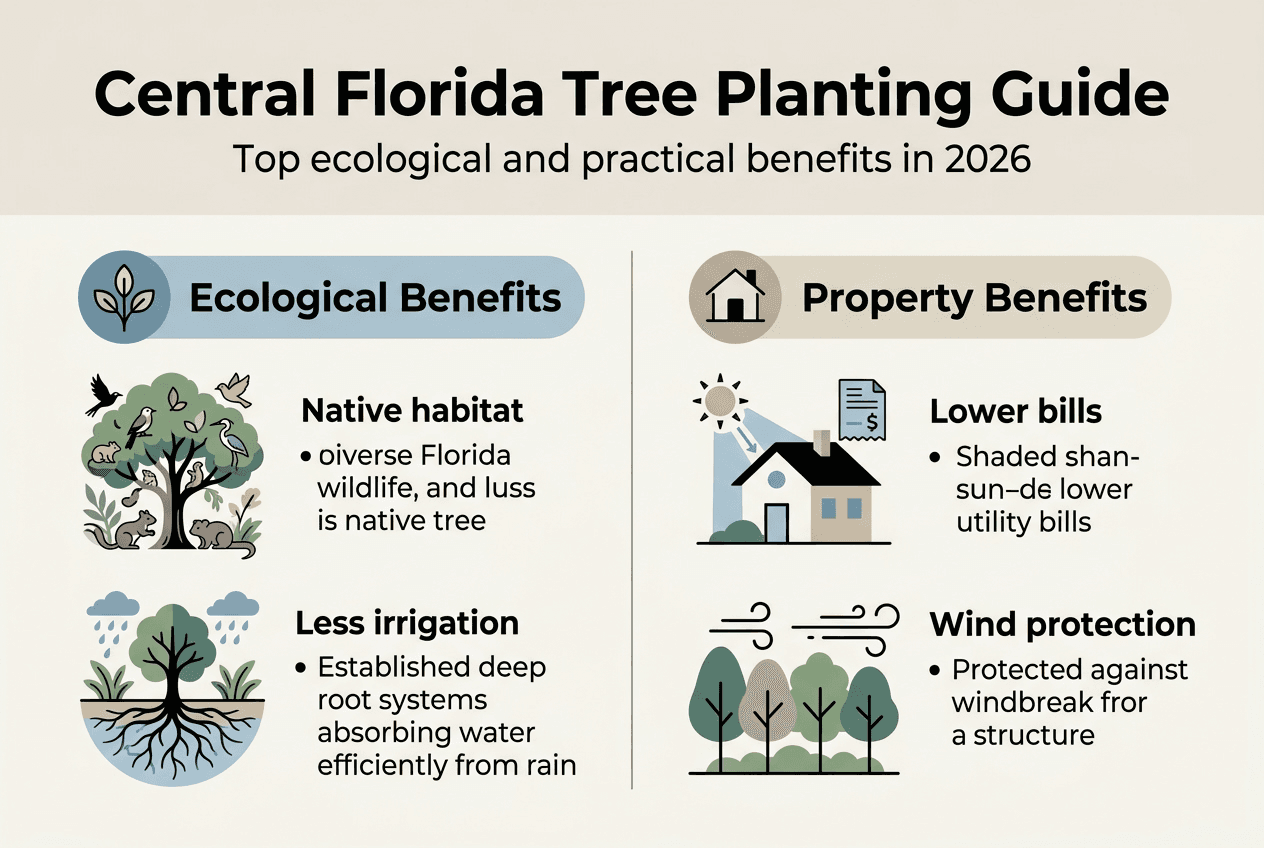
Choosing native tree species transforms your landscape maintenance from a constant battle to a sustainable system. Native trees require less supplemental irrigation and fewer fertilizers once their root systems establish, typically within two to three years. These species evolved to thrive in Florida’s sandy soils, high humidity, and seasonal rainfall patterns.
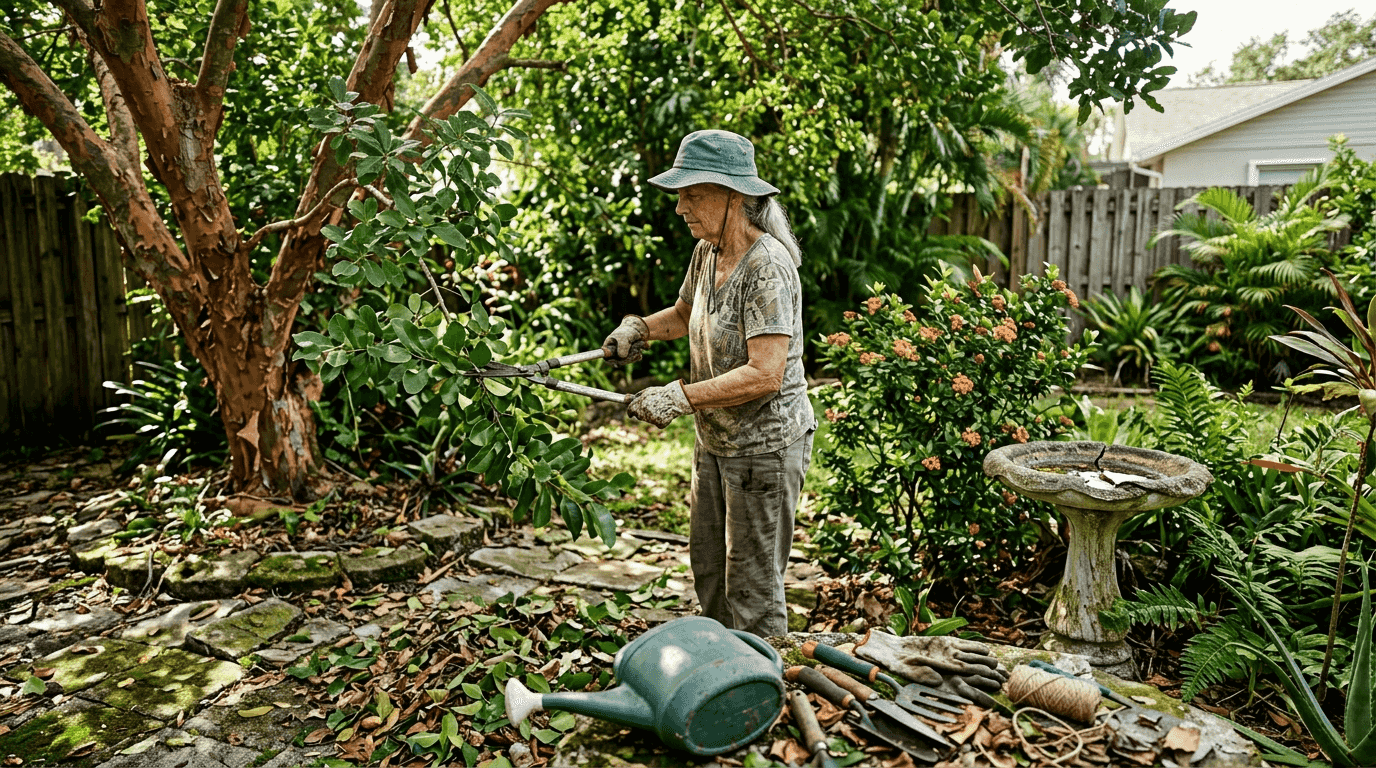
Florida-Friendly landscape principles reduce maintenance and improve environmental health by matching plants to local conditions. This approach eliminates the need for excessive watering, chemical treatments, and intensive care that non-native species demand. Your property becomes self-sustaining, requiring minimal intervention while supporting local wildlife.
Native trees create habitat for beneficial insects, birds, and pollinators that naturally control pest populations. This ecological balance reduces the need for pesticides while enhancing biodiversity. Species like Live Oak and Gumbo Limbo host dozens of native butterfly and bird species, creating living ecosystems that improve mental and physical health for property occupants.
Pro Tip: Choosing native trees for Florida yards boosts landscape longevity and reduces maintenance costs by 40% to 60% compared to exotic species that require constant attention.
Recommended native trees for Central Florida properties
- Live Oak: Drought tolerant, provides massive shade, supports 500+ insect species
- Gumbo Limbo: Extremely wind resistant, fast growing, distinctive red peeling bark
- Slash Pine: Tolerates wet and dry conditions, provides habitat for endangered species
- Dahoon Holly: Produces berries for wildlife, thrives in wet areas, evergreen foliage
- Southern Magnolia: Large fragrant flowers, dense shade, adapts to various soil types
- Bald Cypress: Handles flooding, beautiful fall color, extremely long-lived
The health benefits extend beyond ecological sustainability. Research demonstrates that access to green, healthy landscapes reduces stress, improves air quality, and encourages outdoor activity. Properties with mature native trees create environments that support both human wellness and environmental stewardship.
Water conservation becomes automatic with native species. Their deep root systems access moisture unavailable to shallow-rooted exotics. During Florida’s dry season, established natives continue thriving while imported species require supplemental irrigation. This resilience protects your landscape investment during drought periods and water restrictions.
Following the Central Florida tree planting guide ensures you select species appropriate for your specific microclimate, soil type, and property goals. Local conditions vary significantly across the region, making professional guidance valuable for long-term success.
Protect your property: wind-resistant trees and legal considerations
Florida’s hurricane seasons demand thoughtful tree selection to protect buildings and prevent property damage. Windbreaks reduce wind speed by up to 50% over distance, creating protective zones that shield structures from storm forces. Strategic placement of wind-resistant species minimizes debris hazards while stabilizing soil to prevent erosion.
Choosing the right tree species is crucial for wind resistance. Trees with strong wood, deep root systems, and flexible branches bend rather than break during high winds. Species selection determines whether your landscape becomes a protective asset or a liability during severe weather events.
Selecting wind-resistant trees: five essential steps
- Evaluate wood strength: Choose species with dense, flexible wood that resists splitting and breaking under stress
- Assess root architecture: Deep, spreading root systems anchor trees securely and prevent toppling
- Consider branch structure: Look for trees with strong branch attachments and natural taper from trunk to tips
- Match to site conditions: Plant trees appropriate for your soil drainage, sun exposure, and available space
- Plan for mature size: Ensure adequate clearance from buildings, power lines, and property boundaries at full growth
Pro Tip: Consult local authorities before tree removal or planting near property lines to avoid violations and potential fines that can reach thousands of dollars.
Wind resistance comparison for common Florida trees
| Tree Species | Wind Resistance | Growth Rate | Best Use |
| — | — | — |
| Live Oak | Excellent | Moderate | Large properties, shade |
| Gumbo Limbo | Excellent | Fast | Coastal areas, windbreaks |
| Slash Pine | Good | Fast | Mixed landscapes, habitat |
| Laurel Oak | Poor | Fast | Avoid in storm zones |
| Sand Pine | Good | Moderate | Sandy soils, screening |
Understanding local tree protection laws is essential to avoid fines and legal complications. Florida municipalities designate certain species as protected, requiring permits for removal regardless of property ownership. These regulations preserve community canopy and prevent impulsive removal of valuable trees.
Complying with tree protection regulations
- Research protected species lists for your specific municipality before any tree work
- Obtain required permits before removing trees above diameter thresholds
- Document tree health issues with professional assessments when removal is necessary
- Understand setback requirements for new plantings near property lines and utilities
- Verify HOA restrictions that may exceed local government requirements
The consequences of ignoring protection laws extend beyond financial penalties:
“Property owners who remove protected trees without permits face fines up to $5,000 per tree plus mandatory replacement requirements that can exceed original removal costs by 300%.” – Florida Tree Protection Enforcement
Working with certified arborists familiar with best trees for Orlando yards ensures compliance while optimizing your landscape for beauty and function. Professional guidance navigates complex regulations while selecting species that meet your aesthetic and practical goals.
The Florida protected trees regulations vary by county and municipality, making local expertise invaluable. Some areas protect all trees above certain diameters, while others focus on specific native species. Understanding these nuances before planting or removing trees prevents costly mistakes and legal complications.
Enhancing your property’s value and curb appeal with designed tree planting
Strategic landscape design using Florida-Friendly principles creates properties that stand out in competitive real estate markets. Florida-Friendly landscapes increase curb appeal leading to higher home values by 7% to 15% compared to properties with generic or poorly maintained landscapes. First impressions matter tremendously, and mature trees signal quality and permanence to potential buyers.
The financial benefits extend beyond resale value. Implementing Florida-Friendly practices can be financially beneficial through reduced maintenance costs, lower water bills, and decreased chemical inputs. Properties designed with native trees and appropriate placement require minimal ongoing investment while maintaining peak appearance year-round.
Community standards and HOA requirements often mandate certain aesthetic benchmarks. Well-designed tree planting satisfies these expectations while expressing individual style. Neighborhoods with consistent, high-quality landscaping maintain property values and create desirable living environments that attract quality buyers.
Design tips for integrating native trees effectively
- Layer plantings: Combine canopy trees, understory trees, and shrubs for depth and visual interest
- Create focal points: Use specimen trees with distinctive features as landscape anchors
- Frame views: Position trees to direct sight lines toward attractive features while screening undesirable views
- Plan for seasons: Mix evergreen and deciduous species for year-round color and texture variation
- Consider maintenance access: Leave adequate space for equipment and future care activities
- Blend shade and flowering trees: Combine functional shade providers with ornamental flowering species for aesthetic variety
Pro Tip: Blending shade and flowering trees creates year-round appeal with spring blooms, summer cooling, fall color, and winter structure that maintains property attractiveness through all seasons.
Landscape benefits comparison
| Benefit Category | Impact Level | Timeline | Return on Investment |
|---|---|---|---|
| Aesthetic appeal | High | Immediate to 3 years | 7-15% property value |
| Financial savings | Moderate | 2-5 years | 4-9% energy costs |
| Environmental health | High | 3-10 years | Ecosystem services |
| Maintenance reduction | Moderate | 3-5 years | 40-60% labor costs |
Professional design reduces long-term landscape maintenance by anticipating mature tree sizes, root zones, and canopy spread. Poor planning creates conflicts with structures, utilities, and hardscapes that require expensive corrections. Investing in proper design upfront eliminates these problems while maximizing aesthetic and functional benefits.
Properties designed for tree planting commercial properties follow similar principles but scale considerations for larger spaces and higher traffic. Commercial landscapes balance visual impact with practical concerns like parking lot shade, building protection, and customer experience enhancement.
Understanding tree planting considerations Florida specific to your region ensures selections thrive in local microclimates. Coastal properties face salt spray challenges, while inland areas deal with different pest pressures and soil conditions. Matching trees to these specific factors determines long-term success and minimizes replacement costs.
Discover expert tree services for your Central Florida property
Transforming your property with strategic tree planting requires expertise in species selection, placement, and ongoing care. McCullough Tree Service brings certified arborist knowledge to every project, ensuring your landscape investment delivers maximum environmental and financial returns. Our team understands Central Florida’s unique challenges and opportunities for creating resilient, beautiful outdoor spaces.
We support complete landscape transformation through professional tree trimming that maintains tree health while optimizing energy efficiency and storm preparation. Our expert tree removal services safely eliminate hazardous trees that threaten property or violate protection regulations. Planting guidance ensures you select native species that thrive with minimal maintenance while complying with local requirements.
Our expertise in native species and Florida regulations protects your investment from costly mistakes. We navigate permit requirements, select wind-resistant varieties, and design plantings that enhance property value while supporting local ecosystems. Every recommendation considers your specific goals, whether residential comfort or commercial appeal.
Contact us for personalized planting and care plans that maximize the cooling, protection, and aesthetic benefits discussed throughout this guide. Our Central Florida tree planting guide approach combines scientific knowledge with practical experience to create landscapes that perform beautifully for decades.
Frequently asked questions
What types of trees require less maintenance in Central Florida?
Native trees like Live Oak and Gumbo Limbo reduce irrigation and fertilizer needs once established, typically within two to three years. These species evolved to thrive in Florida’s climate, requiring minimal intervention while providing maximum benefits. Slash Pine and Dahoon Holly also offer excellent low-maintenance options for various site conditions. Choosing native trees for Florida yards eliminates the constant care demands of exotic species.
How do trees help reduce my property’s energy bills?
Shaded trees reduce cooling bills by blocking solar heat before it reaches building surfaces, cutting energy use by up to 9% when properly placed. West-facing shade provides the most afternoon cooling benefit during peak heat hours. Deciduous trees on south and east sides block summer sun while allowing winter warmth. Strategic tree trimming for solar panel efficiency balances renewable energy production with natural cooling benefits.
Are there legal restrictions on removing or planting trees in Florida?
Yes, Florida has tree protection laws requiring permits for removal depending on species, size, and location. Protected species lists vary by municipality, with fines reaching $5,000 per tree for violations. Some areas restrict all trees above certain diameter thresholds regardless of species. Understanding Florida protected trees regulations before any tree work prevents costly legal complications and mandatory replacement requirements.
Which tree species offer the best wind resistance for hurricane protection?
Live Oak and Gumbo Limbo provide excellent wind resistance through strong wood and deep root systems that anchor securely during storms. These species bend rather than break under high winds, protecting property from debris damage. Slash Pine and Sand Pine offer good resistance for specific soil conditions. Avoid Laurel Oak in storm-prone areas due to weak wood and shallow roots that increase failure risk during severe weather events.
Recommended
- Tree Planting Guide Central Florida for Homeowners
- Tree Planting for Commercial Properties: Boosting Value and Compliance
- Tree Planting Considerations for Central Florida Homes
- Tree Planting for Central Florida Developers: 50% Survival Boost