By: | Published: March 26, 2026
Most Central Florida property owners think about their trees only after something goes wrong. A branch crashes through a roof during a storm, or a diseased oak suddenly leans toward the house. That reactive approach is expensive and dangerous. Tampa’s 1,200 acres of canopy lost during the 2024 hurricane season is a stark reminder that neglected trees don’t just look bad. They create serious safety hazards, inflate insurance costs, and drag down property values. Regular tree maintenance isn’t a luxury for homeowners with extra time and money. It’s one of the smartest investments you can make in your property.
Table of Contents
- The real risks of neglecting tree maintenance
- Promoting tree health and longevity
- How tree maintenance boosts property value and curb appeal
- Safety standards and professional expertise in tree care
- Putting tree maintenance into action: A checklist for property owners
- Professional tree care made easy in Central Florida
- Frequently asked questions
Key Takeaways
| Point | Details |
|---|---|
| Neglect risks safety | Skipping tree care leads to storm damage, legal liability, and emergency costs. |
| Increases property value | Well-maintained trees can boost Central Florida property values by up to 19 percent. |
| Prevents disease and loss | Routine pruning and maintenance promote healthier, longer-living trees with fewer pest and fungus problems. |
| Certified experts matter | Hiring ISA-certified professionals ensures your trees get safe, standards-based care. |
The real risks of neglecting tree maintenance
When a tree fails during a storm, the costs pile up fast. Emergency tree removal after a storm can run two to three times more than scheduled maintenance, and that’s before you factor in roof repairs, fence replacement, or vehicle damage. Preventive care is simply cheaper than crisis management.
Central Florida’s hurricane season runs from June through November, and our trees take a beating every year. Tampa lost 1,200 acres (4.7%) of its tree canopy after the 2024 hurricanes, largely due to trees that weren’t structurally sound going into storm season. Proper storm damage preparation before peak season dramatically reduces that risk.
Insurance companies are paying close attention, too. Many insurers now require documented proof of ongoing tree maintenance before they’ll cover storm damage or liability claims. Without records, you could be left holding the bill entirely.
Here are the most common consequences of skipping regular tree care:
- Structural failure during high winds, leading to property damage or personal injury
- Pest and disease spread from one neglected tree to healthy trees nearby
- Liability exposure if a neighbor’s property or a visitor is harmed by a fallen branch
- Insurance claim denial due to lack of documented preventive maintenance
- Higher emergency costs compared to routine scheduled service
“The cheapest tree work you’ll ever do is the maintenance you schedule before a storm, not the emergency call you make after one.”
The professional trimming benefits go well beyond aesthetics. Removing weak, dead, or crossing branches before storm season is one of the highest-return actions a property owner can take. The University of Florida’s pruning guide confirms that structurally sound trees are significantly less likely to fail under wind load.
Promoting tree health and longevity
A tree isn’t just a fixed object in your yard. It’s a living system that responds to care, stress, and injury. Dead, damaged, or diseased branches don’t stay isolated. They become entry points for fungi, bacteria, and insects that can compromise the entire tree over time.
Here’s a simple four-step process for keeping your trees healthy year-round:
- Inspect your trees at least twice a year, once before storm season and once after. Look for cracks, dead wood, fungal growth, and unusual lean.
- Prune strategically by removing dead or crossing branches at the branch collar (the swollen area where the branch meets the trunk). Never cut flush with the trunk.
- Time it right. In Central Florida, late winter or early spring is generally ideal for most species, though palms and some tropicals have different windows.
- Follow up with mulching around the base to retain moisture and protect roots, and monitor for signs of stress in the weeks after pruning.
Proper pruning improves air circulation and directly reduces the spread of fungal diseases, which are especially common in Florida’s humid climate. Thinning the canopy lets sunlight and airflow reach interior branches, keeping the whole tree stronger.
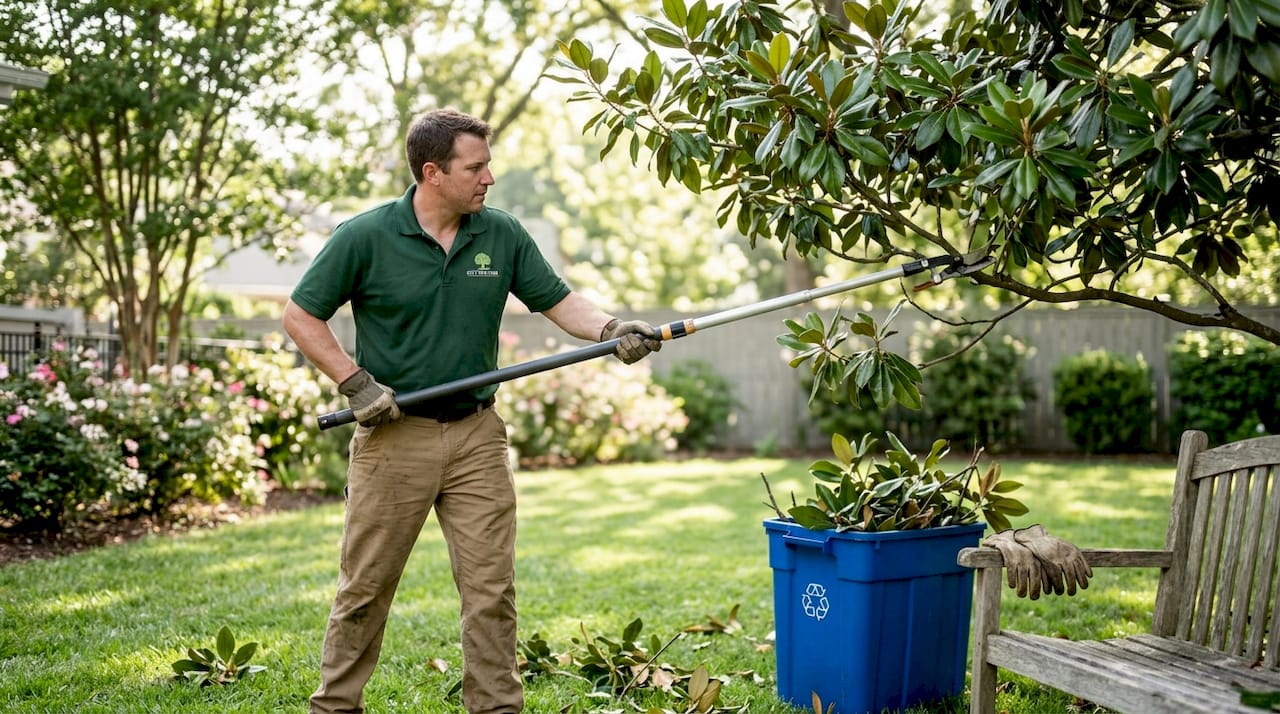
Pests like the Asian ambrosia beetle and laurel wilt disease are active threats in Central Florida. Catching early signs during routine inspections can save a tree that would otherwise need full removal. The Florida tree pruning and trimming guide outlines species-specific timing and techniques that apply directly to our region.
Understanding pruning importance also means knowing what not to do. Topping a tree (cutting the main trunk or large branches back to stubs) triggers rapid, weak regrowth and leaves the tree structurally compromised for years. It’s one of the most damaging things you can do, and it’s surprisingly common.
Pro Tip: The first 25 years of a tree’s life are critical for structural development. Young tree training, which involves guiding branch angles and removing competing leaders early, prevents major problems and expensive corrections later.
Routine care also plays a direct role in reducing branch failures over time. A well-maintained tree is more resilient, lives longer, and requires less intervention as it matures.
How tree maintenance boosts property value and curb appeal
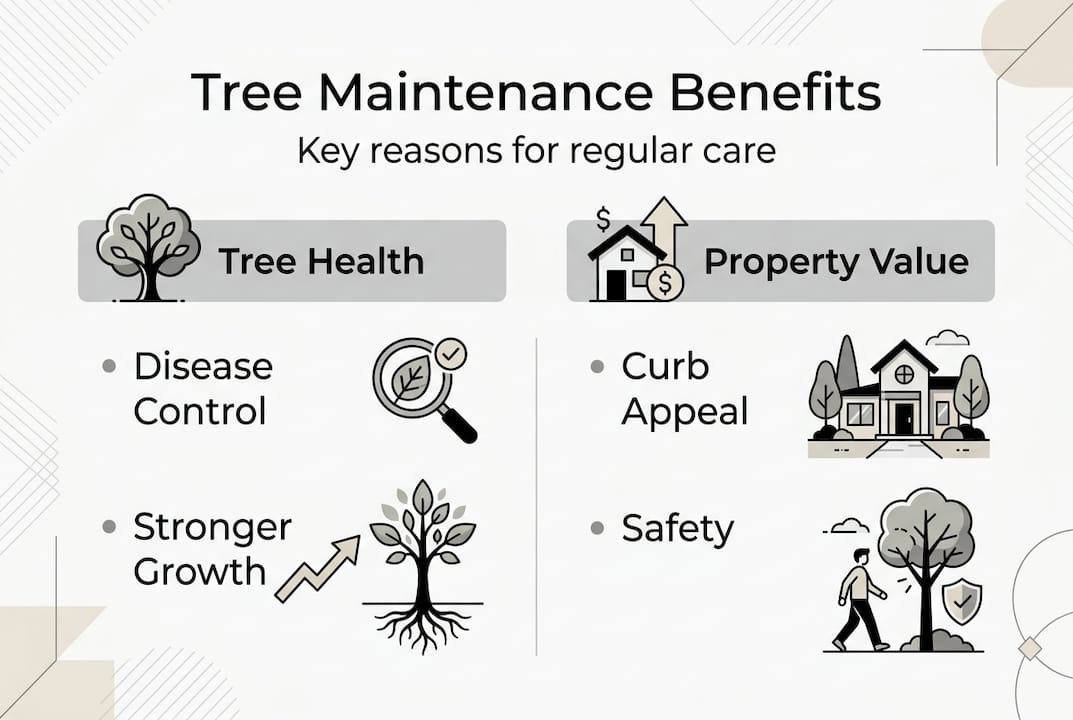
Here’s a number worth knowing: well-maintained trees increase property value by 7 to 19 percent. That’s not a minor bump. On a $400,000 home, that’s potentially $28,000 to $76,000 in added value from trees alone.
For commercial property owners, the stakes are just as high. Attractive, shaded landscaping draws higher-quality tenants, supports faster lease-up rates, and creates a better first impression for clients and customers. Curb appeal isn’t just about looking nice. It directly affects your bottom line.
| Property type | Estimated value increase | Key benefit |
|---|---|---|
| Single-family residential | 10 to 15% | Faster sale, higher offers |
| Multi-family residential | 7 to 12% | Better tenant retention |
| Commercial retail | 12 to 19% | Increased foot traffic |
| Office or mixed-use | 8 to 14% | Higher lease rates |
Shade trees also cut energy costs. Strategically placed trees on the south and west sides of a building can reduce cooling costs noticeably during Florida’s long, hot summers. That’s a direct, recurring financial benefit on top of the property value increase.
The benefits of tree pruning importance show up in buyer and tenant perception, too. A property with mature, healthy trees signals that the owner takes care of things. That trust translates into stronger offers and fewer negotiations.
For Central Florida property owners looking at the full picture, boosting property value through tree care is one of the most cost-effective strategies available. The return on investment from routine maintenance consistently outpaces the cost of the service itself.
- Mature shade trees reduce HVAC load and lower monthly utility bills
- Healthy canopy improves neighborhood desirability and comparable sale prices
- Attractive landscaping shortens time on market for homes being sold
- Well-spaced trees prevent root damage to foundations, driveways, and utilities
Safety standards and professional expertise in tree care
Not all tree work is equal. A chainsaw and a ladder don’t make someone a tree care professional, and the difference between a proper cut and a bad one can mean the life or death of a tree.
The International Society of Arboriculture (ISA) certifies arborists who meet rigorous standards for knowledge and practice. ANSI A300 guidelines set the technical specifications for how pruning, removal, and other tree work should be performed. ANSI A300 and ISA standards specifically identify harmful practices like topping and lion’s tailing (removing too many interior branches) that weaken trees and shorten their lifespan.
| Factor | Certified arborist | DIY or unlicensed crew |
|---|---|---|
| Pruning technique | Correct branch collar cuts | Often flush cuts or stubs |
| Disease identification | Trained to spot early signs | Frequently missed |
| Equipment | Proper tools, safely used | Variable, often inadequate |
| Insurance coverage | Fully insured and licensed | Usually uninsured |
| Documentation | Provides maintenance records | Rarely documented |
| Long-term tree health | Optimized | Often compromised |
Hiring a certified arborist protects you legally and physically. If an unlicensed crew damages a neighbor’s property or injures someone on your land, you may share liability. A certified professional carries the right insurance and follows the right standards.
“Improper pruning cuts, especially flush cuts at the trunk, remove the branch collar and destroy the tree’s natural defense zone, leaving it permanently vulnerable to decay.”
Pro Tip: Keep a written log of every tree service performed on your property, including dates, the work done, and the company’s license number. This documentation is essential if you ever need to file an insurance claim or defend against a liability suit.
For homeowners who want to understand the technical side, the tree pruning tips and pruning standards from IFAS provide a solid foundation. But for anything beyond light hand-pruning, professional help is the right call.
Putting tree maintenance into action: A checklist for property owners
Starting a maintenance routine doesn’t have to be complicated. The key is consistency and timing. In Central Florida, the window before hurricane season (roughly March through May) is the most important time to act.
Here’s a practical checklist to follow each year:
- Walk your property and visually inspect every tree. Look for dead branches, cracks in the trunk, fungal growth at the base, and any unusual lean.
- Prioritize your trees. Large trees near structures, young trees still developing structure, and any tree showing signs of stress should go to the top of your list.
- Schedule professional pruning before storm season. Annual structural pruning should remove no more than 25 to 40 percent of a tree’s foliage in a single session, focusing on branch collar cuts and avoiding topping entirely.
- Document everything. Record the date, the work performed, and the name and license number of the company you hired.
- Repeat annually. Tree care isn’t a one-time fix. Build it into your property maintenance calendar the same way you would HVAC service or roof inspections.
Understanding the maintenance role in Orlando means recognizing that our climate creates unique pressures. Rapid growth rates, year-round pest activity, and intense storm seasons mean Central Florida trees need more consistent attention than trees in cooler, drier climates.
Pro Tip: Always consult a certified arborist before removing any large tree or performing major structural pruning. What looks like a dying tree may be treatable, and what looks healthy may have hidden structural problems that only a trained eye can catch.
The structural pruning guide from the University of Florida is a reliable reference for understanding what proper work looks like, so you can evaluate any crew you hire.
Professional tree care made easy in Central Florida
You now have a clear picture of what regular tree maintenance involves and why it matters so much in our region. The next step is making sure the work gets done right.
At McCullough Tree Service, our ISA-certified arborists bring the expertise, equipment, and documentation practices that protect your trees, your property, and your investment. Whether you need routine tree trimming services, emergency tree removal experts, or just want to start with a professional assessment, we’re ready to help. Our team serves residential and commercial property owners across Orlando and Central Florida with fully licensed, insured service. If you’re not sure where to start, our tree care guide walks you through the basics. Reach out today for a customized estimate and let’s build a maintenance plan that works for your property.
Frequently asked questions
How often should I schedule tree maintenance in Central Florida?
Schedule professional tree inspections and basic maintenance at least once a year, preferably before storm season. Annual structural pruning and inspections keep trees structurally sound and reduce storm risk significantly.
What is the difference between trimming and pruning?
Pruning focuses on tree health and structure by removing diseased or damaged branches, while trimming shapes the tree for appearance. The Florida pruning and trimming guide explains how both practices serve different but complementary goals.
Can tree maintenance lower my energy bills?
Yes. Strategically placed and maintained shade trees can reduce energy costs by up to 10 percent by shading your home or building from direct sun during Florida’s hottest months.
Is tree maintenance required to maintain my insurance policy?
Most insurers require documented proof of ongoing maintenance to cover storm damage or liability claims. Without records, your claim may be denied even if the damage was storm-related.
Why should I hire a certified arborist instead of doing it myself?
ISA-certified arborists follow ANSI A300 standards that protect tree health and prevent costly mistakes like topping or flush cuts. They also carry proper insurance, which protects you from liability if something goes wrong on your property.
Recommended
- Regular Tree Maintenance Cuts Branch Failures 50% in FL
- Commercial tree maintenance: Boost property value by 20%
- The Benefits of Regular Professional Tree Trimming
- Role of Tree Maintenance: Enhancing Orlando Properties