By: | Published: June 13, 2026
TL;DR:
- Commercial landscaping improvements enhance curb appeal, water management, and tenant experience through engineered and aesthetic upgrades. Projects like rooftop renovations, irrigation overhauls, permeable paving, and urban space conversions create lasting value and attract tenants. Prioritizing infrastructure repairs, especially irrigation and soil health, is essential for sustainable, impactful landscape enhancements.
Commercial landscaping improvements are practical design and infrastructure upgrades that visibly enhance curb appeal, enable sustainable water management, and improve tenant experience at business properties. The best examples of commercial landscaping improvements go far beyond planting a few shrubs. They combine engineered hardscape systems, restored irrigation networks, permeable paving, and curated indoor plantings to transform underused or declining spaces into high-performing assets. This article covers real projects including the FedEx Courtyard rooftop renovation, Platinum Park’s irrigation overhaul, Lake Katherine Nature Center’s permeable parking lot, and the Hawthorn Commercial Building complex, giving you specific, proven ideas you can apply to your own property.
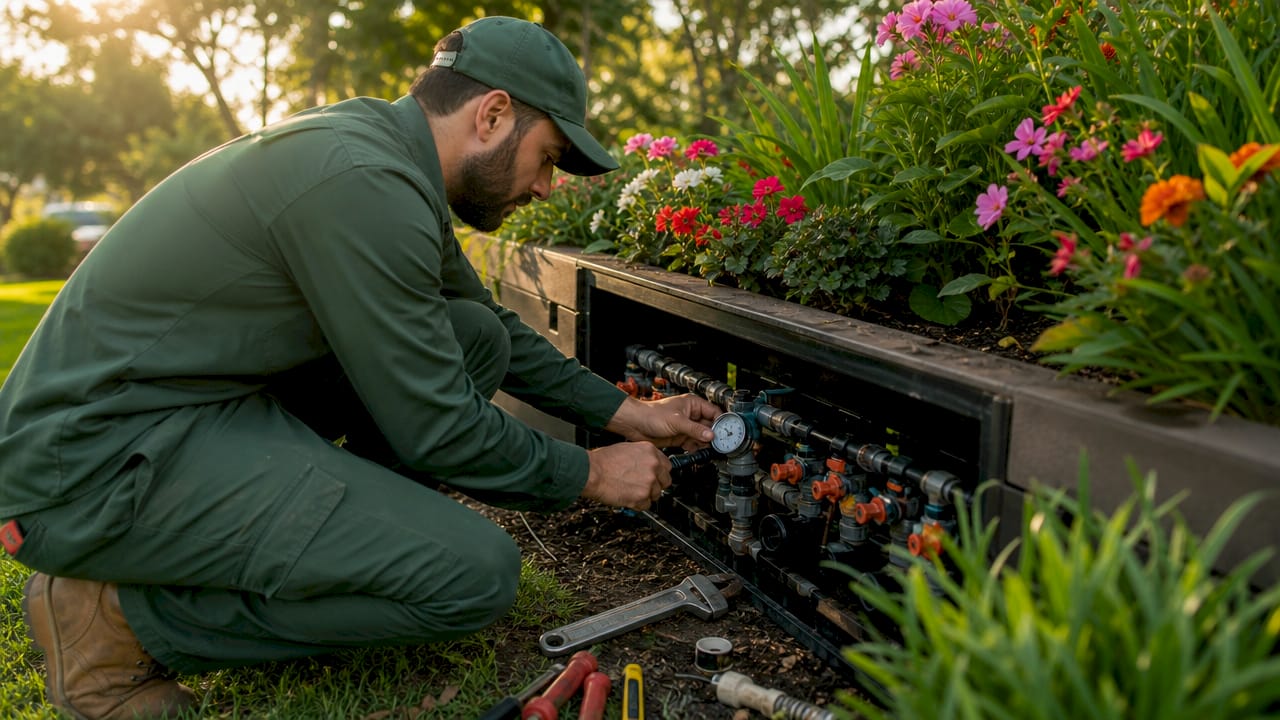
1. examples of commercial landscaping improvements: courtyard renovations
Courtyard renovations are among the most impactful commercial landscape design ideas available to property managers. A well-executed courtyard turns dead or underused outdoor space into a daily-use amenity that tenants and visitors actually want to spend time in.
The FedEx Courtyard rooftop project is one of the most comprehensive examples on record. It included full demolition, Wausau and IPE pedestal paver systems, custom planters, shade structures, putting turf, and a complete green roof system. Rooftop landscaping demands engineered substrate layers, drainage assemblies, and plant selections suited to wind exposure and load limits. That level of engineering is what separates a lasting corporate amenity from a costly maintenance problem.
What makes this type of renovation valuable beyond aesthetics is the daily usability it creates. Tenants who have access to an attractive outdoor space report higher satisfaction, which directly supports lease retention. For property managers, that translates into measurable return on the renovation investment.
- Pedestal paver systems allow for drainage beneath the surface while creating a level, attractive deck
- Green roof assemblies reduce building heat load and manage stormwater at the source
- Custom planters and shade structures define zones for seating, dining, and informal meetings
- Putting turf and specialty ground covers add visual interest without high maintenance demands
Pro Tip: When planning a courtyard renovation, specify site furnishings and shade structures in the initial design phase. Adding them later almost always costs more and disrupts the finished space.
2. irrigation and soil upgrades that restore commercial landscapes
Irrigation failure is the most common root cause of commercial landscape decline. Before any cosmetic fix makes sense, the water delivery system must work correctly.
The Platinum Park project in Plano, Texas, is a textbook example of this principle in action. The property had thin, stressed turf and struggling plantings throughout. Cycle-and-soak irrigation replaced the failing system, paired with a stable water connection and targeted soil amendments. The result was a transformation from patchy, brown turf to a lush, green landscape that holds its condition year-round.
Soil amendments matter as much as the irrigation schedule. Compacted or nutrient-depleted soil cannot absorb water efficiently, even with a perfectly functioning irrigation system. Addressing both together is what produces lasting results.
Systemic irrigation diagnostics require evaluating source pressure, component distribution, scheduling intervals, and soil infiltration rates. Fixing only one variable rarely solves the problem. This is why professional landscapers conduct full system audits before recommending any renovation work.
- Audit source water pressure and confirm it meets system design specifications
- Inspect all heads, valves, and lines for leaks, blockages, or coverage gaps
- Test soil infiltration rates to determine whether amendments are needed
- Program cycle-and-soak schedules that match plant water needs and soil absorption capacity
- Recheck system performance after 30 days and adjust scheduling as conditions change
Pro Tip: Schedule an irrigation diagnostic every spring before peak growing season. Catching pressure drops or broken heads early costs a fraction of what a full turf restoration runs.
3. permeable paving and stormwater management
Permeable paving is one of the most practical ways to improve business landscaping while meeting environmental and regulatory requirements. It manages stormwater at the source, reduces runoff, and holds up under commercial traffic loads.
Lake Katherine Nature Center installed a permeable parking lot that stores an estimated 120,000 gallons of stormwater per rain event. That volume is captured through permeable pavers and bioswales rather than flowing into storm drains or causing localized flooding. For any commercial property in a flood-prone area, that kind of on-site retention directly reduces liability and infrastructure stress.
The RH. Fulton Complex in Nashville replaced failing porous asphalt with Belgard permeable interlocking concrete pavers in 2012. The project included a fire department demonstration that released thousands of gallons of water onto the surface to prove infiltration capacity. That real-world performance test gave facility managers and specifiers the confidence to commit to the system. Belgard permeable interlocking concrete pavers support traffic loads while enabling infiltration and minimizing long-term maintenance overhead.
| Solution | Key Benefit | Best Application |
|---|---|---|
| Permeable interlocking concrete pavers | High load capacity with full infiltration | Parking lots, driveways |
| Bioswales | Filters runoff and reduces peak flow | Parking lot edges, medians |
| Porous asphalt | Lower upfront cost, moderate infiltration | Low-traffic lots |
| Green roof assemblies | Captures rain at the source, reduces heat | Rooftop courtyards |
For commercial properties pursuing LEED certification or local stormwater compliance, permeable paving delivers on both environmental goals and practical durability. It is one of the few landscaping enhancement examples that pays for itself through reduced maintenance and regulatory compliance savings.
4. hardscape features and amenity landscaping that elevate properties
High-performing commercial properties treat outdoor amenities as a direct investment in tenant experience and property prestige. The right hardscape features make a property more usable, more attractive, and more competitive in its market.
The Hawthorn Commercial Building complex demonstrates what a thorough amenity-focused renovation looks like. The project covered 1,020 square meters of landscaped area with granite stairs, timber seating, custom planters, and a Bluetooth-enabled irrigation system. Bluetooth irrigation controls allow facility managers to adjust watering schedules remotely, which reduces water waste and eliminates the need for manual adjustments after weather changes.
Indoor landscaping is equally effective for tenant engagement. The Aon Center in Chicago features lobby installations with orchids, succulents, and moss balls alongside illuminated vignettes on the 70th floor. Rotating seasonal installations keep the space feeling current and well-maintained, which signals to tenants and visitors that the property is actively managed.
- Multi-level walking paths with granite or natural stone create defined circulation and visual depth
- Custom architectural planters reinforce brand identity and frame building entrances
- Architectural lighting extends usability into evening hours and improves security perception
- Bluetooth or smart irrigation controls reduce water costs and simplify maintenance scheduling
- Indoor plant installations in lobbies and common areas improve air quality and tenant satisfaction
For commercial property landscaping tips that go beyond basic maintenance, amenity features like these represent the clearest path to differentiating your property from competing buildings in the same market.
5. transforming underused urban spaces into green commercial assets
Converting obsolete or underused infrastructure into green space is one of the most forward-thinking examples of outdoor improvements available to urban commercial property owners. These projects create community value while directly improving the appeal and usability of adjacent commercial areas.
A 300-meter viaduct conversion documented by Green-Tech used 2,000 tonnes of topsoil, a wildflower seed mix, and dedicated irrigation rings for trees to create a linear park above street level. The project turned a piece of unused infrastructure into an accessible green corridor that draws foot traffic and improves the surrounding commercial environment. Converting underused infrastructure into green space revitalizes urban environments and supports commercial property appeal and community engagement.
For property managers considering similar projects, the engineering requirements are significant but manageable with the right team.
- Structural load assessments must confirm the base structure can support soil, plants, and foot traffic
- Drainage design prevents waterlogging and protects the underlying structure from moisture damage
- Tree irrigation rings deliver water directly to root zones, reducing surface runoff and improving tree establishment
- Wildflower mixes reduce long-term maintenance compared to traditional turf while supporting pollinators
- Accessible pathways and seating areas increase foot traffic and dwell time near adjacent commercial tenants
Urban tree planting within these converted spaces adds shade, reduces urban heat, and creates the kind of environment that draws people back repeatedly.
6. tree planting and canopy management as business landscape transformation
Strategic tree planting is one of the most underused tools in commercial landscape design. Mature shade trees reduce surface temperatures, lower building cooling costs, and create the kind of visual presence that makes a property memorable from the street.
Tree planting for commercial properties involves selecting species suited to the site’s soil type, sun exposure, and available root space. Planting the wrong species in a constrained urban site creates long-term problems including root damage to pavement, utility conflicts, and storm vulnerability. A certified arborist can assess site conditions and recommend species that will thrive without creating maintenance headaches.
Canopy management matters just as much as initial planting. Trees that are not regularly trimmed grow into structures, block signage, and create hazards during storms. For commercial properties in Central Florida, where hurricane season runs from June through November, proactive canopy management is not optional. It is a direct risk management measure.
Pro Tip: Schedule tree trimming and canopy assessments in early spring, before storm season begins. Removing weak or crossing branches before high winds arrive dramatically reduces storm damage risk and liability exposure.
Key takeaways
The most effective commercial landscaping improvements combine infrastructure fixes like irrigation and drainage with visible amenity upgrades to deliver lasting value for tenants and property owners alike.
| Point | Details |
|---|---|
| Fix irrigation before cosmetics | Systemic irrigation failures cause most landscape decline; address them before any surface renovation. |
| Permeable paving pays off | Solutions like Belgard PICP manage stormwater, meet regulations, and reduce long-term maintenance costs. |
| Courtyard renovations drive retention | Engineered rooftop and courtyard upgrades create daily-use amenities that support tenant satisfaction and lease renewal. |
| Amenity features differentiate properties | Hardscape elements, smart irrigation, and indoor plantings signal active management and attract quality tenants. |
| Urban space conversion adds community value | Converting underused infrastructure into green corridors improves commercial appeal and foot traffic for adjacent businesses. |
What i’ve learned about prioritizing commercial landscaping projects
Property managers often ask me where to start when a commercial landscape needs work. My honest answer is always the same: start underground, not at the surface.
The Platinum Park case makes this point better than any theory could. The property looked like it needed new plants. What it actually needed was a functioning irrigation system and better soil. Spending money on new plantings before fixing the water delivery system is like repainting a house with a leaking roof. The cosmetic fix fails fast, and you end up paying twice.
Sustainable features like permeable paving are worth the upfront investment. I have seen property managers hesitate on the cost, then spend more on flood remediation and asphalt repairs over the following five years. The RH. Fulton Complex project is a good reference point. The fire department demonstration that proved the system’s infiltration capacity is exactly the kind of real-world validation that should give any property manager confidence in the specification.
The one thing most articles on this topic miss is the tenant experience angle. Outdoor amenities are not just nice to have. They are a competitive differentiator in markets where tenants have options. A well-designed courtyard, a lobby with rotating plant installations, or a shaded walking path can be the reason a tenant renews rather than relocates. That is a direct financial return that most property managers never quantify but absolutely feel when lease renewal rates hold steady.
— Mcculloughtreeservice
How Mcculloughtreeservice supports your commercial landscaping goals
Commercial landscaping improvements depend on healthy, well-managed trees as much as any hardscape or irrigation upgrade. Overgrown canopies block light from ground plantings, create storm hazards, and undermine the visual quality of even the most carefully designed outdoor spaces.
Mcculloughtreeservice works with commercial property managers across Orlando and Central Florida to keep trees healthy, properly shaped, and structurally sound. From professional tree trimming that opens up canopy light for understory plantings, to certified arborist assessments that identify risk trees before storm season, the team brings licensed expertise to every commercial property. Mcculloughtreeservice also handles land clearing and site preparation for properties undergoing larger landscape transformations. Contact Mcculloughtreeservice to schedule a commercial property assessment and get a detailed estimate for your next improvement project.
FAQ
What are the most impactful commercial landscaping improvements?
Irrigation system upgrades, permeable paving, and courtyard renovations consistently deliver the highest return for commercial properties. These improvements address both functional performance and tenant-facing aesthetics at the same time.
How does permeable paving benefit a commercial property?
Permeable paving captures stormwater on-site, reduces runoff, and supports regulatory compliance. The Lake Katherine Nature Center permeable parking lot stores an estimated 120,000 gallons per rain event, demonstrating the scale of impact possible on a single commercial site.
Should irrigation be fixed before replanting?
Yes. Irrigation and soil health are foundational and should be corrected before any cosmetic planting work begins. The Platinum Park project shows that failing irrigation is the primary cause of landscape decline, not plant selection or design.
What hardscape features add the most value to commercial properties?
Granite stairs, custom planters, architectural lighting, and smart irrigation controls are among the highest-value hardscape additions. The Hawthorn Commercial Building complex used all four across 1,020 square meters to create a property that stands out in its market.
Can underused urban spaces be converted into commercial landscaping assets?
Yes. Linear park conversions using topsoil, wildflower mixes, and tree irrigation systems turn obsolete infrastructure into green corridors that improve foot traffic and commercial appeal. These projects require structural assessments and professional engineering but deliver long-term community and commercial value.
Recommended
- Land clearing in landscaping: boost your property value
- Landscaping Tips for Homeowners: Practical 2026 Guide
- Expert Tips on the Land Clearing Process
- Top Landscaping Services in Central Florida: What to Know