By: Shelby McCullough| Published: March 13, 2026
Many homeowners believe their trees are healthy simply because they look green and full. This misconception can be costly and dangerous. Hidden diseases, pest infestations, and structural weaknesses often develop silently beneath the canopy, invisible to untrained eyes. In Central Florida, where hurricanes and storms regularly test tree stability, routine arborist inspections become essential for protecting both property and people. Professional evaluations catch problems early, ensure compliance with local regulations, and prepare your landscape for severe weather. This guide explains why regular inspections matter and how they save money while keeping your property safe.
Table of Contents
- Challenges Trees Face In Central Florida’s Climate
- How Routine Arborist Inspections Protect Your Trees’ Health
- Ensuring Compliance With Local Tree Ordinances And Regulations
- Applying Inspection Results: Maintenance, Safety, And Storm Preparation
- Protect Your Property With Expert Tree Care Services
Key takeaways
| Point | Details |
|---|---|
| Early detection saves money | Identifying tree diseases and pest damage early prevents expensive removal or property damage later |
| Compliance protects you legally | Regular inspections help you meet local tree ordinances and avoid fines for unpermitted work |
| Storm preparation reduces risk | Inspections reveal weak limbs and structural issues before hurricane season threatens your property |
| Property value stays strong | Healthy, well maintained trees enhance curb appeal and prevent unexpected hazards |
| Certified expertise matters | Professional arborists use specialized knowledge to evaluate tree health that homeowners cannot assess |
Challenges trees face in Central Florida’s climate
Central Florida’s unique environment creates perfect conditions for tree stress and failure. The region experiences intense humidity, frequent thunderstorms, and annual hurricane threats that test even the healthiest trees. High temperatures combined with moisture create ideal breeding grounds for pests and diseases that thrive in subtropical climates. Many tree species common to the area face threats uncommon in other parts of the country.
Frequent storms and hurricanes increase the risk of limb breakage and complete tree failure. Wind speeds during severe weather expose hidden structural weaknesses that develop over years. A tree that appears solid may harbor internal decay or root damage invisible from ground level. Without professional assessment, these vulnerabilities remain undetected until catastrophic failure occurs, often during the worst possible moment when storms strike.
Several specific threats target Central Florida trees:
- Laurel wilt disease spreads rapidly through native species
- Root rot develops in poorly drained soils common to the region
- Boring insects weaken tree structure from the inside out
- Lightning strikes damage vascular systems without obvious external signs
- Soil compaction from construction limits root development
Pro Tip: Schedule your annual inspection in early spring, at least two months before hurricane season begins in June, giving you time to address any issues discovered.
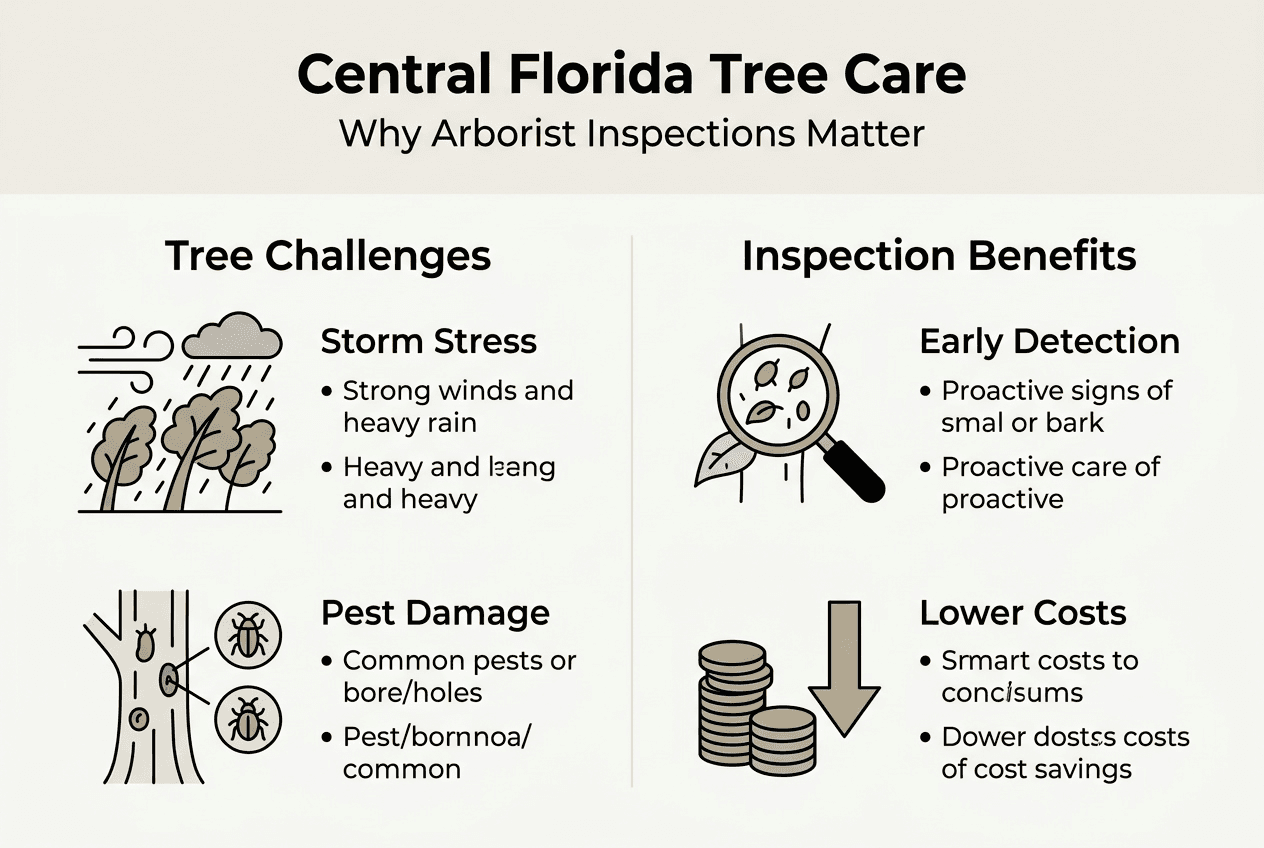
The combination of environmental stressors means Central Florida trees require more vigilant monitoring than those in temperate climates. Regular inspections detect problems while treatment remains possible and affordable. Waiting until symptoms become visible often means the damage has progressed beyond simple remediation. Professional arborists recognize subtle warning signs that indicate developing problems, from unusual bark patterns to slight changes in leaf color that signal internal distress.
“Trees in hurricane prone regions need proactive care, not reactive emergency response. The time to address structural issues is before the storm, not after.”
Property managers and homeowners who invest in routine inspections gain peace of mind knowing their trees won’t become projectiles or crushing hazards during the next major storm. The modest cost of regular tree trimming and assessment pales compared to emergency removal, property repairs, or injury liability. Understanding these regional challenges helps property owners appreciate why professional tree care represents essential maintenance rather than optional luxury.
How routine arborist inspections protect your trees’ health
Professional tree inspections go far beyond casual visual assessment. Certified arborists bring specialized training and diagnostic tools that reveal hidden problems invisible to property owners. They examine root systems, assess structural integrity, identify disease symptoms in early stages, and detect pest activity before infestations spread. This comprehensive evaluation provides a complete picture of tree health and risk factors.
Early detection of diseases dramatically improves treatment success rates and reduces costs. Laurel wilt, for example, can kill susceptible trees within weeks of infection. Arborists trained to recognize initial symptoms can recommend immediate intervention that may save the tree. Once the disease progresses to visible wilting and dieback, treatment options become limited and removal often becomes necessary. The financial difference between early treatment and late stage removal can reach thousands of dollars per tree.
Certified arborists use several assessment techniques during inspections:
- Resistograph testing measures internal wood density to detect decay
- Aerial inspection with climbing gear or lifts examines upper canopy
- Soil analysis evaluates nutrient levels and drainage issues
- Root collar excavation reveals girdling roots and structural problems
- Increment boring takes core samples to assess growth patterns
Pest infestations represent another critical concern that inspections address. Boring insects, scale insects, and other destructive pests often establish populations before homeowners notice damage. Arborists recognize the subtle signs of infestation, from unusual sawdust accumulations to slight changes in bark texture. Treating pest problems in early stages prevents the extensive damage that occurs when populations explode unchecked.
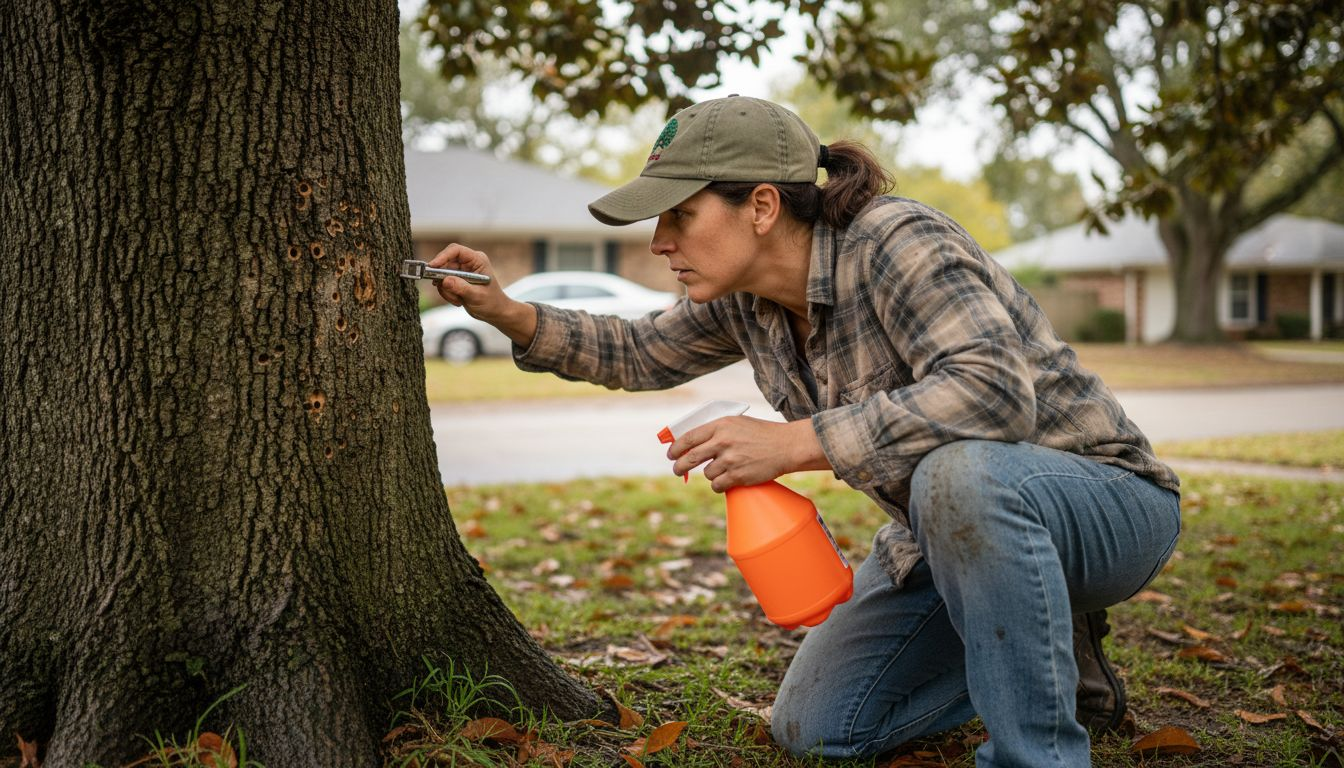
Pro Tip: Keep a file with all inspection reports and photos. This documentation proves valuable when selling property, filing insurance claims, or demonstrating compliance with local regulations.
Regular health assessments extend tree lifespan significantly. Trees receiving professional care live longer, maintain better structure, and resist environmental stresses more effectively than neglected specimens. The arborist can recommend specific treatments, from targeted fertilization to corrective pruning, that address identified deficiencies. These interventions maintain tree vitality and prevent the gradual decline that eventually necessitates removal.
Understanding indicators of unhealthy trees helps property owners recognize when professional assessment becomes urgent. However, many serious problems develop without obvious symptoms. Inspections scheduled annually or biannually catch issues during the window when intervention remains effective. For high value trees or those near structures, more frequent monitoring provides additional protection.
“The best time to treat a tree disease is before you can see it. Professional inspections make that possible.”
The cost benefit analysis strongly favors preventive inspections over reactive emergency response. A routine inspection typically costs a few hundred dollars, while emergency tree removal after failure can exceed several thousand dollars, not counting property damage or injury liability. Insurance may not cover damage from trees with documented maintenance neglect. Following current tree care best practices protects both your investment and your legal position should problems arise.
Ensuring compliance with local tree ordinances and regulations
Central Florida municipalities maintain strict regulations governing tree removal, pruning, and protection. These ordinances exist to preserve urban tree canopy, protect property values, and maintain environmental benefits trees provide. Property owners who fail to comply face significant fines, work stoppage orders, and potential legal complications. Routine arborist inspections help navigate this regulatory landscape by documenting tree conditions and identifying when permits become necessary.
Local tree ordinances typically require permits before removing trees above certain size thresholds or protected species. The specific rules vary by city, with some municipalities protecting all trees over six inches in diameter while others focus on heritage trees or specific species. Attempting to remove protected trees without proper authorization can result in fines reaching thousands of dollars per tree, plus mandatory replacement plantings at the property owner’s expense.
Common regulatory requirements across Central Florida include:
- Permit applications for trees exceeding diameter thresholds
- Arborist reports documenting tree condition and removal justification
- Replacement tree plantings to maintain canopy coverage
- Protected species designations requiring special approval
- Heritage tree preservation for specimens meeting age or size criteria
The following table summarizes typical fine structures and regulations in major Central Florida cities:
| City | Protected Tree Size | Permit Required | Typical Fine Range |
|---|---|---|---|
| Orlando | 8+ inches diameter | Yes for removal | $500 to $5,000 per tree |
| Winter Park | 6+ inches diameter | Yes for removal/pruning | $1,000 to $10,000 per tree |
| Kissimmee | 10+ inches diameter | Yes for removal | $250 to $2,500 per tree |
| Lake Mary | 8+ inches diameter | Yes for removal | $500 to $7,500 per tree |
Routine inspection reports serve as crucial documentation when applying for tree removal permits. Municipalities require professional assessment confirming the tree poses safety hazards, suffers from terminal disease, or creates other legitimate concerns justifying removal. Without this documentation, permit applications face rejection regardless of actual tree condition. Arborists familiar with local regulations can prepare reports meeting specific municipal requirements, streamlining the approval process.
Property managers and homeowners benefit from understanding that permit requirements apply to both removal and significant pruning in many jurisdictions. Removing more than 25% of a tree’s canopy may trigger permit requirements even without complete removal. Inspections help property owners plan tree work that complies with regulations while achieving landscape management goals.
Pro Tip: Before purchasing property, request tree inspection reports and verify the previous owner obtained required permits for any tree work. Unpermitted removal can create liability that transfers to new owners.
Regular arborist visits create a documented history of tree care and condition monitoring. This record proves valuable if disputes arise with municipalities or neighbors regarding tree management decisions. The reports demonstrate due diligence and professional oversight, strengthening your legal position. When planning new tree plantings, arborists can recommend species and locations that minimize future regulatory complications while maximizing landscape value.
Applying inspection results: maintenance, safety, and storm preparation
Arborist inspection reports provide detailed recommendations for maintaining tree health and safety. Understanding how to interpret and act on these findings maximizes the value of professional assessment. Reports typically categorize recommendations by urgency, from immediate safety concerns requiring prompt action to routine maintenance that can be scheduled during the next growing season. Property owners should prioritize interventions based on risk level and available resources.
Inspection findings commonly lead to several types of interventions:
- Corrective pruning removes dead, diseased, or structurally weak branches
- Crown reduction decreases wind resistance and reduces storm damage risk
- Cabling and bracing provide structural support for weak branch unions
- Root zone management improves soil conditions and prevents compaction
- Pest and disease treatment addresses identified infestations or infections
- Complete removal eliminates trees beyond saving or posing unacceptable risks
The following comparison helps property owners understand when different interventions become appropriate:
| Condition | Recommended Action | Reasoning |
|---|---|---|
| Minor deadwood, healthy structure | Routine pruning | Maintains health, prevents minor hazards |
| Significant decay in trunk | Removal | Structural failure risk too high |
| Pest infestation, early stage | Treatment and monitoring | Cost effective, preserves tree |
| Weak branch unions, valuable tree | Cabling and pruning | Provides support, reduces failure risk |
| Disease affecting 50%+ of canopy | Removal | Treatment unlikely to succeed |
| Healthy tree, poor location | Transplant or removal | Prevents future conflicts |
Preparing trees for hurricane season based on inspection findings significantly reduces property damage risk. The process begins with identifying and removing dead or dying branches that become projectiles in high winds. Thinning dense canopies allows wind to pass through rather than catching the full force that can uproot entire trees. Addressing structural weaknesses before storms arrive prevents failures that occur when wind loads exceed compromised branch strength.
Pro Tip: Complete all recommended storm preparation work by May 31st each year. Waiting until hurricane warnings are issued leaves insufficient time for proper tree care and may force you to accept whatever emergency services are available at premium prices.
Property owners should understand the distinction between routine tree trimming and complete tree removal. Trimming addresses specific branches while preserving the tree, appropriate when overall health remains good despite localized problems. Removal becomes necessary when structural integrity is compromised beyond repair, disease has progressed too far for treatment, or the tree’s location creates unacceptable ongoing risk. Arborist recommendations clarify which approach fits each situation.
Acting promptly on inspection recommendations prevents problems from escalating. A branch showing early decay can be removed safely and affordably during routine maintenance. Ignoring the issue allows decay to progress into the trunk, eventually requiring complete tree removal at much higher cost. Similarly, treating pest infestations in early stages prevents the extensive damage that occurs when populations establish throughout the tree.
Regular maintenance following inspection guidelines supports healthy growth patterns and reduces vulnerability to pests and diseases. Proper pruning techniques promote strong branch attachments and balanced canopy development. Adequate nutrition and water management strengthen trees’ natural defense mechanisms. These ongoing care practices extend the intervals between major interventions and reduce lifetime tree care costs.
Professional preparation services ensure work meets industry standards and local regulations. Improper pruning techniques can actually increase storm damage risk by creating weak growth patterns or leaving trees vulnerable to disease entry. Certified arborists follow scientifically based practices that enhance rather than compromise tree structure and health.
Protect your property with expert tree care services
Navigating Central Florida’s unique tree care challenges requires professional expertise and local knowledge. McCullough Tree Service provides comprehensive arborist inspections tailored specifically for the region’s climate, pest pressures, and regulatory environment. Our certified arborists bring years of experience identifying problems early, when intervention remains effective and affordable. We understand the specific threats facing Central Florida trees and how to protect your landscape investment.
Our professional tree trimming services maintain tree health while reducing storm damage risk. We follow industry best practices that promote strong structure and balanced growth. When trees cannot be saved, our expert removal services handle the job safely and efficiently, with full insurance coverage and proper licensing. Every service includes the documentation needed for permit compliance and insurance purposes. Our certified arborist team provides the expertise Central Florida property owners need to maintain beautiful, safe landscapes year round. Contact us today to schedule your comprehensive tree inspection and protect your property investment.
FAQ
How often should I schedule routine arborist inspections for my trees?
Most Central Florida homeowners benefit from annual inspections, ideally scheduled in early spring before hurricane season begins. Trees near structures, those showing stress symptoms, or specimens in high traffic areas may require biannual assessments. Young trees establishing root systems and mature trees approaching the end of their lifespan need more frequent monitoring than healthy middle aged specimens. Following recommended care schedules helps catch problems during the treatment window.
Can routine arborist inspections help me avoid costly tree removal?
Inspections frequently identify problems while trees remain treatable, preventing the need for removal. Early detection of diseases like laurel wilt significantly improves survival chances and reduces treatment costs compared to late stage intervention. Timely pruning removes diseased or damaged sections before problems spread throughout the tree. Pest treatments applied early stop infestations before extensive damage occurs. The inspection investment typically pays for itself by avoiding one emergency removal. Recognizing signs of unhealthy trees early makes the difference between treatment and removal.
What legal obligations do I have regarding tree inspections and maintenance in Central Florida?
While routine inspections are not legally mandated, they help ensure compliance with local tree ordinances that do carry legal weight. Many Central Florida municipalities require permits before removing or significantly pruning protected trees, with fines reaching thousands of dollars for violations. Inspection reports provide the documentation needed for permit applications and demonstrate due diligence in tree management. Property owners may face liability for damage caused by trees with obvious maintenance neglect. Understanding permit requirements protects you from legal complications and financial penalties.
How do arborist inspections help prepare trees for hurricane season?
Inspections identify structural weaknesses, dead branches, and disease issues that increase storm failure risk. Regular assessments before hurricane season allow time for corrective pruning, crown reduction, and other interventions that reduce wind resistance and improve stability. Arborists can recommend which trees need cabling or bracing to support weak branch unions that might fail in high winds. Removing hazardous trees before storms arrive prevents property damage and eliminates emergency situations during dangerous weather. Professional hurricane preparation services ensure your landscape can withstand Central Florida’s severe weather threats.
Recommended
- Arborist Certification: Why It Matters in Central Florida
- Comprehensive Orlando Tree Service by Certified Arborists
- Tree Health Assessment: Protecting Orlando Landscapes
- 4 Reasons To Regularly Trim Your Trees – McCullough Tree Service