By: | Published: April 21, 2026
TL;DR:
- Choosing the appropriate land clearing method depends on site size, goals, and environmental regulations.
- Manual clearing offers precision for small, sensitive sites, but is labor-intensive and slow.
- Mechanical methods are fastest and most cost-effective for large projects, but can impact soil and erosion.
Choosing the wrong land clearing method can cost you weeks of delays, thousands in unexpected expenses, and serious headaches with local regulators. Central Florida’s landscape is anything but simple: dense palmettos, sandy loam soil, scattered wetlands, and strict environmental oversight make every clearing project its own puzzle. Whether you’re prepping a residential lot in Orlando or breaking ground on a commercial development in Osceola County, the method you choose shapes your timeline, your budget, and the long-term health of your land. This guide walks you through your real options so you can make a confident, informed decision.
Table of Contents
- Key factors when choosing a land clearing method
- Manual land clearing: Pros, cons, and best uses
- Mechanical land clearing: Equipment and efficiencies
- Alternative methods: Burning, mulching, and selective clearing
- Our take: Don’t overlook the site’s future — match your method to your goals
- Find your perfect land clearing solution with local experts
- Frequently asked questions
Key Takeaways
| Point | Details |
|---|---|
| Match methods to site | The best land clearing method depends on your project size, terrain, and site goals. |
| Mechanical is fastest | Heavy machinery offers the most efficient clearing for large Central Florida properties. |
| Eco options available | Burning, mulching, and selective clearing support environmental goals if done right. |
| Permits often required | Most land clearing in Central Florida needs permits, especially for burning or tree removal. |
Key factors when choosing a land clearing method
Before you commit to any approach, you need to look at your specific site conditions and project goals. Rushing into a clearing contract without this groundwork is one of the most common and costly mistakes property owners make. Property size and local regulations can significantly impact which method is practical or even legal for your site.
Here are the core factors to assess before you start:
- Property size and terrain: A half-acre lot with a few trees calls for a completely different approach than a 20-acre tract with thick undergrowth and uneven terrain.
- Project timeline: If you’re on a construction schedule, a slower manual method could stall everything downstream.
- Budget: Equipment rental, labor, debris hauling, and permitting all add up fast. Know your ceiling before you get quotes.
- Environmental regulations: Florida has strict rules around wetland buffers, protected species, and vegetation removal near waterways. Violations are expensive.
- Debris removal and land use: Are you keeping topsoil? Replanting native vegetation? Plans for erosion control post-clearing matter more than most people realize.
- Local conditions: Central Florida’s sandy soil can shift and erode quickly after clearing. High summer rainfall means exposed soil can wash before your foundation is even poured.
For a detailed breakdown of regional considerations, the Central Florida land clearing tips resource covers how local weather patterns and vegetation types affect your planning.
Pro Tip: Always pull your county’s vegetation removal ordinance before signing any clearing contract. Some municipalities in Orange and Seminole counties require tree surveys and mitigation plans even for private lots.
Manual land clearing: Pros, cons, and best uses
With these factors in mind, let’s start with the most traditional technique: manual land clearing. This method involves workers using chainsaws, hand saws, axes, and other non-mechanical tools to remove vegetation one plant at a time. It’s the most controlled approach available, and it has a genuine place in the right project.
Manual clearing is labor-intensive but ideal for small areas or selective clearing where precision matters more than speed. If you’re working around existing trees you want to keep, landscaping features, or delicate soil structure near a water feature, manual work gives you that level of control.
Where manual clearing works best:
- Small residential lots under one acre
- Sites with protected trees that need to stay in place
- Environmentally sensitive areas near wetlands or conservation zones
- Projects where the budget is limited and the timeline is flexible
- Selective brush removal to improve aesthetics without full clearing
The trade-offs you need to know:
- Labor costs can be surprisingly high for anything beyond a small lot
- Progress is slow, especially with dense Florida palmetto scrub or thick vines
- Not practical for large commercial sites where time equals money
- Requires skilled workers who can distinguish between what stays and what goes
You can learn more about what land clearing includes before deciding if manual methods cover your scope.
Pro Tip: Combining manual clearing with targeted machine use gives you the best of both. Let a small skid steer handle the heavy brush piles while workers use hand tools for precision work near trees or property boundaries.
The honest reality is that purely manual clearing on anything over half an acre in Florida’s summer heat is a significant physical and logistical challenge. Plan accordingly and budget for realistic labor hours.
Mechanical land clearing: Equipment and efficiencies
While manual clearing is suited for small-scale work, most projects in Central Florida demand more efficient methods. Mechanical clearing uses heavy equipment to remove vegetation quickly and at scale. This is the go-to approach for new residential developments, commercial sites, and any property where time is the primary constraint.
Mechanical clearing is the fastest and most cost-effective option for large sites, making it the default choice for contractors and developers across the region.
The main equipment types you’ll encounter:
- Bulldozers: Push over trees and scrub, effective for full clearing. Can disturb topsoil significantly.
- Excavators: More precise than bulldozers, useful for grubbing stumps and working in tighter spaces.
- Forestry mulchers: A standout option in Florida. These machines grind trees and brush directly into mulch on-site, eliminating haul-away costs and leaving a layer of organic material behind.
- Skid steers with attachments: Versatile and maneuverable, good for mid-sized lots or working around structures.
| Equipment type | Best project size | Relative cost | Clearing speed |
|---|---|---|---|
| Bulldozer | Large (5+ acres) | High | Very fast |
| Excavator | Medium to large | High | Moderate to fast |
| Forestry mulcher | Small to large | Moderate | Fast |
| Skid steer | Small to medium | Moderate | Moderate |
Mechanical methods do come with trade-offs. Soil compaction from heavy machinery can affect drainage and future planting. Topsoil disruption is real, especially on sandy Florida lots where erosion follows quickly. Proper handling of tree debris removal is also part of the total project cost you need to factor in.
Pro Tip: Forestry mulchers are particularly well-suited for Central Florida because they eliminate the need for separate debris hauling, and the mulch layer they leave behind actually helps retain soil moisture during dry season.
Alternative methods: Burning, mulching, and selective clearing
Beyond machinery, some projects require unique or eco-conscious solutions. Florida actually has a long tradition of prescribed burning for land management, and on-site mulching has grown in popularity as a sustainable clearing alternative.
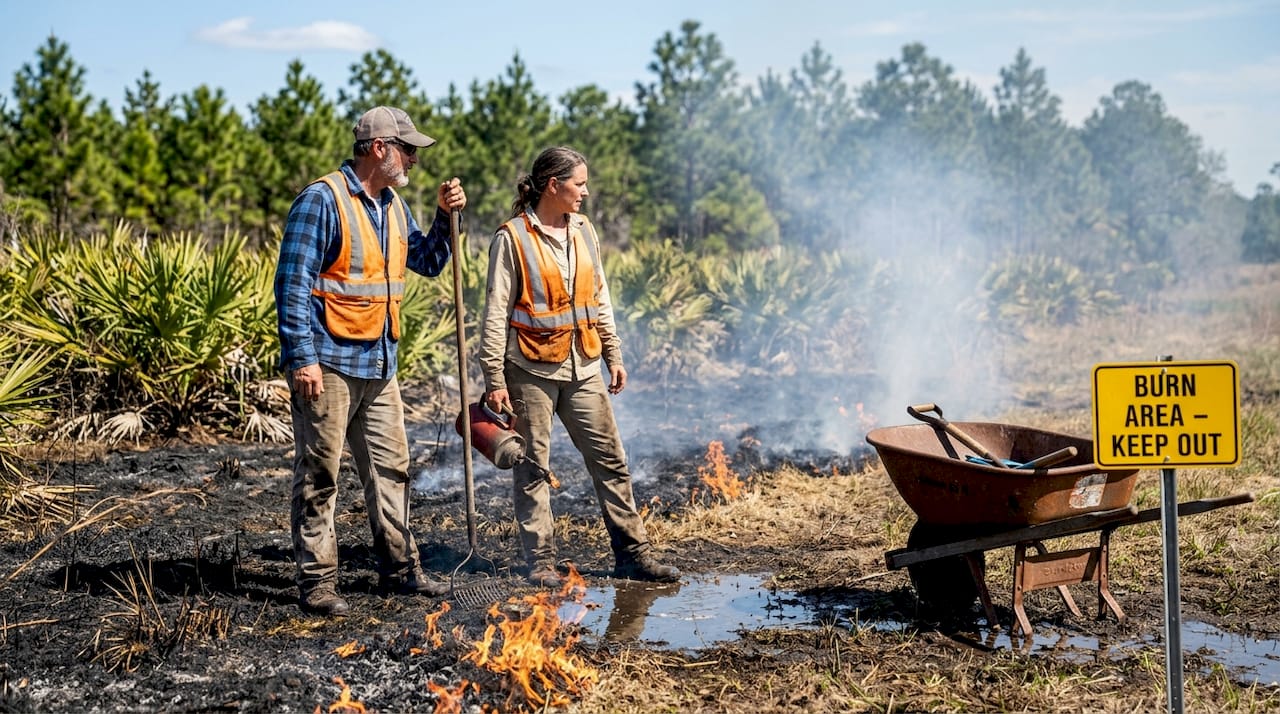
Alternative clearing methods may reduce waste and preserve soil health but can require permits or expert consultation before you proceed.
Controlled burning involves setting a managed fire to clear vegetation. It’s effective for large tracts of land and has ecological benefits for native Florida ecosystems. However, it requires a burn permit from the Florida Forest Service, careful coordination with neighbors and local fire authorities, and specific weather and wind conditions. It’s rarely practical for residential or urban development sites.
On-site mulching means grinding all cleared material into wood chips and spreading them across the property. This keeps organic matter in the soil, suppresses weed regrowth, and eliminates trucking costs. It’s increasingly popular for eco-conscious developers in Central Florida.
Selective clearing preserves chosen trees and native vegetation while removing only what’s necessary. This is ideal for projects where natural aesthetics or landscaping plans are central to the development vision.
| Method | Relative cost | Time required | Environmental impact |
|---|---|---|---|
| Controlled burning | Low | Fast | Mixed (permits required) |
| On-site mulching | Moderate | Moderate | Positive (soil health) |
| Selective clearing | Moderate to high | Slow to moderate | Very positive |
Always verify permitting requirements with your county and the Florida Forest Service before choosing burning or large-scale clearing. Non-compliance can result in project shutdowns and significant fines.
For projects where landscaping land clearing goals include improving curb appeal or property value, selective clearing and on-site mulching often deliver the best long-term results.
Our take: Don’t overlook the site’s future — match your method to your goals
Here’s something most clearing contractors won’t tell you upfront: the method you choose on day one affects your property for years. We’ve seen plenty of sites where the “fastest, cheapest” mechanical clearing approach left behind compacted soil that drained poorly, cost the owner a fortune in grading and drainage corrections, and delayed the project far longer than a more thoughtful method would have.
Land clearing is not just step one of construction. It sets up your drainage patterns, influences what vegetation returns naturally, and determines how your soil behaves under Florida’s intense rainfall. Choosing long-term land clearing strategies over short-term convenience is a decision you’ll feel for the entire life of the project.
Our recommendation: hire local experts who know Florida’s soil types, native species, and county-specific regulations. A certified arborist on-site during clearing can save you from accidentally removing protected trees or disturbing wetland buffers that trigger costly restoration requirements. Don’t just chase the lowest bid. Match your method to what the land needs and where it’s going.
Find your perfect land clearing solution with local experts
When your Central Florida property is ready for clearing, having the right team behind you makes all the difference. McCullough Tree Service brings certified arborist expertise to every land clearing project, whether you’re preparing a residential lot or breaking ground on a larger commercial site.
Explore all land clearing options to find the right fit for your budget and timeline. Our team also handles tree removal services as part of full site preparation, and we walk every client through the complete process using our property owners’ process guide. Contact us today for a site evaluation and a customized clearing plan built around your specific goals.
Frequently asked questions
Which land clearing method is fastest for a large property?
Mechanical methods offer the highest efficiency for big sites. Bulldozers and excavators can clear multiple acres per day, far outpacing manual or selective approaches.
Do I need a permit to clear land in Central Florida?
Most clearing projects do require permits, particularly when fire or significant tree removal is involved. Regulations may require permits for burning or extensive clearing, so always check with your county before breaking ground.
Is mulching better for the environment than burning?
On-site mulching boosts soil health by returning organic material to the ground, while burning can release pollutants and requires strict safety measures and legal permits to proceed.
How can I clear land on a tight budget?
Manual clearing can be cost-effective for small projects. Combining selective hand removal with a single equipment pass for heavy debris is a practical approach that keeps costs manageable without sacrificing results.
Recommended
- Land Clearing in Central Florida: Methods, Costs & Tips
- Effective Land Clearing Methods for All Budgets
- Complete Land Clearing Guide for Central Florida Homes
- Land clearing checklist 2026: Central Florida guide