By: Shelby McCullough| Published: May 10, 2026
TL;DR:
- Selective tree removal targets only problematic trees, protecting healthy landscape elements and supporting ecosystem health. Certified arborists oversee the process, ensuring compliance, safety, and preservation of property value, especially in storm-prone Central Florida. Properly executed, it reduces environmental impact, maintains canopy cover, and minimizes risks compared to clear-cutting.
Many property owners hear “tree removal” and immediately picture a crew leveling every tree on their lot. That assumption leads to hesitation, and sometimes to doing nothing when action is genuinely needed. Selective tree removal is something entirely different. It’s a targeted, strategic approach that removes only the trees causing problems while protecting everything else around them. For Central Florida homeowners and commercial property managers, understanding this distinction can mean the difference between a healthier landscape and one that’s either neglected or unnecessarily stripped bare.
Table of Contents
- What is selective tree removal?
- Selective vs. clear-cutting: Key differences for your property
- Steps in the selective tree removal process
- When and why to choose selective removal
- A certified arborist’s take: Balancing safety, compliance, and beauty
- Professional selective tree removal for Central Florida properties
- Frequently asked questions
Key Takeaways
| Point | Details |
|---|---|
| Protects landscape health | Selective tree removal saves desirable trees, avoids erosion, and sustains property beauty. |
| Requires certified assessment | A certified arborist helps you decide if removal or pruning best meets your needs. |
| Compliance is crucial | Local permits and safety planning prevent fines or accidents during tree removal. |
| Boosts long-term value | Choosing a selective approach maintains ecosystem function and increases property value over time. |
What is selective tree removal?
Selective tree removal is the practice of identifying and removing specific trees from a property based on defined criteria, while leaving surrounding trees, shrubs, and ground cover intact. The target criteria typically fall into three categories: tree health, safety risk, and aesthetic or structural concerns. A diseased oak that threatens neighboring healthy trees gets removed. A pine leaning dangerously over a roof comes down. A crowded cluster of young trees gets thinned so the strongest specimens can flourish. That’s selective removal at work.
The key distinction here is intentionality. Every tree that comes down has a documented reason. This is fundamentally different from clear-cutting, which removes all trees from an area regardless of their condition, age, or ecological value. As lumber capital research shows, clear-cutting leads to soil erosion, significant habitat loss, and recovery timelines that can stretch across decades, while selective removal maintains canopy cover, supports the local ecosystem, preserves aesthetics, and allows for natural regeneration.
“Not every tree problem requires full removal. Selective removal is about asking the right questions before any chainsaw gets started.” A certified arborist brings the training to answer those questions correctly.
The benefits of selective removal extend beyond what you can see on the surface. Preserving mature canopy trees protects soil moisture, reduces urban heat island effects, and keeps property values stable. In a state like Florida, where mature oaks and cypress trees can add tens of thousands of dollars in appraised value, selectively protecting your best trees while removing problem specimens is simply smart property management.
Selective vs. clear-cutting: Key differences for your property
With the basics covered, let’s compare selective removal to clear-cutting so you can make the best choice for your landscape.
The differences between these two approaches go well beyond how many trees come down. They affect soil stability, permit requirements, cost, and how quickly your property recovers and thrives afterward. The environmental cost gap is significant: selective harvesting methods leave 40 to 60 percent of tree volume standing, while clear-cutting may generate higher short-term revenue or rapid site clearing but produces sediment runoff loads 10 to 100 times higher than selective methods.
| Feature | Selective removal | Clear-cutting |
|---|---|---|
| Trees removed | Targeted individuals only | All trees on site |
| Canopy preserved | Yes, 40-60% or more | No |
| Soil erosion risk | Low | Very high |
| Permit complexity | Moderate (per species) | High (usually major permits) |
| Site recovery timeline | 1-3 years | 10-30 years or more |
| Property value impact | Neutral to positive | Often negative short-term |
| Ecosystem disruption | Minimal | Severe |
The long-term productivity data from UF/IFAS research supports this clearly: selective methods sustain forest and property productivity over time, while clear-cutting delivers short-term gains at the cost of long-term degradation. UF/IFAS also recommends early training and timely intervention to avoid situations where large-scale removals become necessary.
Here’s a practical look at the environmental and aesthetic trade-offs:
Selective removal advantages:
- Maintains existing shade and canopy structure
- Protects wildlife corridors and nesting sites on your property
- Preserves root systems that stabilize soil
- Allows neighboring trees to fill in naturally over time
- Keeps curb appeal and outdoor living spaces intact
Clear-cutting consequences:
- Exposes bare soil to Florida’s heavy rain events, triggering runoff
- Eliminates established shade, raising cooling costs during summer
- Removes habitat for birds and beneficial insects
- Can trigger stricter regulatory review and higher permit costs
- Leaves properties looking barren for years
Professional tree trimming paired with periodic selective removal is the approach most arborists recommend for maintaining a balanced, healthy landscape across Central Florida’s diverse property types.
Steps in the selective tree removal process
Understanding the value of selective removal leads us to exactly how the process unfolds on your property.
Selective tree removal is not a one-step operation. It’s a considered sequence of actions that requires professional involvement at several critical points. Skipping any of these steps can result in fines, property damage, or the unintended loss of healthy trees you actually wanted to keep.
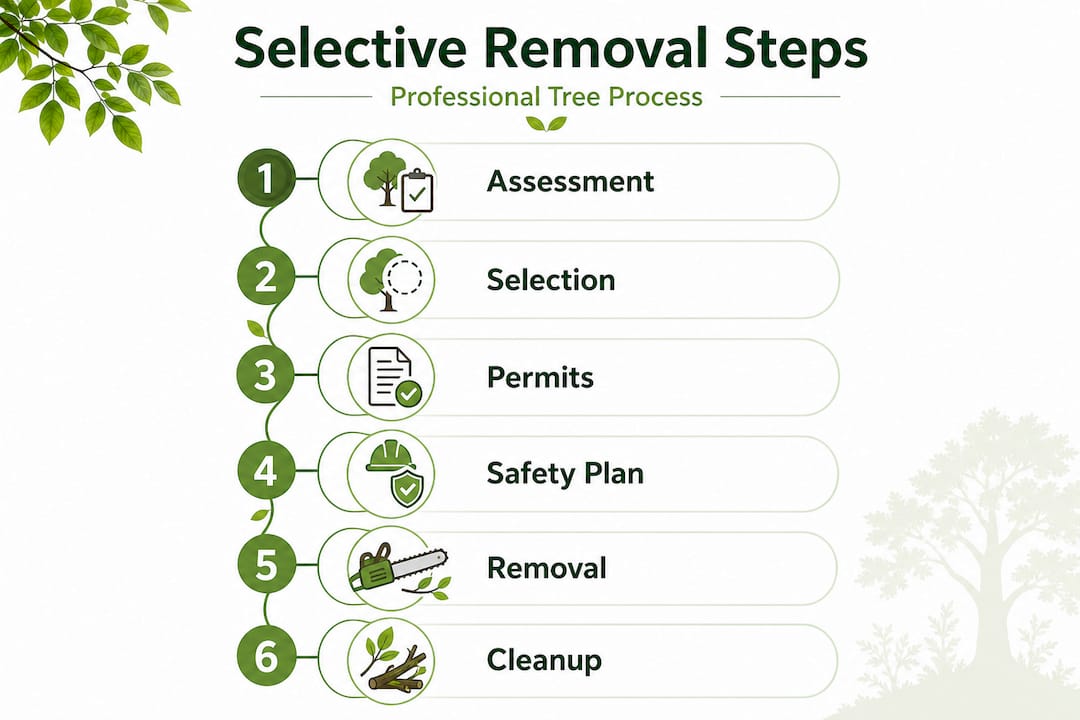
1. Initial assessment by a certified arborist
The process always starts with a thorough inspection. A qualified arborist walks the property, evaluates each tree’s structural integrity, checks for disease or pest activity, and identifies any root conflicts with structures or utilities. ISA Certified Arborists are specifically trained for this work, and engaging one first ensures the health assessment is accurate enough to determine whether removal is even necessary or whether pruning might solve the problem.
2. Identifying which trees to remove
Once the assessment is complete, your arborist will flag specific trees based on objective criteria. The decision combines health data, structural risk scores, and your goals for the property. Some trees get flagged for immediate removal; others go on a monitoring list for seasonal re-evaluation.
3. Reviewing permit requirements
This step surprises many property owners. In most Central Florida municipalities, removing even a single tree above a certain trunk diameter requires a permit. Permit requirements vary by city and county, and some protected species require additional review. Skipping this step can result in fines that dwarf the cost of the removal itself.
4. Safety planning and site communication
Before any equipment arrives, the crew lays out a detailed safety plan. This includes identifying drop zones, protecting nearby structures, locating underground utilities, and setting up barriers if neighbors or passersby are at risk. Good tree removal safety steps are non-negotiable on residential properties.
5. Removal using appropriate techniques
Depending on the tree’s size, location, and proximity to structures, crews may use rigging, climbing, aerial lifts, or sectional removal from the top down. The goal is control, not speed. Nearby plants, turf, and structures are protected throughout.
6. Site cleanup and final inspection
After removal, the site is cleared of debris, the stump is addressed (grinding or leaving based on your preference and any permit conditions), and a final walkthrough confirms that no damage occurred and remaining trees are undisturbed. A good overview of this full workflow is available in our tree removal guide for Orlando.
Pro Tip: Always ask to see an arborist’s ISA certification number and verify that they can pull the required permits on your behalf. A contractor who skips permits is putting your property and their liability on your shoulders.
When and why to choose selective removal
Now that the process is clear, let’s cover how to recognize when selective removal is truly the right choice for your property.
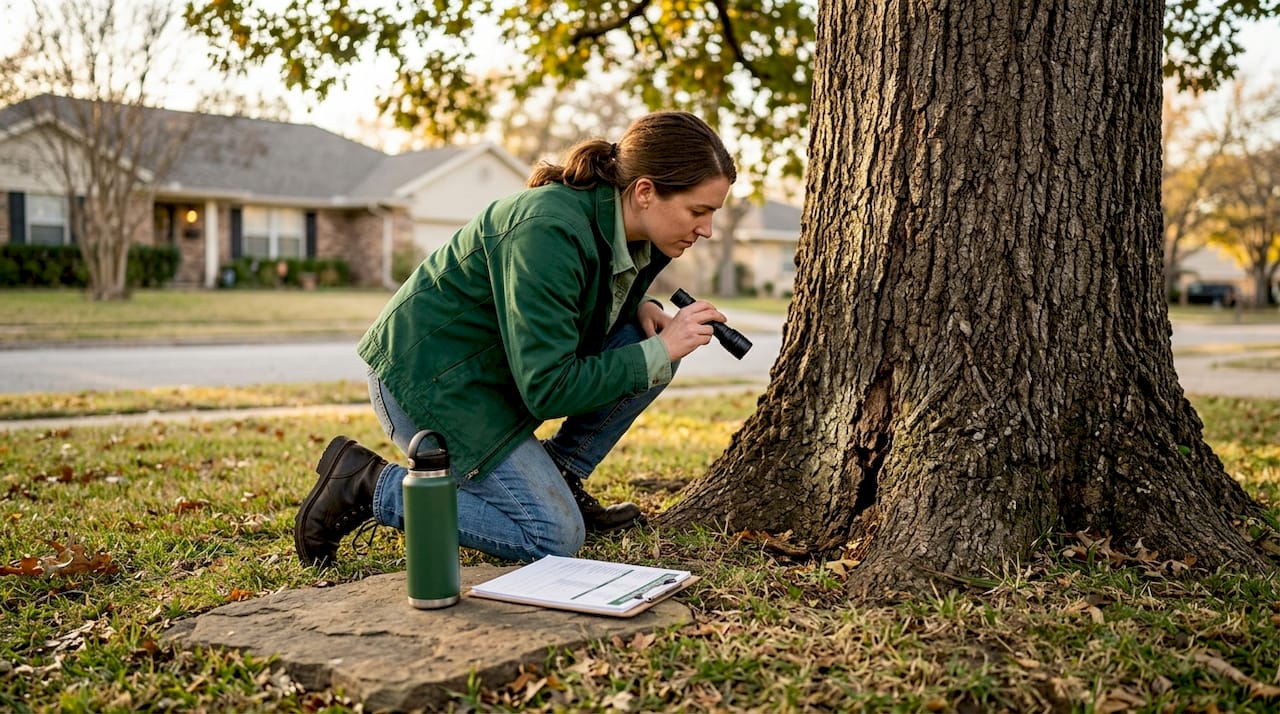
Property owners in Central Florida deal with specific tree challenges that make selective removal more relevant here than in many other regions. The combination of hurricane-force storms, sandy soil conditions, humidity-driven fungal diseases, and dense subtropical growth creates a landscape that needs active management.
Situations that call for selective removal:
- Storm damage or structural failure risk. Trees with split trunks, significant lean, or compromised root systems after a storm are candidates for removal before the next weather event.
- Disease or pest infestation spreading to healthy trees. Laurel wilt disease, for example, spreads rapidly among redbay and related species. Removing infected trees can stop the spread.
- Overcrowding that suppresses healthy growth. Too many trees competing for the same canopy space leads to weak, thin canopies and root competition that makes all of them more vulnerable.
- Trees threatening structures or power lines. A tree growing into a roofline, foundation, or overhead utility creates compounding risk over time.
- Improving sight lines and property aesthetics. Selective removal can open up views, improve natural light into a home, and make a landscape feel designed rather than overgrown.
Signs your trees need removal include visible decay at the base, large deadwood in the canopy, hollow trunks, and significant lean after a storm event. In some cases, what looks like a removal candidate can actually be saved through crown reduction or targeted pruning. That’s why having an arborist assess trimming vs. pruning as an alternative first is always worth the conversation.
For Central Florida property owners, ISA Certified Arborists are the standard for health assessments, helping you determine whether removal is justified or whether a less invasive intervention will produce the same outcome.
Pro Tip: Selective removal done correctly and with the right permits can actually prevent future fines. Some Florida municipalities fine property owners for allowing hazardous trees to remain on their lots when neighbors or the public are at risk.
A certified arborist’s take: Balancing safety, compliance, and beauty
Here’s the perspective you won’t always hear from a contractor focused on quick turnaround: selective tree removal is genuinely more difficult than clear-cutting. It requires more skill, more planning, and more professional judgment. And yet, it’s almost always the right call for a residential or commercial property.
We’ve seen it happen too many times in Central Florida. A property owner hires an unlicensed crew to take down a few trees quickly. No assessment. No permits. Maybe a problem tree comes down, but so does a healthy protected specimen that should have stayed. Now the property owner is facing a municipal fine, potential legal exposure if the removal caused damage to a neighbor’s property, and a yard that looks worse than when they started.
ISA Certified Arborists bring something to a project that no amount of experience alone can substitute for: accountability. When a licensed, certified professional recommends removal, that recommendation is defensible. When permits are pulled correctly, the property owner is protected. When the work follows a documented safety plan, liability risk drops significantly.
We also believe the importance of certified arborists goes beyond just legal compliance. Florida’s ecosystems are genuinely sensitive. The trees on your property provide habitat for protected bird species, filter stormwater runoff into our already stressed water table, and regulate temperatures in ways that directly affect your energy costs. Removing the wrong tree doesn’t just create an aesthetic problem. It can create a chain of consequences that takes years to fully undo.
The uncomfortable truth is that selective removal done right costs more upfront than a quick unlicensed job. But the protection it provides, for your property value, your legal standing, and your landscape’s long-term health, makes it the only approach worth considering.
Professional selective tree removal for Central Florida properties
If you’ve been managing tree issues on your own or delaying action because the process felt overwhelming, the good news is that certified professionals handle every step from assessment to final cleanup.
McCullough Tree Service provides fully licensed tree removal services across Orlando and Central Florida, backed by certified arborist support at every stage of the project. Whether you need a single hazardous tree removed or a broader selective thinning across a large commercial property, our team manages permits, safety planning, and site cleanup so you don’t have to. Our detailed tree removal guide for Orlando is a good starting point if you want to review the full process before reaching out for an estimate.
Frequently asked questions
Does selective tree removal require permits in Central Florida?
Yes, most cities and counties in Central Florida require permits for tree removal, particularly for large, mature, or species-protected trees. Permit thresholds and protected species lists vary by municipality, so checking with a licensed arborist before any work begins is strongly recommended.
How does selective tree removal benefit property value?
Selective removal preserves mature canopy, improves the aesthetic balance of a landscape, and maintains shade cover, all factors that appraisers and buyers recognize as genuine value. Removing problem trees while protecting healthy ones often produces a net positive effect on property valuation.
Can selective tree removal help prevent storm damage?
Yes. Removing structurally compromised, diseased, or overcrowded trees before hurricane season significantly reduces the chance of storm-related failures that damage roofs, fences, vehicles, and neighboring properties.
Should I hire a certified arborist for selective removal?
Hiring a certified arborist ensures that each tree is evaluated on objective health and safety criteria, that local permit requirements are met, and that the removal is performed with the expertise needed to protect surrounding trees and structures. It’s not optional if you want the job done correctly and legally.
Recommended
- Tree Pruning Importance: Key Benefits Explained
- Tree Removal and Property Value in Orlando
- Pruning Trees: Essential Tips and Benefits
- The Environmental Impact of Tree Trimming