By: Shelby McCullough| Published: March 19, 2026
Removing a tree from your Central Florida property can quickly turn dangerous without proper safety knowledge. Storm damage, aging trees, and overgrown branches create hazards that put your family and home at risk. This guide walks you through essential safety steps, legal requirements, and proven techniques to handle tree removal correctly, whether you tackle small jobs yourself or know when to call certified professionals who understand Florida’s unique challenges.
Table of Contents
- Understanding The Risks And Preparation For Tree Removal
- Legal Requirements And Permit Considerations In Central Florida
- Step-By-Step Tree Removal Safety Techniques For Homeowners
- Post-Removal Verification And Professional Help Considerations
- Safe Tree Removal Services By McCullough Tree Service
- How Do I Know If My Tree Needs Professional Removal?
- What Permits Are Required For Tree Removal In Central Florida?
- Are There Safer Alternatives To Removing A Tree Entirely?
- What Safety Gear Should I Use If Removing Branches Myself?
Key takeaways
| Point | Details |
|---|---|
| Permit compliance | Native trees over 5-12 inches in diameter require permits unless certified as hazardous by an arborist |
| Pre-removal assessment | Storm-prone Central Florida demands thorough inspection of tree condition before any removal work |
| Hinge cutting technique | Leave 10% of trunk uncut to control fall direction and prevent dangerous uncontrolled drops |
| Crown removal limits | Never remove more than 25% of a tree’s crown in one season to maintain structural integrity |
| Professional expertise | Certified arborists ensure legal compliance and safety for complex or hazardous removals |
Understanding the risks and preparation for tree removal
Central Florida’s weather patterns create unique tree hazards that demand careful planning before any removal work begins. Hurricanes, tropical storms, and severe thunderstorms weaken tree structures through wind damage, soil saturation, and root exposure. Pre-season risk assessment proves more effective than reactive removal after damage occurs, giving homeowners time to identify problems before emergency situations develop.
A thorough risk assessment starts with visual inspection of the entire tree. Look for obvious warning signs like severe leaning, large cracks in the trunk, dead or hanging branches, and exposed or damaged roots. Check where the tree might fall and identify anything in its path: your home, neighbor’s property, power lines, or other structures. Trees near buildings or utility infrastructure require professional evaluation regardless of their apparent condition.
Weather conditions play a critical role in removal safety. Never attempt tree work during windy conditions, rain, or when storms are forecast. Even light winds can affect how a tree falls, turning a controlled removal into a dangerous situation. Check the forecast for at least three days ahead and schedule work only during stable weather windows.
Your preparation checklist should include these essential steps:
- Clear the drop zone of vehicles, outdoor furniture, and anything valuable within twice the tree’s height
- Notify neighbors about your removal plans, especially if branches could affect their property
- Establish emergency contact numbers for local utilities and emergency services
- Arrange for proper debris disposal through municipal services or private haulers
- Inspect all cutting tools and safety equipment before starting work
Pro Tip: Walk around your property after every major storm to document new tree damage with photos. This creates a record for insurance claims and helps you track which trees need professional attention versus routine maintenance.
Before making any cuts, understand your tree trimming preparation requirements and review emergency tree service steps for storm-damaged trees. Proper preparation reduces accidents and ensures you have everything needed to complete the job safely.
Legal requirements and permit considerations in Central Florida
Florida’s tree protection laws exist to preserve native species and maintain urban canopy coverage throughout the state. Understanding these regulations prevents costly fines and legal complications that can arise from unauthorized tree removal. State and local governments enforce strict rules about which trees you can remove without permission.
Native trees exceeding specific diameter thresholds require permits before removal in most Central Florida municipalities. The diameter at breast height (DBH) measurement, taken at 4.5 feet above ground, determines whether your tree falls under permit requirements. Most jurisdictions set thresholds between 5 and 12 inches DBH for native species, though exact measurements vary by location.
Certain situations allow removal without standard permits. Certified arborists can issue hazard certifications when trees pose immediate danger to people or property. This certification process requires documentation of the specific hazard, such as severe storm damage, disease, or structural failure that creates imminent risk. Emergency removals still need proper documentation even when permits are waived.
Violating tree removal regulations carries serious consequences. Fines can reach thousands of dollars per tree, and some jurisdictions require replacement plantings at ratios of 2:1 or 3:1 for illegally removed trees. Property values may decrease if you remove protected trees without authorization, and future permit applications face increased scrutiny after violations.
Key permit considerations include:
- Identifying whether your tree species appears on local protected lists
- Measuring DBH accurately before assuming no permit is needed
- Allowing 2-4 weeks for permit processing in most municipalities
- Understanding that permits may require replacement tree plantings
- Keeping all permit documentation and arborist certifications on file
Local municipalities often maintain additional rules beyond state requirements. Some neighborhoods have homeowner association restrictions that further limit tree removal options. Orlando, Winter Park, and surrounding communities each enforce their own tree ordinances with varying protected species lists and size thresholds.
Navigating tree permits in Central Florida becomes simpler when you consult the comprehensive guide to tree removal in Orlando before starting any project. Professional arborists stay current on changing regulations and can handle permit applications on your behalf.
Step-by-step tree removal safety techniques for homeowners
Proper cutting technique separates safe tree removal from dangerous accidents. The hinge cutting method controls fall direction by leaving approximately 10% of the trunk uncut, creating a hinge that guides the tree’s descent. This technique requires precision and understanding of wood mechanics to execute correctly.
Avoid flush cuts that remove the hinge entirely or stub cuts that leave too much holding wood. Flush cuts eliminate directional control, causing trees to fall unpredictably or twist during descent. Stub cuts prevent the tree from falling at all, leaving it dangerously suspended and requiring difficult corrective cuts under tension.
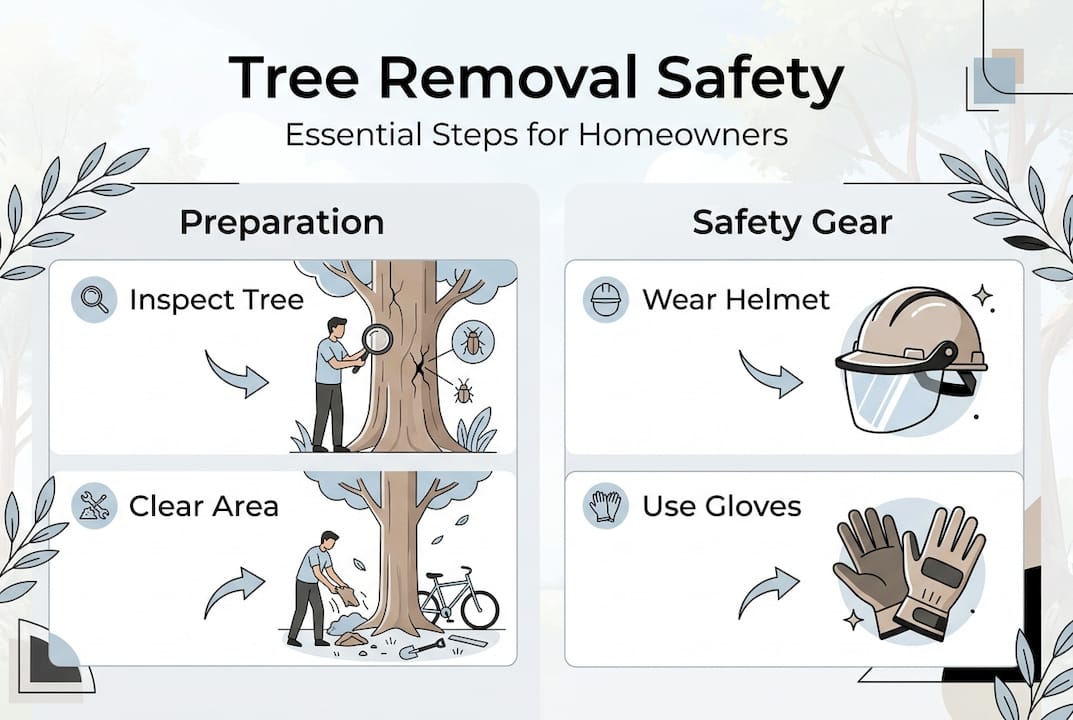
Crown removal limits protect both tree health and structural integrity during partial removal work. Never remove more than 25% of a tree’s crown in a single season, as excessive removal stresses the tree and may cause decline or death. This rule applies even when removing hazardous branches, requiring you to prioritize which limbs pose the greatest risk.
Follow this numbered sequence for safe tree removal:
- Inspect the tree from all angles to identify lean direction, weight distribution, and potential obstacles
- Clear the drop zone to twice the tree’s height in the fall direction and establish escape routes at 45-degree angles from the fall line
- Set up a safety perimeter with caution tape or barriers to keep people and pets away
- Make the notch cut on the side facing your intended fall direction, angling down at 45 degrees to one-third trunk diameter
- Create the felling cut on the opposite side, slightly above the notch bottom, leaving 10% of trunk diameter as your hinge
- Retreat immediately along your escape route as the tree begins falling
- Wait until the tree completely settles before approaching to begin limbing and bucking
| Cutting Method | Control Level | Risk Factor | Best Use Case |
|---|---|---|---|
| Hinge cutting | High | Low | Standard removals with clear drop zones |
| Flush cutting | None | Very High | Never recommended for any situation |
| Stub cutting | Minimal | High | Never recommended for any situation |
| Sectional removal | Highest | Medium | Trees near structures or in confined spaces |
Proper equipment and protective gear are non-negotiable for every cutting step. Wear a hard hat with face shield, safety glasses, hearing protection, cut-resistant gloves, and steel-toed boots. Use sharp, well-maintained chainsaws or hand saws appropriate for your tree’s size. Dull blades require excessive force and increase accident risk.
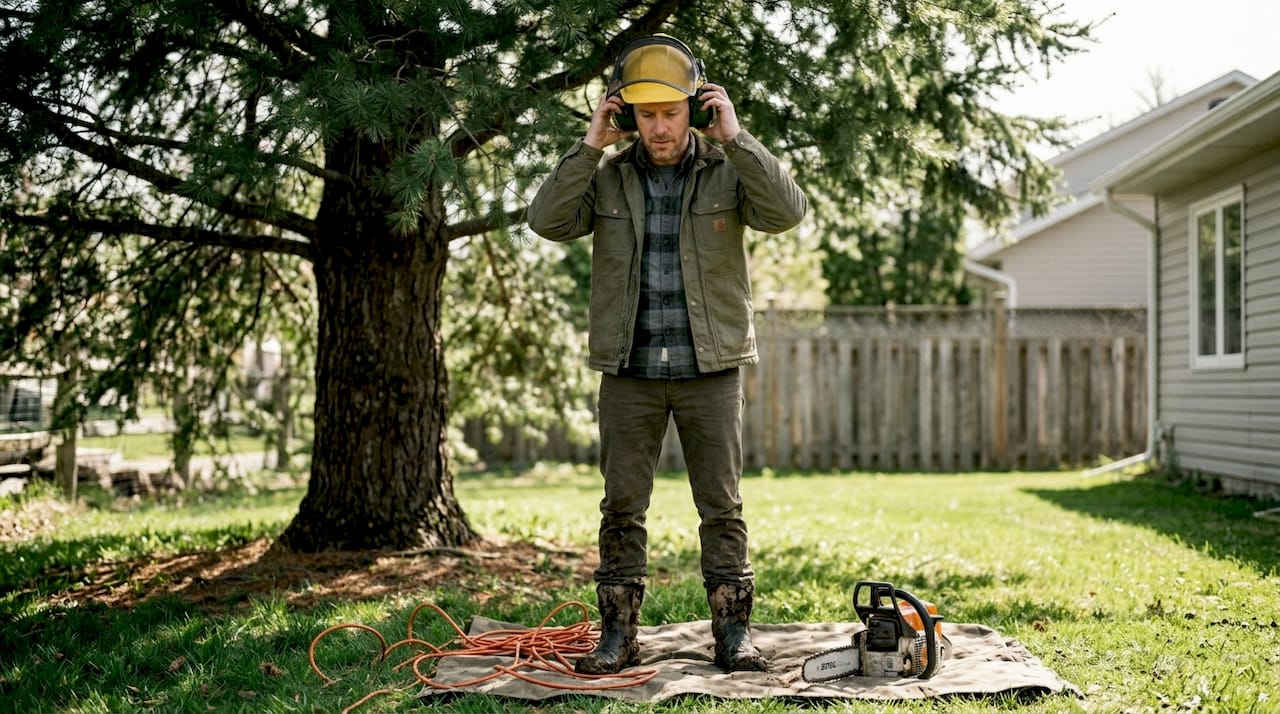
Pro Tip: Practice your escape route before making any cuts. Walk it several times to ensure no obstacles will trip you when you need to move quickly. Your escape route should never be directly behind the tree, as trees can kick back unexpectedly during the fall.
Understanding how to cut down a tree safely and following tree trimming safety protocols ensures you execute each step correctly. Small mistakes in cutting technique can have serious consequences, so never rush through any part of the process.
Post-removal verification and professional help considerations
Verifying complete tree removal prevents accidents during cleanup and debris management. After the tree falls, wait at least five minutes before approaching to ensure all movement has stopped and no branches remain suspended in nearby trees. Widow makers, dead branches caught in canopies, can fall without warning during cleanup operations.
Stump management becomes your next priority once the tree is down. Leaving stumps creates tripping hazards, attracts pests, and allows some species to resprout from root systems. Grinding stumps 6-12 inches below ground level eliminates these problems and prepares the area for replanting or lawn restoration. Chemical stump removal takes months and may not work on all species.
Debris disposal requires planning based on volume and local regulations. Many municipalities offer curbside pickup for yard waste but limit quantities and require specific preparation. Private haulers provide faster service for large volumes. Some homeowners chip branches for mulch or cut logs for firewood, reducing disposal costs while creating useful materials.
Key post-removal verification steps include:
- Walking the entire fall zone to identify any damaged property or utility lines
- Checking nearby trees for hanging branches dislodged during the fall
- Inspecting your home’s roof, siding, and gutters for impact damage
- Documenting the completed work with photos for insurance or permit records
- Scheduling stump grinding within two weeks to prevent pest colonization
Certified arborists bring expertise that dramatically reduces removal risks while ensuring permit and certification compliance. Their training covers advanced rigging techniques, proper equipment use, and how to handle trees in difficult locations. Professional crews complete removals faster and safer than DIY attempts, especially for large trees or those near structures.
| Service Aspect | DIY Approach | Professional Service |
|---|---|---|
| Average completion time | 2-3 days | 4-8 hours |
| Equipment quality | Consumer grade | Commercial grade |
| Insurance coverage | Homeowner policy limits | Full liability coverage |
| Permit handling | Owner responsibility | Included in service |
| Cleanup thoroughness | Variable | Complete removal |
Professional services become essential when trees exceed 30 feet tall, lean toward structures, have extensive decay, or stand near power lines. These situations require specialized equipment like bucket trucks, cranes, and rigging systems that homeowners cannot safely operate. The cost of professional removal is far less than potential medical bills, property damage, or legal liability from accidents.
Pro Tip: Get multiple quotes from certified arborists before choosing a service provider. Legitimate companies provide detailed written estimates, proof of insurance, and references from recent clients. Avoid any service that requests full payment upfront or cannot provide credentials.
Exploring the benefits of certified arborists in Orlando, understanding the purpose of stump grinding, and learning how to prevent lawn damage after tree removal helps you make informed decisions about professional services versus DIY work.
Safe tree removal services by McCullough Tree Service
When tree removal complexity or safety concerns exceed your comfort level, McCullough Tree Service delivers expert solutions throughout Central Florida. Our certified arborists handle every aspect of safe removal, from initial assessment and permit acquisition to complete debris cleanup and stump grinding. We prioritize safety while ensuring full compliance with local regulations, protecting you from liability and ensuring your property remains secure.
Our team uses commercial-grade equipment and proven techniques to remove trees efficiently without damaging surrounding landscape or structures. We prepare your property before starting work, establish proper safety perimeters, and manage all debris removal so you can focus on other priorities. Whether you need emergency storm cleanup or planned removal of hazardous trees, our experience and certification provide peace of mind that the job will be done right.
Contact us today to schedule a free consultation and estimate for your tree removal needs. Our tree removal services combine certified arborist expertise with thorough tree trimming preparation to deliver results that protect your investment and keep your family safe.
How do I know if my tree needs professional removal?
Several warning signs indicate you should call a certified arborist rather than attempting removal yourself. Trees leaning more than 15 degrees from vertical, especially if the lean developed suddenly, pose immediate fall risks that require professional assessment. Large cracks or splits in the trunk, extensive dead branches throughout the canopy, and visible decay or fungal growth at the base all signal structural problems beyond DIY capability.
Never attempt removal when trees stand within falling distance of your home, neighbor’s property, or power lines. Professional arborists use specialized rigging and sectional removal techniques to safely dismantle trees in confined spaces. The risk of property damage or injury far exceeds the cost of professional service in these situations.
What permits are required for tree removal in Central Florida?
Permit requirements depend on your tree’s species, size, and location within Central Florida. Most municipalities require permits for native trees exceeding 5-12 inches in diameter at breast height, though exact thresholds vary by jurisdiction. Palm trees, invasive species, and trees certified as hazardous by arborists may be exempt from standard permit requirements.
Certified arborists streamline the permit process by providing necessary documentation, hazard certifications, and replacement planting plans when required. They understand local ordinances and can expedite approvals that might take weeks if you navigate the process alone. Check your specific city’s requirements through their planning department or consult tree permits in Central Florida for detailed guidance.
Are there safer alternatives to removing a tree entirely?
Many situations allow you to preserve trees through strategic pruning rather than complete removal. Removing hazardous dead branches, thinning dense canopies to reduce wind resistance, and crown reduction cuts can eliminate safety concerns while maintaining the tree’s benefits. These alternatives cost less than removal and preserve property value, shade, and environmental benefits that mature trees provide.
Consult certified arborists to evaluate whether pruning offers a viable solution for your specific situation. They assess tree health, structural integrity, and hazard severity to recommend the most appropriate treatment. Understanding tree trimming versus pruning helps you discuss options intelligently with professionals.
What safety gear should I use if removing branches myself?
Minimum safety equipment for any tree work includes a hard hat with attached face shield, safety glasses rated for impact protection, cut-resistant gloves, and steel-toed leather boots with good ankle support. Add hearing protection when operating chainsaws or chippers, as prolonged exposure to loud equipment causes permanent hearing damage.
Never remove large branches alone or attempt work above shoulder height without proper training. Ladders create additional fall risks and should be avoided for tree work. Review comprehensive tree trimming safety protocols before starting any cutting work to understand proper equipment use and hazard recognition.
Recommended
- Safe Tree Removal Central Florida: 85% Injury Cut Guide
- Tree Removal Step by Step: Safe and Easy DIY Guide
- Why Trim Trees for Safety in Central Florida
- Emergency Tree Removal: Protecting Central Florida Property