By: Shelby McCullough| Published: June 6, 2026
TL;DR:
- Local tree ordinances are enforceable laws that regulate tree removal, preservation, and planting, shaping urban forest management. They define protected species, permit procedures, mitigation standards, and exemptions to ensure community and ecological values are maintained amid development. Effective enforcement and integration with zoning and planning—and proactive compliance—are essential for climate resilience and equitable urban canopy growth.
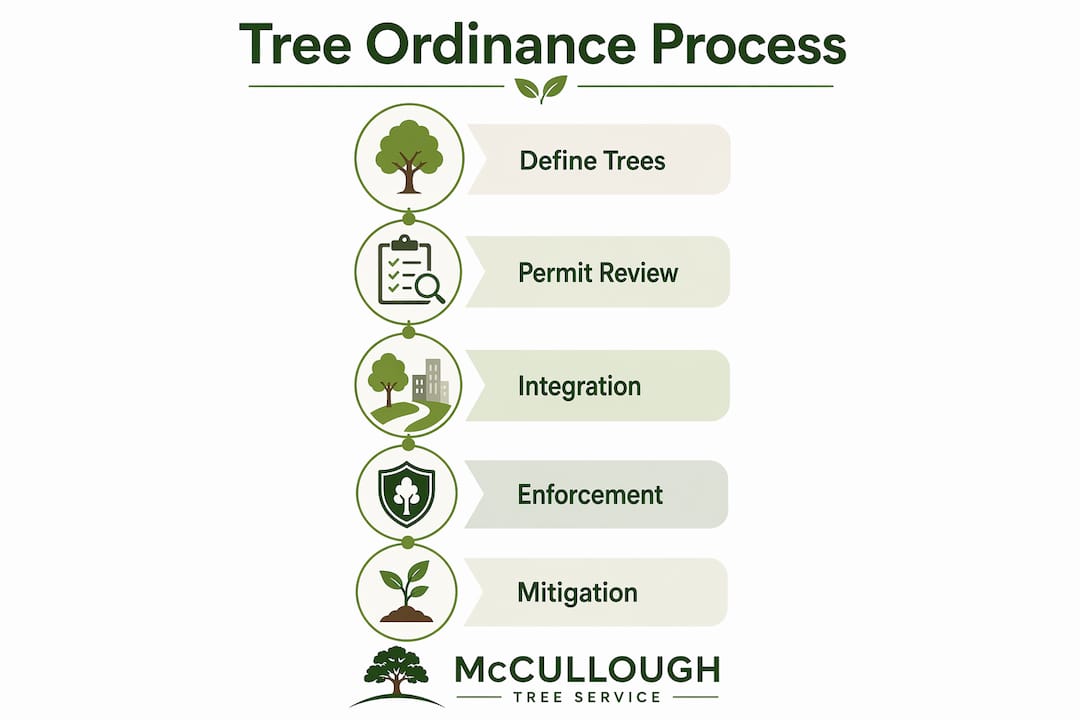
Local tree ordinances are legally enforceable municipal laws that regulate tree removal, preservation, and planting within a defined jurisdiction. The role of local tree ordinances extends far beyond protecting a single oak or palm. These regulations form the legal backbone of community tree management, giving cities and counties the authority to balance development pressure against the environmental and economic value of their urban forest. For Florida property owners, developers, and community organizations, understanding how these laws work is not optional. It is the foundation of responsible land stewardship.
What is the role of local tree ordinances?
Local tree ordinances define which trees receive legal protection, under what conditions removal is permitted, and what mitigation is required when trees are lost. The Arbor Day Foundation and the U.S. Environmental Protection Agency both recognize these laws as the primary mechanism through which local governments manage urban forestry at scale. Without them, tree canopy loss during construction and development would be largely unchecked.
The core purpose of these ordinances is threefold: protect trees with significant ecological or community value, create a transparent permit process for removal, and require replacement when protected trees are removed. In Florida, where rapid development constantly competes with mature tree canopy, this legal framework carries real weight.
Pro Tip: Before submitting any permit application in Florida, request a pre-application meeting with your local urban forestry or planning department. Many municipalities will flag ordinance conflicts before you invest in site plans.
What are the typical components of local tree ordinances?
Most tree ordinances share a common structure, though the specifics vary widely between Florida municipalities. Understanding each component helps you anticipate what compliance actually requires.
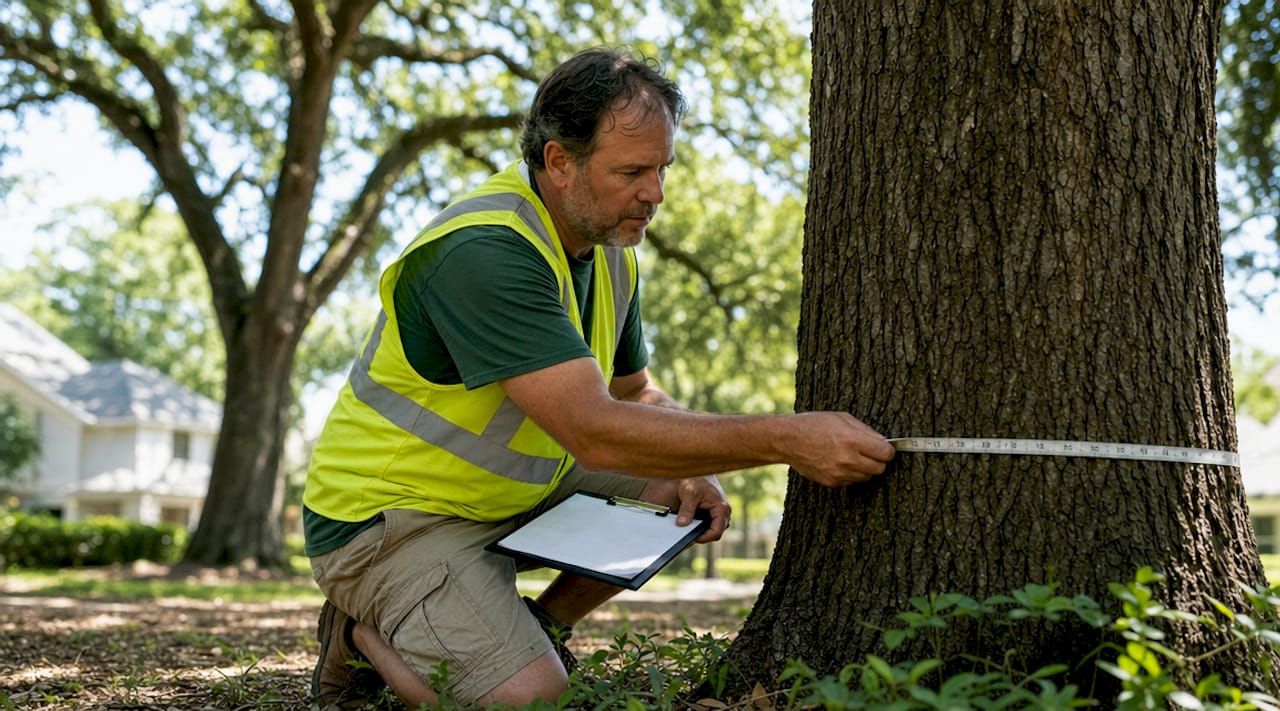
- Protected tree definitions. Ordinances typically define protected trees by diameter at breast height (DBH), measured at 4.5 feet above ground. A tree with a DBH of 6 inches or more is commonly protected, though some Florida cities set the threshold higher for certain species.
- Permit requirements. Removing a protected tree without a permit is a violation in most jurisdictions. The permit process includes an application, site inspection, and approval criteria that weigh the tree’s health, location, and species value.
- Mitigation requirements. When removal is approved, replacement is typically required. Mitigation approaches fall into two categories: stem-based replacement, which requires planting a set number of new trees, and canopy-based replacement, which requires matching the canopy area lost. Canopy-based mitigation better reflects ecological value but remains less common in practice.
- Exemptions. Most ordinances exempt trees that pose an imminent safety hazard, are diseased beyond recovery, or are classified as invasive species. In Florida, Brazilian pepper and melaleuca are frequently listed as exempt from protection.
- Fee-in-lieu options. When on-site replanting is impractical, some jurisdictions accept a payment into a municipal tree fund. This is a less preferred option but provides flexibility for dense urban sites.
Cities like Austin, TX and Fayetteville, AR have developed well-documented ordinance frameworks that Florida municipalities frequently reference when updating their own codes. Legal counsel participation in drafting ordinances measurably improves enforceability and reduces the risk of legal challenges after adoption.
How do tree ordinances integrate with urban planning and zoning?
Tree ordinances do not operate in isolation. Their real power comes from integration with zoning codes, land disturbance permits, and green infrastructure programs. When these systems work together, canopy protection becomes a condition of development approval rather than an afterthought.
Zoning ordinances can mandate minimum vegetative coverage and specify approved tree species to support climate resilience. This means a developer cannot simply clear a site and replant with low-value ornamentals. The species planted must meet standards that support long-term canopy health. Somerville’s green score system and San Antonio’s landscape ordinances are two examples of zoning-based preservation programs that go beyond basic tree counts.
Norwalk, CT’s 2025 Tree Master Plan sets an urban canopy target of 53% to guide both tree preservation and zoning updates. That figure represents a policy commitment: every land-use decision must be evaluated against its impact on canopy coverage. Florida cities pursuing similar targets need ordinances that are explicitly cross-referenced with their zoning and comprehensive plan documents.
| Integration element | Purpose |
|---|---|
| Land disturbance permits | Tie tree removal approval to construction permits to prevent pre-clearing |
| Zoning vegetative coverage minimums | Require minimum canopy on developed parcels |
| Approved species lists | Promote climate-resilient, native tree selection |
| Stormwater management codes | Credit tree canopy toward runoff reduction requirements |
| Comprehensive plan policies | Align long-term canopy goals with growth management |
Pro Tip: If you are a developer in Central Florida, check whether your county’s land disturbance permit cross-references the tree ordinance. If it does not, you may face stop-work orders mid-project when violations are discovered during inspection.
What enforcement challenges and best practices exist for tree ordinances?
Enforcement is where most tree ordinances succeed or fail. A well-written ordinance with weak enforcement produces the same outcome as no ordinance at all.
- Linking permits to development approvals. Effective enforcement ties tree removal permits directly to active land disturbance and construction permits. This prevents developers from clearing trees during site grading before formal review begins. Without this linkage, violations are common and difficult to prosecute after the fact.
- Appeals processes. Appeals processes provide oversight but can delay enforcement when standards are vague or politically influenced. Clear, science-based criteria for appeals prevent administrative delays and protect the integrity of the permit system.
- Staff capacity and training. Many Florida municipalities lack dedicated urban forestry staff. Enforcement falls to planning or code compliance officers who may not have arboricultural training. This creates inconsistent application of the ordinance.
- Data tracking software. Tools like TreePlotter allow municipalities to maintain a digital inventory of protected trees, track permit history, and flag violations. Without data infrastructure, enforcement is reactive rather than preventive.
- Development incentives. Some communities offer density bonuses or reduced permit fees to developers who preserve significant trees. This approach treats compliance as a benefit rather than a burden, which improves voluntary adherence.
The most common enforcement failure in Florida is pre-construction clearing. Developers remove trees before permits are issued, then pay mitigation fees after the fact. Ordinances that require tree surveys as part of the initial permit application, not as a post-clearing formality, close this loophole effectively.
How do tree ordinances support climate resilience and tree equity?
Trees are not decorative. The Harvard Salata Institute frames urban forestry as climate infrastructure hiding in plain sight, with the same strategic importance as roads or water systems. Local tree ordinances are the legal mechanism that protects this infrastructure from being dismantled one permit at a time.
“Success should be measured not just through canopy coverage, but through tree equity — addressing canopy gaps in historically disinvested neighborhoods.” — Harvard Salata Institute on Urban Forestry
Tree equity is a direct application of this principle. In many Florida cities, lower-income neighborhoods have significantly less tree canopy than wealthier areas, which means higher heat exposure, worse air quality, and reduced property values. Ordinances that include canopy equity provisions direct tree planting resources toward these gaps rather than simply maintaining canopy in areas that already have it.
Species selection within ordinances also matters for long-term climate resilience. Florida’s warming temperatures and intensifying storm seasons require species that tolerate heat, drought, and wind. Ordinances that specify native species like live oak, bald cypress, and Southern magnolia build a more durable urban forest than those that permit any replacement tree regardless of species. Integrated urban forestry regulations that combine tree care with stormwater and soil management produce the greatest environmental return per acre.
Key takeaways
Local tree ordinances protect urban forests by creating enforceable legal standards for tree preservation, removal permits, mitigation, and species selection that directly shape the health and equity of Florida’s communities.
| Point | Details |
|---|---|
| Ordinance components | Protected tree definitions, permit processes, mitigation requirements, and exemptions form the core structure. |
| Zoning integration | Linking ordinances to land disturbance permits and zoning codes prevents canopy loss during development. |
| Enforcement best practices | Tying removal permits to construction approvals and using data tools like TreePlotter closes enforcement gaps. |
| Climate and equity goals | Canopy equity provisions direct tree planting to underserved neighborhoods with the greatest heat exposure. |
| Legal drafting quality | Legal counsel involvement in ordinance drafting reduces challenges and improves long-term enforceability. |
What working with Florida tree ordinances has taught me
Most people treat tree ordinances as a compliance checkbox. That is the wrong frame. After years of working with property owners and municipalities across Central Florida, the pattern is consistent: the people who engage with ordinances early and proactively almost never face costly violations or project delays. The people who discover the ordinance after a tree is already down are the ones paying mitigation fees and fighting stop-work orders.
One misunderstanding I see constantly is the assumption that a tree’s poor health automatically exempts it from protection. It does not. In most Florida jurisdictions, you still need a permit to remove a declining protected tree unless it poses an imminent, documented hazard. A certified arborist’s written assessment is your best protection in that situation. It documents the condition, supports your permit application, and provides a defensible record if the removal is later questioned.
Another overlooked opportunity is community tree planting programs. Many Florida municipalities offer free or subsidized trees for residential planting through programs tied to their urban forestry plans. Participating builds goodwill with local officials, contributes to canopy targets, and can offset mitigation requirements in future projects. If you are a developer or commercial property owner, that relationship with the urban forestry department is worth more than most people realize.
Working with a qualified arborist and, for complex projects, a land-use attorney before you break ground is not overcautious. It is the standard practice of anyone who has learned the hard way that tree ordinances have teeth. For urban tree care compliance in Central Florida, the cost of professional guidance upfront is a fraction of the cost of a violation.
— Mcculloughtreeservice
Stay compliant with professional tree care from McCullough Tree Service
Navigating local tree ordinances in Florida requires more than reading the municipal code. It requires on-the-ground expertise to assess protected trees, document conditions accurately, and execute permitted work in a way that satisfies inspectors and preserves your project timeline.
McCullough Tree Service provides certified arborist services across Orlando and Central Florida, with direct experience in ordinance-compliant tree trimming and tree removal. Whether you need a pre-permit tree assessment, mitigation planting, or storm damage cleanup that meets local code requirements, the team at McCullough Tree Service delivers work that holds up to municipal review. Contact McCullough Tree Service for an estimate before your next project breaks ground.
FAQ
What does a local tree ordinance actually regulate?
A local tree ordinance regulates the removal, preservation, and planting of trees within a municipality, typically covering permit requirements, protected species definitions, and mitigation rules when trees are removed.
Do Florida homeowners need a permit to remove a tree?
Most Florida municipalities require a permit to remove any protected tree, defined by species or DBH threshold. Exemptions exist for hazardous or invasive trees, but documentation from a certified arborist is typically required to qualify.
What is DBH and why does it matter for tree ordinances?
DBH stands for diameter at breast height, measured at 4.5 feet above ground. Ordinances use DBH as the primary threshold to determine whether a tree is protected, making it the single most important measurement in any permit application.
How does mitigation work when a protected tree is removed?
Mitigation requires the property owner to replace the removed tree through replanting on-site, off-site planting, or a fee-in-lieu payment to a municipal tree fund. Canopy-based mitigation better reflects ecological value than stem-based counting but is less commonly required.
Can a developer clear trees before getting a permit?
Pre-construction clearing without a permit is a violation in most Florida jurisdictions. Effective ordinances link tree removal directly to land disturbance permits to prevent this, but enforcement depends on the municipality’s inspection capacity and permit cross-referencing practices.
Recommended
- Tree Permits in Central Florida – What Homeowners Need to Know
- Tree Planting Considerations for Central Florida Homes
- Florida Protected Trees: Regulations and Care
- Why routine arborist inspections matter for Central Florida trees