Tree Removal in Conway, FL
Professional Tree Removal in Conway, FL
Welcome to McCullough Tree Service, your neighborhood choice for expert tree removal service in Conway, FL. Conway sits southeast of downtown Orlando in Orange County, wrapped around the Conway Chain of Lakes, with mid-century ranch homes, deep lakefront lots off Hoffner and Gatlin Avenue, newer infill builds, and small commercial pockets mixed in along Curry Ford Road.
We are a family-owned and operated, fully insured company with 3 ISA-Certified Arborists on staff, and we have been working these Orange County neighborhoods for decades.
That blend of housing means Conway lots rarely give a crew the open drop zone a brand-new subdivision would. Side yards are tight, lakefront lots slope toward the water, and seventy-year-old shade trees often stand a few feet from a roof, a pool cage, a seawall, or an overhead service drop.
Every removal starts with a free estimate from an arborist who looks at those constraints first.
Our crews handle exactly these conditions week in and week out around Conway. Whether the tree leans toward a neighbor’s garage near Pershing Avenue or spreads over a screened pool enclosure in a 1960s ranch neighborhood off Anderson Road, the takedown is planned, rigged, and carried out to protect everything standing around it.
You can see the full scope of our tree removal work across Orlando and Central Florida, then call (407) 734-5854 for a free estimate on your property.
The tree canopy in Conway is genuinely mature. Much of this area was platted and built long before the subdivisions farther out on the south side of Orange County, so the live oaks, laurel oaks, slash pines, camphors, and cabbage palms shading these streets are full-grown specimens rather than young landscape plantings.
Lakefront parcels along the Conway Chain hold some of the largest oaks in the area, and those trees carry decades of accumulated limb weight.
A big canopy is an asset right up until it becomes a liability. Trees set close to foundations, garages, and property lines two generations ago now hold heavy limbs directly over living space.
The sandy soils and high water table common near the Conway lakes can also limit how firmly roots anchor once summer storms saturate the ground.
Warning signs on a Conway tree worth an arborist’s eye:
- A lean that has shifted — new soil heaving or roots lifting on the side opposite the lean.
- Thinning or dead upper crown — bare top branches, common on aging laurel oaks and pines nearing the end of their span.
- Cavities or fungal fruiting — conks, mushrooms at the root collar, or wood that sounds hollow when tapped.
- Old wind damage that never healed — ragged branch tear-outs and co-dominant trunks that cracked apart in a past Conway storm season.
- Structures and utilities in conflict — branches lying on shingles, gutters loaded with leaf litter, or growth crowding service lines.
An ISA-Certified Arborist can tell you which of those issues pruning will correct and which ones mean the tree has reached the end of its safe life on your Conway property.
The assessment is a free estimate — there is no charge to find out where your tree stands.
Our Comprehensive Tree Care Services:
- Certified Arborist Consultations
- Tree Trimming
- Tree Removal
- Tree Demossing
- Storm Cleanup
- Land Clearing Services
- Tree Planting Services
- Tree Grinding & Stump Removal
- Tree Service Financing
Customer Testimonials
Searching for a dependable tree removal company near Conway? You have found one. McCullough Tree Service is family-owned and operated, has served Orange and Seminole County communities for more than 30 years, and the neighborhoods ringing the Conway Chain of Lakes are familiar ground for our crews.
We understand how Conway properties are put together: shallow setbacks on the older streets, shared fence lines, aging overhead utility runs, pool cages, boat docks, and side yards narrow enough to decide whether a tree comes down by climbing and rigging or by crane.
Here is what working with our team looks like:
- An arborist on site, never a salesperson — the person evaluating your tree understands tree biology and how trees actually fail.
- A written plan before a saw runs — you see the method, the access route, and exactly what cleanup includes.
- Orange County permit questions answered first — we confirm whether your tree’s species and diameter trigger a local requirement.
- Insurance in place before we start — certificates sent straight to you, your neighbor, or your association whenever they ask for proof.
Conway Homeowners: Why Expert Takedowns Matter
Conway’s established, tightly platted streets create removal conditions that look nothing like a new development with deep rear lots. Trees here were routinely planted within a few feet of driveways, detached garages, carports, pool decks, and side fences, which drops real structures straight into the fall path of any uncontrolled cut.
Lakefront parcels add their own wrinkle, with docks, seawalls, and boat lifts sitting below the canopy.
When a weakened oak or pine finally gives way during an afternoon thunderstorm or a tropical system, the tree is seldom the only casualty. Roofs, soffits, screen enclosures, vehicles, and boundary fencing take the hit, and that repair bill makes a planned removal look inexpensive by comparison.
Ask about financing options for tree removal and trimming if cost timing is the reason a risky tree is still standing.
There is also a personal safety issue that has nothing to do with property. Taking a tree apart in sections over a house demands climbing skill, rigging knowledge, and load calculation that untrained crews cannot perform predictably.
Sending a limb the wrong direction over a Conway roofline is the kind of mistake you only get to make once.
Professional removal trades that risk for control. The tree comes apart in planned pieces, each one lowered on rope or lifted clear by crane, in a sequence decided before anyone starts a saw.
Safety planning comes first on every job we take — for the crew, for your family, and for the house next door.
There is also a permitting side to think about in Conway. Orange County protects certain trees based on species and trunk diameter, so a mature live oak or laurel oak near the right-of-way may need sign-off before a saw touches it.
If your home sits under a homeowner or condominium association, expect a second layer of landscape approval for anything taken out of common or shared ground. We handle the arborist documentation that these reviews normally ask for.
An uninsured outfit that flattens a neighbor’s fence, cracks a driveway apron, or takes down a protected specimen without documentation leaves the homeowner holding a second problem on top of the first one.
We head that off by confirming permit status before scheduling, documenting the tree’s condition with arborist notes, and working carefully enough that the only sign we were there is the missing tree.
Every crew is fully insured, and proof of coverage is available any time you ask.
Our Tree Removal Process
Every Conway removal is planned around the realities of an established, close-set neighborhood — limited side-yard access, overhead service drops, shared fencing, pool cages, and structures well inside the fall radius — so the job finishes clean and the rest of your property stays untouched.
Here is how a removal unfolds from the first phone call to the final rake-out.
1. No-Cost Arborist Visit to Your Property
One of our ISA-Certified Arborists comes out to your Conway property, inspects the trunk, root plate, and crown, and determines how the tree has to come down given everything surrounding it.
This visit is always a free estimate, never a limited-time offer.
We map structures, fence lines, utility drops, dock access, and the width of your entry point, then confirm whether Orange County rules require a permit for that species and diameter before anything gets scheduled.
2. Site Protection and Setup
Before the first cut, the crew builds a controlled work zone. That means marking the landing area, flagging irrigation heads and utility runs, and staging equipment where it will not rut turf or crack older driveway edges.
On Conway’s narrower lots we plan for the other side of the fence too — the neighbor’s roof, shed, pool cage, and parked vehicles are part of the setup, not something we deal with later.
3. Piece-by-Piece Takedown or Crane Lift
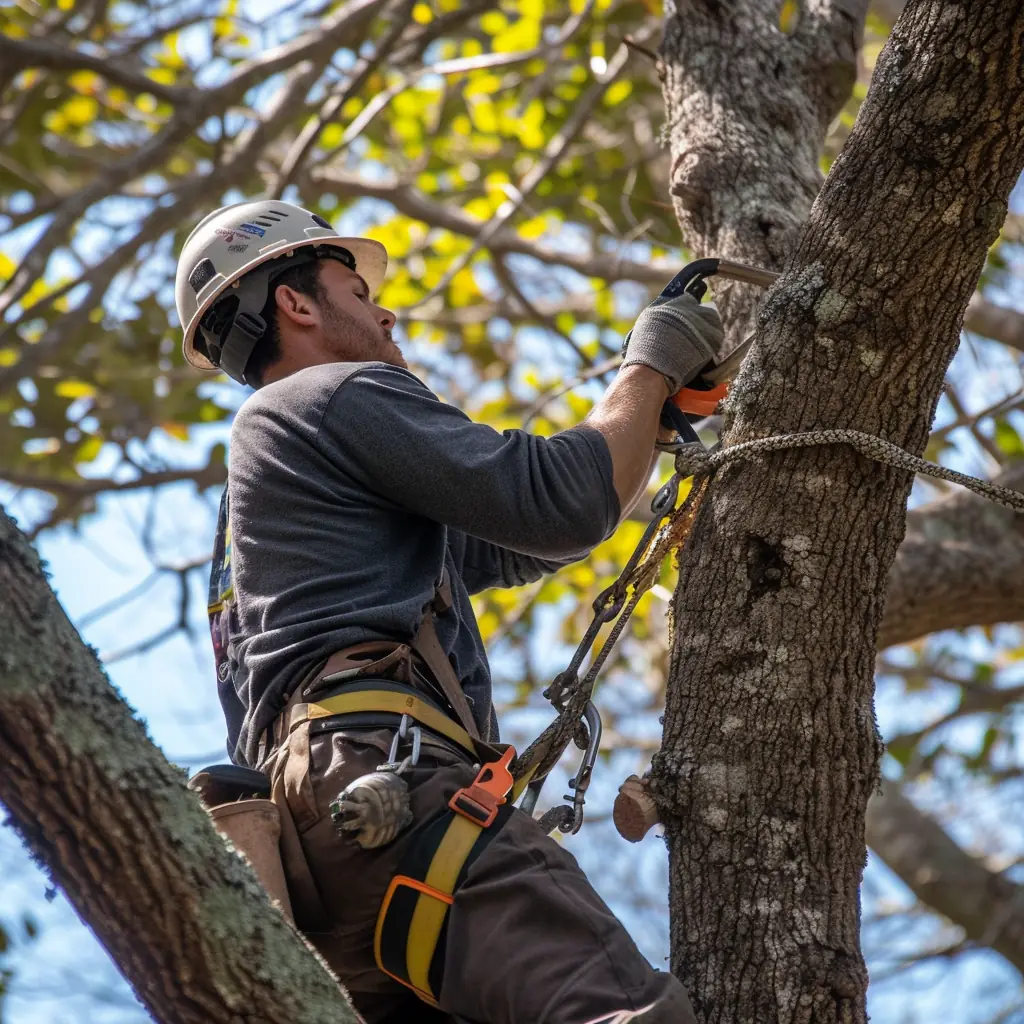
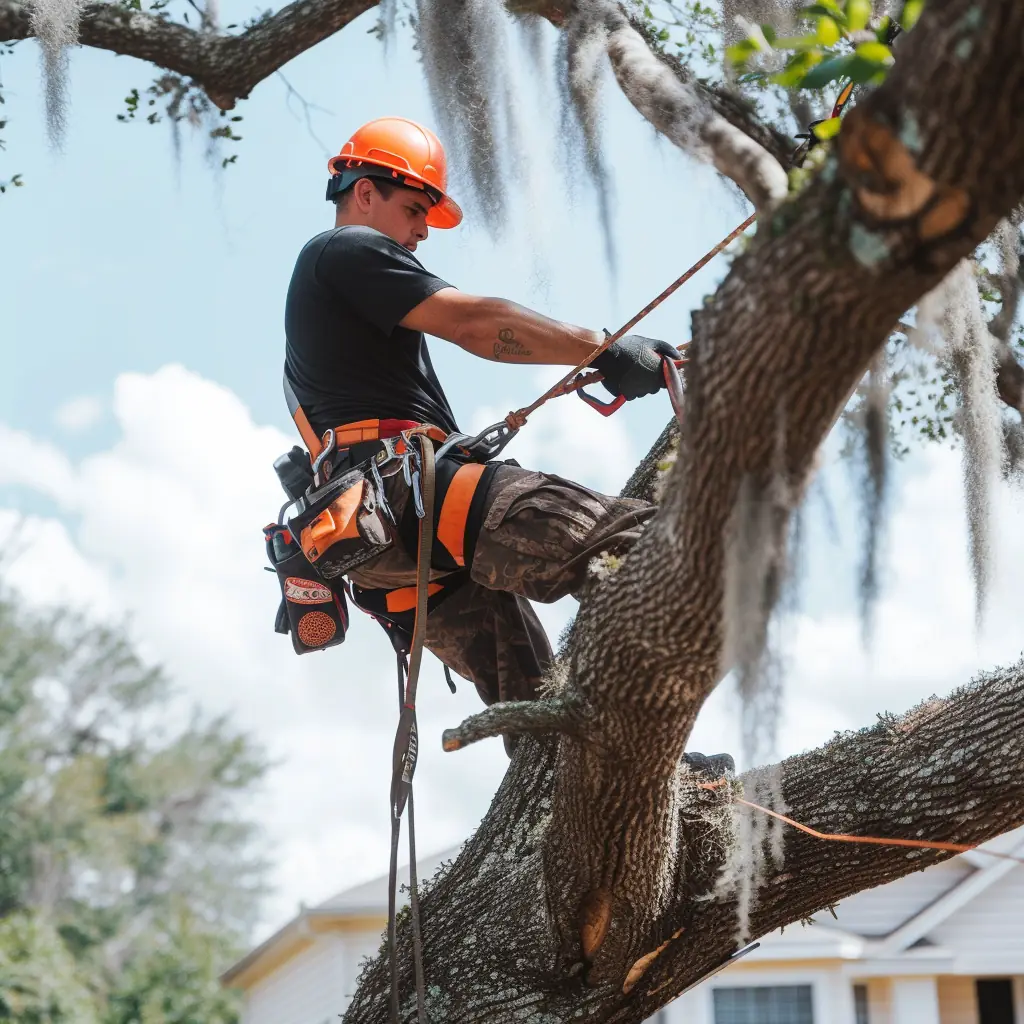
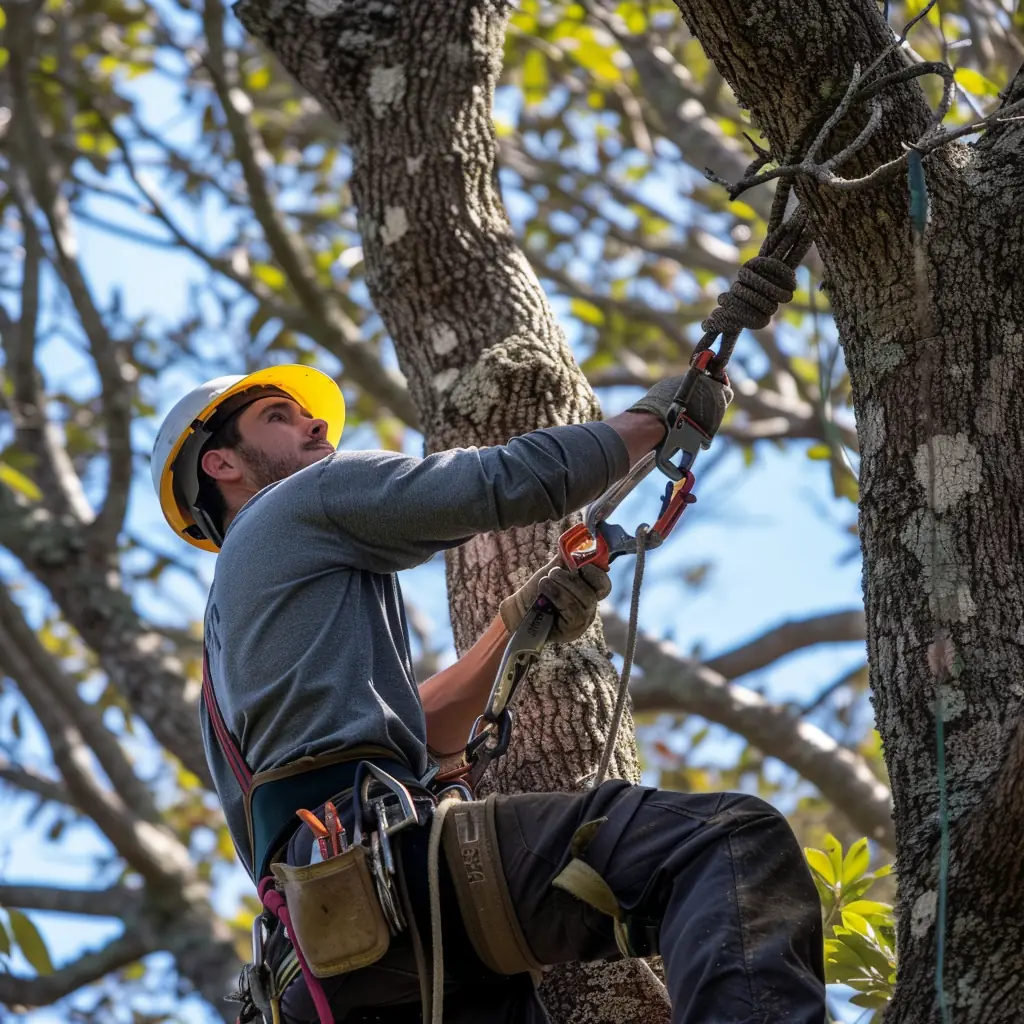
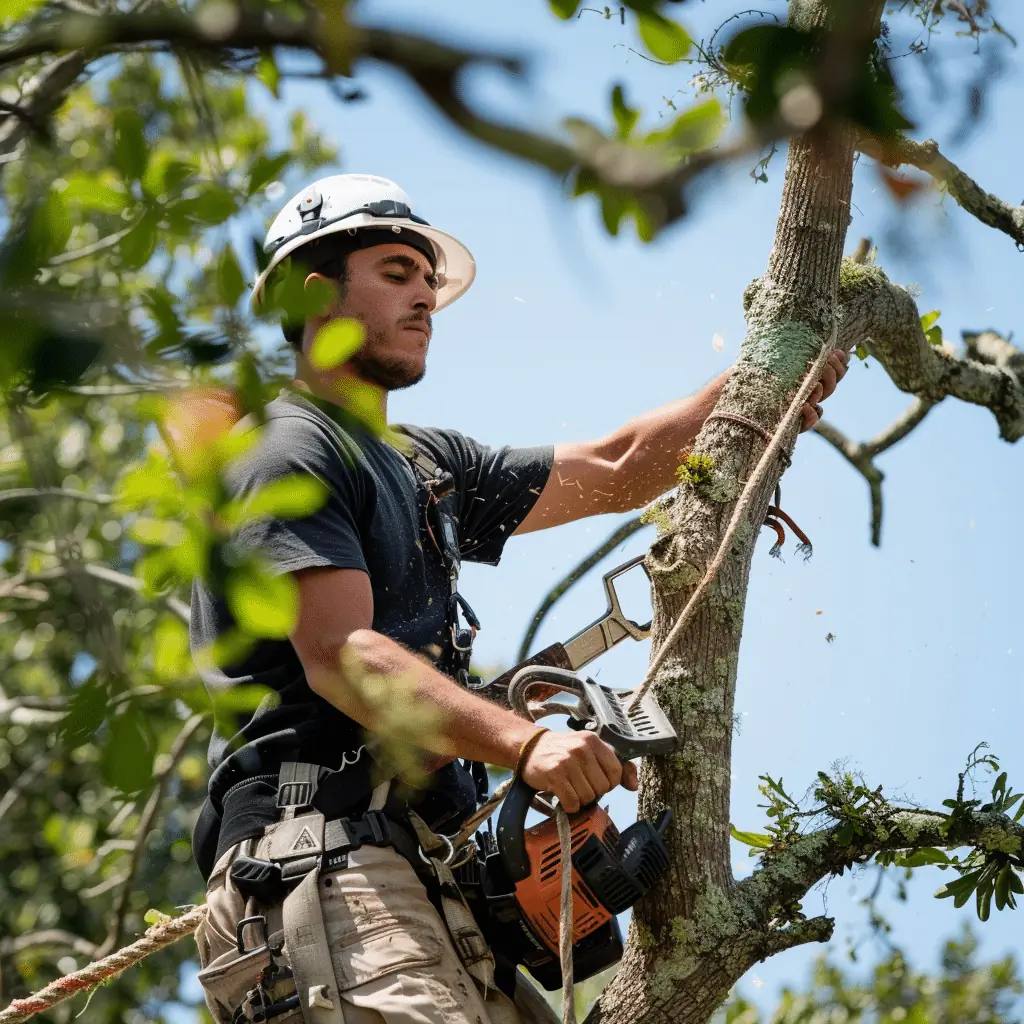
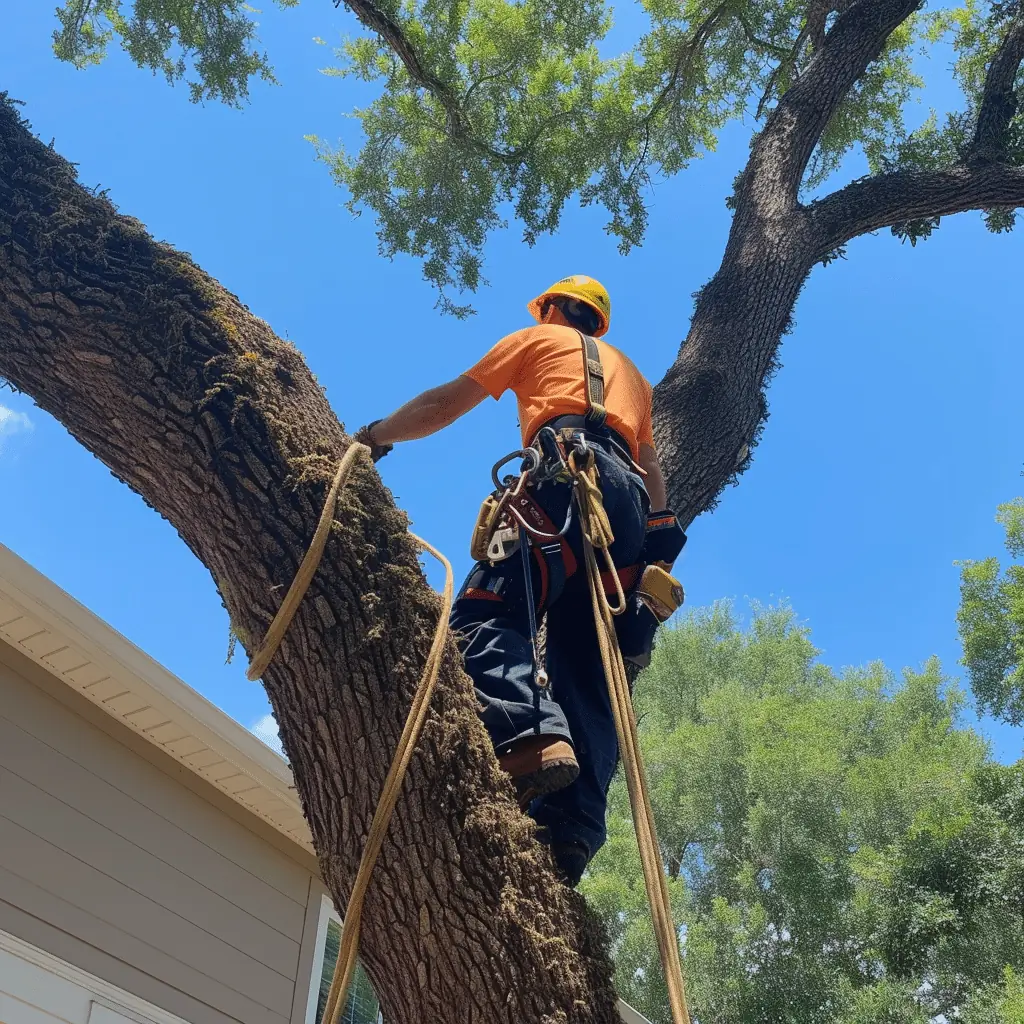
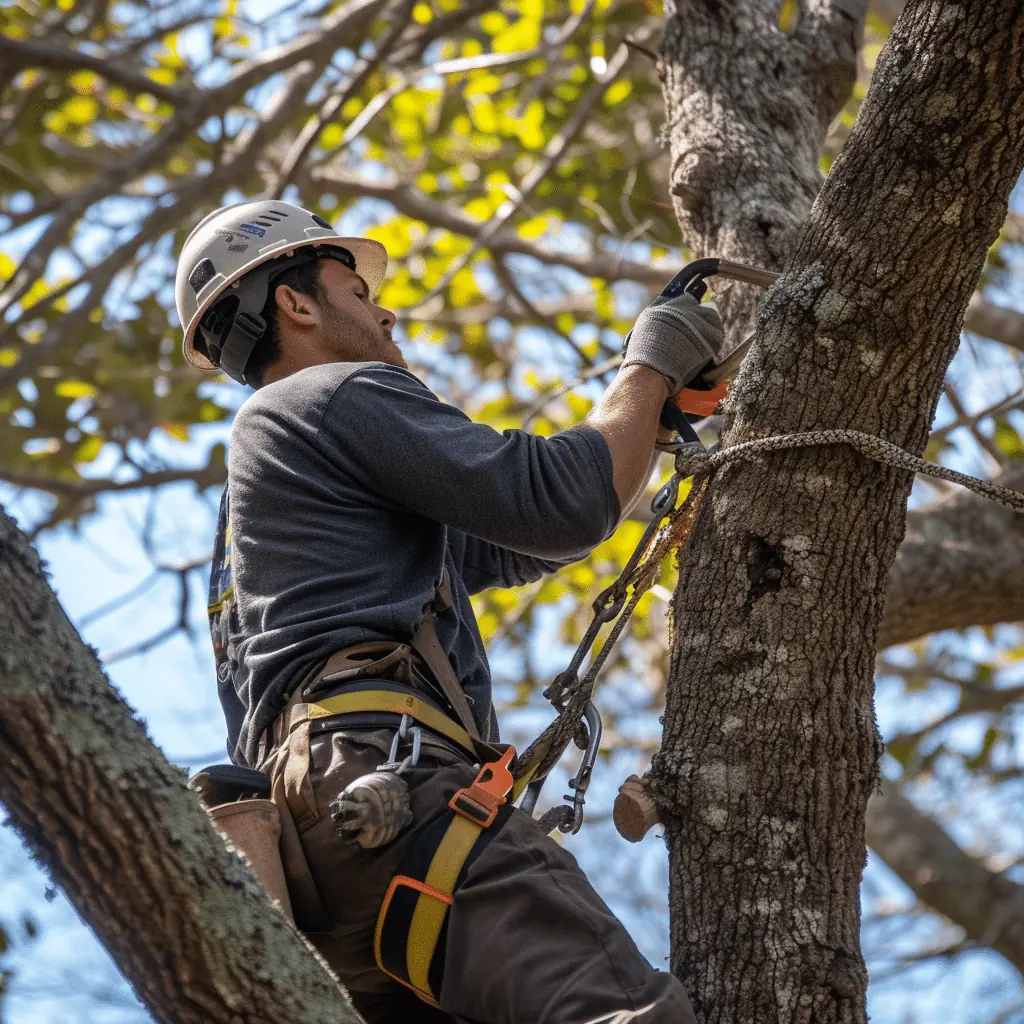
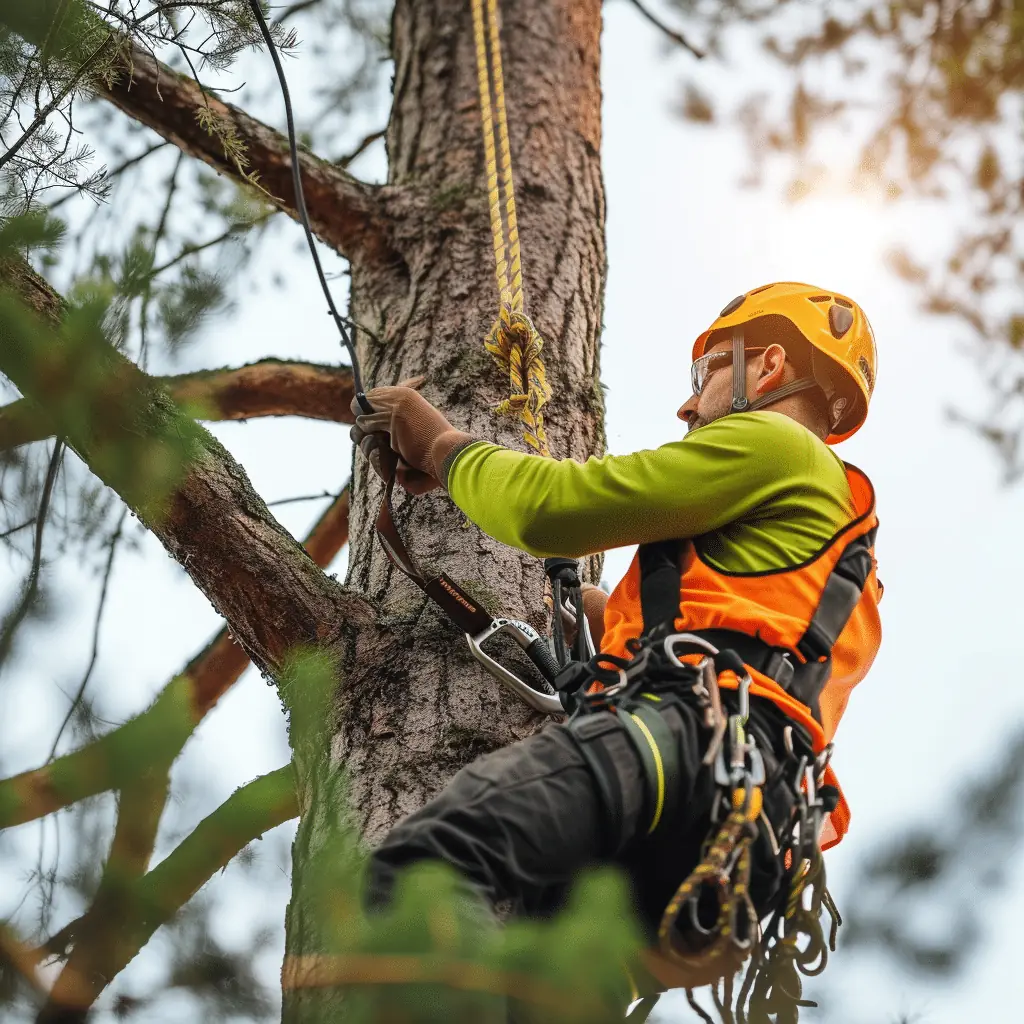
Depending on the tree’s size, its lean, and what sits beneath the canopy, we take it down by sectional climbing and rigging or with a crane-assisted lift.
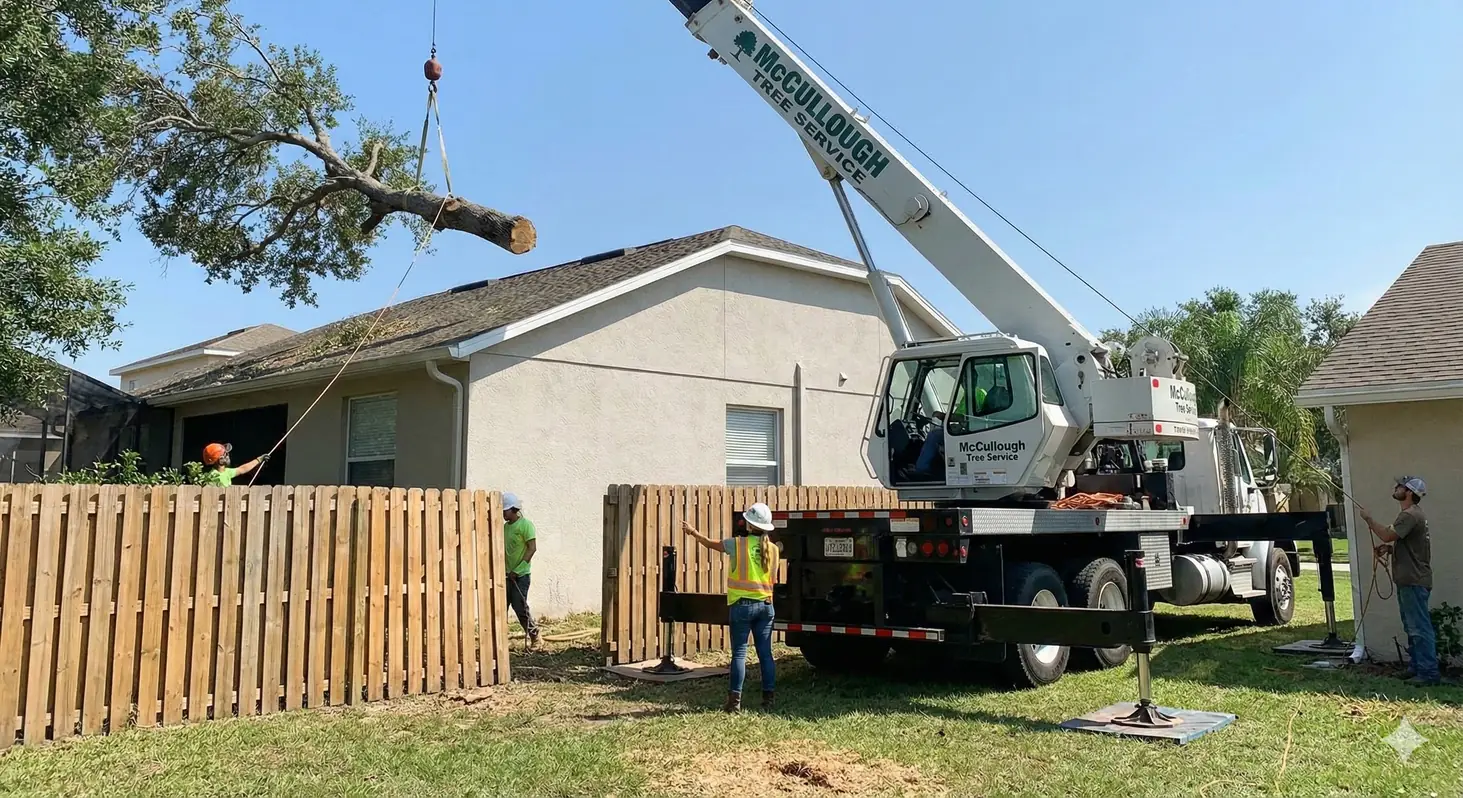
Crane work is the right call when a tree stands over a roof, a screened pool enclosure, or a neighbor’s structure with no usable drop zone — a familiar situation in Conway, where mature canopy and mid-century lot sizes overlap. The crane picks each section straight up and sets it in the landing zone, so nothing ever swings over what you are trying to protect.
4. Debris Hauled Off and Site Swept
All wood and brush leaves your property unless you want rounds left behind for firewood. Limbs are chipped, debris is hauled off, and the entire work zone gets raked and blown clean.
Turf, walkways, and driveways go back the way we found them. Stump grinding is available as an add-on that takes the root collar below grade so the spot can be sodded, mulched, or replanted.
Why Conway Homeowners Choose McCullough
Conway sits on narrow older lots where a drop zone is measured in feet, not yards, and that is exactly why homeowners here call us instead of a general landscaper. When a mature oak leans over a screen enclosure or a shared fence line, nothing about the takedown can be improvised.
Here is what separates a controlled removal from a risky one on a crowded Conway property.
- 3 ISA-Certified Arborists on Staff — Your Conway removal is directed by a certified arborist from the first cut to the last, not delegated to whoever is on the truck that morning. The ISA credential reflects studied training in tree biology, structural risk evaluation, and the way tensioned wood responds once it is under rigging load.
- Crane-Assisted Removal Capability — Frequently the only safe approach on a Conway lot. A crane lifts each section vertically away from roofs, pool cages, and neighboring structures where felling or free-dropping is simply off the table.
- Clean, Considerate Job Sites — Turf, driveways, walkways, and any fence we share with the property next door get protected before work begins, and the yard is raked out before we pull away. On Conway streets where homes sit shoulder to shoulder, that kind of care is noticed by everyone on the block.
- Family-Owned and Fully Insured — We are a family business carrying full liability coverage on every job, so homeowners are never left exposed. Documentation is available on request.
- 30+ Years Serving Orange County — We know the species growing around the Conway Chain of Lakes, how they fail, and the Orange County requirements that apply to removal work in this area.
Schedule Your Free Estimate
Whether it is a laurel oak with limbs resting on your shingles, a pine that has been dropping deadwood since the last storm, or a leaning tree near the fence line you would rather not gamble on, McCullough Tree Service will take a look and give you a straight assessment at no cost.
Neighbors nearby count on the same crews for tree removal in Edgewood, and we are on Conway streets just as often.
You will leave the visit with a clear plan: the removal method, the access route, what cleanup covers, and whether a permit applies to your tree.
Financing options are available if you would rather spread the cost out.
Reach us at (407) 734-5854, or send a note to info@mcculloughtreeservice.com, and we will set up a no-cost walkthrough of your Conway property.
FAQs
1. Is a permit required to take down a tree in Conway?
That depends entirely on the tree. Orange County regulates certain trees by species and trunk diameter, and removing a protected specimen can call for documentation or a replacement planting.
Hazardous trees are generally handled differently than healthy ones, which is exactly why an arborist assessment comes first.
We research the permit question for your specific tree and address, and we walk you through what applies before any work is scheduled. Call (407) 734-5854 and we will sort it out with you.
2. Can you take out a tree hanging over my roof or pool cage?
Yes, and in Conway it is one of the most common requests we get. Older homes here frequently have mature oaks and pines sitting directly above the roofline or a screen enclosure, where free-dropping limbs is not an option at all.
In those cases we dismantle the tree in sections using climbing lines and rigging, or bring in a crane to lift each piece vertically clear of the structure.
Either approach is planned in advance by an ISA-Certified Arborist, and the crew is fully insured for the work.
3. How do you protect my neighbor’s property on a tight Conway lot?
Protecting adjacent property is part of our setup on every single job. Before cutting begins, the crew identifies structures, sheds, fencing, irrigation heads, vehicles, docks, and pavement inside and around the work zone.
Protective matting goes down over hardscape along the work path, and equipment is staged so it will not rut lawns or crack aging driveway edges.
When a tree sits right on a shared boundary, we rig every section so the load travels into our landing zone instead of over the line — and our full insurance coverage stands behind the work either way.
4. Which trees come down most often in Conway neighborhoods?
Laurel oaks top the list. They grow quickly, they are everywhere in neighborhoods of this vintage, and they tend to hollow out internally and shed large limbs long before a live oak of similar size would.
Slash and longleaf pines come next, usually after beetle activity or storm damage thins the crown and leaves standing deadwood above a house.
We also remove live oaks that have simply outgrown their spot, along with camphors and storm-damaged palms near the lakes. Crews running the same species calls in Meadow Woods see much the same pattern.
5. Does a Conway tree removal include grinding the stump?
When a removal wraps up, the stump is left trimmed close to ground level. Taking it the rest of the way out is a separate grinding service you can add on.
For most Conway yards we suggest doing it. A leftover stump catches mower blades, invites termites and other insects that thrive in Central Florida’s damp heat, and stands in the way of re-sodding or putting a new plant in that spot.
The grinder drops the stump and the flare of root around it well below grade, and the shavings it produces can stay on site as mulch or ride out with the rest of the debris. Bring it up during your free estimate so we can quote the removal and the grinding as one number.
Contact Us
(407) 734-5854 948 Ferne Dr.Longwood, FL 32779 (407) 734-5854 Open In Google Maps