Tree Removal Service in Fern Park, FL
Professional Tree Removal in Fern Park, FL
Welcome to McCullough Tree Service, your trusted source for professional tree removal service in Fern Park, FL. Fern Park sits just north of Orlando along the US 17-92 corridor in Seminole County, a compact community of older single-family neighborhoods, small lakefront parcels near Lake Bell and Lake of the Woods, condominium and townhome developments, and long-established commercial frontage.
That mix of housing stock means Fern Park properties rarely offer the wide-open drop zones that newer subdivisions do. Driveways are narrow, lots are modest, and decades-old shade trees often stand within feet of a roof, a carport, a fence line, or an overhead service drop.
Our crews remove trees in exactly those conditions every week. Whether the tree is leaning toward a neighbor’s garage off Ronald Reagan Boulevard or overhanging a screened porch in a 1960s ranch neighborhood, the removal is planned, rigged, and executed to protect everything around it.
Fern Park’s tree canopy is genuinely old. Much of the community was platted and built out decades before the newer subdivisions to the north, which means the live oaks, laurel oaks, slash pines, camphors, and sabal palms shading these streets are full-grown specimens rather than young landscape trees.
Mature canopy is an asset until it isn’t. Trees that were set close to foundations, garages, and property lines generations ago now carry heavy limb weight directly over living space, and the sandy soils and high water table common across this part of Seminole County can limit root anchorage during summer storms.
Signs that a Fern Park tree needs a professional look include:
- Lean that has changed — fresh soil heaving or exposed roots on the uphill side of the trunk.
- Crown die-back — bare upper branches, especially on laurel oaks and pines approaching the end of their useful lifespan.
- Trunk cavities or fungal growth — conks, mushrooms at the base, or soft, hollow-sounding wood.
- Storm damage from a previous season — torn limb sockets and split co-dominant stems that never healed.
- Conflict with structures or utilities — limbs resting on a roof, gutters packed with leaf load, or growth pressing into service lines.
A certified arborist can tell you which of those conditions can be corrected with pruning and which ones mean the tree has reached the end of its safe life on the property.
Our Comprehensive Tree Care Services:
- Certified Arborist Consultations
- Tree Trimming
- Tree Removal
- Tree Demossing
- Storm Cleanup
- Land Clearing Services
- Tree Planting Services
- Tree Grinding & Stump Removal
- Tree Service Financing
Customer Testimonials
Looking for a dependable tree removal company in Fern Park? You are in the right place. McCullough Tree Service has worked throughout Central Florida for more than 30 years, and the neighborhoods along the 17-92 corridor are familiar ground for our crews.
We know how Fern Park properties are laid out: shallow setbacks, shared fence lines, older overhead utility runs, and narrow side yards that decide whether a tree comes down by climbing and rigging or by crane.
Here is what working with us looks like:
- An arborist on site, not a salesperson — the person who assesses your tree understands tree biology and failure patterns.
- A written plan before work starts — you know the method, the access route, and what cleanup includes.
- Seminole County permitting handled up front — we confirm whether your tree and its diameter trigger a local requirement.
- Full insurance coverage — documentation available on request for your records or your association.
Fern Park Homeowners: The Case for Expert Tree Takedowns
Fern Park’s older, tightly platted neighborhoods create removal conditions very different from newer developments with deep lots. Trees here were commonly planted within a few feet of driveways, detached garages, carports, and side fences, which puts real structures directly inside the fall path of any uncontrolled cut.
When a compromised oak or pine fails on its own during a summer thunderstorm or a tropical system, the damage is rarely limited to the tree. Roofs, soffits, screen rooms, vehicles, and boundary fencing absorb the load, and the repair bill dwarfs the cost of a planned removal.
There is also a safety issue that has nothing to do with property. Sectional dismantling over a house requires climbing, rigging, and load calculation that untrained crews simply cannot perform predictably. Dropping a limb the wrong direction over a Fern Park roofline is a single-mistake situation.
Professional removal replaces that risk with control: the tree comes apart in planned pieces, each one lowered on rope or lifted clear, in an order decided before a saw ever runs.
Fern Park property owners also have local rules to consider. Seminole County and the Town of Fern Park regulate certain protected trees by species and trunk diameter, and condominium or townhome associations along the corridor often maintain their own landscape approval process for anything removed from common or limited-common areas.
An uninsured crew that damages a neighbor’s fence, cracks a driveway apron, or removes a protected specimen without documentation hands the homeowner a second problem on top of the first.
We keep that from happening by confirming permit status, documenting tree condition with arborist notes, and working cleanly enough that the only evidence of the job is the missing tree.
Our Tree Removal Process
Every Fern Park removal is built around the realities of an older, close-set neighborhood — limited side-yard access, overhead service lines, shared fencing, and structures within the fall radius — so the work gets done cleanly and leaves the rest of your property untouched.
1. Free On-Site Arborist Assessment
An ISA-certified arborist comes to your Fern Park property, inspects the trunk, root plate, and crown, and identifies how the tree has to come down given what surrounds it.
We map structures, fence lines, utility drops, and access width, then confirm whether Seminole County or Town of Fern Park rules require a permit for that species and diameter before anything is scheduled.
2. Site Protection and Setup
Before the first cut, the crew establishes a controlled work zone. That means marking the drop area, identifying irrigation heads and utility runs, and positioning equipment where it will not chew up turf or crack older driveway edges.
On Fern Park’s narrow lots we also account for the neighbor’s side of the fence — adjacent roofs, sheds, and vehicles are part of the plan, not an afterthought.
3. Controlled Dismantling or Crane Extraction
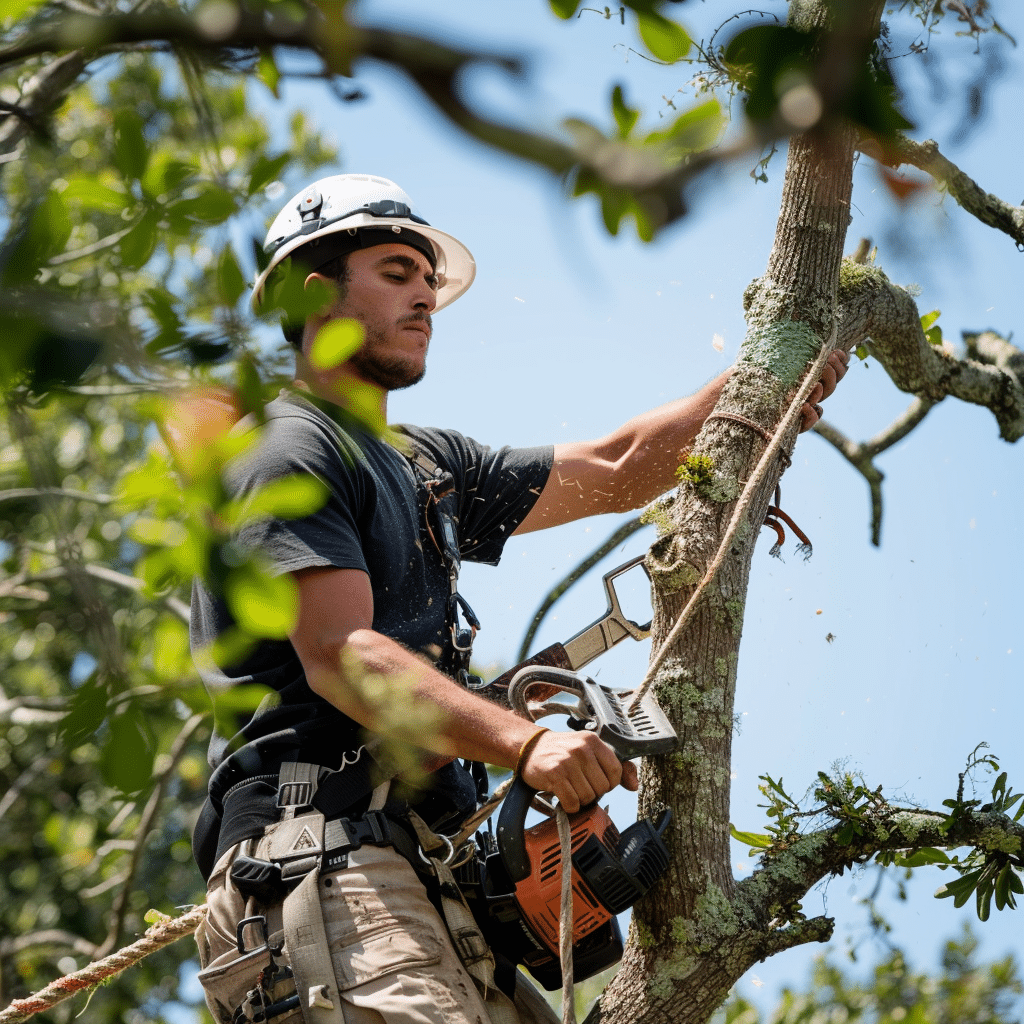
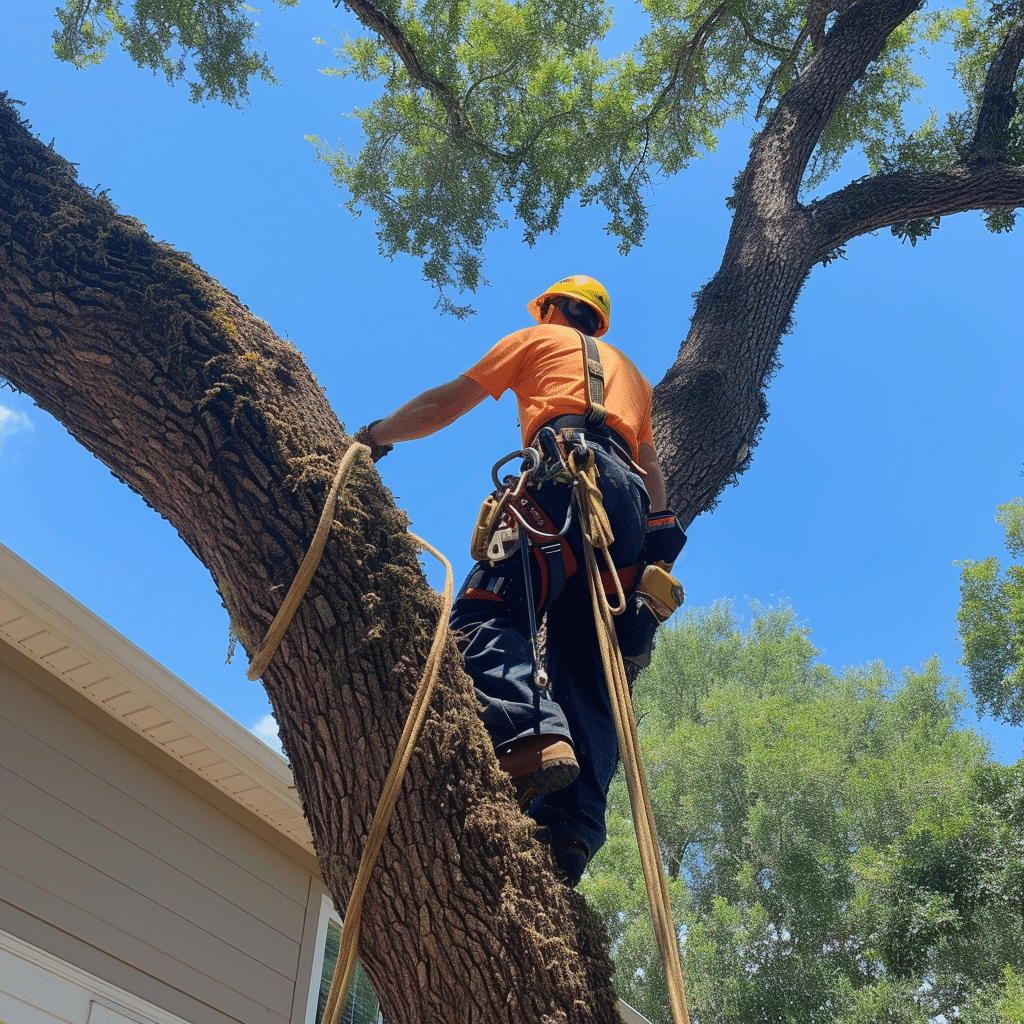
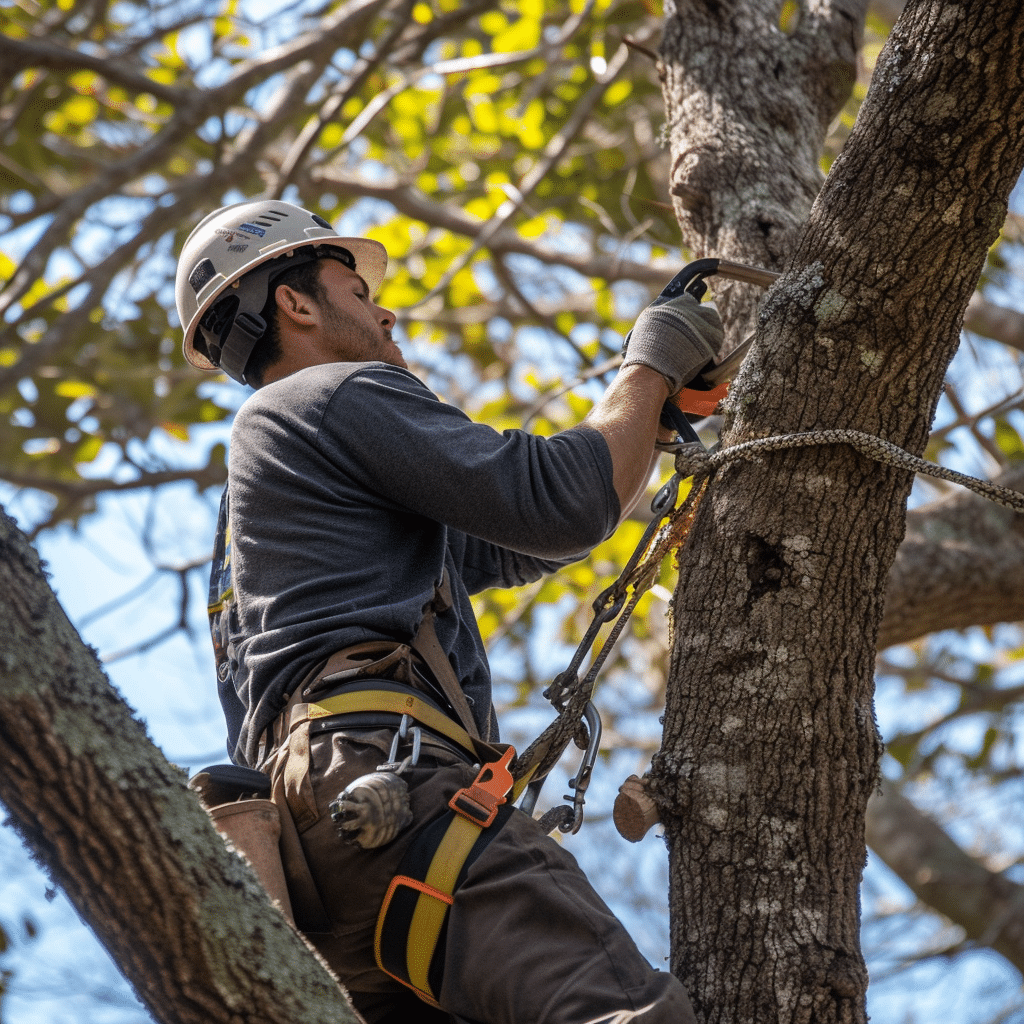
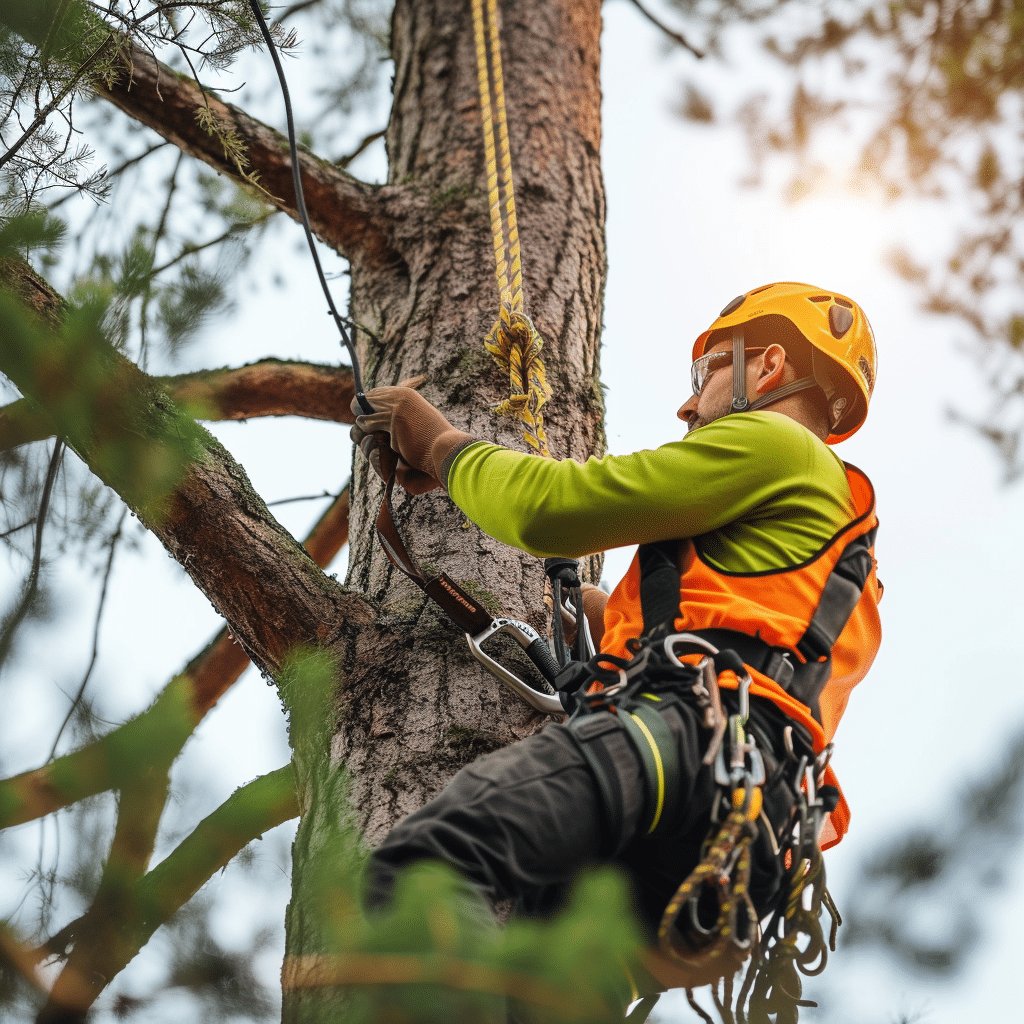
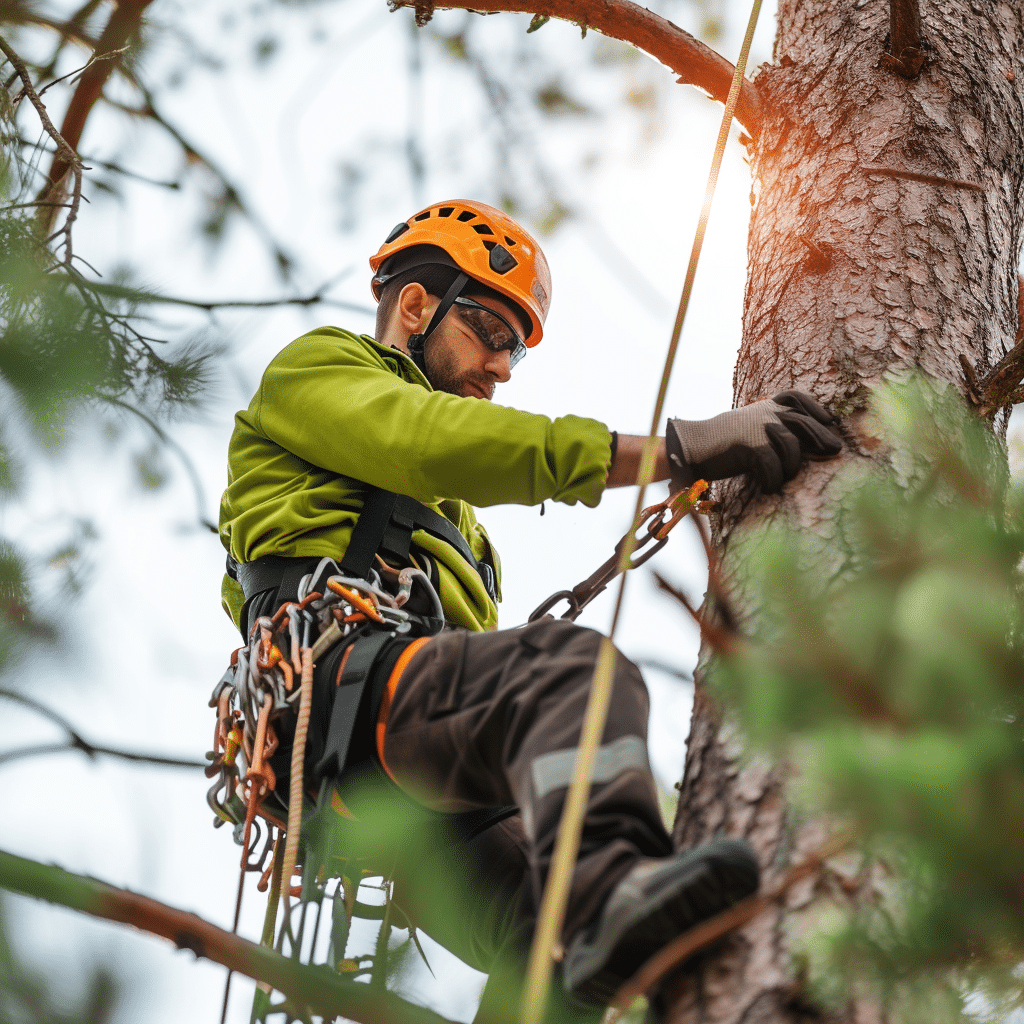
Depending on size, lean, and what sits beneath the canopy, the tree comes down by sectional climbing and rigging or by crane-assisted lift.
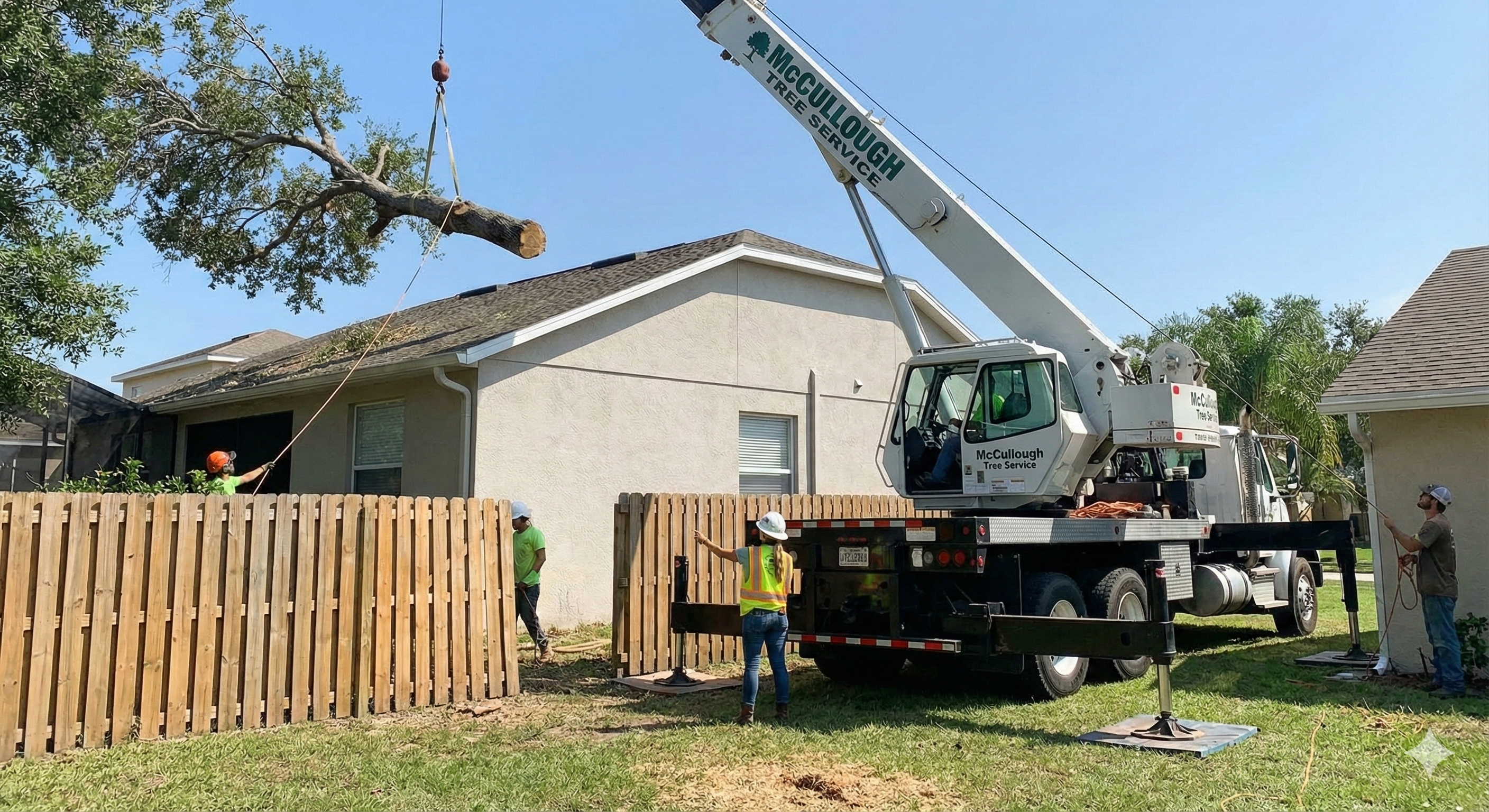
Crane work is the right answer when a tree stands over a roof, a screened porch, or a neighboring structure with no viable drop zone — a common situation in Fern Park, where mature canopy and mid-century lot sizes overlap. The crane picks each section vertically and sets it in the landing area, so nothing swings over what you are trying to protect.
4. Full Cleanup and Haul-Away
All wood and brush leaves the property unless you ask us to leave rounds for firewood. Limbs are chipped, the debris is hauled, and the work zone is raked and blown clean.
Turf, walkways, and driveways go back to the condition we found them in. Stump grinding is available as an add-on to take the root collar below grade so the area can be sodded, mulched, or replanted.
Why Fern Park Homeowners Choose McCullough
Fern Park homeowners call us because close-quarters removals in an older neighborhood leave no margin for guesswork. These are the things that make the difference on a tight lot.
- 3 ISA-Certified Arborists on Staff — A certified arborist leads every removal rather than handing it to a crew member. ISA credentials mean formal training in tree biology, risk assessment, and how loaded wood actually behaves under rigging.
- Crane-Assisted Removal Capability — Often the only safe method on a Fern Park lot. A crane lifts each section straight up and away from roofs, porches, and neighboring structures where felling or free-dropping is off the table.
- Clean, Considerate Job Sites — We protect turf, pavement, and shared fencing on every job and leave the property tidy, which matters in neighborhoods where houses sit close together and neighbors notice.
- Fully Insured Operations — Every job carries full liability coverage so homeowners are not left exposed. Documentation is available on request.
- 30+ Years in Central Florida — We know the species along the 17-92 corridor, how they fail, and the Seminole County and Town of Fern Park requirements that apply to removal work here.
Schedule Your Free Estimate
Whether it is a laurel oak with limbs resting on your roof, a pine that has been dropping deadwood since the last storm, or a leaning tree near your fence line that you would rather not gamble on, McCullough Tree Service will look at it and give you a straight assessment at no charge.
You will get a clear plan: the removal method, the access route, what cleanup covers, and whether a permit applies.
Call (407) 734-5854 or email info@mcculloughtreeservice.com to schedule your free Fern Park estimate.
FAQs
1. Do I need a permit to remove a tree in Fern Park?
It depends on the tree. Seminole County and the Town of Fern Park regulate certain trees based on species and trunk diameter, and removals tied to protected specimens may require documentation or a replacement planting.
Hazardous trees are usually treated differently from healthy ones, which is why an arborist assessment matters.
We confirm the permit question for your specific tree before scheduling, and if you live in a condominium or townhome community we can provide our ISA credentials and insurance certificate for your association’s file.
2. Can you remove a tree that is hanging over my roof or screened porch?
Yes, and it is one of the most frequent calls we get in Fern Park. Older homes here often have mature oaks and pines directly above the roofline or a screen enclosure, where dropping limbs is simply not an option.
In those situations we dismantle the tree in sections using climbing lines and rigging, or bring in a crane to lift each piece vertically clear of the structure.
Either way the wood never travels over what we are protecting — it is picked, swung to a clear landing zone, and processed there.
3. How do you keep my neighbor’s property safe on a narrow Fern Park lot?
Adjacent-property protection is built into our setup on every job. Before cutting starts, the crew identifies structures, sheds, fencing, irrigation heads, vehicles, and pavement inside and near the work zone.
Protective matting goes over hardscape in the work path, and equipment is staged to avoid rutting lawns or cracking older driveway edges.
When a tree sits right on a shared boundary, we rig it so every section is under load control from the moment it is cut, or use a crane so nothing moves laterally at all. We also let neighbors know when access or noise will affect them.
4. Which trees get removed most often around Fern Park?
Laurel oaks lead the list. They grow fast, they are common in neighborhoods of this age, and they tend to develop internal decay and shed large limbs well before a live oak of the same size would.
Slash and longleaf pines are next, usually after beetle activity or storm damage thins the crown and leaves standing deadwood over a house.
We also remove live oaks that have simply outgrown their planting spot and now press against roofs, garages, or utility drops, along with sabal palms and old camphors that have declined or become a nuisance near structures.
5. Does tree removal in Fern Park include taking out the stump?
A standard removal leaves the stump cut low to the ground. Grinding it out is a separate add-on service.
We recommend grinding in most Fern Park yards. Stumps in a lawn are mower hazards, they attract termites and other pests in Florida’s climate, and they block any plan to re-sod or replant the spot.
Grinding takes the stump and upper root flare below grade and produces chip material you can keep as mulch or have hauled away with the rest of the debris.
Contact Us
(407) 734-5854 948 Ferne Dr.Longwood, FL 32779 (407) 734-5854 Open In Google Maps